“Mathieu is more or less unbeatable”: Belgian coach admits only a “very bad day” can stop Van der Poel at Worlds
Cyclocross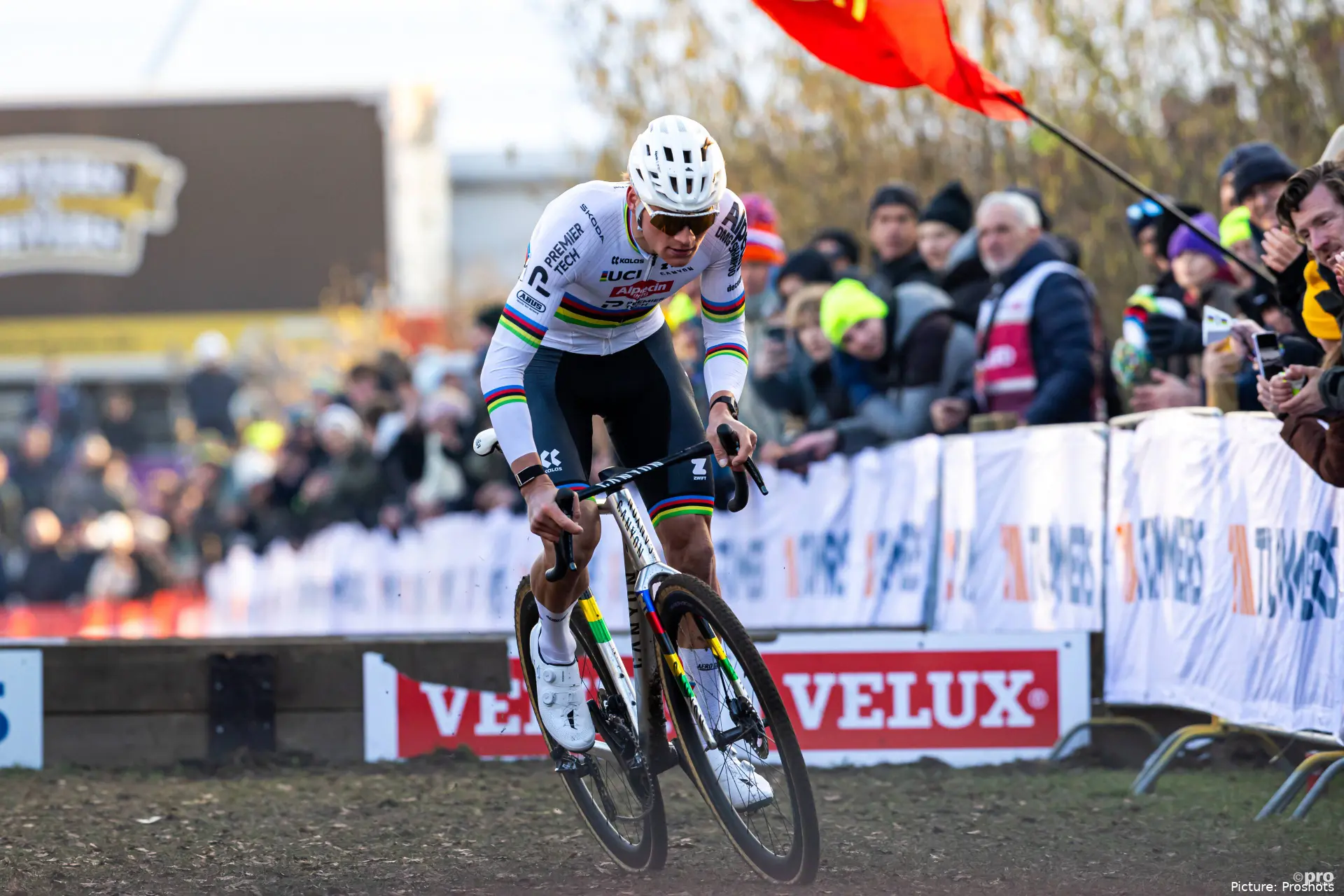
The clearest assessment of the men’s Cyclocross World Championships build-up has come not from a rival rider, but from the Belgian camp itself.
With Mathieu van der Poel arriving in Hulst after a winter of near-total control, Belgium’s national coach Angelo De Clercq has been strikingly open about the scale of the task facing his riders.
“Mathieu is more or less unbeatable,” De Clercq admitted, speaking to WielerFlits. “He would need to have a very bad day not to win.”
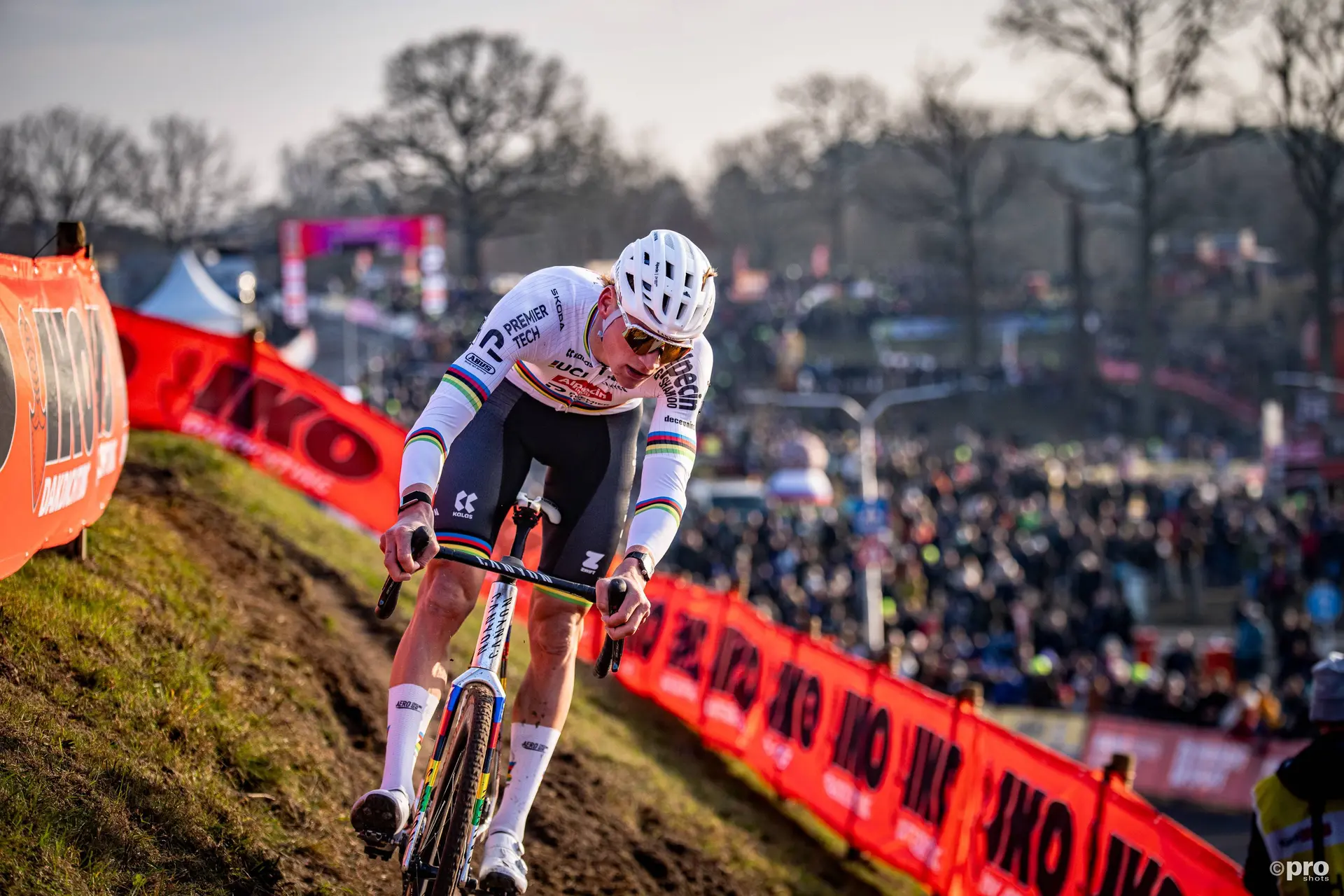
It is a remarkable concession, but one that reflects the reality of what this winter has shown. Van der Poel has not only won, but he has also repeatedly removed uncertainty from races within a lap, even when punctures or poor luck briefly disrupted his rhythm. The gap has been wide enough that the rest of the field has often been left to contest a separate race behind him.
Podium realism, not resignation
That honesty shapes Belgium’s approach to Hulst. De Clercq has not attempted to disguise that second and third place matter. “For us, second and third place are also very important,” he said, acknowledging that gold cannot be the sole reference point when the favourite’s dominance is so pronounced.
At the same time, he stressed that the Belgian riders will not simply roll over. The opening phase of the race is central to their thinking. “We have to be ready in the first lap, because it is so technical with off-camber sections and slanted slopes,” De Clercq explained, pointing to the need for strong positioning before Van der Poel inevitably begins to dictate terms.
That emphasis on the early laps is rooted in recent evidence. Races such as Maasmechelen and Hoogerheide showed that once Van der Poel has established his rhythm at the front, the window to react closes quickly. As De Clercq put it, “If Mathieu has another outstanding day, then we will know that quickly.”
Why faith in Thibau Nys remains
Within that context, Belgium’s leading hope remains Thibau Nys, despite a frustrating end to the World Cup campaign. De Clercq was unconcerned by Nys missing the podium in Hoogerheide, instead framing the disappointment as potential fuel.
“I don’t see it as a negative,” he said. “I think that disappointment will only motivate him and keep his focus high. Maybe he will start even more concentrated, with the knife between his teeth in the first lap.”
De Clercq also pointed to Nys’ broader record at championships as a reason for confidence. He highlighted previous podium finishes and his ability to focus on one target rather than spreading form across the winter. “He is someone who can really focus on one specific moment,” the coach said. “My confidence in Thibau remains high.”
There is also a practical explanation for why Nys has not emerged as Van der Poel’s main challenger in recent weeks. De Clercq spoke openly about differences in preparation, noting that some riders build freshness towards the final World Cup rounds, while others continue heavier training with the World Championships and the spring in mind. “I think he lacked a bit of freshness,” he said, adding that he expects that to return after a lighter week.
Waiting for the race to decide
Strategically, Belgium’s plan is deliberately flexible. De Clercq made clear that the first two laps will be decisive in shaping how aggressively his riders respond. He referenced Tibor Del Grosso as an example of how fast starts can stretch the race early, before settling into a more predictable pattern.
“If Mathieu has another outstanding day, then we will know that quickly,” De Clercq repeated. “Then it becomes about seeing where we stand.”
In other words, Belgium are preparing for multiple scenarios, but none that ignore the obvious. Van der Poel arrives as the overwhelming favourite, riding at a level even rivals and coaches describe as close to flawless. Belgium’s task is to be ready if something unexpected happens, while also maximising their chances of turning dominance at the front into medals behind.
As De Clercq himself summed it up, the gap is large enough to simplify the conversation. Hope remains, but realism rules.

Kieran WoodDeputy Editor-in-Chief
Kieran Wood is a sports journalist based in Wales and has been active in journalism since 2022. He regularly contributes to DartsNews.com and CyclingUpToDate.com, where he covers professional cycling and darts. In cycling, his work includes liveblogs from major races, including the Tour de France, the Giro d’Italia, and La Vuelta a España, alongside race reports and analysis. He has also conducted interviews with professional riders.
His reporting spans the full racing calendar, from one-day classics to stage races, with a focus on accurate, real-time coverage and clear contextual analysis. For statistics, results, and historical context, he regularly uses resources such as ProCyclingStats. To support reporting on rider activity and training context where relevant, he also references Strava.
In his work, Kieran places strong emphasis on careful sourcing, editorial accuracy, and updating articles as new, verified information becomes available.
claps 4visitors 4
Just in
Popular news
Latest comments
- Good grief, who proofreads this stuff? Errors abound.wrsty18-10-2026
- You can add weight to a bike and limit gears or make it single speed if you like. I doubt that would reduce crashes. It would just add another dymanique. All good and well, but It wont stop cars getting on to the course.Cyclingsbestfan18-10-2026
- Seixas is probably second best in the World on short climbs. But that hasn't translated as well to long climbs
 Rafionain-Glas18-10-2026
 - Idiotic fellaRafionain-Glas18-10-2026
- Nothing. Against Pogi nothingabstractengineer18-10-2026
- He didn't even try to sprint all outvappaxbipmv18-10-2026
- Campenaerts looked like a rolling pumpkin with that all orange leaders skinsuit !frieders318-10-2026
- He can take his dumb a$$ politics somehwere else !frieders318-10-2026
- good to have her back. fingers crossed she‘ll be able to stay!Ketterechts17-10-2026
- A tenner and he wins the Tour next year, too 😂anonymouscyclist17-10-2026
Loading
Write a comment