“What happened in Milan should never happen again” - Giro organisers draw line under Jonas Vingegaard neutralisation row before Rome finale
Cycling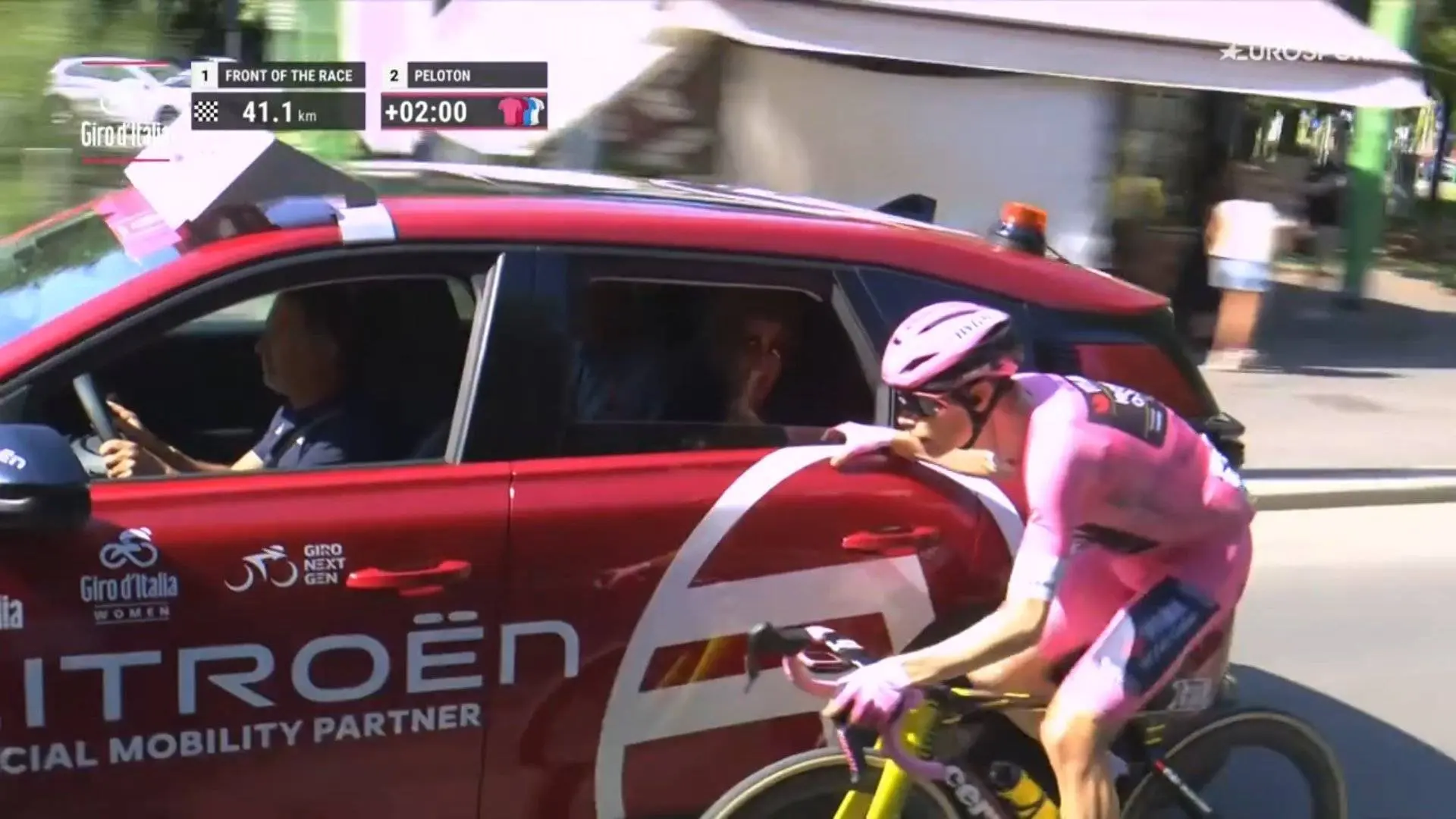
The Giro d’Italia will not allow the Rome finale to become another Milan. That was the message from race organisers after the stage 15 neutralisation row, with RCS Sport insisting the final stage circuit in the Italian capital is safe, familiar and set to be raced as planned.
The controversy in Milan began when Jonas Vingegaard and other riders raised concerns during the stage, prompting discussions with the race convoy before general classification times were eventually frozen with 16 kilometres remaining. The decision protected the GC riders, but it also left a chaotic image at one of the Giro’s marquee city finishes.
Race director and safety manager Stefano Allocchio has now pushed back strongly against any suggestion that Milan should become a precedent for Rome.
“What happened in Milan should never happen again,” Allocchio told Cycling News. “The Milan circuit was safe.”
RCS refuse to reopen Rome debate
Rome is due to host the Giro finale on the same circuit used last year, giving organisers a key argument against any late challenge from the peloton. “The Rome circuit is exactly the same as last year, so the riders and teams know it and have raced on it,” Allocchio said.
The safety debate has followed the Giro deep into its final week, but RCS’ position has hardened. Milan was treated as a compromise in the moment. Rome, they argue, is different.
Allocchio accepted that riders have a right to raise safety concerns, but questioned where the line should be drawn if sprint stages are repeatedly challenged during the race itself. “I understand the riders have concerns about safety, but what are we going to do? Never have sprint finishes?” he said. “We accepted the riders’ request in Milan, and they thanked us, but it won’t happen again.”
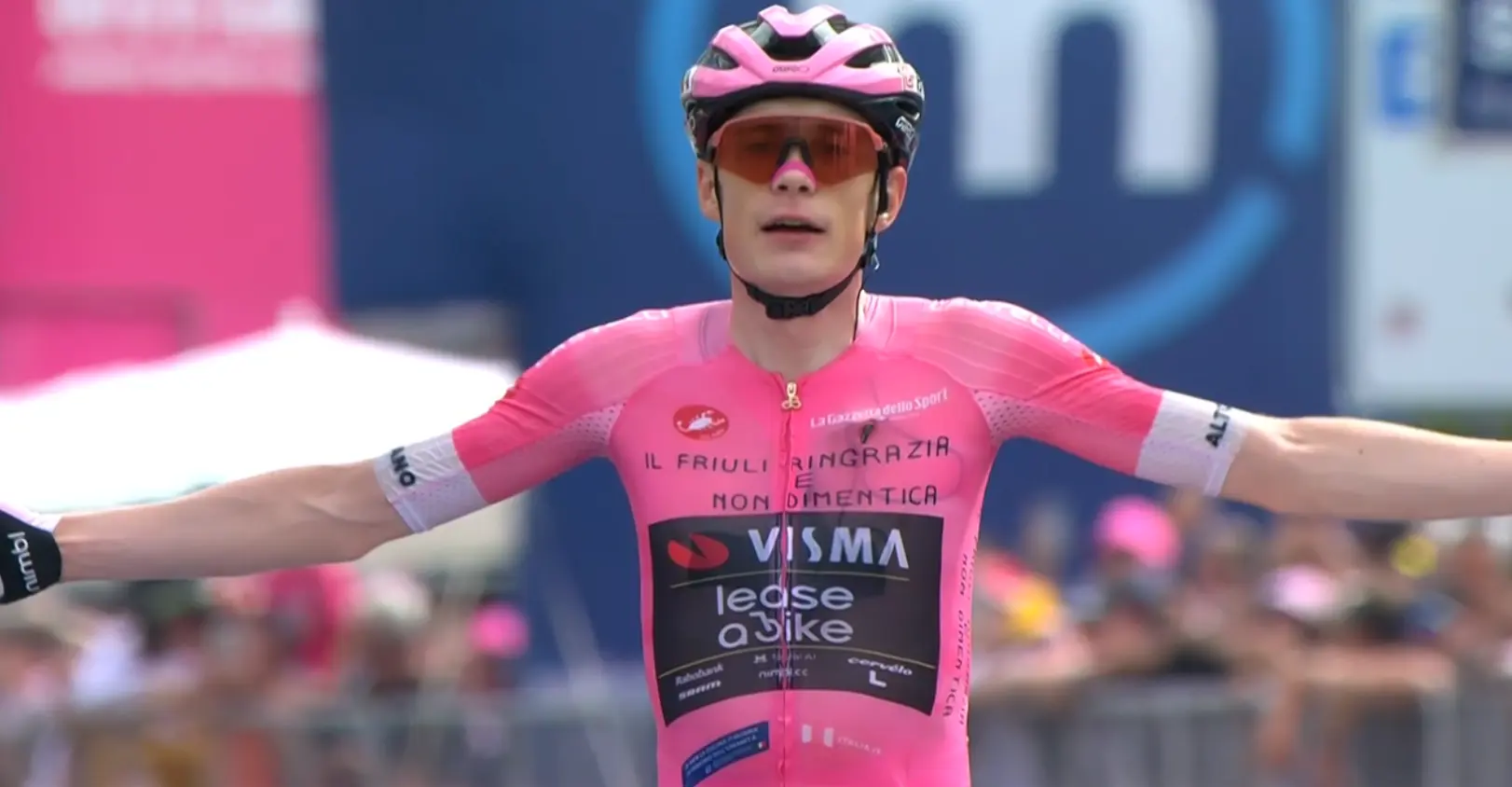
For Vingegaard, the final weekend should be about completing his Giro victory and adding the maglia rosa to his Tour de France and Vuelta a Espana titles. Instead, the Milan row has left another debate running alongside the fight for Rome: how much control riders should have once a stage is already underway.
“The vibe flopped”
The Milan decision did not only frustrate organisers. Brent Copeland, the Jayco-AlUla team manager and AIGCP president, said the episode damaged the spectacle for people watching from outside cycling’s usual bubble.
“RCS had done a great job organising everything for the Giro to return to central Milan,” Copeland told Cycling News. “There were a lot of special guests and partners who were all invited to the race on Sunday. Everyone was watching, but then the last lap was neutralised, the vibe flopped.”
The confusion was immediate. The race continued, but the GC fight had effectively been removed from the final circuit. For seasoned cycling fans, the distinction was messy enough. For guests, sponsors and potential investors, Copeland said it was even harder to follow.
“People were asking me what was going on,” he said. “I tried to explain, but people thought it was like the Safety Car in F1, even though the race continued. There were people there who could be interested in investing in the sport, and suddenly they were confused about what was going on. At the end of the day, cycling suffered last Sunday in Milan.”

Paul Magnier has emerged as the premier sprinter at the 2026 Giro d'Italia
Sprint finish or rolling negotiation?
The row has left the Giro with an awkward question before Rome. Riders want greater influence over safety. Organisers want decisions made before the flag drops, not after the race has reached the city centre.
Copeland pointed back to the 2007 Giro, when rider protest also disrupted the race, and said cycling has still not found a clean way to handle these flashpoints. “It’s now 17 years later, and a similar thing happened, so we’ve not learnt from it,” he said.
His preference is for earlier discussions and clearer agreements before the peloton reaches dangerous or contested sections. “Discussions about safety on specific stages need to take place before the race, and let’s communicate things better,” Copeland said. “Let’s not destroy cycling’s image, with riders going back to the car during the race and no one understanding what’s going on.”
“I really encourage the GC riders to get together before the race and certain stages to agree to stay out of trouble, but let the race go on and let the sprinters do their race,” he added.
That is now the pressure point for Rome. The maglia rosa should be settled by then, the sprinters will want their final stage, and RCS have no appetite for another mid-race stand-off. Milan left the Giro with a safety argument and an image problem. Rome is where organisers want the racing to take the final word.
Kieran WoodDeputy Editor-in-Chief
Kieran Wood is a sports journalist based in Wales and has been active in journalism since 2022. He regularly contributes to DartsNews.com and CyclingUpToDate.com, where he covers professional cycling and darts. In cycling, his work includes liveblogs from major races, including the Tour de France, the Giro d’Italia, and La Vuelta a España, alongside race reports and analysis. He has also conducted interviews with professional riders.
His reporting spans the full racing calendar, from one-day classics to stage races, with a focus on accurate, real-time coverage and clear contextual analysis. For statistics, results, and historical context, he regularly uses resources such as ProCyclingStats. To support reporting on rider activity and training context where relevant, he also references Strava.
In his work, Kieran places strong emphasis on careful sourcing, editorial accuracy, and updating articles as new, verified information becomes available.
claps 10visitors 2
Just in

Popular news
Latest comments
- He didn't even try to sprint all outvappaxbipmv18-10-2026
- Campenaerts looked like a rolling pumpkin with that all orange leaders skinsuit !frieders318-10-2026
- He can take his dumb a$$ politics somehwere else !frieders318-10-2026
- good to have her back. fingers crossed she‘ll be able to stay!Ketterechts17-10-2026
- A tenner and he wins the Tour next year, too 😂anonymouscyclist17-10-2026
- the answer is either stick to classics or GTs but not bothabstractengineer17-10-2026
- the exodus already stared with Ciccone. Already they were struggling with two sprinters, now there are three. Also Ganna will demand leadership. Gall is the most proven GC, Ayuso has the most potential. GC leadership for everybody will be impossible. Literally a UAE style mess without pogi.abstractengineer17-10-2026
- I raced as an amateur for 12 years, including six years on my country’s national road cycling team. I secured two national titles and competed in three World Championships plus more than 15 international stage races. At 23, we travelled to Italy for a training camp—or so I assumed. On a rest day, we watched a presentation about adopting a more “professional” training approach. It was crystal clear what “professional” meant. That moment first exposed me to this dilemma. After returning from Italy, I left cycling—at least at the competitive level I had known. Over the following two years, the whole team was caught doping. I hold that everyone is innocent until proven guilty. In my view, current stakeholders operate on a different scale, and the sums involved are vast. I am unsure whether any doping would ever be revealed. I try to stay positive and enjoy the show. My 2c.
 vannpelt17-10-2026
 - Fiver he wins 🤣
 leedorney17-10-2026
 - “…measures to reduce speeds.” Might as well shorten the race course to just 50km as well? ASO generates at minimum €300m a year and 30- 40% profit. Maybe stop being greedy and spend more of the profit to protect the riders instead.b3tlla17-10-2026
Loading
Write a comment