“We won’t have the same late discussion about it like we do every year”: UCI and CPA prepare 2027 rule overhaul to end last-minute GC neutralizations
Cycling
The final stages of the three men's Grand Tours could undergo an important change in 2027, with the Cyclistes Professionnels Associés (CPA) set to meet the UCI and race organizers on December 2 to agree in advance on how the general classification will be handled on the final day. The discussions follow several controversial decisions to neutralize GC times in recent years, including at the Tour de France and Vuelta a España, where last-minute changes have repeatedly affected the format of the finales.
CPA president Adam Hansen wants the meeting to establish clear rules before the races begin, rather than leaving riders, teams and organizers to negotiate adjustments during the final stage itself.
“Next week, we have a meeting about all the last stages of the Grand Tours, because you’ve probably noticed they all get changed,” Hansen told Domestique. “The UCI is a bit tired with this too, because it’s not a good look for the sport.
“We’ll speak about the final stages, just to make an agreement, and then it’s in the road book in advance that the time will be taken at a specific point, for whatever reason. That way, we won’t have the same late discussion about it like we do every year.”
Montmartre and Madrid finales have sparked repeated changes
The issue has become increasingly prominent since the Tour de France introduced the climb of Montmartre into its final Paris circuit. In both 2025 and 2026, the general classification times were neutralized before the end of the stage, although the decisions were made at different points.

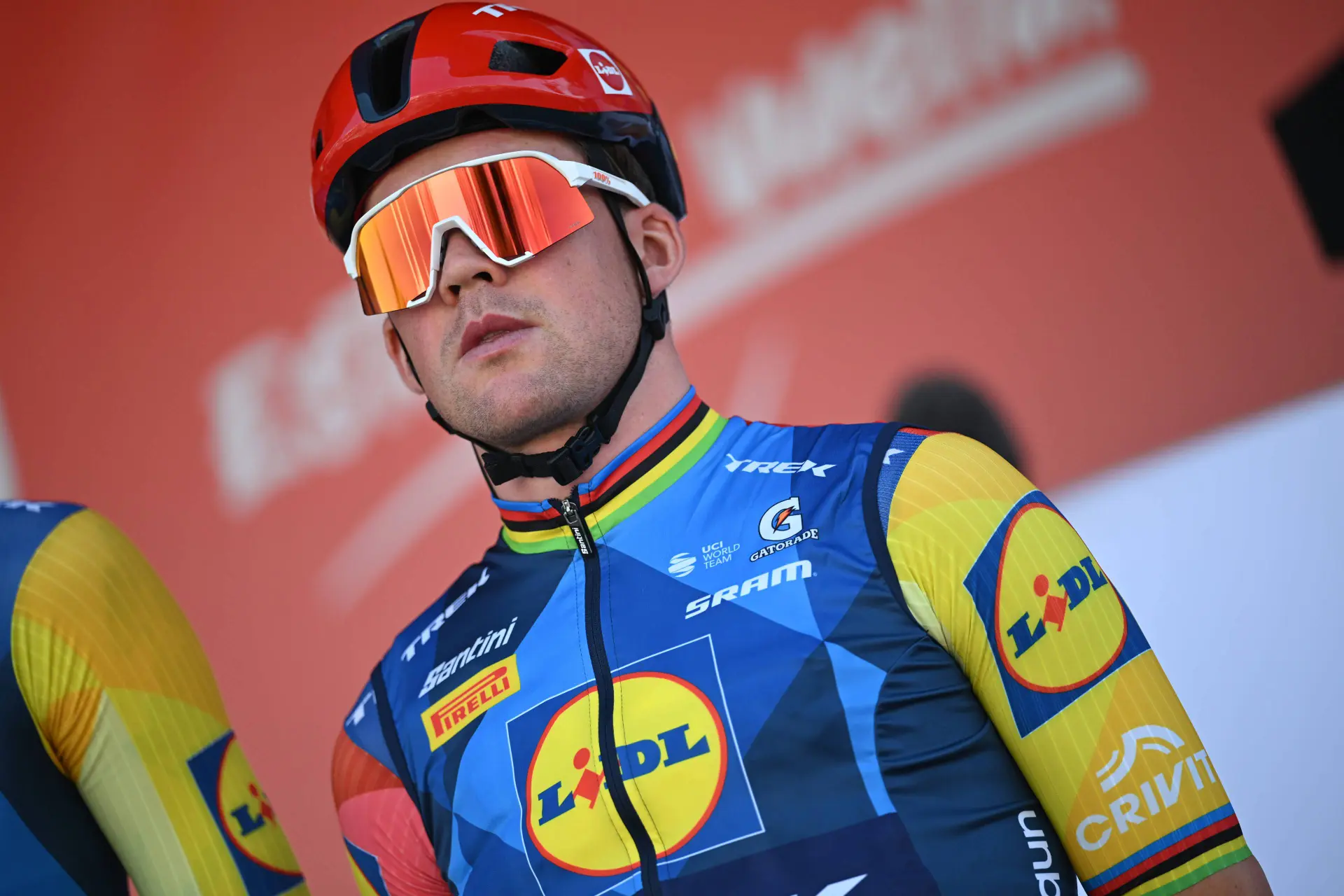
Mathieu van der Poel won the last stage of the Tour de France 2026
In 2025, heavy rain prompted the race jury to stop the GC clock with 50 kilometers remaining. A year later, the times were taken with one lap of the finishing circuit still to go. Both decisions meant that the final kilometres on the Champs-Élysées did not count towards the overall standings, even though the stage itself continued.
The Vuelta a España also experienced a late adjustment in 2026. The clock was stopped before the final lap of the circuit in Granada, following discussions involving riders, teams, race organizers and the jury.
Hansen believes that the repeated last-minute decisions are damaging to the sport's image. “The riders don’t have a problem if the organisers want to pick these new finishes, but they just need to make them fair. If you make it unfair for the riders, then we just have to adapt to make it fair for them and not have them lose their race.
“That’s why we’re having the meeting next week. This way, we won’t have the same discussion that we have every year on the final day. I don’t like that at all.”
Hansen explains why the Vuelta GC was neutralized
Hansen also revisited the decision to neutralize the general classification during the final stage of the 2026 Vuelta, arguing that the CPA's main concern was sporting fairness rather than safety.
“The last climb was on a too narrow road, where cars couldn’t pass riders and riders couldn’t pass cars, and the climb itself was about seven minutes long,” Hansen explained. “If a rider had got a flat at the top, he would have had to wait for the last rider to come up before his team car could reach him, so anyone in the top ten would have been out of it with mechanical.”
Read also
“From a rider’s point of view, you just can’t have this on the last stage – and it also goes against UCI regulations, where cars must be able to pass riders and riders must be able to pass cars. That was the biggest concern in the last stage of the Vuelta, even if the organisers spun it that it was more of a safety issue. But if it had been a safety issue, we would have asked for more than just neutralising the GC times, because we care about all riders, not just the GC riders.”
The situation is somewhat different at the Tour de France, where team cars do not follow riders over the Montmartre climb during the Paris finale. Nevertheless, the general classification has still been neutralized before the finish in the last two editions.

Félix SernaCycling Journalist
Félix Serna is a writer at CyclingUpToDate and has been part of the team since 2025. He covers professional cycling across both the men’s and women’s calendars, with a focus on UCI rankings, race developments, and rider performance. His work includes interview-based reports, liveblogs, and tournament coverage designed to provide clear, accurate context throughout the season.
In his reporting, Félix regularly uses ProCyclingStats for results, statistics, and historical reference. He places strong emphasis on careful sourcing, editorial accuracy, and updating articles promptly when new, verified information becomes available. He holds a bachelor’s degree in International Studies.
claps 0visitors 0
Just in




Popular news


Latest comments
- I fully agree that "2027 could completely reshape the pecking order" because this competition is a mix of skill, team support, luck opposition, and health.flyer25-11-2026
- I've always thought the last day of each of the grand tours was problematic mostly in that the GC is considered completed before the race starts when that is not really true. There is some tension, but not desirable tension. What saves the awkward practice is the race finish is legit for those who participate - so it's not wholly different from the other stages. That neutralizations usually make good sense demonstrates their necessity so if that has to be the way to go I agree that the design plan for the neutralization should be completed before the race starts. This years end stage in the Vuelta had one of the best first half's I've seen in that many of the riders looked to be thoroughly enjoying themselves making it a joy to watch. But I think it was slightly closer to the exception rather than the rule.flyer25-11-2026
- Apparently that week is a MAJOR training disadvantage as "three major benefits" were claimed. When I read a proposal such as this, I want to also read the reasons why changing might not be so good - the CONS.flyer25-11-2026
- most likely they fudged it but i think they want to set an example to the riders that even the top riders are not exempt in the top races even during nighttime as a precedenceabstractengineer25-11-2026
- I think Isaac is in the perfect position to grow as a rider. Looks like Tadej has taken him under his wing and has a strong team around him to also help him grow. I believe he can sign with another team in a few years if he wants to become a team leader. I think he will have a long wait with Tadej.Paggss25-11-2026
- Indeed, if one's goal in life is to be the best possible cyclist, one should delay having kids. If, however, one's goal is to be the most fulfilled human as possible, one shouldn't delay having kids. -An Economist, crazed cyclist, and father of 3 who started having kids too lateacem8225-11-2026
- No report because nothing to report!!Lozza25-11-2026
- Jeez. Begs the question then why they aren’t using that sort of money to fill their roster with young talents instead of superannuated winners on their last hurrahwrsty24-11-2026
- Riccardo Ricco almost died back in 2011 after doing a transfusion of his blood after it had formed bacteria in it, he is lucky to be alive. But boy when he was racing he sure could climb 😂awp24-11-2026
- If Tier 1 is the Premier league, 500 riders are available (excluding devo riders)
 Rafionain-Glas24-11-2026
Loading
1 Comments