“You'll end up like me, making ice cream” - Lifetime-banned Riccardo Ricco hits back at Tadej Pogacar over doping comments
Cycling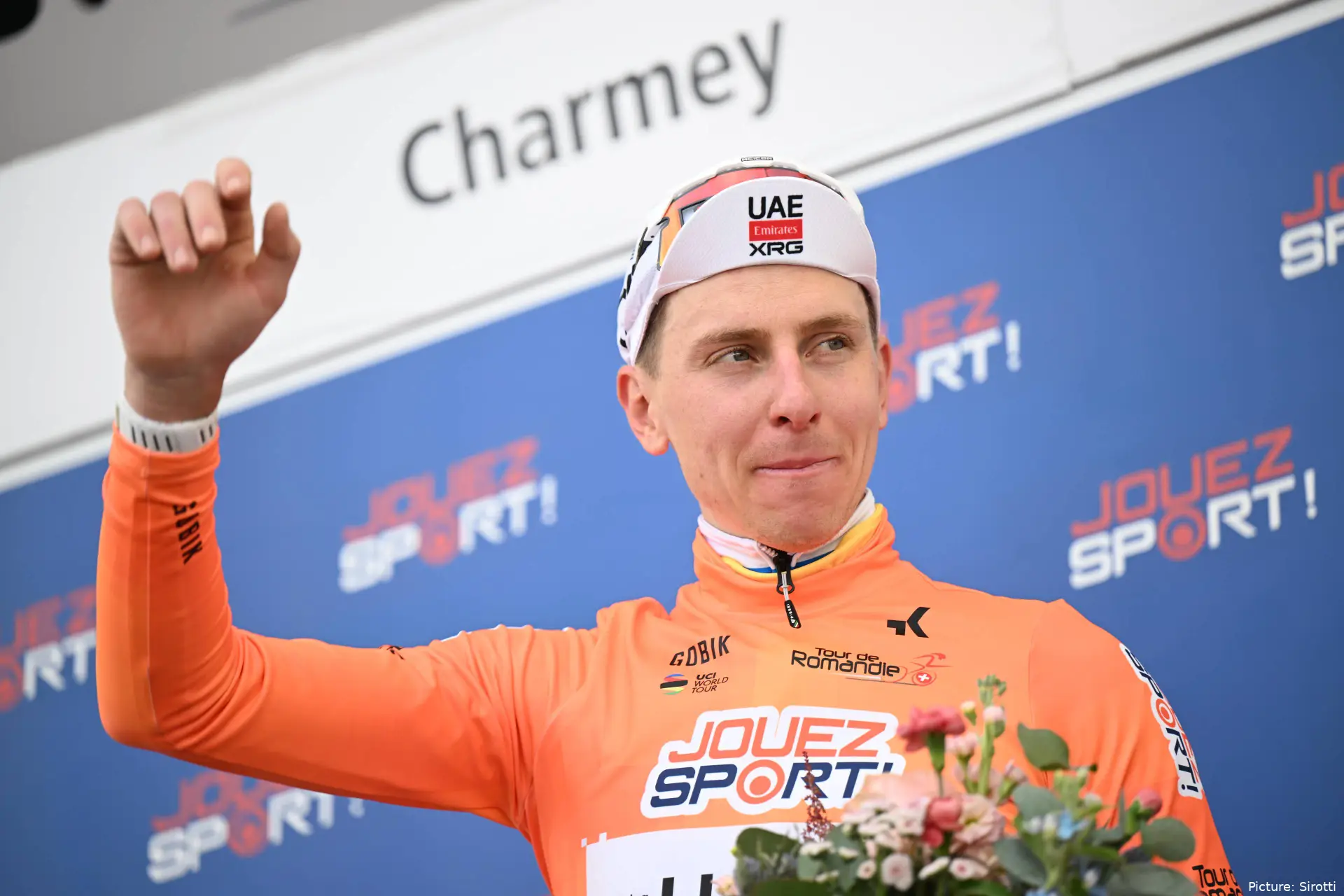
Riccardo Ricco has taken aim at Tadej Pogacar after the five-time Tour de France winner referenced a career selling ice cream when discussing the consequences of doping in professional cycling. Ricco, who was banned from the sport for life in December 2020, now runs two ice cream parlours in Italy.
The former Giro d'Italia runner-up spent three seasons at Saunier Duval under Mauro Gianetti and Joxean Matxin Fernandez, both of whom now occupy senior positions at Pogacar's UAE Team Emirates – XRG.
“I accept the dissing. I expected it beforehand,” Ricco said on his Instagram Stories. “All I can say is that before talking about this, you should be 100% sure of what you're saying. It only takes a moment, and you'll end up like me, making ice cream.”
Tadej Pogacar puts his faith in the modern peloton
Speaking to La Gazzetta dello Sport at an event organised by his management agency, A&J All Sports, in Italy over the weekend, Pogacar was asked about the overnight anti-doping controls conducted during this year's Tour de France.
Both Pogacar and Jonas Vingegaard were subjected to tests in the early hours of the morning before stage 15. Vingegaard was woken at around 2am, with anti-doping officials visiting Pogacar three hours later. The controls had been authorised by a judge at the Paris judicial court.
“I would put my hand in the fire for myself and for the vast majority of the peloton,” Pogacar told the Italian newspaper. “Doping simply doesn't exist for most of the peloton nowadays. We race with our hearts and with the right mentality. We all know that banned, prohibited substances can damage your health. At the same time, cycling is a sport, and nobody wants to risk their life for it. One mistake and you could end up selling ice cream or something like that.”
Pogacar did not name Ricco during his answer.
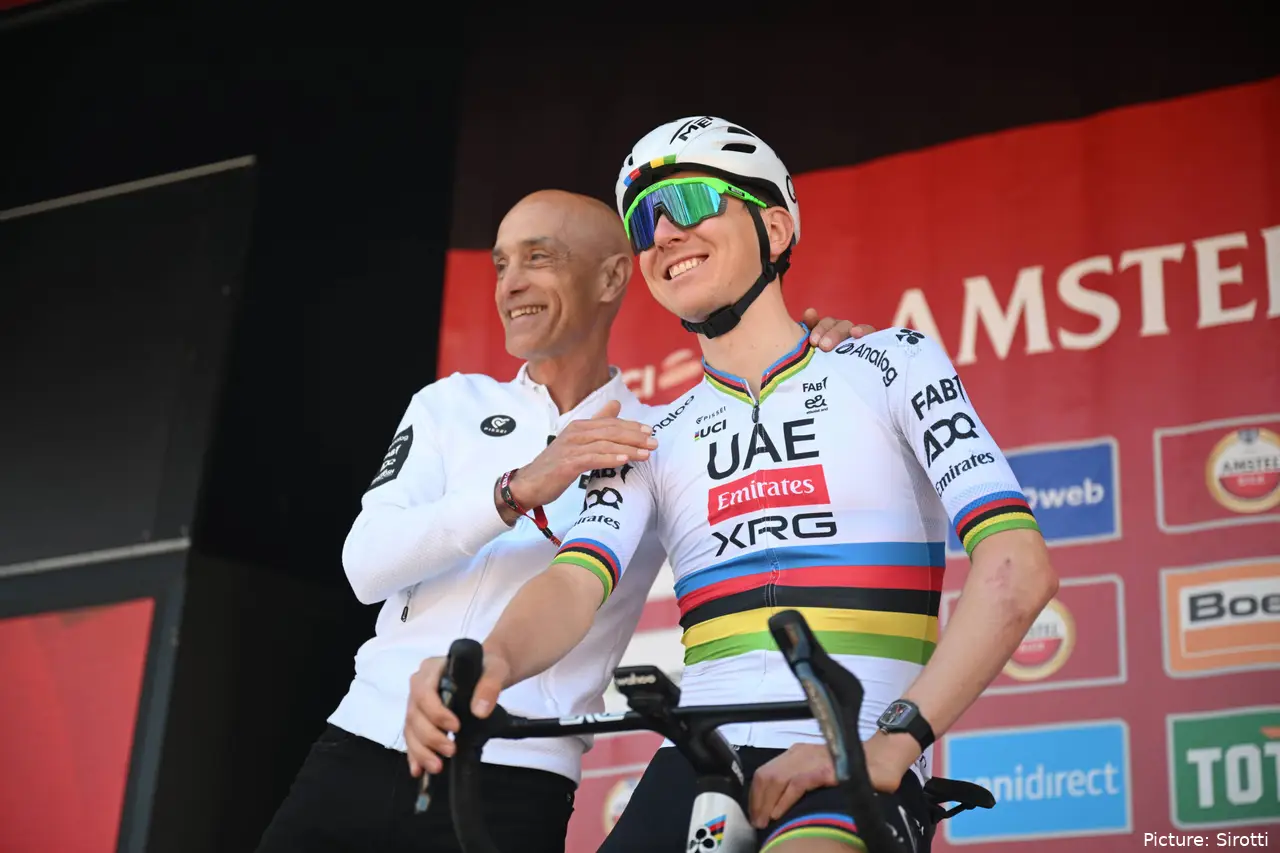
Mauro Gianetti is one of the leading figures within UAE Team Emirates - XRG
Ricco's Giro d'Italia success and doping scandals under Gianetti and Matxin
Having finished sixth overall and won a stage on his Giro d'Italia debut in 2007, Ricco returned to his home Grand Tour a year later to push Alberto Contador all the way to Milan. The Italian finished just one minute and 57 seconds behind the Spaniard, winning two stages and the white jersey.
Still only 24, Ricco headed to the Tour de France that July and crossed the line first at both Super-Besse and Bagneres-de-Bigorre inside the opening nine stages.
Ahead of stage 12, however, Ricco was removed from the race after testing positive for CERA, a form of EPO. Saunier Duval withdrew its entire team, with teammate Leonardo Piepoli subsequently also testing positive for the substance.
Gianetti and Matxin were both working at Saunier Duval at the time. The pair later worked together at Geox-TMC, where Juan Jose Cobo won the 2011 Vuelta a Espana ahead of Chris Froome and Bradley Wiggins. Cobo was stripped of his title in 2019 following abnormalities detected in his biological passport.
During this year's Tour de France, Gianetti addressed his history with Ricco, Piepoli and Cobo in an interview with L'Equipe. The Swiss acknowledged mistakes in his recruitment and handling of certain situations but denied responsibility for his former riders' doping offences.
Now CEO of UAE Team Emirates – XRG, Gianetti also argued that Pogacar would be subjected to doubts regardless of which team he represented.
Former professional Christophe Bassons, who spoke out against doping during the Lance Armstrong era, raised questions of his own about Gianetti's continued presence in the sport during an interview in October, questioning the credibility of cycling without directly accusing Pogacar of doping.
A lifetime ban and a new career away from cycling for Ricco
Ricco returned to competition in 2010 after serving his initial suspension, winning the Tour of Austria and several stages across the Italian calendar.
In February 2011, while preparing for his first full season with Vacansoleil-DCM, Ricco was rushed to hospital following a self-administered blood transfusion. The incident nearly cost him his life and resulted in a 12-year suspension, which was subsequently upheld by the Court of Arbitration for Sport.
Ricco's suspension was due to expire in 2024, but a further investigation into the supply of prohibited substances culminated in the Italian national anti-doping tribunal banning him for life in December 2020.
Riccardo Ricco's doping sanctions
| Year | Offence | Sanction |
| 2008 | Positive test for CERA at the Tour de France | Two-year ban, reduced to 20 months |
| 2012 | Blood doping following the 2011 transfusion | 12-year ban |
| 2020 | Further case involving prohibited substances | Lifetime ban |
Ricco spent several years living in Tenerife, where he learnt to make ice cream before returning to Italy. Alongside his wife Melissa, he established Chocoloco in Vignola, subsequently opening a second ice cream parlour in Rocca Malatina and an academy teaching ice cream and dessert preparation.
Gazzetta covered Ricco's new career in March this year, following an interview with La Stampa in which the Italian also discussed the blood transfusion that had left him in hospital 15 years earlier.
Ricco previously defended Pogacar against doping suspicions
Earlier this year, Ricco himself welcomed the fact that the performances of riders such as Pogacar were no longer automatically met with the same doping accusations that accompanied victories during his own career.
Speaking in an interview with OA Sport on New Year's Day, Ricco was asked why other individuals involved in doping scandals during his generation had been able to retain prominent positions within professional cycling while he remained excluded.
The Italian attributed his own treatment to his outspoken personality before bringing Pogacar into the discussion.
“Pogacar puts in extraordinary performances, but nobody says anything. In the past, they would immediately have alluded to doping. About time. That's a positive difference. Riders need protecting.”
Ricco also pointed to the technological advances made in cycling equipment since his professional career when discussing the difference in speeds between the two generations.
Read also
UCI defended overnight doping controls at the 2026 Tour de France
The overnight visits to Pogacar and Vingegaard in July formed part of a wider series of exceptional anti-doping controls during the Tour de France.
Team Visma | Lease a Bike boss Richard Plugge criticised the timing and manner of the tests after Vingegaard was woken several hours before the normal testing window opened. The Dane subsequently crashed out of the Tour with a broken collarbone.
Pogacar questioned whether the disruption to Vingegaard's sleep could have contributed to the crash, although the Slovenian also expressed his willingness to undergo exceptional testing if required.
The UCI issued an official statement on 22 July, defending the controls while acknowledging the importance of recovery for riders competing in a Grand Tour.
UCI president David Lappartient later explained the limitations of predictable testing windows, particularly in the detection of small doses of EPO.
All 166 riders remaining in the Tour de France also underwent blood testing on 20 July as part of the Athlete Biological Passport programme. More than 360 out-of-competition tests had been conducted by the International Testing Agency on prospective Tour participants during the month preceding the race.
No positive test or anti-doping violation against Pogacar has been publicly announced following the controls, with the Slovenian having never received an anti-doping sanction during his professional career.
Kieran WoodDeputy Editor-in-Chief
Kieran Wood is a sports journalist based in Wales and has been active in journalism since 2022. He regularly contributes to DartsNews.com and CyclingUpToDate.com, where he covers professional cycling and darts. In cycling, his work includes liveblogs from major races, including the Tour de France, the Giro d’Italia, and La Vuelta a España, alongside race reports and analysis. He has also conducted interviews with professional riders.
His reporting spans the full racing calendar, from one-day classics to stage races, with a focus on accurate, real-time coverage and clear contextual analysis. For statistics, results, and historical context, he regularly uses resources such as ProCyclingStats. To support reporting on rider activity and training context where relevant, he also references Strava.
In his work, Kieran places strong emphasis on careful sourcing, editorial accuracy, and updating articles as new, verified information becomes available.
claps 13visitors 5
Just in


Popular news
Latest comments
- If Tier 1 is the Premier league, 500 riders are available (excluding devo riders)
 Rafionain-Glas24-11-2026
- Me too! I'm very curious to read the official report on jow they caught themvappaxbipmv24-11-2026
- By that logic you have 15 tier 1 rider. And that's only GC guys. Add classics riders, sprinters, TTers and suddenly you have 30 tier 1 riders. And you put them on the same level as Pogacar. Well donevappaxbipmv24-11-2026
- He's one of the more entertaining GT riders of the last year. I'm glad he found a team.Occam24-11-2026
- This is a silly take. The guy is clearly a Tier 1 rider; anyone capable of placing top 10 in the Tdf is.Occam24-11-2026
- Just a reminder. EVERY SINGLE time a rider consistently performs to a level well above the rest of the peloton, he's been on the gear. Every single time.Occam24-11-2026
- He may be a top pro but Pidcock is so right about the dangers of cycling in London and the lack of UCI action on rider safety. Thank god we have Pidcock and Ben Healy to shout out about these risks. I see people on e-bikes in London riding like madmen with no concept of the carnage they could cause and unfortunately for them they don’t even have the awareness or reactions of a good amateur cyclist let alone Pidcock. Keep shouting from the rooftops Tom and Ben because most of the people around you are clearly incapable or just plain in thick!Paul53124-11-2026
- I was equally surprisedRafionain-Glas24-11-2026
- I think INEOS has some very strong riders however they need that one rider who can really contend in the 3 major stage races. I also believe Roglic could have helped them. Yes, he's not what he once was, he could have brought them more wins and especially UCI points . I assume INEOS is looking for major riders who's contracts are up in '27. Hopefully they do. It'll be fun to watch.Paggss24-11-2026
- Point taken! However, I like Taddy Better :~ )Paggss24-11-2026
Loading
3 Comments