DISCUSSION Vuelta a España Stage 21: Enric Mas makes history, but controversial neutralization marks Granada finale
Cycling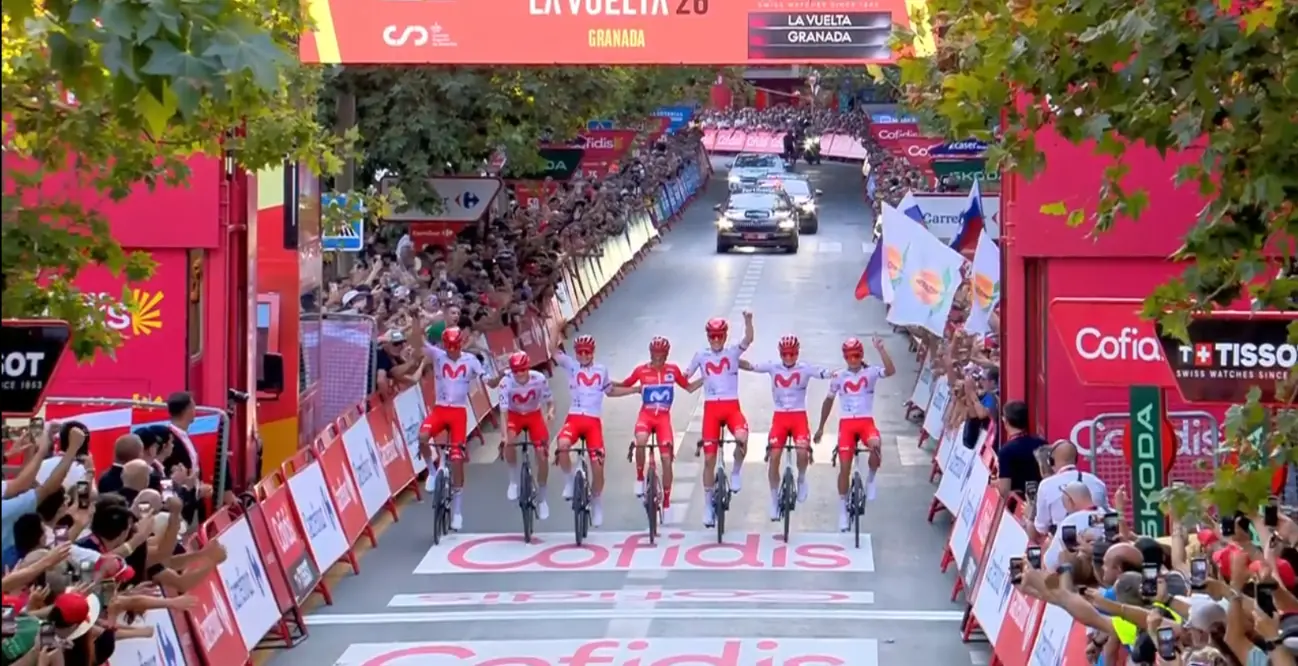
Enric Mas secured overall victory at the 2026 Vuelta a Espana as Tobias Halland Johannessen won a dramatic final stage in Granada.
Mas completed Stage 21 safely to finish 2:15 ahead of Primoz Roglic and 2:44 clear of Felix Gall. The Movistar leader inherited the red jersey following Tadej Pogacar’s race-ending crash on Stage 8 before strengthening his position with victory on Alto de Aitana. He then defended his advantage through the remaining mountain stages and the individual time trial, turning three previous runner-up finishes into the biggest triumph of his career. Mas is the first Spanish winner of the Vuelta since Alberto Contador in 2014.
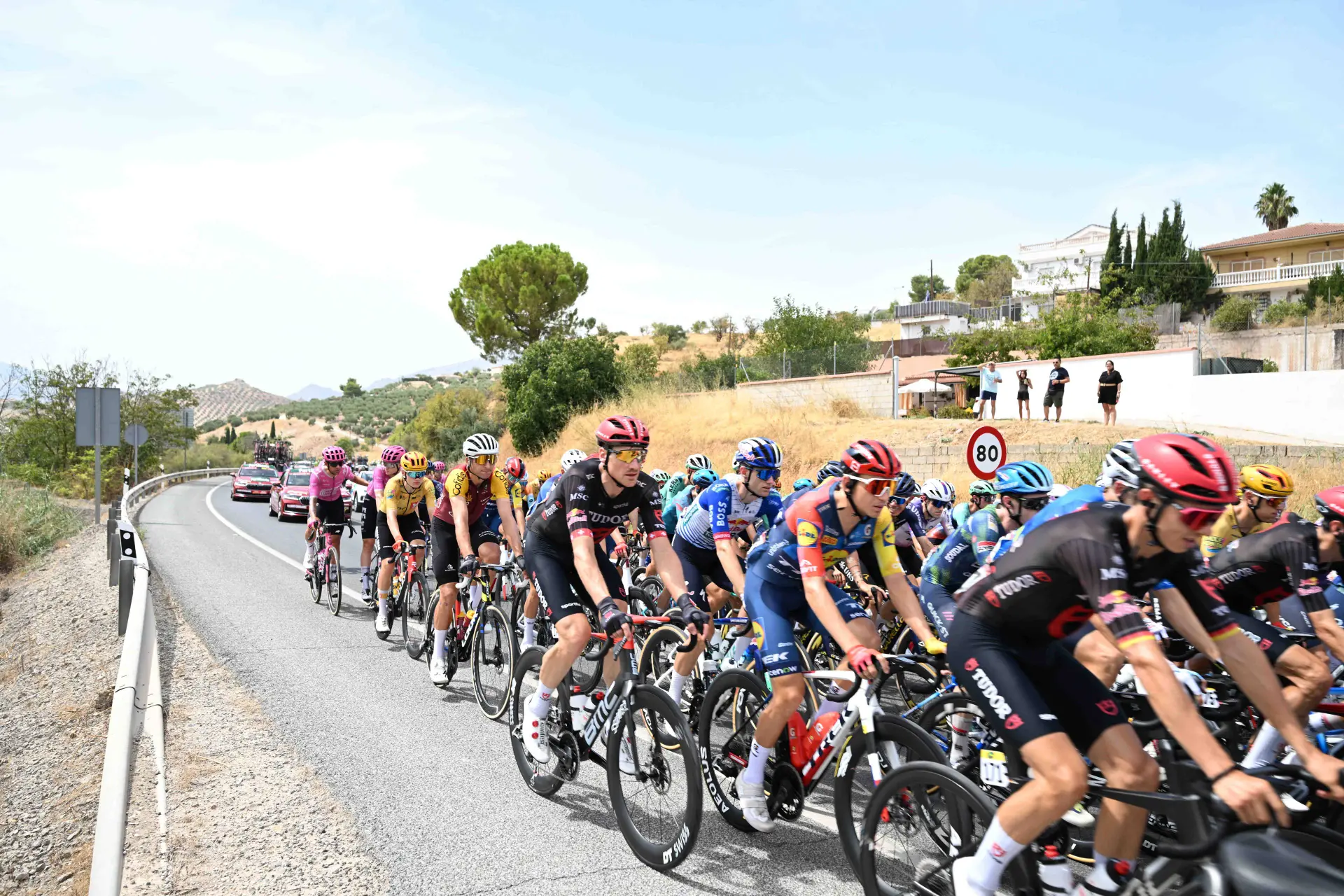
The fight for the final stage came alive on Granada’s demanding Alhambra circuit. A selective front group formed as repeated attacks dropped several contenders, including Wout van Aert. Axel Laurance and Pello Bilbao both tried to escape, while Matthew Brennan battled back into contention but was repeatedly forced to chase moves.
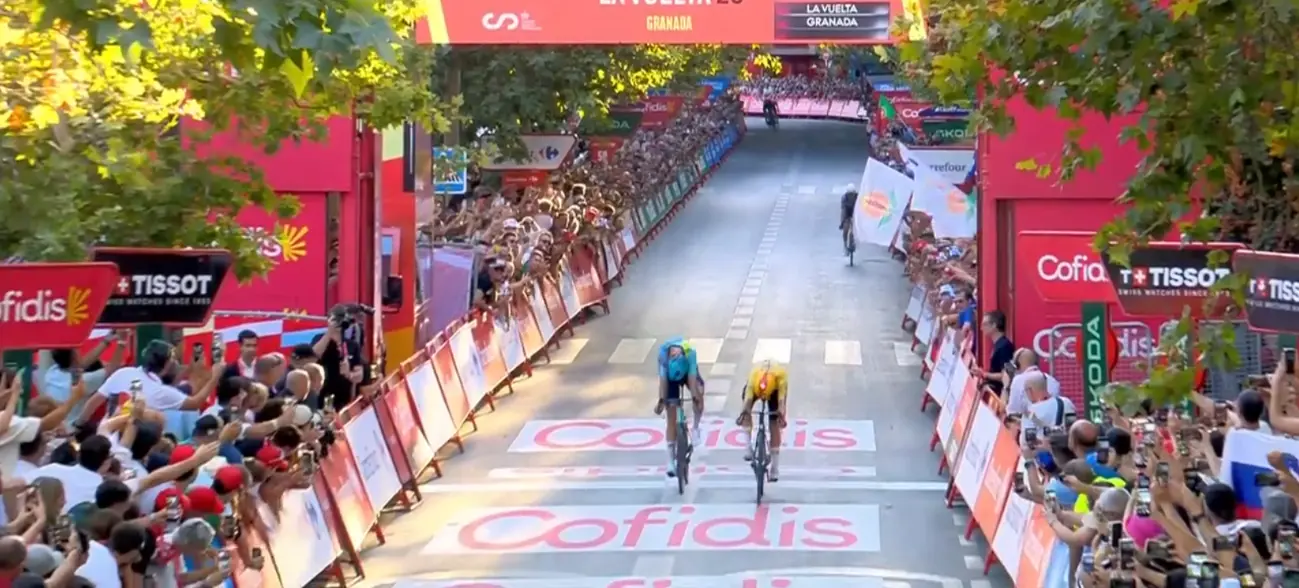
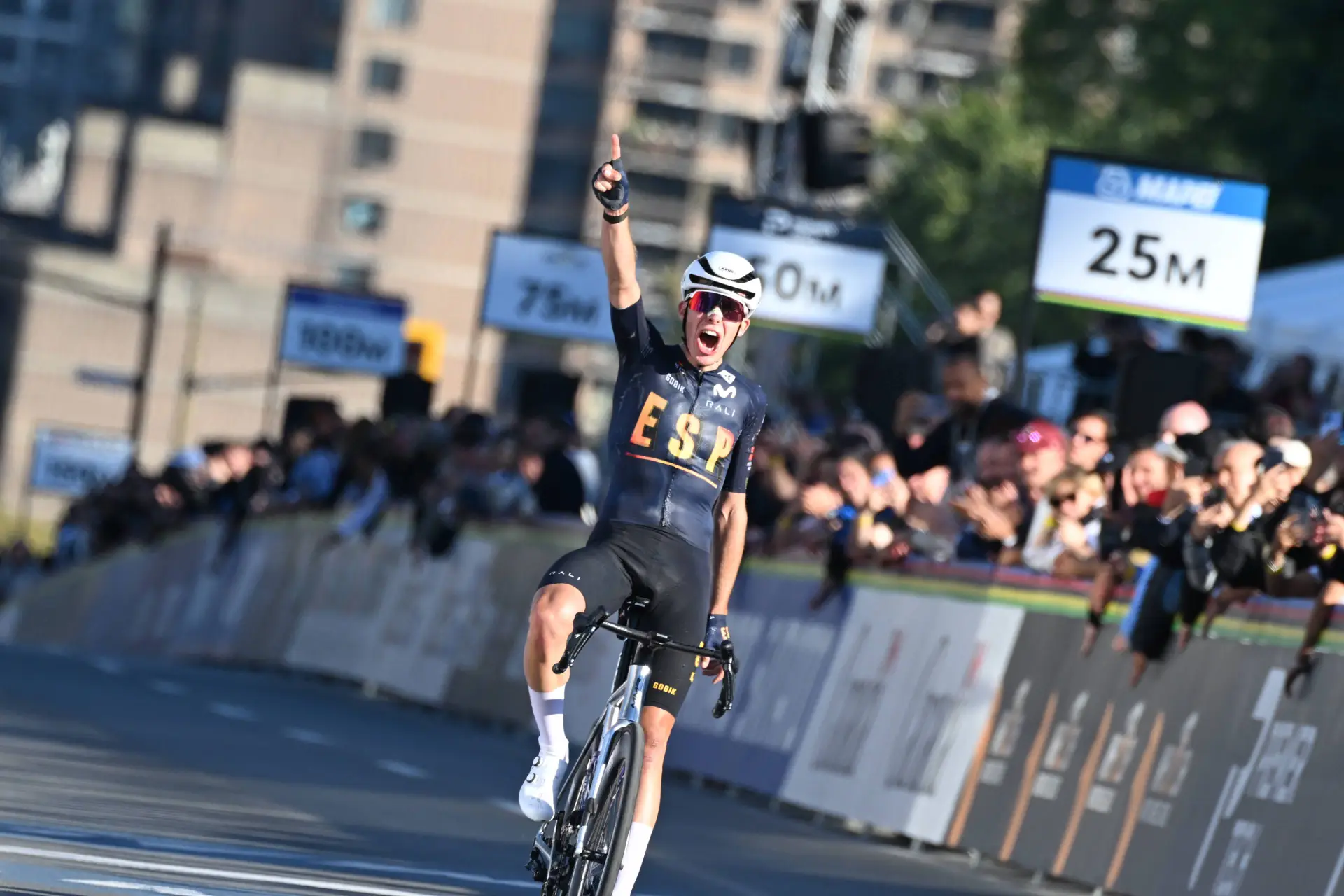
Ramses Debruyne created the decisive separation inside the final two kilometres, with Johannessen and Alessandro Romele joining him. Romele opened the sprint, but Johannessen came past to deliver victory for Uno-X Mobility. Romele finished second for XDS Astana Team, while Debruyne took third for Alpecin-Premier Tech.
Johannessen’s success followed his second place yesterday, while Mas ended Spain’s 12-year wait for a home Vuelta champion.

Santiago Buitrago, Enric Mas, Oscar Onley and Wout van Aert pose for the cameras. They are the winners of the individual classifications at La Vuelta 2026.
Rúben Silva of CyclingUpToDate shared his thoughts after stage 21 of the Vuelta a Espana, praising Tobias Johannessen’s deserved victory while strongly criticising the decision to neutralise the general classification with ten kilometres remaining.
Johannessen takes a deserved victory
“A very well deserved victory for Tobias Johannessen. A rider who is a great climber, puncheur, sprinter, is consistent, knows how to choose breakaways, but despite that hasn't been able to win a race since 2023. Uno-X on stage 20 did everything right, pulling out unusual tactics to surround Johannessen with his full team, and finished a disappointing second place."
“Today few would've given him the win, but in an explosive circuit and a final lap that became very tactical due to Matthew Brennan's presence, he benefitted greatly from the circumstances at play. Again his brilliant timing saw him jump into the right attack, and then he had the legs to beat Alessandro Romele in the final sprint which was also a surprise. Romele doesn't have to worry though, as his Vuelta was such a massive breakthrough that his talent can be shown all throughout the year after what he's shown.”
"I felt quite sorry for the race"
Rúben was far less positive about the decision not to allow the general classification battle to continue all the way to the finish line in Granada.
“I felt quite sorry for the race to not actually be a race in its final day. No safety issues, no dangers, just the 'respect for the tradition' of the final day being one to celebrate. Sure I do enjoy the celebrations at the finish line, but the riders do get to have them anyway, even in this hilly circuit."
“The race being neutralized with 10 kilometers to go signaled there were actually no dangers in the circuit, only the desire for a mishap not to change something in the GC, since 90% of the stage was a ‘real’ stage anyway. With several climbs, a tactical race and small gaps between the GC men, we could've had Felix Gall and Primoz Roglic fight for second place; or Clément Berthet and Cristían Rodríguez fight for eighth. Richard Carapaz could go on the attack, Decathlon could try something to dislodge Roglic. Anyway a real race.”
Lack of clarity for the fans
The neutralisation also created a potentially confusing situation, particularly because a large group had gone clear shortly before the general classification times were taken.
“With 15 kilometers to go we had 40 riders go up the road with about a minute's lead. Imagine Rodríguez is there for example, crosses the 10Km to go mark and overtakes Berthet, then stops and finished in the peloton. He wins the time on Berthet anyway because the finish line does not matter. There was no clarity on who was ahead and even if there was a mutual deal between the GC riders, fans wouldn't be informed or know what is happening. Needless to say that for new fans, this is not clear at all.”
It delegitimizes the peloton
For Rúben, the decision could also damage the credibility of the riders when they raise concerns about genuinely dangerous racing conditions.
“In any way, my opinion is that it delegitimizes the peloton, who often are racing under dangerous conditions, whose word loses strength when a neutralization is quite literally forced for a regular stage.”
Carlos Silva of CyclingUpToDate followed the action closely during stage 21 of the Vuelta a Espana. After Tobias Halland Johannessen claimed victory in Granada and Enric Mas secured the red jersey, Silva shared his thoughts on the controversial final circuit, Uno-X Mobility’s reward and the battle for the general classification.
“Honestly, I do not understand why there was so much controversy from the riders about the final circuit or why there were calls to neutralise that part of the stage,” Silva reflected. “The climb was narrow and had some traffic islands, while the descent was perhaps slightly dangerous because of the type of road surface. But looking at the circuit as a whole, I did not see enough reason to neutralise the race.”
Compared to the traditional finish in Madrid, Silva felt that the Granada circuit brought a different kind of excitement to the final day of the Vuelta. The demanding terrain also gave a wider range of riders an opportunity to fight for the stage victory.
“The Granada circuit made the race more exciting and offered a different perspective,” he continued. “It gave another type of rider the chance to contest the stage. It is true that there were still around seven kilometres remaining after the Alto de Alhambra, so it was difficult to create a decisive gap. Any chasing group had enough road to close it, and that was ultimately what happened.”
Johannessen earns deserved reward for Uno-X
Axel Laurance launched a powerful attack on the final climb and initially managed to open a gap. However, seven riders responded and eventually caught him before the finish, setting up a reduced sprint for victory in Granada.
“Laurance attacked very strongly on the climb and gained some space, but seven riders reacted immediately and went with him towards the finish,” Silva explained.
“Let’s be honest: after their great tactical display yesterday, Johannessen’s victory was more than deserved,” Silva said. “I was very happy to see him win because Uno-X raced with courage and followed an attacking strategy. They had nothing to gain by being conservative and everything to lose, so they sent six riders into the breakaway and committed fully.”
That ambitious approach did not result in victory on stage 20, leaving the Norwegian team with mixed emotions. One day later, however, Johannessen ensured that their aggressive racing was finally rewarded.
“Yesterday, they saw the victory slip through their fingers right at the end, so it was a bittersweet day for Uno-X and Johannessen ,” Silva added. “Today, despite an excellent response and very good positioning from Romele, Johannessen gave everything and deserved to raise his arms.”

At the start, the organisers and peloton pay tribute to Steven Kruijswijk, David de la Cruz, Pello Bilbao, Magnus Cort and Jesus Herrada, who are riding the final Grand Tour stage of their careers before retiring.
Mas the best of the rest
There was little drama left in the battle for the red jersey, with Enric Mas safely completing the stage and securing overall victory. Silva described the Spaniard as the strongest of the riders behind Tadej Pogacar, although he believes it is impossible to know how the race might have unfolded without the Slovenian’s influence.
“Mas was the best of the rest” Silva said. “Would he still have won the Vuelta if Pogacar had not started? That is a question we will never be able to answer. There were not huge differences between Mas and Felix Gall.”
Silva pointed to the way Pogacar’s attacks shaped the general classification. Gall attempted to respond to those accelerations but eventually paid for those efforts, allowing Mas to gain time that later proved decisive.
“Mas benefited to some extent from Pogacar’s attacks” he explained. “Gall responded to them and later cracked, which allowed Mas to put time into him. That time ended up being extremely important. Without Pogacar, those attacks would not have happened and Gall would not have spent that energy. If Mas had been the rider attacking instead, Gall might have been able to respond. We could have seen a much closer and more exciting fight for the overall victory.”
Positive farewell for Roglic
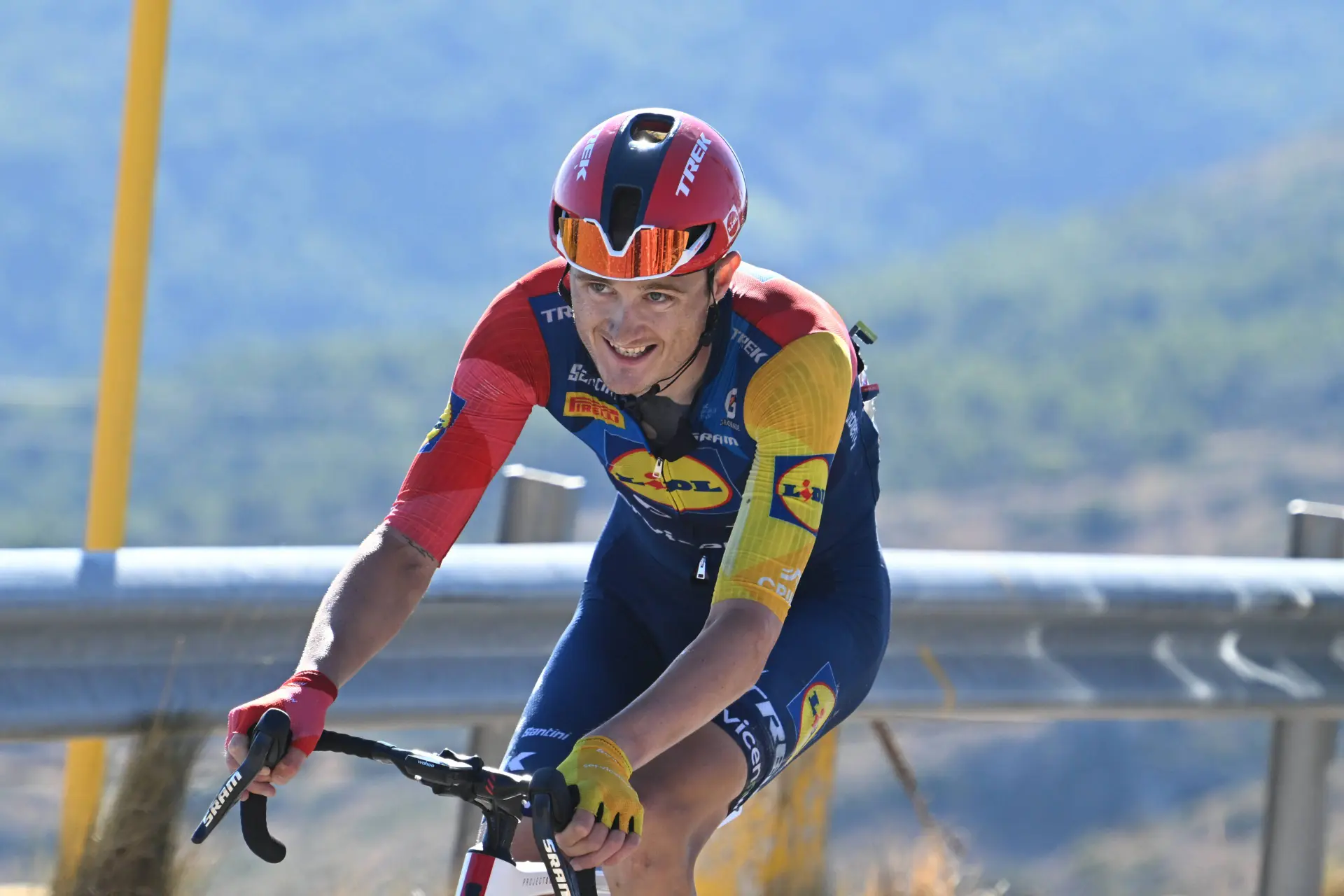
Primoz Roglic completed the final podium, although Silva felt that the Slovenian had consistently been slightly below the level of Mas and Gall whenever the race reached the major mountain stages.
“I would not place Roglic quite alongside Gall and Mas because he was always a level below his rivals in the mountain stages” Silva assessed. “However, considering his age and comparing him with Gall and Mas, finishing on the podium is an excellent result. It is a very positive way for Primoz Roglic to complete his final Grand Tour in the colours of Red Bull.”
Overall, Silva considered the final Grand Tour of the season a success. The race delivered breakaways, attacks and plenty of excitement, although the performances of several teams left him disappointed.
“The overall assessment of this Vuelta is definitely positive,” he concluded. “There was plenty of excitement, with breakaways and attacks. Some teams deserve a less positive assessment because, honestly, I do not know what they went to Spain to do. That applies to Team Jayco AlUla and Team Picnic PostNL. They seemed to be there merely to make up the numbers."
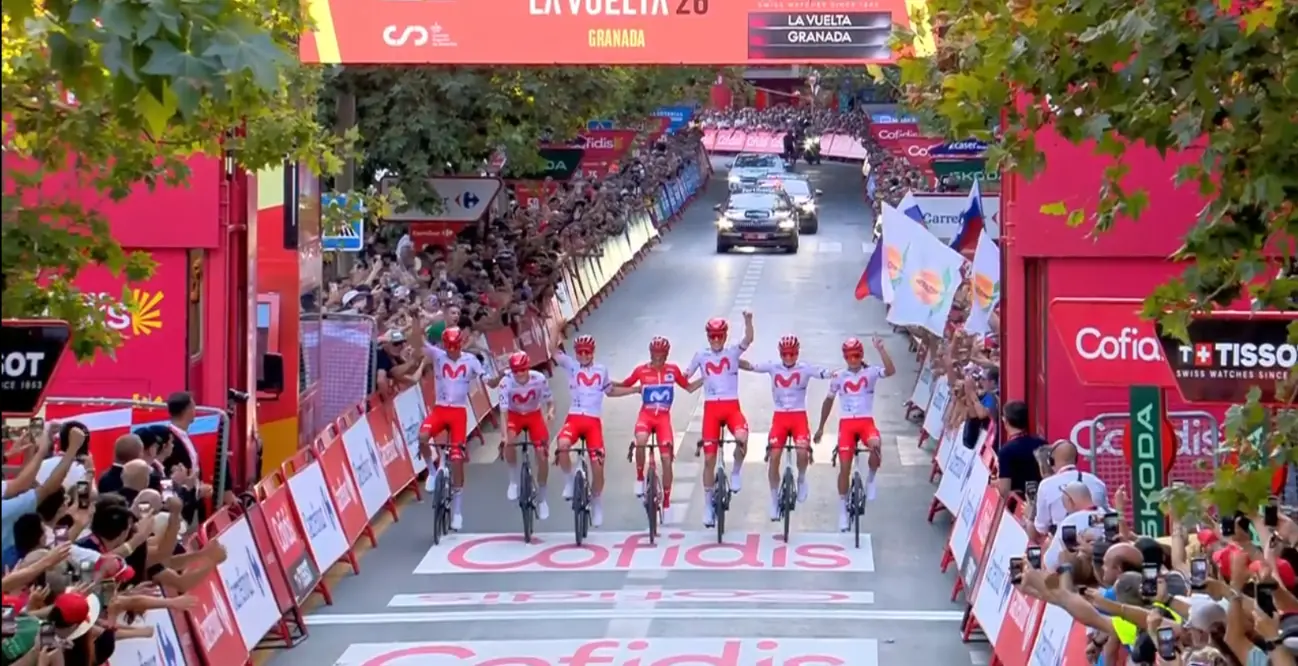
Juan López of CiclismoAlDia shared his thoughts after stage 21 of the Vuelta a Espana, highlighting the historic significance of Enric Mas’ overall victory while expressing his disappointment over the neutralization of the race.
Historic victory for Enric Mas
“The highlight of the final stage, of course, is the significance of Enric Mas giving Spain its first overall victory since Alberto Contador did so in 2014. It was a day of celebration for the Mallorcan, which he fully deserved, together with his Movistar Team teammates, all dressed in red instead of the team’s traditional blue.”
Disappointment over neutralization
Juan was far less enthusiastic about the way the final stage unfolded, with the neutralization removing any possibility of a genuine general classification battle.
“As for the stage itself, there was absolute sadness over the neutralization and the lack of interest from the GC riders in fighting to be part of the battle for the stage win. Johannessen’s victory was thoroughly deserved after the huge effort he put in the previous day’s queen stage, in what was, as we have said, a rather lackluster day due to the neutralization and far too many kilometres ridden at a slow pace.”
Verdict
The final stage delivered a worthy winner and a historic overall champion, but the decision to neutralise the general classification battle left a sour taste. Tobias Halland Johannessen’s victory felt like a fitting reward after Uno-X Mobility’s ambitious tactics on the queen stage. His timing was excellent, and beating Alessandro Romele in the sprint underlined the versatility that has long marked him out as a special rider. Romele, meanwhile, can leave the race satisfied after a breakthrough performance that should give him confidence for the future.
Enric Mas also deserves his moment. By becoming Spain’s first Vuelta winner since Alberto Contador in 2014, he delivered a significant victory for both Spanish cycling and Movistar Team. Questions about how the race might have unfolded without Tadej Pogacar’s influence will remain hypothetical. Mas handled every situation placed before him and finished as the strongest of the remaining contenders.
The frustration centres on the neutralisation. Granada offered climbs, narrow gaps in the standings and several possible battles, yet the times were taken with ten kilometres remaining despite no clear safety threat. That decision created confusion, removed potential attacks and weakened an otherwise intriguing finale. Celebration and genuine racing did not need to be mutually exclusive. The Vuelta finished with deserving winners, but its final competitive opportunity was unnecessarily lost.
What did you make of the stage 21 of the 2026 Vuelta a Espana? Share your thoughts on the race, from the decisive moments and standout performances to the main talking points and incidents of the day. Did the stage unfold as you expected, and which riders impressed or disappointed you? Let us know your opinion in the comments and join the discussion.
Carlos Silva is a writer for CyclingUpToDate.com, where he contributes race reports, interviews, analysis pieces, and live coverage of the international cycling calendar. Holding a degree in Sports from the Jean Piaget Institute, he combines academic knowledge of performance, training, and competition with hands-on journalism experience in professional cycling.
Throughout his career, Carlos has conducted interviews with leading figures in the sport, including Alberto Contador, Joaquim Rodríguez, Óscar Pereiro, João Almeida, Isaac del Toro, Derek Gee, John Degenkolb and Geraint Thomas. These conversations reflect direct engagement with Grand Tour winners, Classics specialists, and emerging talents.
He has provided on-site coverage at major events ranging from the Vuelta a España to the Tour de France, alongside stage races such as Vuelta a Andalucía, Volta ao Algarve, Volta a Portugal and O Gran Camiño. Covering the mythical climbs of the Giro d'Italia remains one of his professional ambitions.
Carlos is responsible for liveblog coverage of all major WorldTour races and beyond, including the Tour de France, Giro d'Italia and Vuelta a España. His reporting integrates verified data from ProCyclingStats to ensure statistical accuracy, contextual depth, and analytical precision.
A lifelong cycling enthusiast, he approaches storytelling across written, photographic, and video formats with a focus on credibility, tactical insight, and informed race interpretation.
claps 0visitors 0
Just in
Popular news
Latest comments
- He has crashed, got sick or had a bad day even if Pogi and jonas were not there, There is no way 6+ is even possible.he manages to screw himself no matter who is there and of course everything else but himself is to blame. one day performance is not equal to GT performanceabstractengineer24-10-2026
- In 2024 Tadej, Jonas and Remco took over the first three places in a few mountain top finishes. Making them pretty much the best three climbers in the history of those climbs since they have been keeping records. If Tadej and Jonas weren't here Remco would have already won over six grand tours.awp24-10-2026
- Remco could conceivably take two minutes out of Tadej over 70km of time trials. That said, Tadej could take ten to fifteen minutes out of Remco in the mountains. The real tell about the time trials will be how comfortable Tadej will be after his back fracture, I had a burst fracture of my L1 in a bad cycling crash, when I returned it was hard to tt fast because I couldn't make power being so low in the ski's like I did before the crash.awp24-10-2026
- I believe you should support your argument with relevant examples. Pogi’s wasn’t an organisational problem and the TdF has a pretty good track record regarding rider safety (comparing to other organisers). You could also make a few suggestions to help those who don’t seem to manageJumpyjohn24-10-2026
- If you want peoples to believe you’re called Miguel, at least make the kind of errors a Miguel would and stop being so Mouey. All you do is repeat how much you love anything UAE and hate anything Visma, you can’t even make it seem as if you enjoy cycling, all your enthusiasm goes towards bashing and pumping those 2.Jumpyjohn24-10-2026
- I actually expect Remco to crash or have a bad day due to the aircon or something.abstractengineer24-10-2026
- Pogi took 3 minutes in one stage over Remco and Remco gave up. Pogi beat Pantani's record by a Minute on Alpe DHuez while taking 2 minutes over Remco. Remco only relies in crashes and TTs for his GC.abstractengineer24-10-2026
- He wont get the moneyabstractengineer24-10-2026
- PogiFanSlobberBoy once again clowning here! Look in the mirror and you'll see the foolish one!frieders324-10-2026
- Yawn ! Another ridiculous comment from a bike doper !frieders324-10-2026
Loading
Write a comment