"We shouldn’t always have to give politically correct answers... No one stands out" – Quinn Simmons calls for more characters in cycling
Cycling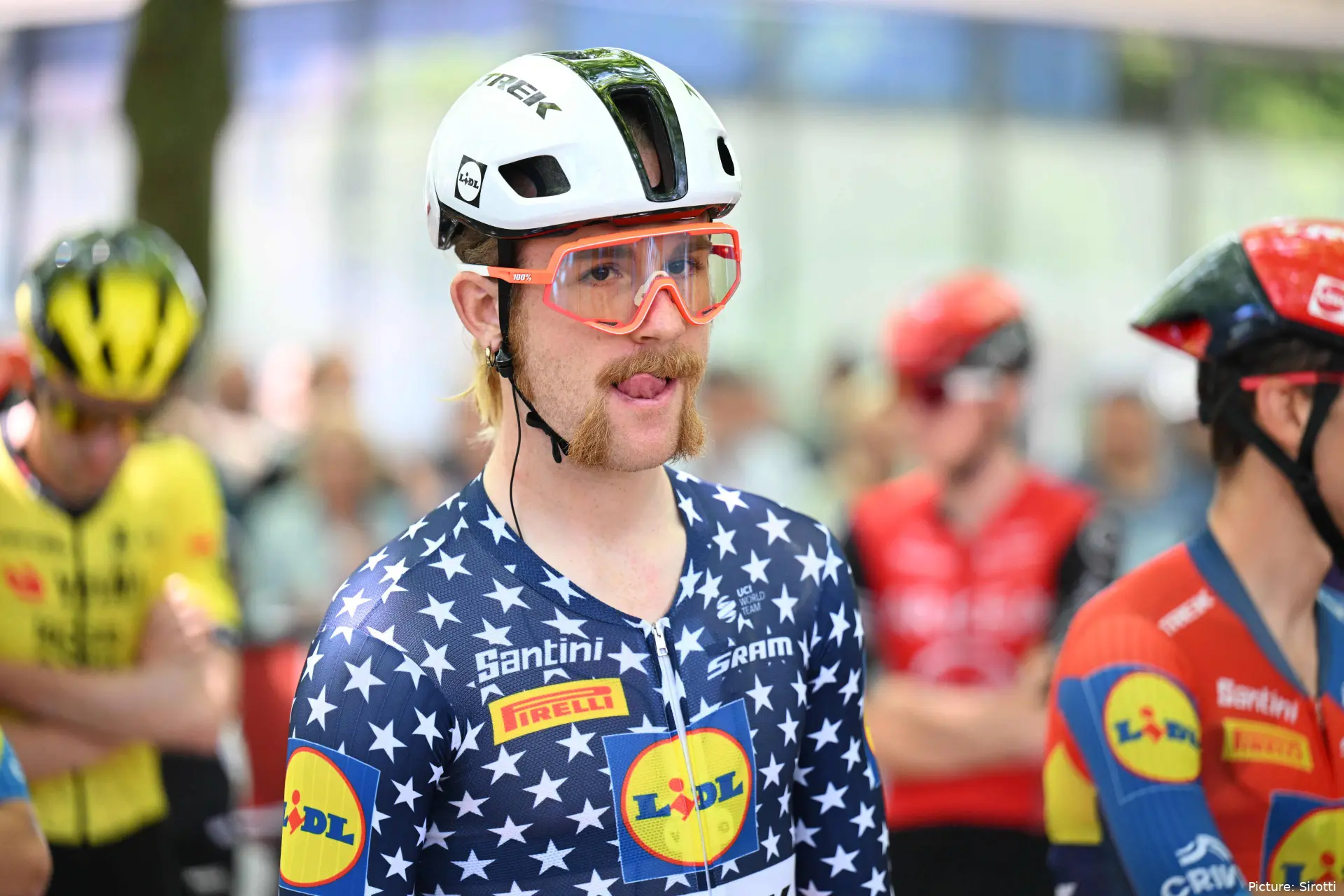
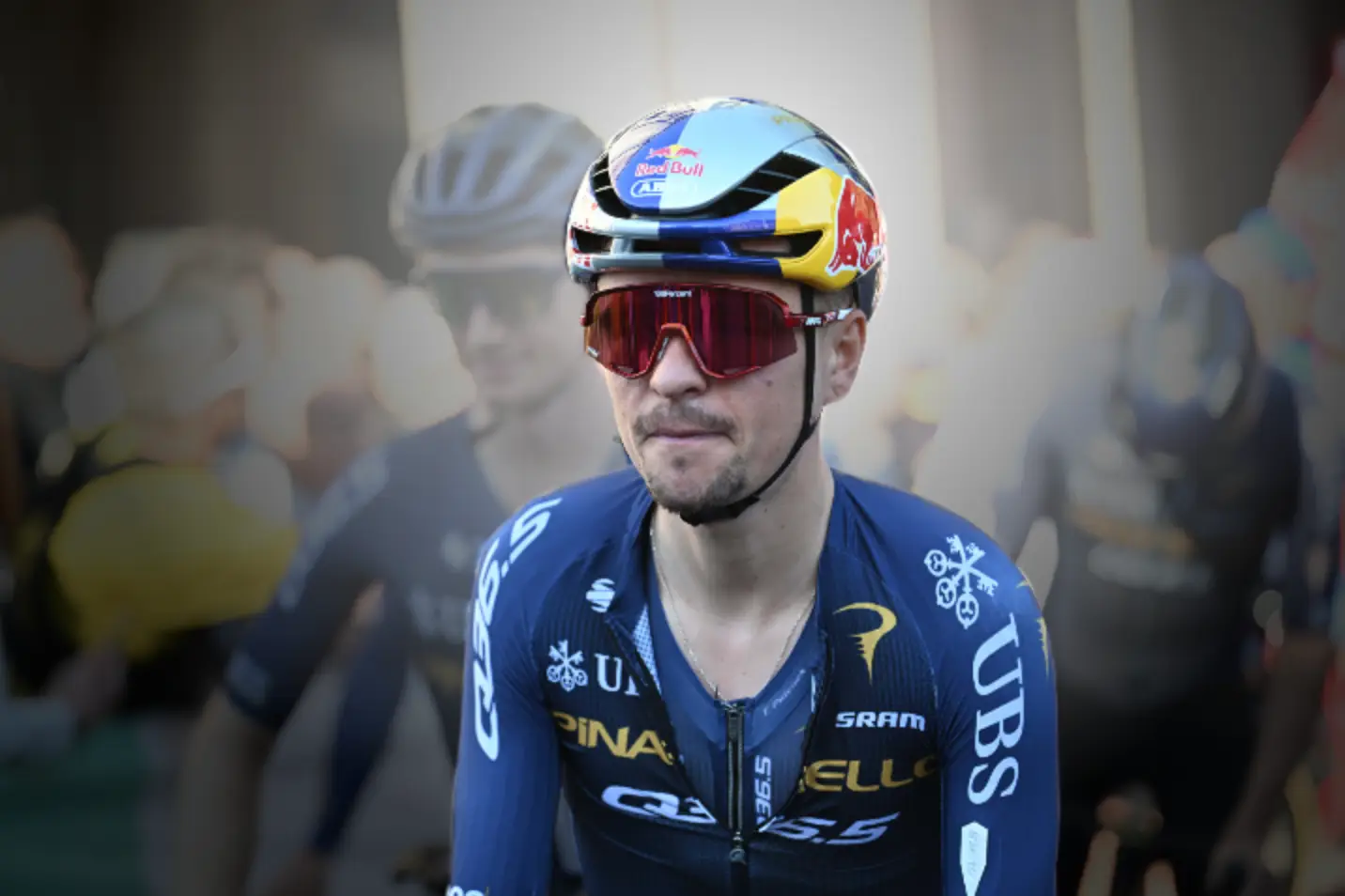
In a sport where tradition often weighs as heavily as the climbs, Quinn Simmons is carving out a name not just with his legs, but with his voice.
In a recent in-depth interview with Bici.Pro, the 24-year-old Lidl-Trek rider offered a strikingly candid perspective on the state of professional cycling — one that questions not just how the sport is raced, but how it's presented, consumed, and ultimately, how its athletes express themselves.
“We shouldn’t always have to give politically correct answers,” Simmons told Bici.Pro. “If there’s a battle in a race, if something went wrong, or if something wasn’t fair, we shouldn’t have to sugar-coat everything. I think we can be more honest as riders.”
It’s a message that resonates beyond post-race flash quotes. Simmons believes the current cycling culture filters out personality, creating a homogenous peloton of media-trained automatons. “If everyone starts being more open, it becomes normal,” he added. “Then no one stands out. I think in other sports athletes are much more genuine. In cycling, you always have to wear a filter. And when someone drops it, it becomes a problem.”
A sport in need of showmen?
It’s hard not to read this as a call for cycling to rediscover its showmen — its Pantanis, Sagans, Cipollinis, even Wigginses. Riders whose on-bike exploits were matched by off-bike charisma. Simmons himself cites Peter Sagan as his childhood idol: “I grew up watching Sagan. I loved his style on the bike, his aggressive racing, and how he carried himself. He made it fun.”
But where are the next Sagans coming from? That’s the dilemma Simmons sees facing pro cycling today. With the sport more performance-driven, data-heavy, and team-oriented than ever, individuality is often sacrificed at the altar of marginal gains. Riders are encouraged to “stick to the plan,” and public personas are airbrushed to fit sponsor expectations and team media guidelines.

Simmons was a star of the recent Tour de France
Making cycling watchable again
Simmons’ criticisms don’t end with rider interviews. He also questions whether modern cycling is doing enough to attract younger fans in an increasingly crowded and fast-paced media landscape. “Cycling isn’t very attractive for a teenager right now,” he said. “It risks becoming boring. I don’t watch it for fun — I watch it because I love competition, I love the work, and I want to be the best at something. But if I wanted to have fun, I’d choose another sport. For me, cycling is more important than happiness.”
It’s a stark, if somewhat fatalistic, view. Yet it reflects a deeper concern: that cycling’s unique blend of endurance, strategy, and suffering is being lost on a generation raised on TikTok and instant gratification.
So what’s the solution? Simmons points to circuit-style racing — à la World Championships — as a potential answer. “I really enjoy circuit races. Full-gas from the start, constant action. It’s great for spectators and it’s also safer for us riders.”
Indeed, circuit finishes have been a growing trend in race design, offering tighter racing, improved visibility for fans, and better broadcasting opportunities. But Simmons is aware that tradition still holds sway. “Some people won’t like it. And of course, some races wouldn’t work as circuits. But if the sport moved in that direction, I think it would be good — for both entertainment and safety.”
No to racing without radios
On safety, Simmons is firm — particularly on the controversial topic of race radios. As debates swirl about whether cycling should follow a more ‘old-school’ path without real-time communication, Simmons pulls no punches. “I don’t understand why people want to get rid of radios. It would be really dangerous. If a director can’t alert us to a crash or something dangerous on the road, that’s a big problem. It’s not even a question — they should never be removed.”
It’s another example of Simmons being unafraid to challenge nostalgic sentiment for the sake of practicality. For him, keeping riders safe and fans engaged need not be mutually exclusive.

Simmons is a two-time US national champion
Borrowing from other sports
Simmons also sees value in learning from other global sports — particularly the way Formula 1 and American leagues like the NFL or NBA package their product. “In the US, they really know how to grab attention,” he said. “Look at the Super Bowl: big ceremonies, entertainment during breaks, real-time data for fans. They know how to make sport a show.”
Cycling, he argues, could borrow some of these tools — like more use of public team radio broadcasts or real-time telemetry — to enhance storytelling without compromising the integrity of the competition.
In a sport where nuance and narrative are often buried beneath watts and w/kg ratios, Simmons is calling for a cultural shift — not just towards safety and spectacle, but towards authenticity. He’s not asking riders to turn into influencers, or races into reality TV. He’s asking them to be real.

Kieran WoodDeputy Editor-in-Chief
Kieran Wood is a sports journalist based in Wales and has been active in journalism since 2022. He regularly contributes to DartsNews.com and CyclingUpToDate.com, where he covers professional cycling and darts. In cycling, his work includes liveblogs from major races, including the Tour de France, the Giro d’Italia, and La Vuelta a España, alongside race reports and analysis. He has also conducted interviews with professional riders.
His reporting spans the full racing calendar, from one-day classics to stage races, with a focus on accurate, real-time coverage and clear contextual analysis. For statistics, results, and historical context, he regularly uses resources such as ProCyclingStats. To support reporting on rider activity and training context where relevant, he also references Strava.
In his work, Kieran places strong emphasis on careful sourcing, editorial accuracy, and updating articles as new, verified information becomes available.
claps 21visitors 21
Just in

Popular news
Latest comments
- He didn't even try to sprint all outvappaxbipmv18-10-2026
- Campenaerts looked like a rolling pumpkin with that all orange leaders skinsuit !frieders318-10-2026
- He can take his dumb a$$ politics somehwere else !frieders318-10-2026
- good to have her back. fingers crossed she‘ll be able to stay!Ketterechts17-10-2026
- A tenner and he wins the Tour next year, too 😂anonymouscyclist17-10-2026
- the answer is either stick to classics or GTs but not bothabstractengineer17-10-2026
- the exodus already stared with Ciccone. Already they were struggling with two sprinters, now there are three. Also Ganna will demand leadership. Gall is the most proven GC, Ayuso has the most potential. GC leadership for everybody will be impossible. Literally a UAE style mess without pogi.abstractengineer17-10-2026
- I raced as an amateur for 12 years, including six years on my country’s national road cycling team. I secured two national titles and competed in three World Championships plus more than 15 international stage races. At 23, we travelled to Italy for a training camp—or so I assumed. On a rest day, we watched a presentation about adopting a more “professional” training approach. It was crystal clear what “professional” meant. That moment first exposed me to this dilemma. After returning from Italy, I left cycling—at least at the competitive level I had known. Over the following two years, the whole team was caught doping. I hold that everyone is innocent until proven guilty. In my view, current stakeholders operate on a different scale, and the sums involved are vast. I am unsure whether any doping would ever be revealed. I try to stay positive and enjoy the show. My 2c.
 vannpelt17-10-2026
 - Fiver he wins 🤣
 leedorney17-10-2026
 - “…measures to reduce speeds.” Might as well shorten the race course to just 50km as well? ASO generates at minimum €300m a year and 30- 40% profit. Maybe stop being greedy and spend more of the profit to protect the riders instead.b3tlla17-10-2026
Loading
26 Comments