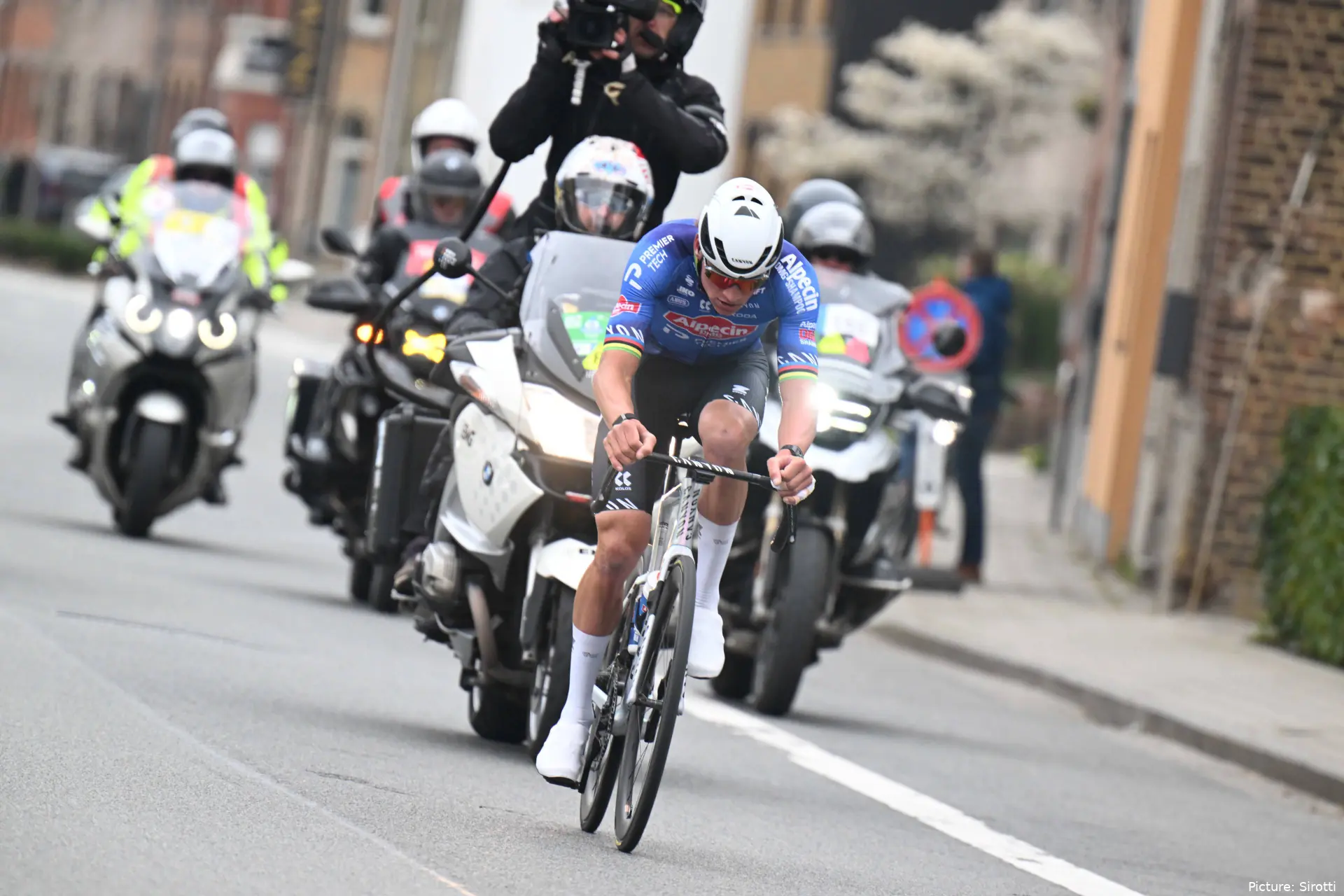
This Sunday, Tadej Pogacar and Mathieu van der Poel line up at the Tour of Flanders as the main contenders for victory, but Belgium brings strong counterarguments to challenge that favoritism, with Remco Evenepoel and Wout van Aert ready to enter the fight.
Roxane Knetemann spoke on the podcast In het Wiel, still surprised by Evenepoel’s confirmation at the start, though she does not expect it to significantly change the race approach of the main favorites.
“I don’t think Pogacar’s tactics change if Evenepoel hadn’t been on the start list. He knows he has to start early. I think he sees Van der Poel as his biggest rival, and he has to make him tired and empty him out. He does that by racing aggressively from a long way out."
The former Dutch rider’s view is clear: the Slovenian is likely to opt for a hard race from early on, trying to wear Van der Poel down before the decisive moments.
In this context, the Dutchman’s energy management could prove decisive for the outcome. “I would try to ride a bit on the safe side. I think this is exactly what Pogacar hopes for: that they get away together early, because that allows him to chip away at Van der Poel’s tank. You do that less quickly with Pogacar."
"He knows: ‘This is how I can break him, we need to start the Oude Kwaremont already exhausted.’ We saw that last year as well.” In other words, Van der Poel will need to carefully measure his effort and avoid engaging too early in a direct battle, or risk paying the price later, especially on the Oude Kwaremont.
In last year’s edition, Van der Poel managed to follow the attacks for a long time but eventually cracked on the final passage over the Oude Kwaremont, the moment he let the World Champion slip away.
If the two once again find themselves alone at the front, the scenario could repeat itself, with an intense tactical duel. “Then it is up to Van der Poel to do less work in that kind of two-man break, because he has to save energy. But he is not going to completely stop riding, because that’s just not Van der Poel.”
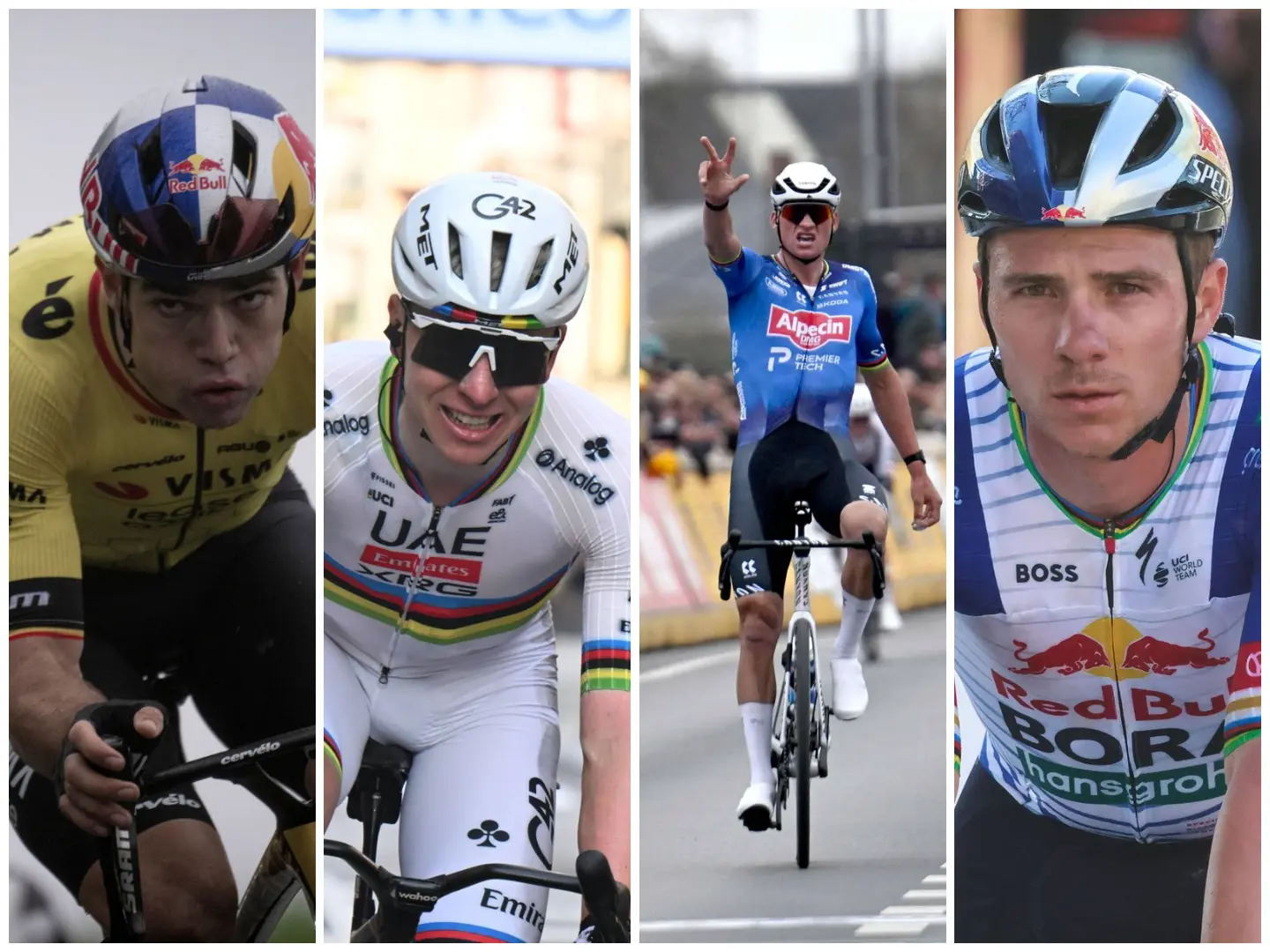
Looking at the numbers, both riders’ consistency in the race is remarkable. In seven appearances at the Tour of Flanders, Mathieu van der Poel has never finished outside the top four. Tadej Pogacar boasts a similar record, with two victories and a fourth place on his debut. The Dutchman now has the chance to make history and become the outright record holder if he secures a fourth win.
Will we see a duel between two friends and rivals, or will in-form names like Filippo Ganna and Mads Pedersen also enter the mix, alongside Evenepoel and Van Aert? The road will decide.
Carlos Silva is a writer for CyclingUpToDate.com, where he contributes race reports, interviews, analysis pieces, and live coverage of the international cycling calendar. Holding a degree in Sports from the Jean Piaget Institute, he combines academic knowledge of performance, training, and competition with hands-on journalism experience in professional cycling.
Throughout his career, Carlos has conducted interviews with leading figures in the sport, including Alberto Contador, Joaquim Rodríguez, Óscar Pereiro, João Almeida, Isaac del Toro, Derek Gee, John Degenkolb and Geraint Thomas. These conversations reflect direct engagement with Grand Tour winners, Classics specialists, and emerging talents.
He has provided on-site coverage at major events ranging from the Vuelta a España to the Tour de France, alongside stage races such as Vuelta a Andalucía, Volta ao Algarve, Volta a Portugal and O Gran Camiño. Covering the mythical climbs of the Giro d'Italia remains one of his professional ambitions.
Carlos is responsible for liveblog coverage of all major WorldTour races and beyond, including the Tour de France, Giro d'Italia and Vuelta a España. His reporting integrates verified data from ProCyclingStats to ensure statistical accuracy, contextual depth, and analytical precision.
A lifelong cycling enthusiast, he approaches storytelling across written, photographic, and video formats with a focus on credibility, tactical insight, and informed race interpretation.
claps 4visitors 3
Just in

Popular news
Latest comments
- Man, I'm really looking forward to next season. Seeing these new line-ups, it's going to be VERY interesting.wrsty23-10-2026
- This Remco-friendly (and Seixas-friendly?) route was almost certainly designed to reduce Pog's dominance. But as Prudhomme has said straight out, now he thinks Pog's accident will have reduced his dominance anyway.Hills3323-10-2026
- We also don't know how much Pog was really putting into gaining time. Feels like watching Usain Bolt, where you can only wonder how much faster he'd have gone if he was sprinting 100% to the line, instead of being two feet ahead and starting to pull up with ten yards to go. If any of the other riders really started to close in on Pog, I do think he'd simply have gone even deeper and crushed them. I would really like that kind of race though, none of this "4 minutes lead by the first rest day" trouncing. So if introducing more TT and less summit finish makes the race go more to the wire, I'm all for that. I don't think it'll change the outcome necessarily, but it'll make the whole thing less of a foregone conclusion by week 2.wrsty23-10-2026
- That nearly is 7 mins and you win GTs comfortably by 2 mins. Remco fans - he almost won the TDF, He beat Pogi twice in the mountains this year.abstractengineer23-10-2026
- What would be your preferred Tour design then? Just out of interestwrsty23-10-2026
- I like Remco but even I'll admit he didn't get anywhere close to Pogacar, just like everyone else.megasmacky23-10-2026
- That's what y'all said this year, "remco will come fifth"bruins3022-10-2026
- That used to be the norm, 100 kms of TTs. Now look at the '87 route...acem8222-10-2026
- Well, crashes can happen, so it's not impossible...acem8222-10-2026
- that would be kinda cool. there is a lot of untapped potential. which I'm sure the UCI will overlook. in order to get sock length correct.mij22-10-2026
Loading
Write a comment