“This is no coincidence” - UCI controversially impose last-minute ban on Visma’s tyre pressure system pre-Paris-Roubaix as team DS fumes at decision
CyclingThursday, 09 April 2026 at 13:30

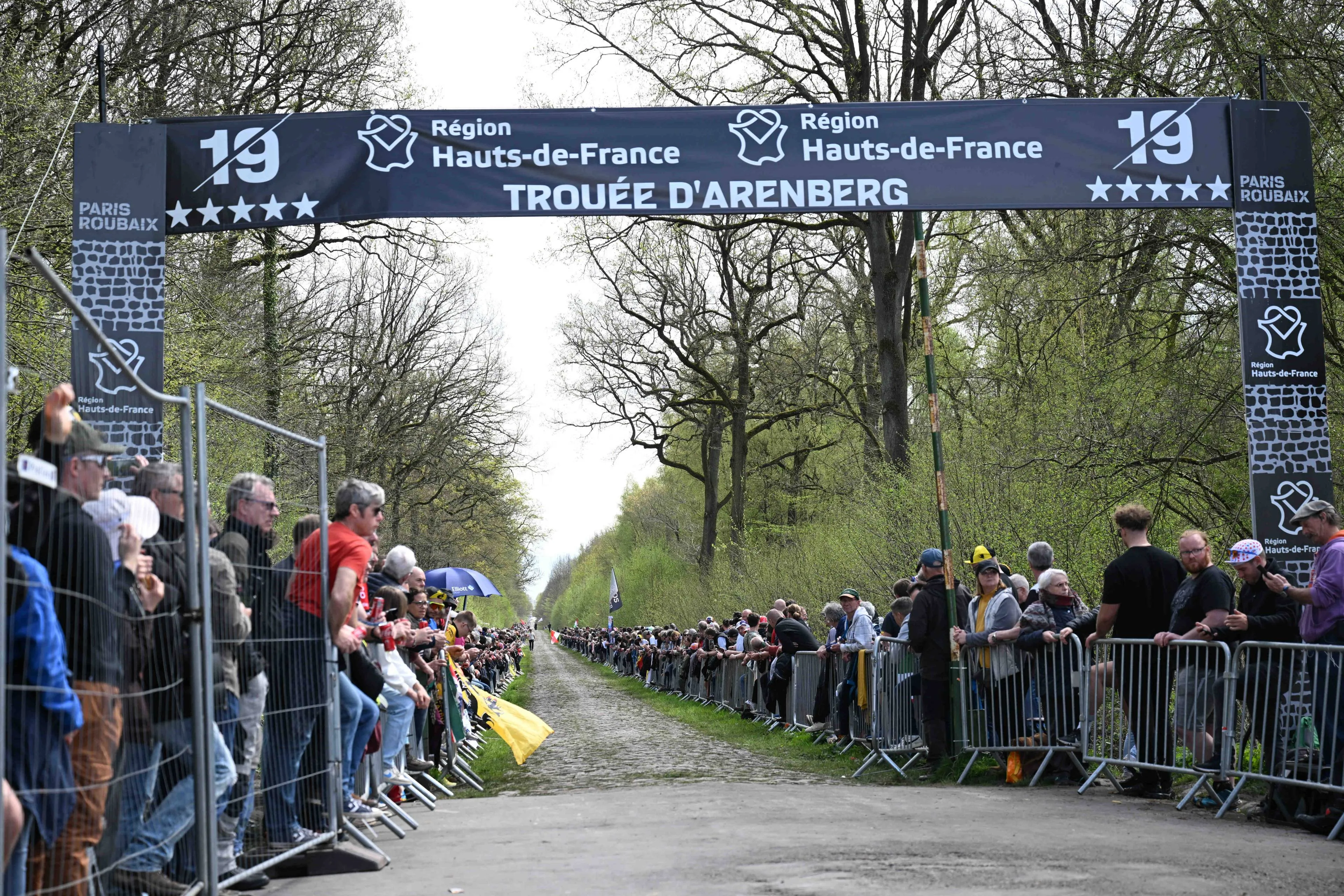
Paris-Roubaix is a race decided by margins. Over more than 50 kilometres of cobbles, the difference between winning and losing is often not strength alone, but how well a rider and their equipment can survive the chaos.
That is what makes the UCI’s late decision to ban Visma’s tyre pressure system so significant. Just days before the 2026 edition, one of the few tools designed specifically for the unique demands of the Hell of the North has been taken off the table.
A system built for Roubaix’s demands
Unlike other Monuments, Paris-Roubaix forces riders to constantly transition between smooth tarmac and some of the most brutal road surfaces in professional cycling. Managing tyre pressure across those changes is a long-standing challenge.
Visma’s system offered a solution. Riders could adjust pressure while racing, lowering it for grip and comfort on the pavé, then increasing it again for speed on the road sections. In a race where positioning, punctures and bike handling can decide everything, that flexibility had clear value. And in 2026, it may have mattered more than ever.
With tighter early sectors and less recovery time between cobbled stretches, this year’s route is expected to place even greater stress on equipment from the opening phases of the race.
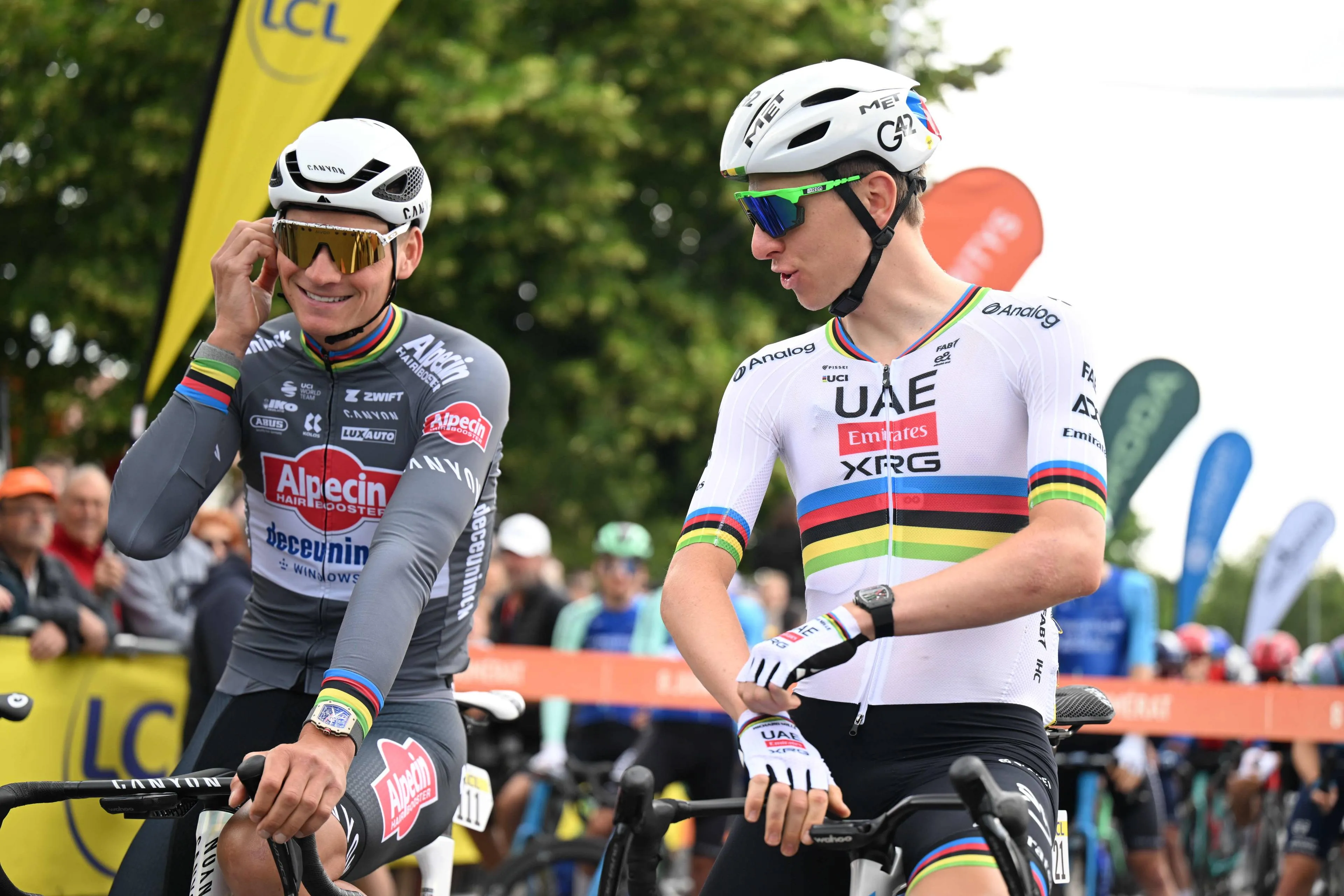
Late intervention from the UCI
Despite being used in competition, the system will not be seen on Sunday. “We received a letter two weeks ago stating that the system is banned until the end of the season,” said Mathieu Heijboer, Head of Performance at Team Visma | Lease a Bike, speaking on the In De Waaier podcast.
The UCI’s reasoning centres on commercial availability rules, with the governing body questioning whether the system meets the requirement after the company behind it filed for bankruptcy earlier this year.
“A vague story” and no warning
For Visma, the explanation has not brought clarity. “A vague story.”
The system has since returned to the market following a restart of the company, while its use in recent races had raised no concerns. “There was also no prior warning. In fact, we still used it at GP Denain.”
That lack of notice is what sharpens the sense of frustration within the team.
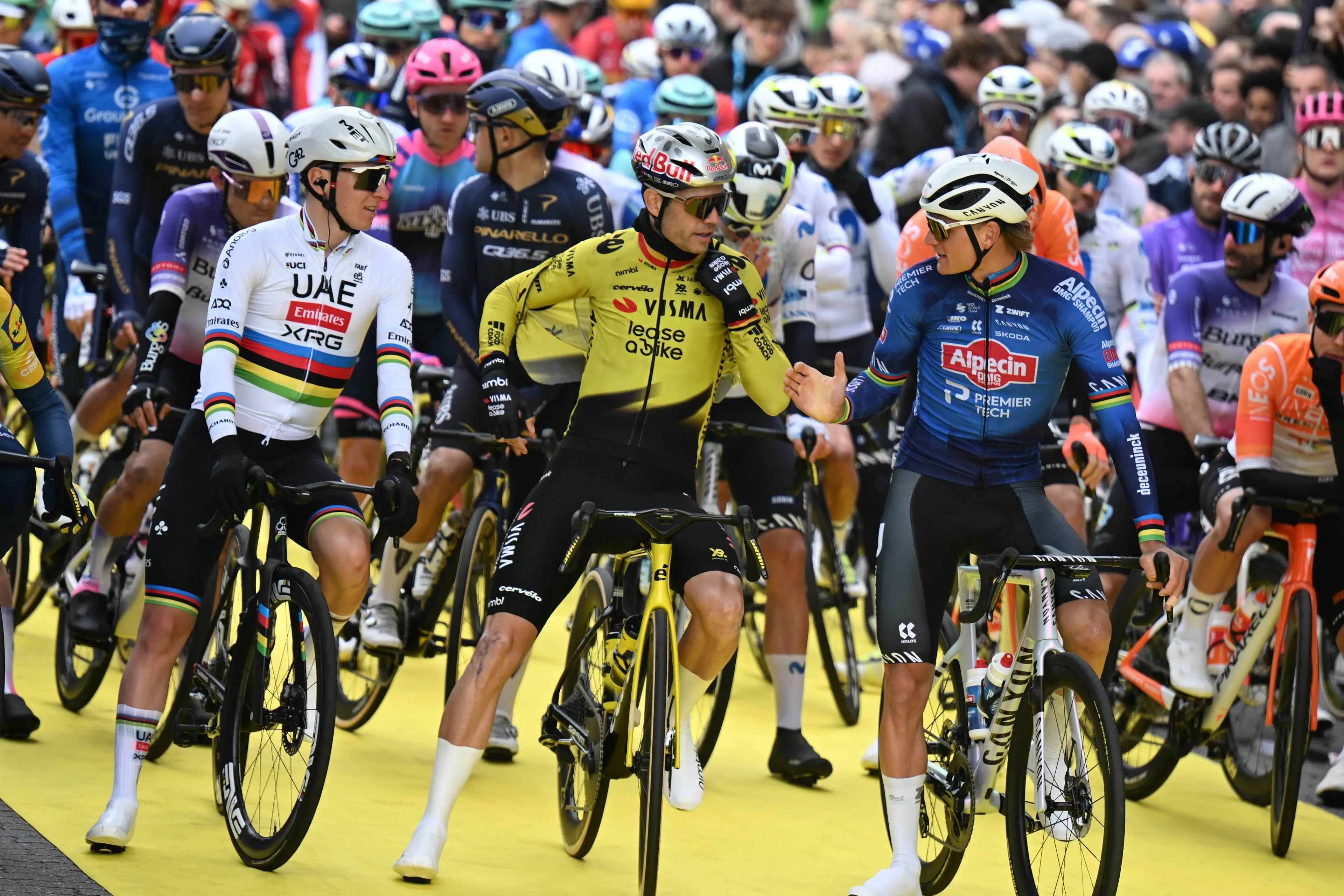
“This is no coincidence”
Paris-Roubaix is uniquely sensitive to equipment decisions, and the timing of the ruling has not gone unnoticed. “That is, of course, no coincidence.”
With penalties ranging from warnings to disqualification, there is no room for risk. “That’s a risk we are obviously not going to take.”
For Wout van Aert, the impact is immediate. The Belgian remains in pursuit of a first Paris-Roubaix title, and in a race where small advantages can define the outcome, the removal of a system designed specifically for the cobbles is not insignificant.
Asked directly whether it affects his chances, Heijboer was clear. “Yes.”

Wout van Aert at the 2026 Tour of Flanders
One less variable in a race built on chaos
Paris-Roubaix rarely follows expectation. Mechanical issues, positioning and sheer unpredictability shape the outcome as much as raw power. This year, however, one variable has been removed before the race has even begun.
In a Monument defined by uncertainty, that alone could prove decisive.
claps 12visitors 7
Just in
Popular news
Latest comments
- Baby Giro for me... far more interesting. Lorenzo Finn getting the pointy end of the tactical stick and then putting the hammer down today.
 Rafionain-Glas20-06-2026
 - Just the opposite! Races without Pogi are totally uninteresting. Which race are you following? Tour of Slovenia or tour of Switzerland?MajorPayne19-06-2026
- It's so sad to see my compatriot Primož fighting for top 10, he should be fighting for top 3 in this competition and for top 5 in the Tour de France. But I'm still OK, my compatriot Pogi is not actually fighting for 1st place, he's just having a good training session which will automatically give him the 1st place. Isn't that funny? :))mus-musculuspeedypogigonzales19-06-2026
- No, it won't be an excuce, but don't worry, this won't happen. No one has a chance.mus-musculuspeedypogigonzales19-06-2026
- What’s this for a calculation? It has no interest without telling when he was doing this, it certainly wasn’t 10, 20 or 30km before the finish. A 1 minute gap at 60km/h is 1km A 15km/h differential is 4m/s so to catch up they’d need just 4 minutes so basically he was calculating all this in the last 4km where I’d not be so calm about estimating a peleton not being able to average 70 when soloing is at 55, there’s obviously a tailwind. But anyway, well done on holding out.Mistermaumau19-06-2026
- If Zigart has a serious crash on one of the key days of the Tour de France will that really be an excuse for Pogačar losing the yellow Jersey?Rafionain-Glas19-06-2026
- Pogi is taking it easy, thinking about his Urška. Wish them both a lot of love and support for each other. She will be OK and Pogi even stronger.mus-musculuspeedypogigonzales19-06-2026
- 100% agree. It's been overdue. Let the sprinters have their competition without GC involvement.Pedalmasher19-06-2026
- It is indeed, @KerisVroom. In fact, it was a feat achieved by Merckx and Hinault 1969, 71, 72 and 79 between them. It was exactly these achievements which caused the organisers to tweek the points system to favour pure sprinters.anonymouscyclist19-06-2026
- Well saidRafionain-Glas19-06-2026
Loading
5 Comments