“They didn't up their level to go with Tadej... Pogacar brought his level down” - Chris Horner claims world champion gaslit rivals during Romandie stage 1 win
Cycling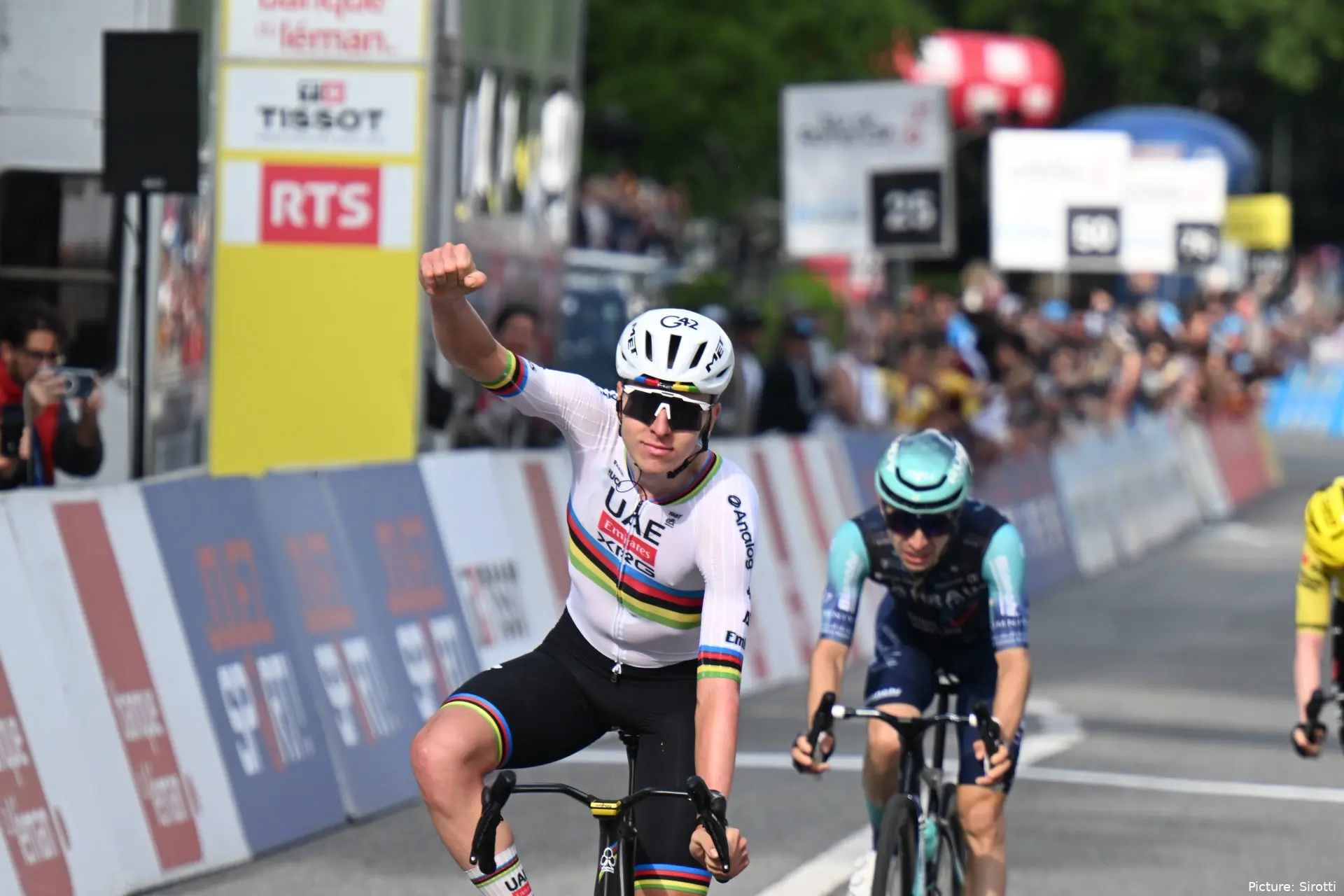
Tadej Pogacar’s stage 1 victory at the Tour de Romandie was shaped on the slopes of Ovronnaz, but according to Chris Horner, the decisive factor was not the selection itself, but how it was made.
As Pogacar moved to the front on the final climb, the race narrowed rather than fully breaking apart. Lenny Martinez was the first to respond, with Florian Lipowitz and Jorgen Nordhagen later joining to form the four-rider group that would decide the stage.
That outcome, Horner argued in his post-race analysis via the former Vuelta a Espana winner's YouTube channel, reflected Pogacar’s approach as much as the level of those around him. “Those guys did not up their level to go with Tadej… Tadej Pogacar brought his level down.”
A climb that never fully broke the race
The key moment came when Pogacar took over pacing duties on Ovronnaz, with his team already having reduced the peloton beforehand. Rather than launching a single decisive attack, the Slovenian rode a sustained effort that kept the group small but intact. Martinez remained on his wheel, and others were able to return before the summit.
“Not because physically he doesn’t have it, just because mentally he wants to take a little bit easier day,” Horner said. “He wants some company with him. That’s why they were there with him.”
With more than 30 kilometres still to race after the climb, including a headwind section, the decision not to force a separation shaped the rest of the stage.
Four riders to the finish
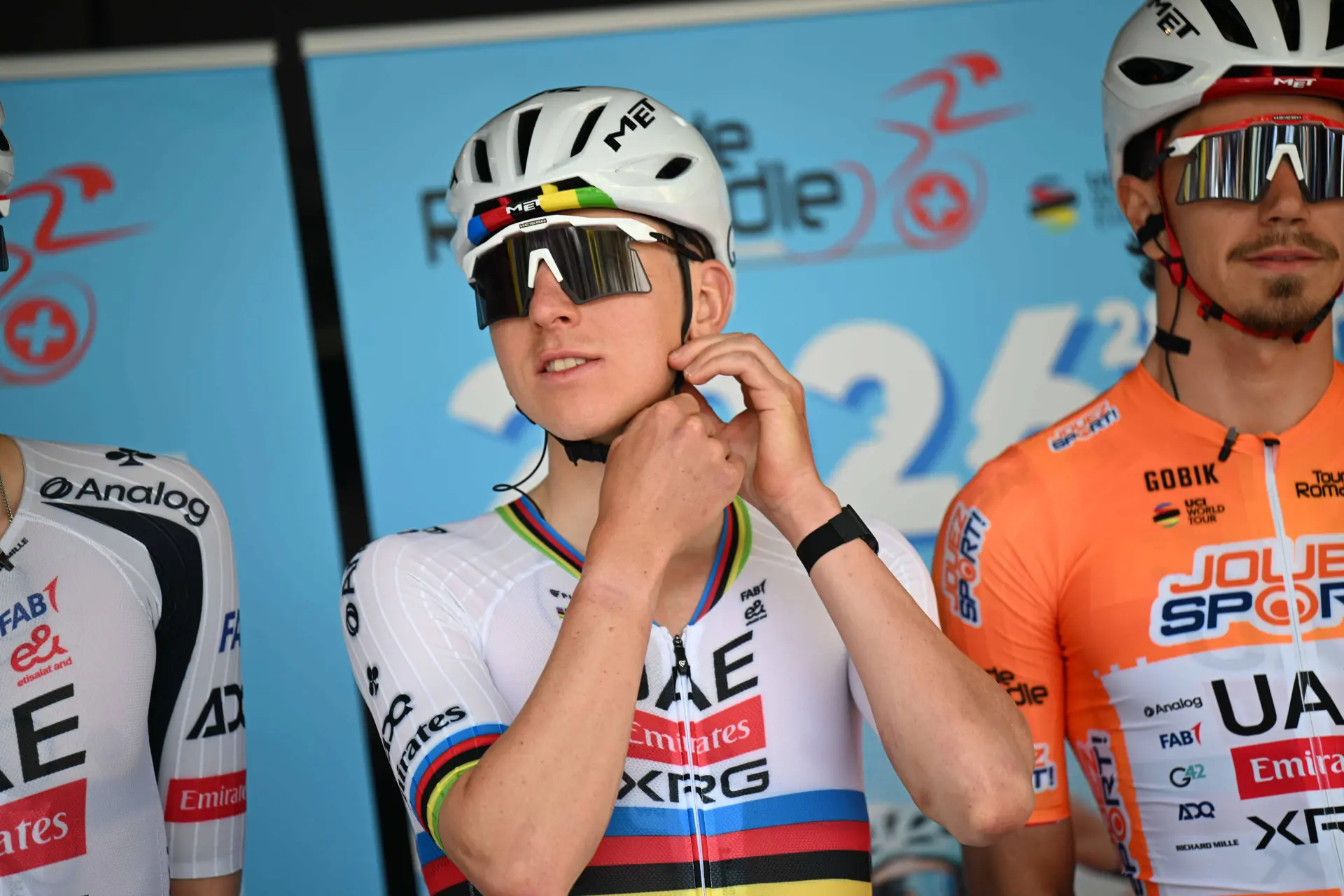
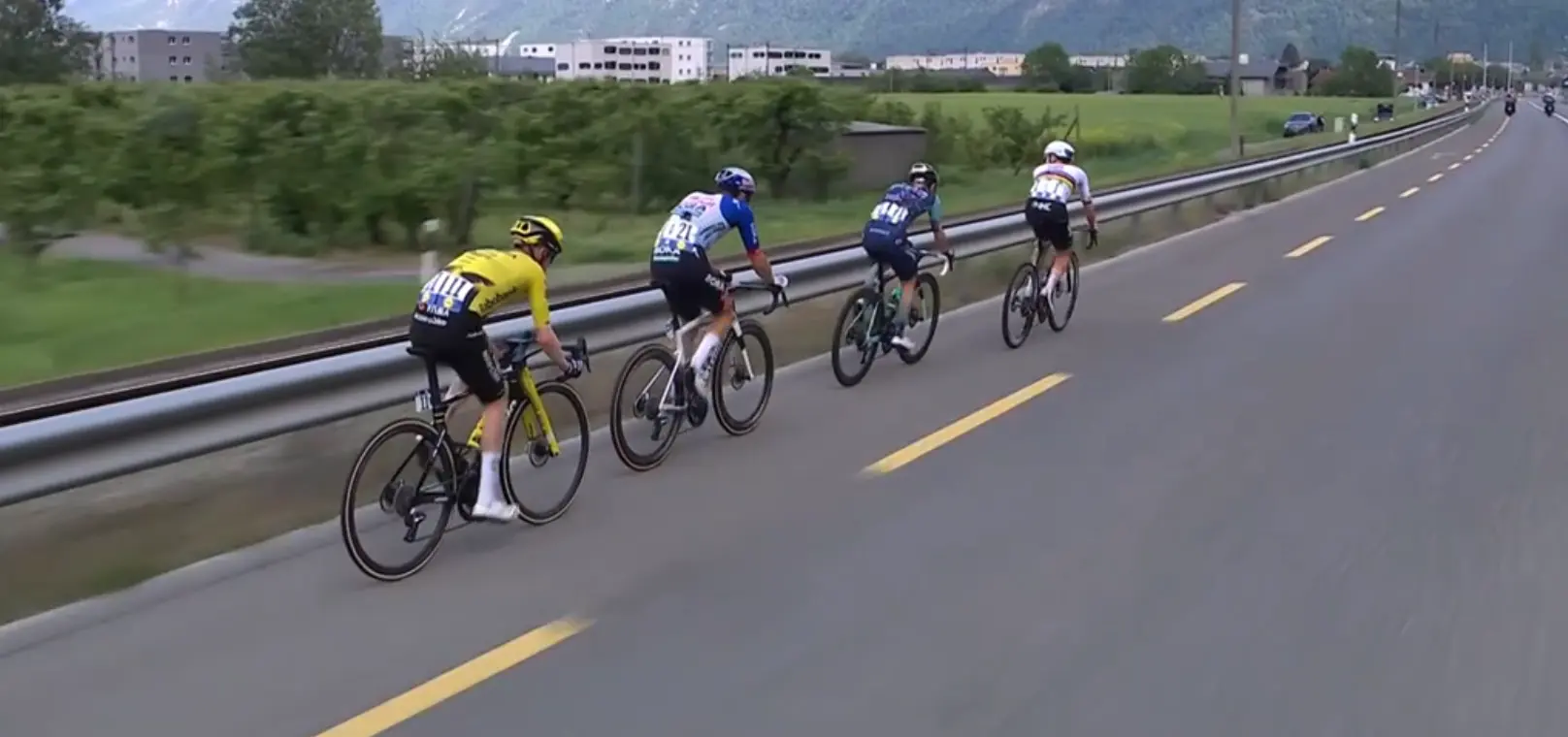
That approach led directly to the race situation seen in the final kilometres. Pogacar, Martinez, Lipowitz and Nordhagen entered the flat run-in together, holding a gap of around 20 to 30 seconds over the chasers. Despite limited cooperation at times, especially from Lipowitz, the group maintained its advantage.
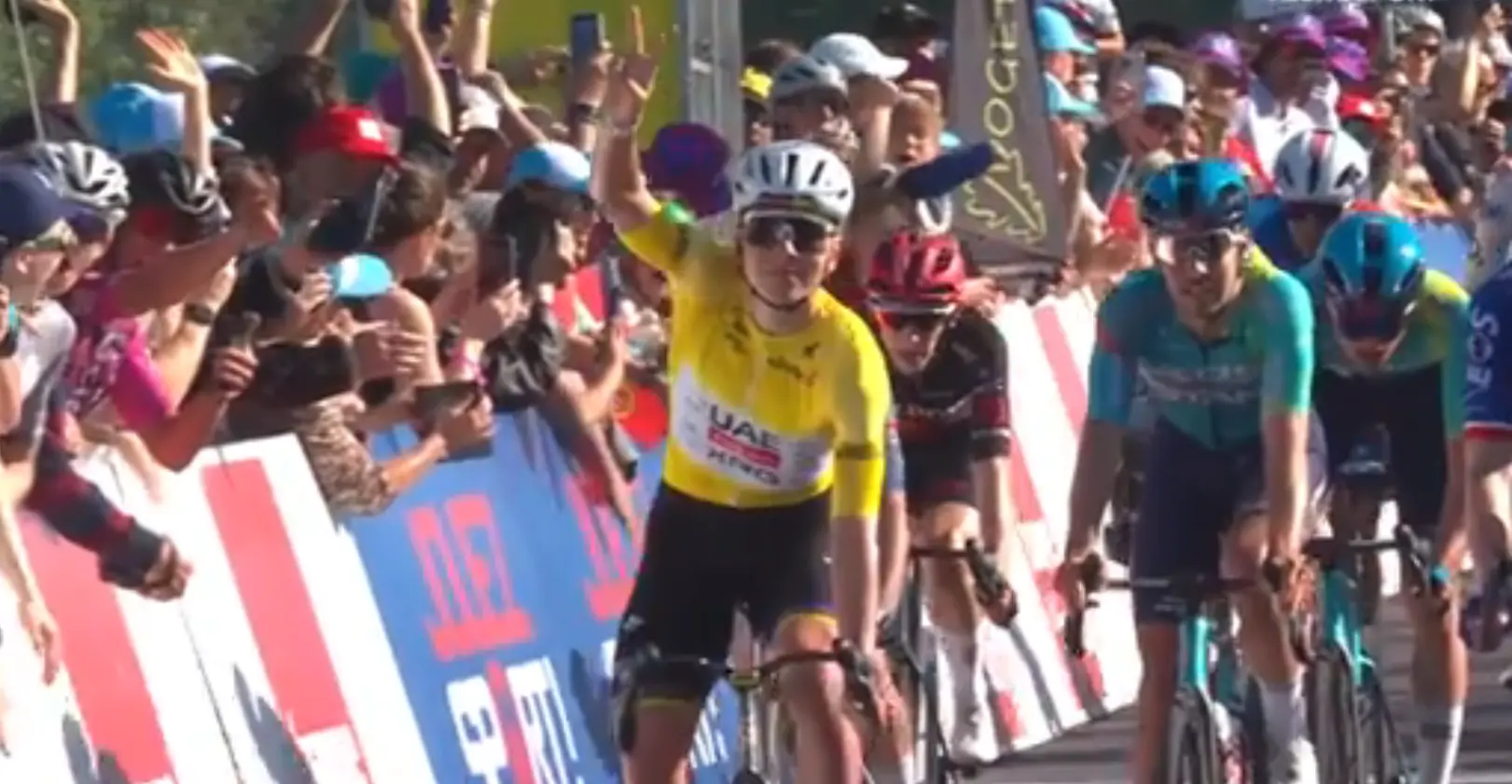
The stage was then decided in a sprint. Pogacar launched from around 200 metres to go and quickly created a gap, taking the win ahead of Lipowitz and Martinez.

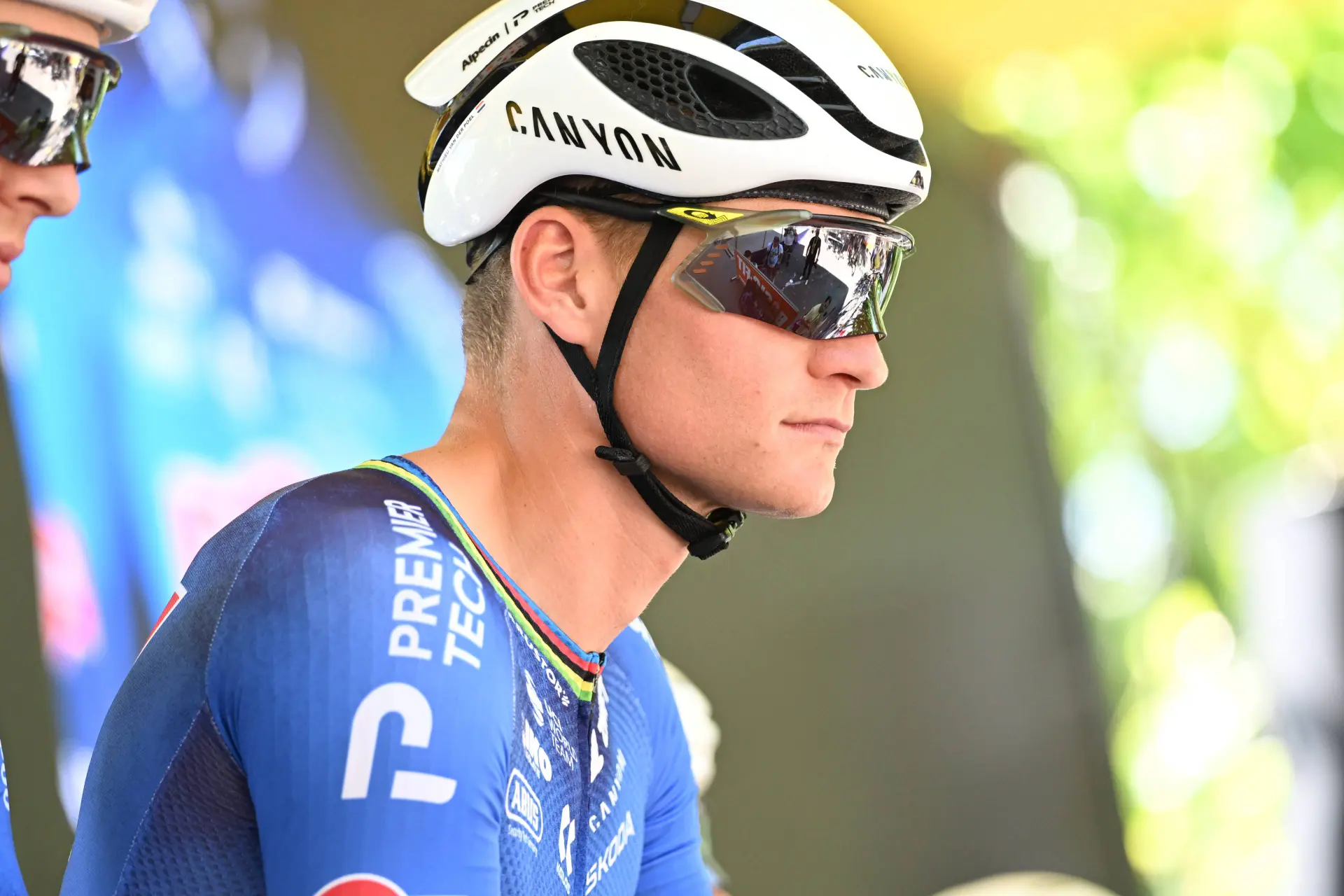
Tadej Pogacar on the podium at the 2026 Tour de Romandie
“He’s at a casual race here”
For Horner, the way the stage unfolded reinforced his view that Pogacar never needed to reach his highest level. “The fact that he didn’t use Grossschartner means what? It means he’s at a casual race here at Romandie.”
He also pointed to the broader context of the week, noting that this is Pogacar’s first stage race of the 2026 season after already building his campaign around the spring Classics. Instead of committing fully on the climb, Pogacar kept something in reserve and relied on a smaller group and his sprint to finish the job.
Rivals fail to increase the pressure
If Pogacar’s ride was controlled, Horner was critical of the riders around him. The chasing group behind at times contained multiple riders from the same teams, but failed to organise a sustained effort. “Everybody that was working with Tadej Pogacar is a knucklehead,” Horner said.
With numbers behind, there were opportunities to either bring the race back together or force Pogacar into a harder effort. “If Tadej Pogacar wants to hold off the riders in the back, well, he’s going to have to start doing some work.”
“You’ve got to abuse him later on the flat sections,” Horner added. “On the flats, you’re saving 100 to 200 watts sitting on the wheel.”
Instead, the combination of hesitation behind and cooperation in the lead group allowed Pogacar to manage his effort all the way to the line.
Early signal for the week ahead
The result gave Pogacar the stage win, time bonuses and the race lead, but Horner’s analysis points to a wider implication.
If Pogacar was able to control the race without going to his limit, the challenge for his rivals over the remaining stages becomes more complex, as they may need to change their approach to avoid a repeat scenario.

Kieran WoodDeputy Editor-in-Chief
Kieran Wood is a sports journalist based in Wales and has been active in journalism since 2022. He regularly contributes to DartsNews.com and CyclingUpToDate.com, where he covers professional cycling and darts. In cycling, his work includes liveblogs from major races, including the Tour de France, the Giro d’Italia, and La Vuelta a España, alongside race reports and analysis. He has also conducted interviews with professional riders.
His reporting spans the full racing calendar, from one-day classics to stage races, with a focus on accurate, real-time coverage and clear contextual analysis. For statistics, results, and historical context, he regularly uses resources such as ProCyclingStats. To support reporting on rider activity and training context where relevant, he also references Strava.
In his work, Kieran places strong emphasis on careful sourcing, editorial accuracy, and updating articles as new, verified information becomes available.
claps 2visitors 2
Just in
Popular news
Latest comments
- Pogi would have won the Vuelta at around 10 min. But it would have been boring for fools like you. Capish?PogiSloFans11-10-2026
- Rather than me describing the technology at length on here, If you google. Line-scan cameras. They are also sometimes called Slit-Scan cameras. Either search will fill you in. You can read all about how they. work. Enjoy! Just to be clear the cyclist is saying he wants to see exactly where the digital finish line is in relation to the actual physical finish. At this point we only have the word of the authority that the digital line corresponds to the exact starting edge of the physical finish line. That seems like a reasonable request to me.Prorodsandstuff11-10-2026
- 100% @Jumpyjohn, good point well raised.anonymouscyclist11-10-2026
- The media keep stirring the soup.. or spitting in it
 leedorney11-10-2026
 - Yes, he has won many races... second class races. He isn't the real deal... Seixas is the real deal. Capish?PogiSloFans11-10-2026
- What are you guys talking about? I'm not the one you guys think I am. I'm a Slovenian Pogi fan, that's all... the guy you're talking about is a Croation Ustasha. Capish?PogiSloFans11-10-2026
- It would be epic if Seixas came to UAE. 3/4 of the commentators on this site would stop watching cycling... ha ha ha ha ha ha...PogiSloFans11-10-2026
- UAE's problem is Seixas wants to beat Tadej.Renz11-10-2026
- You are blinded by your infatuation with Pogi. IdT has done crazy good stuff. One of the strongest ever first three years in the peloton. poor showing in his last couple of races btu I don't think he is quite washed up yetmobk11-10-2026
- Absolutely not. The guy has finished so many races 2nd to Pogi so absolutely not a shocker that when Pogi isn't there he wins a fewmobk11-10-2026
Loading
2 Comments