“The whole face of the race has changed” - Robbie McEwen reacts after brutal Giro d’Italia crash sends riders to hospital
Cycling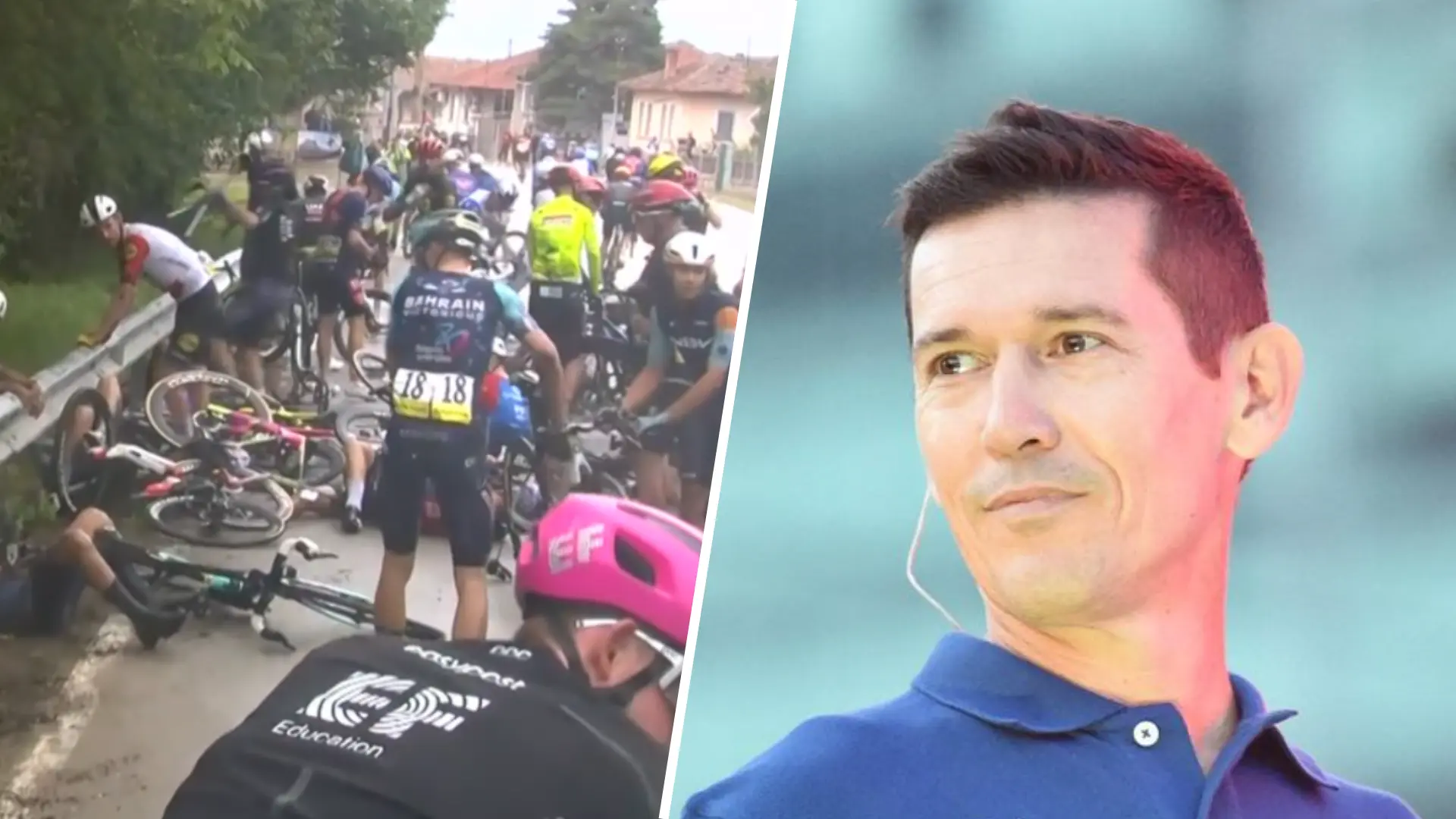
A brutal crash on wet roads in Bulgaria turned Stage 2 of the Giro d’Italia into an early Grand Tour flashpoint, with riders sent to hospital, GC ambitions left in ruins and sprint legend turned TNT Sports expert Robbie McEwen warning that “the whole face of the race has changed.”
The incident came with around 23 kilometres remaining on the road to Veliko Tarnovo, shortly before the final climb to the Lyaskovets Monastery. A large group of riders went down on a slippery section of road, with the consequences spreading across several teams.
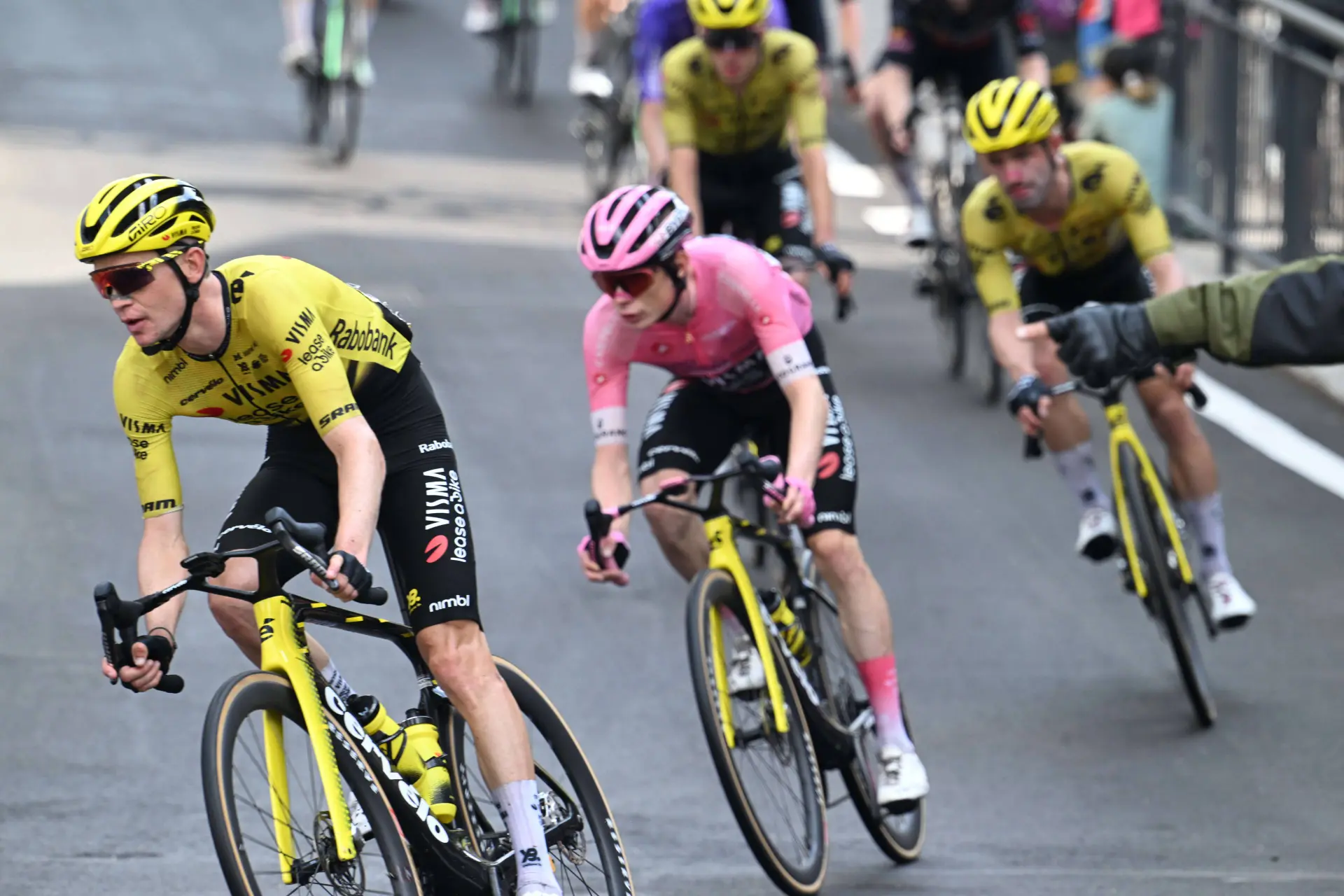
Jay Vine and Marc Soler were both taken to hospital, while UAE Team Emirates - XRG leader Adam Yates lost more than 12 minutes after crashing heavily. Santiago Buitrago was also forced to abandon and taken to hospital for further examinations, while several other riders were delayed or left to chase back before the final climb.
Speaking on TNT Sports after the stage, McEwen, who won 12 Giro d’Italia stages during his career and wore the Maglia Rosa in 2005, said the crash showed the unforgiving nature of the sport. “It is a really treacherous sport and the racing is so close, one thing goes wrong for one person, there are 30 or 50 affected by it,” he said.
“It can happen in a split second”
The scale of the incident was immediately clear. Medical vehicles were occupied, the race was temporarily neutralised, and several riders were still chasing or receiving assistance when racing resumed.
For McEwen, the most striking part was not only the crash itself, but the contrast between the severity of the fall and how quickly many riders tried to continue. “It is amazing to see how quickly a lot of the riders are able to just get up and go on but unfortunately in this case there are riders that could not and have had to go to hospital,” he said.
The sporting consequences were also immediate. Yates’ general classification hopes were effectively ended by his time loss, Buitrago’s race was over altogether, and UAE were left waiting on medical updates for Vine and Soler. “But it is another reminder that it can happen in a split second, the whole face of the race has changed,” McEwen said.
Riders forced to move on immediately
The stage eventually resumed, with Jonas Vingegaard later attacking on the final climb before Guillermo Thomas Silva won from the chasing group and moved into the Maglia Rosa.
McEwen did not frame the crash as a simple matter of blame. Instead, he pointed to the instincts of a peloton fighting for position on unknown, slippery roads, with every rider trying to protect their own race before danger becomes obvious. “The riders will all say ‘that is racing’,” he said. “There is nothing you can really do in that situation. You do not know how slippery the roads are until you get there and something happens.”
The restart underlined that reality. After one of the most damaging crashes of the race so far, the Giro quickly returned to full speed as teams fought for position before the final climb and descent.
“And everybody is going to push on at the time and defend their position, try and be at the front, do what they need to do until they come undone and then they start to sit and think about it,” McEwen said. “But you saw after that how quickly they take it up again and get onto the next descent and race like nothing’s happened.”
For the riders injured or forced out, Stage 2 will continue long after the finish line. For the race itself, it was the day the 2026 Giro’s early shape changed in one violent moment.

Kieran WoodDeputy Editor-in-Chief
Kieran Wood is a sports journalist based in Wales and has been active in journalism since 2022. He regularly contributes to DartsNews.com and CyclingUpToDate.com, where he covers professional cycling and darts. In cycling, his work includes liveblogs from major races, including the Tour de France, the Giro d’Italia, and La Vuelta a España, alongside race reports and analysis. He has also conducted interviews with professional riders.
His reporting spans the full racing calendar, from one-day classics to stage races, with a focus on accurate, real-time coverage and clear contextual analysis. For statistics, results, and historical context, he regularly uses resources such as ProCyclingStats. To support reporting on rider activity and training context where relevant, he also references Strava.
In his work, Kieran places strong emphasis on careful sourcing, editorial accuracy, and updating articles as new, verified information becomes available.
claps 3visitors 3
Just in
Popular news
Latest comments
- Nothing. Against Pogi nothingabstractengineer18-10-2026
- He didn't even try to sprint all outvappaxbipmv18-10-2026
- Campenaerts looked like a rolling pumpkin with that all orange leaders skinsuit !frieders318-10-2026
- He can take his dumb a$$ politics somehwere else !frieders318-10-2026
- good to have her back. fingers crossed she‘ll be able to stay!Ketterechts17-10-2026
- A tenner and he wins the Tour next year, too 😂anonymouscyclist17-10-2026
- the answer is either stick to classics or GTs but not bothabstractengineer17-10-2026
- the exodus already stared with Ciccone. Already they were struggling with two sprinters, now there are three. Also Ganna will demand leadership. Gall is the most proven GC, Ayuso has the most potential. GC leadership for everybody will be impossible. Literally a UAE style mess without pogi.abstractengineer17-10-2026
- I raced as an amateur for 12 years, including six years on my country’s national road cycling team. I secured two national titles and competed in three World Championships plus more than 15 international stage races. At 23, we travelled to Italy for a training camp—or so I assumed. On a rest day, we watched a presentation about adopting a more “professional” training approach. It was crystal clear what “professional” meant. That moment first exposed me to this dilemma. After returning from Italy, I left cycling—at least at the competitive level I had known. Over the following two years, the whole team was caught doping. I hold that everyone is innocent until proven guilty. In my view, current stakeholders operate on a different scale, and the sums involved are vast. I am unsure whether any doping would ever be revealed. I try to stay positive and enjoy the show. My 2c.
 vannpelt17-10-2026
 - Fiver he wins 🤣
 leedorney17-10-2026
Loading
Write a comment