“That finish is a real ambush” - Giro d’Italia stage 18 finale warning as David de la Cruz describes "complicated" day
Cycling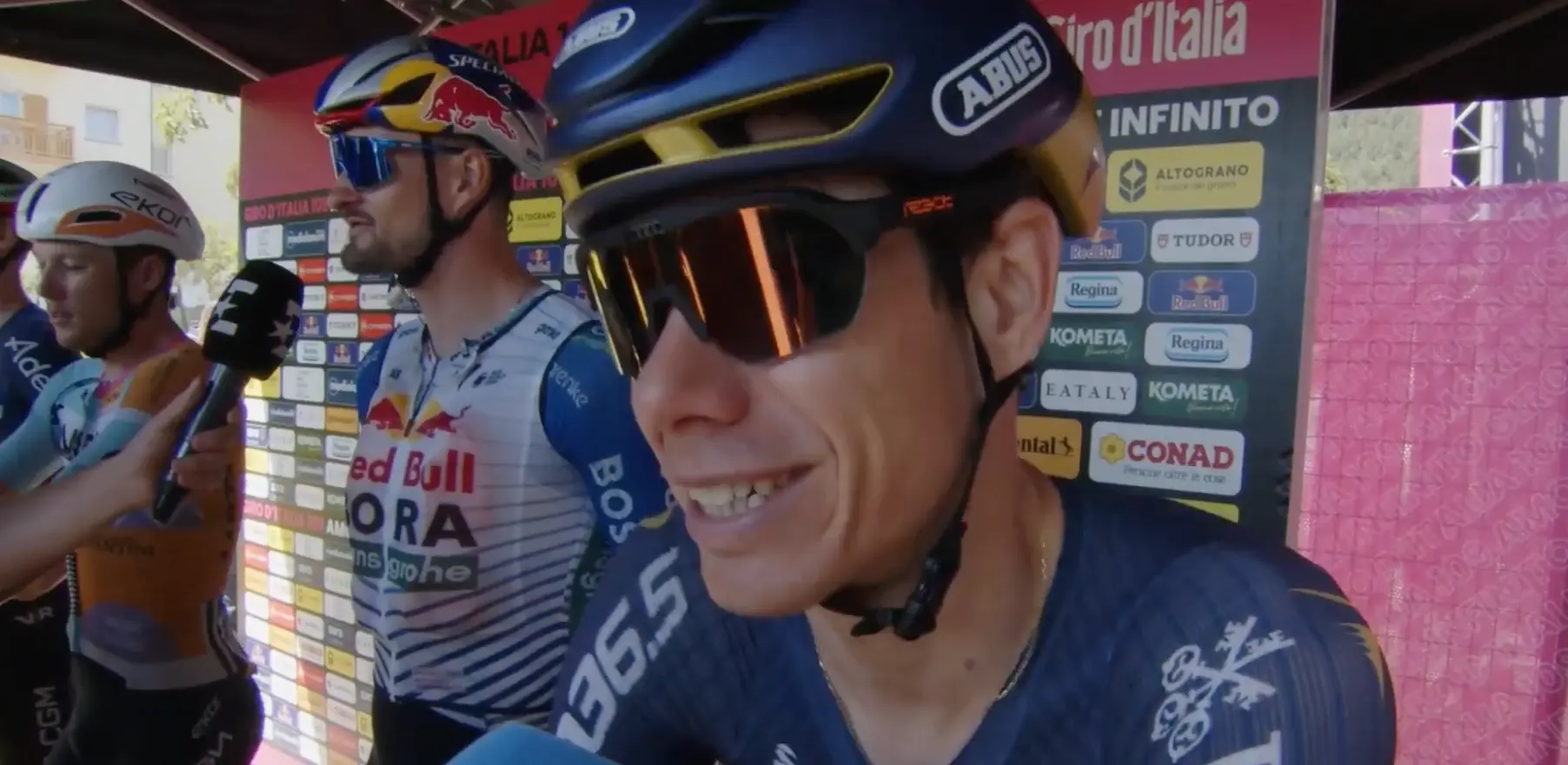
David de la Cruz tackles stage 18 of the Giro d’Italia with the shared sense of fatigue across the peloton, yet convinced the day is once again one for the break. The Spaniard weighed up a demanding route that offers little to sprint teams, especially given the toughness of the finale.
“Tired, yes, I feel tired, but I hope the rest of the peloton does too,” he joked before delving into the features of a stage he believes will be very hard to control in comments to Cycling Pro Net. For De la Cruz, the profile clearly invites long-range moves and a break with a real shot at the win.
“It’s a very complicated day, because it’s a good day for the break,” the Spanish rider explained. “I find it hard to see a team controlling the finish, with that very steep one‑kilometre climb,” he added, referring to the explosive ramp that will decide the stage.
Beyond the finale, De la Cruz underlined the importance of the climb at kilometre 20, a five or six‑kilometre ascent that could force an early selection. “It’s going to be similar to yesterday, so I see a stage for the break,” he said.
The Spaniard also noted the context facing the peloton, after two very demanding days and with two brutal stages still to come. “Today won’t be easy, and I think it’s quite hard to predict what might happen,” he said, hinting that many general classification hopefuls could look to save energy for the decisive mountain days.
With that in mind, De la Cruz believes riders out of the GC fight, or others chasing different goals such as Jhonatan Narváez in the battle for the Maglia Ciclamino, could try to slip into the day’s decisive move.

David de la Cruz, in full effort at the Giro d’Italia

A stage for the break
Asked about the sprinters’ teams’ chances of controlling the race, the Spaniard was unequivocal. “I find it difficult,” he insisted. He explained that the combination of the climb at kilometre 20 and the explosive finale favours a strong, sizeable break, something that would stretch the blocks aiming for a bunch sprint.
“The stage is designed for the break,” he summed up. De la Cruz called the finale “a real trap” and believes the sprinters will focus on survival and saving energy for the finish in Rome, which he considers “the only real opportunity” for them in the final week of the Giro.
The Spaniard also doesn’t expect big moves among the GC favourites. “I’d be surprised if there’s a fight at the end from the GC,” he said, comparing the day to earlier stages where podium contenders looked ahead rather than trying to prise open gaps.
Read also
Even so, De la Cruz warned they will need to stay alert whatever unfolds. “I think today people will try to save as much as possible; you can’t make big differences anyway. I don’t expect a major battle, but we’ll still need to be ready for whatever comes,” he concluded.

Gavin QuinnCycling Journalist
Gavin Quinn is a cycling journalist and ultra-distance cyclist with a BA in Journalism from Dublin City University. Formerly the Press & Communications Officer for Cycling Ireland, Gavin has worked inside the national team at the World Championships and has reported for the Irish Mirror, Mirror UK, and The42.
His expertise is backed by elite-level access, having interviewed stars like Sam Bennett and Ben Healy, as well as immense personal endurance. In 2025, he completed a 12,000km solo cycle from Ireland to Vietnam, following a 4,600km tour across Europe. From the cobbles of Paris-Roubaix to the gradients of the Tourmalet, Gavin’s writing focuses on the "romance and brutality" of the sport. Having visited 50+ countries, he brings a global, cultural perspective to his coverage of the pro peloton for CyclingUpToDate.
claps 0visitors 0
Just in

Popular news
Latest comments
- He didn't even try to sprint all outvappaxbipmv18-10-2026
- Campenaerts looked like a rolling pumpkin with that all orange leaders skinsuit !frieders318-10-2026
- He can take his dumb a$$ politics somehwere else !frieders318-10-2026
- good to have her back. fingers crossed she‘ll be able to stay!Ketterechts17-10-2026
- A tenner and he wins the Tour next year, too 😂anonymouscyclist17-10-2026
- the answer is either stick to classics or GTs but not bothabstractengineer17-10-2026
- the exodus already stared with Ciccone. Already they were struggling with two sprinters, now there are three. Also Ganna will demand leadership. Gall is the most proven GC, Ayuso has the most potential. GC leadership for everybody will be impossible. Literally a UAE style mess without pogi.abstractengineer17-10-2026
- I raced as an amateur for 12 years, including six years on my country’s national road cycling team. I secured two national titles and competed in three World Championships plus more than 15 international stage races. At 23, we travelled to Italy for a training camp—or so I assumed. On a rest day, we watched a presentation about adopting a more “professional” training approach. It was crystal clear what “professional” meant. That moment first exposed me to this dilemma. After returning from Italy, I left cycling—at least at the competitive level I had known. Over the following two years, the whole team was caught doping. I hold that everyone is innocent until proven guilty. In my view, current stakeholders operate on a different scale, and the sums involved are vast. I am unsure whether any doping would ever be revealed. I try to stay positive and enjoy the show. My 2c.
 vannpelt17-10-2026
 - Fiver he wins 🤣
 leedorney17-10-2026
 - “…measures to reduce speeds.” Might as well shorten the race course to just 50km as well? ASO generates at minimum €300m a year and 30- 40% profit. Maybe stop being greedy and spend more of the profit to protect the riders instead.b3tlla17-10-2026
Loading
Write a comment