“Should you still ride with him, or should you start gambling a bit?” - Tadej Pogacar's rivals questioned after another display of dominance at Tour of Flanders 2026
Cycling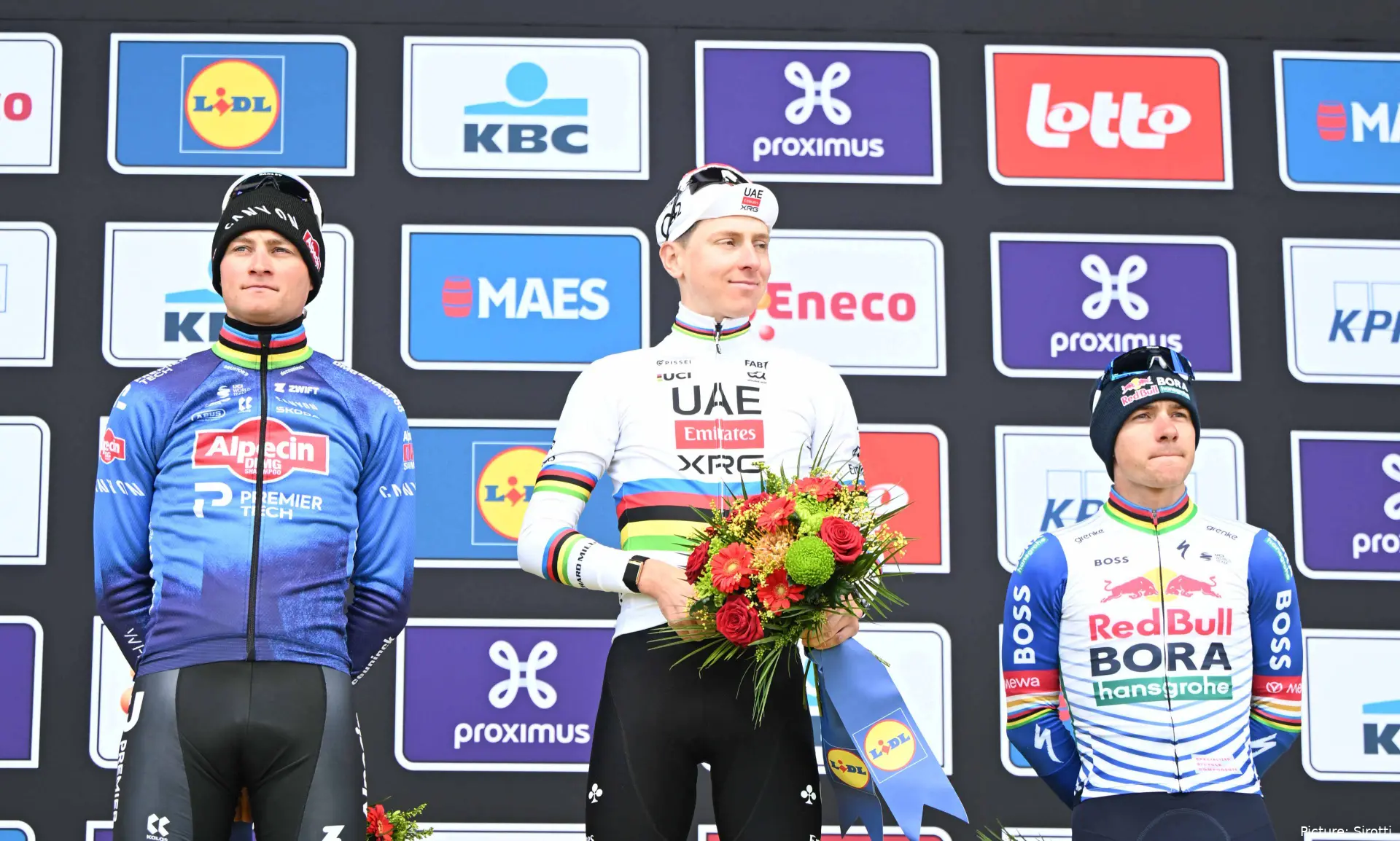
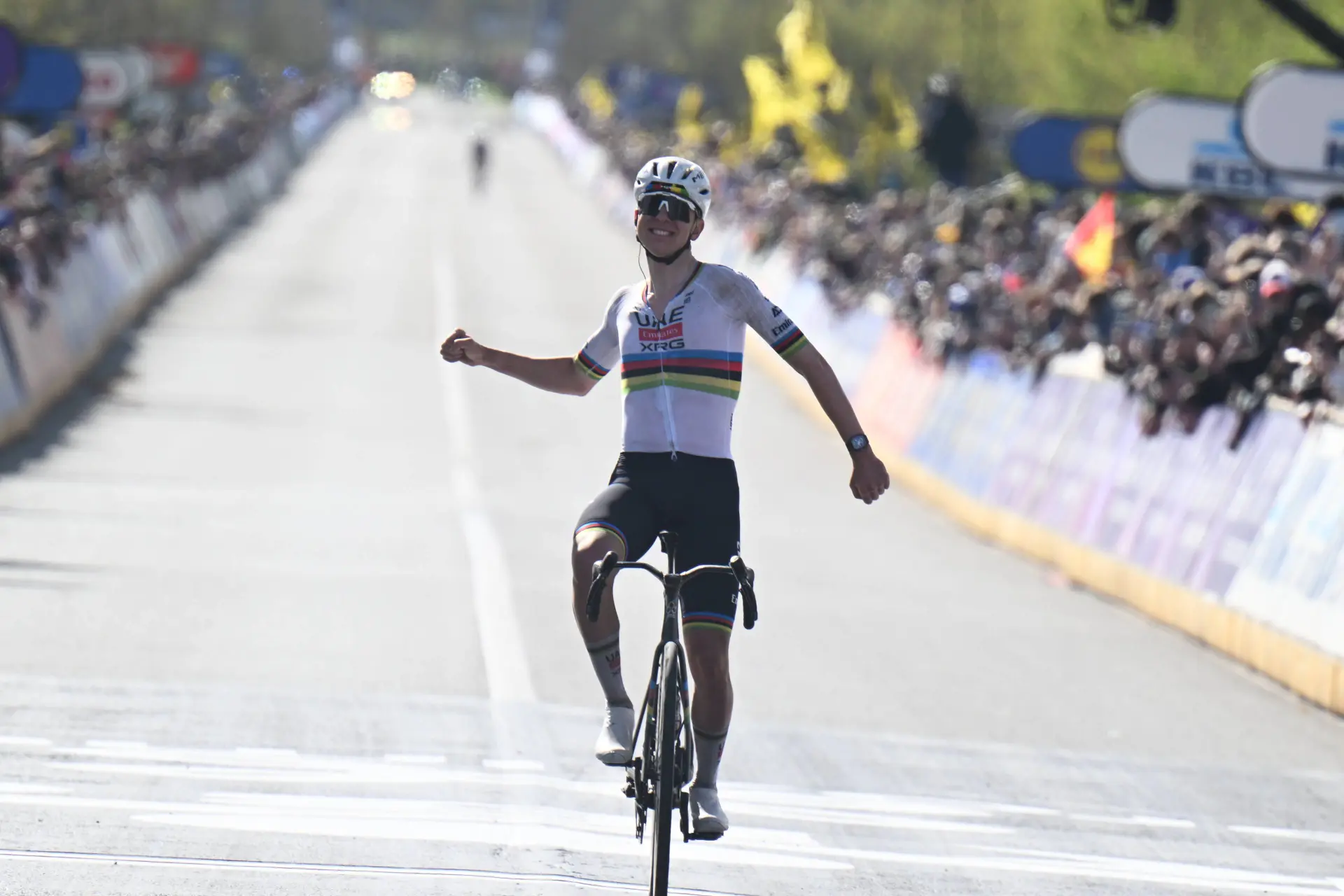
Tadej Pogacar’s victory at the 2026 Tour of Flanders did more than just settle the result. It reopened a familiar question that continues to follow him through the biggest races. When the race reached its decisive phase, the strongest rider was clear. What remains up for debate is whether those around him could have approached it any differently.
A race shaped on the cobbled climbs
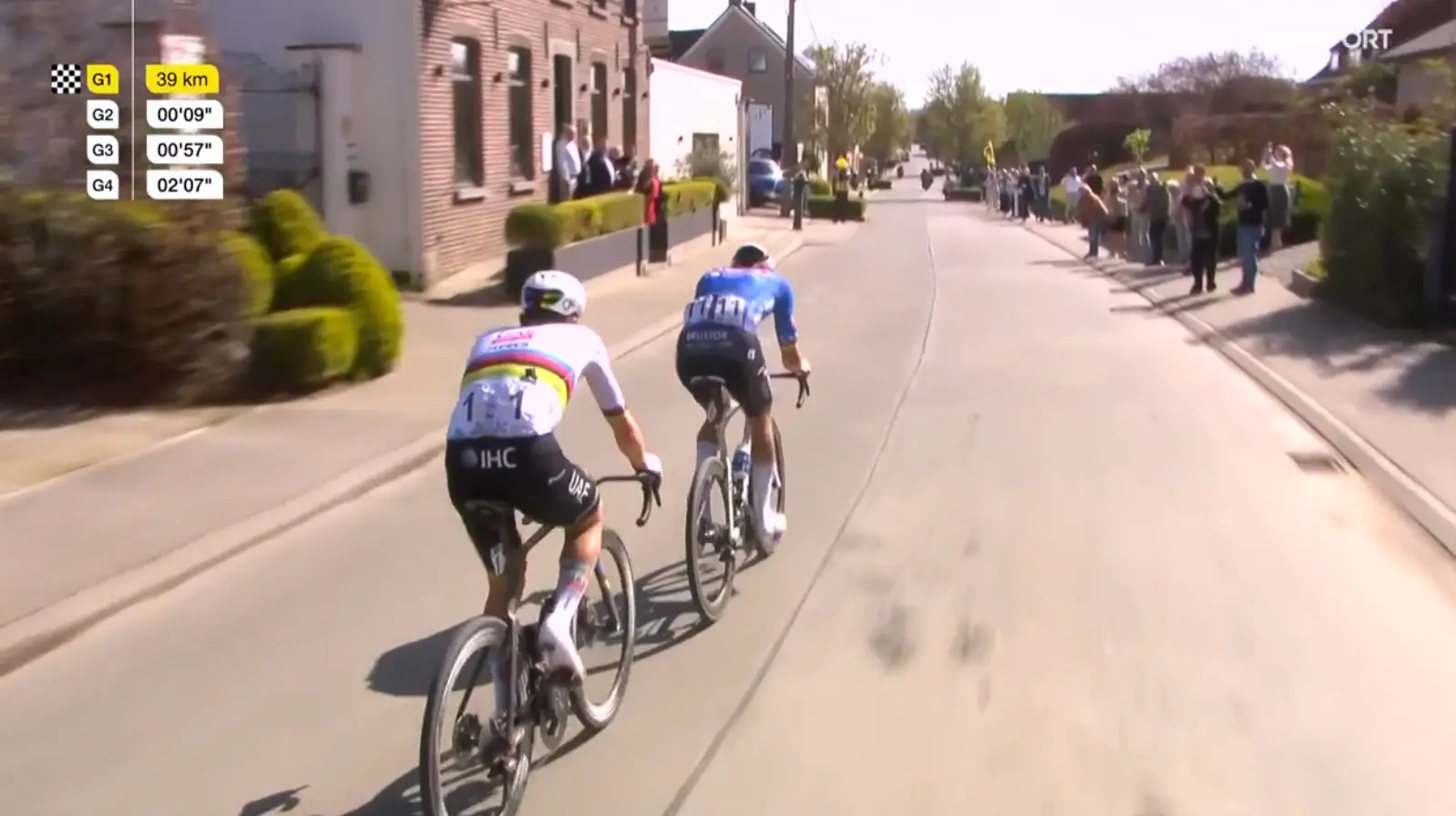
The key selection formed on the sequence of Oude Kruisberg and Hotond, where Pogacar and Mathieu van der Poel moved clear, with Remco Evenepoel briefly close before losing ground. From that point, the race settled into a familiar pattern, with Pogacar driving the pace and the others forced into response.
Even when gaps remained small, they proved difficult to close. The final passage of the Oude Kwaremont then provided the decisive moment, as Pogacar accelerated clear, leaving Van der Poel to chase alone and the rest behind. It was in that context that the tactical question began to take shape.
Ride with him or gamble?
Sporza commentators Karl Vannieuwkerke and José De Cauwer both raised the dilemma that faced Pogacar’s rivals in real time, particularly as the front group formed and began working together before the final Kwaremont.
“If you know that Pogacar is so dominant, should you still ride with him, or should you start gambling a bit?” Vannieuwkerke asked, even questioning whether pride played a role in how the front group approached the situation. “I’m thinking of Mathieu van der Poel. Or is that sense of pride that gets in the way?”
For De Cauwer, however, the idea of a different tactic came with its own limits, especially given how quickly Pogacar made the difference once the pace lifted on the decisive climbs. “That sense of pride, maybe. But even if they wait, he just drops them again on the next climb. We saw how quickly Pogacar made the difference…” he said, before pointing to how these situations tend to play out at the very front of races. “Those riders are so proud, so great. We’ve seen it so many times. They don’t do that anymore. No, they ride along.”

Wout van Aert and Tadej Pogacar at the 2026 Tour of Flanders
A race where strength overruled tactics
As the race moved through the Oude Kwaremont and into the Paterberg, that pattern held. Pogacar dictated the terms, Van der Poel followed as long as he could, and the gaps behind grew with Evenepoel unable to close back on.
Attempts to disrupt that rhythm never fully materialised. Each acceleration from Pogacar immediately created separation, leaving little opportunity for hesitation or tactical play.
In that sense, the debate remains unresolved. The question of whether to cooperate or gamble is easy to pose, but far harder to execute when the strongest rider can repeatedly force the same outcome.
“Everyone finished where they belong”
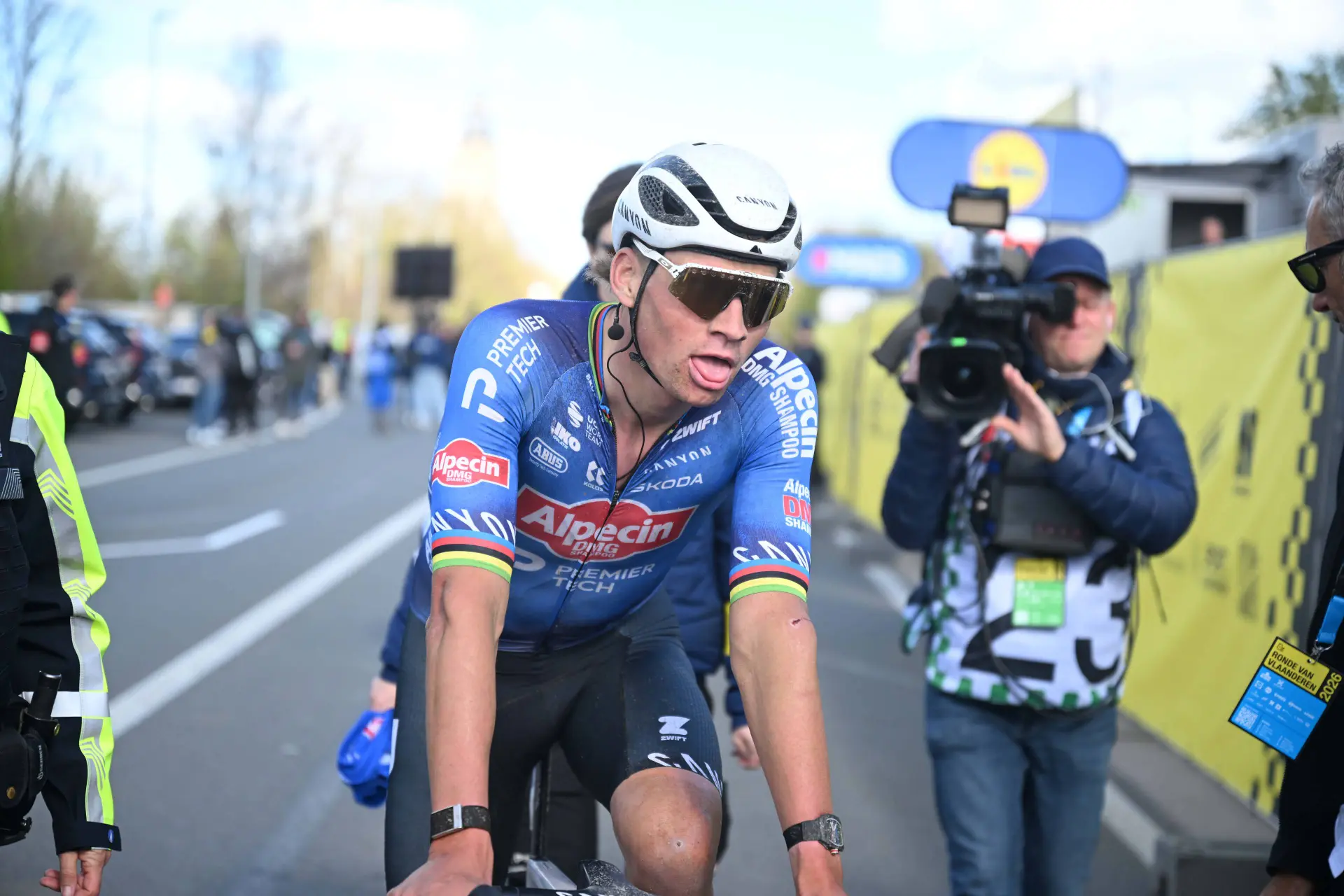
The final result appeared to reinforce that idea. “There was nothing to be done against Tadej Pogacar,” Vannieuwkerke said, with De Cauwer in agreement. “I don’t think we’re the only ones saying that. Everyone who saw it up close will agree that there was nothing to be done.”
Behind, the order of the race reflected what had already been seen on the road in the final climbs, where the differences were made. “Fourth place for Wout van Aert is also good, but he too was just that little bit short on the Oude Kwaremont,” Vannieuwkerke noted.
De Cauwer, meanwhile, pointed to how the race unfolded late on. “That second time up the Oude Kwaremont was just too long for him. Towards the end, he came through a bit again, but he had to do it alone,” he explained. “They all finished where they belong.”
A five star favourite delivers
For Vannieuwkerke, the race could be reduced to a simple conclusion. “It was a five-star Tour of Flanders, and the five-star favourite won,” he said, summing up the hierarchy that played out across the final. “The man who also got five stars, but maybe should have had four, finished second. Those who were given three stars ended up in third, fourth and fifth.”
It was a summary that reflected how the race had unfolded, with the decisive moves on the cobbles ultimately settling both the result and the debate.

Kieran WoodDeputy Editor-in-Chief
Kieran Wood is a sports journalist based in Wales and has been active in journalism since 2022. He regularly contributes to DartsNews.com and CyclingUpToDate.com, where he covers professional cycling and darts. In cycling, his work includes liveblogs from major races, including the Tour de France, the Giro d’Italia, and La Vuelta a España, alongside race reports and analysis. He has also conducted interviews with professional riders.
His reporting spans the full racing calendar, from one-day classics to stage races, with a focus on accurate, real-time coverage and clear contextual analysis. For statistics, results, and historical context, he regularly uses resources such as ProCyclingStats. To support reporting on rider activity and training context where relevant, he also references Strava.
In his work, Kieran places strong emphasis on careful sourcing, editorial accuracy, and updating articles as new, verified information becomes available.
claps 10visitors 1
Just in

Popular news
Latest comments
- Despite his crash, Jonas gave us some edge-of-seat stages in the first two weeks of the 2024 Tour, and even came back to beat Pog in one stage. In 2025 he said he felt like a new man and came out swinging. It's just this year that his challenge fizzled after Stage 1 and fans began to boo Tadej. It's more likely that ASO just can't face waiting two weeks for Jonas to launch his challenge next year.Hills3327-10-2026
- Bummed to see an Austrian guy not make it on what is nominally (ok ok not really) a German team. He didn't have a good 2026, and I hope that he finds his footing at Bardiani. They've got a long history of excellent coaching and development.RidesHills27-10-2026
- Subject to the top riders DNS DNF or sick/crash.abstractengineer27-10-2026
- Pogi has no challenger since 2024. Jonas is one level below, Remco has no balls, Sexias is too young. Whether ASO acknowledge or not is immaterialabstractengineer27-10-2026
- People keep referring to Pogačar and mountain-top finishes, and sure, he's succeeded on those often enough. Thing is, he succeeds on mountains, period. How often has he attacked on a climb, made time on the descent, and added time on the flat run in to the final? Often enough that they'd have to remove mountains for it not to be a Pogačar route. And then they'd have hills, and the guy who has won Flanders 3 times isn't going to suffer there, either. So if you remove those they have sprints and TTs, and last year he was mixing it up in a few sprints, as well. So, yeah, good luck folks. Let's see how he recovers before we make too many other claims. The seasons from 2024 to 2026 are three of the top 10 best cycling seasons ever (Merckx has something like 5 of the remaining), and I'm going to predict that 2027 is going to be up there with them.RidesHills27-10-2026
- The US has gone through a long convoluted process of defining how athletes can make money off their "Name, Image, and Likeness," and I see the point that Pederson and the other athletes are making here. Also, how very Mads Pederson to say, "Everyone has seen the somewhat tacky advertisements." You can almost see that sly smile on his face when he says it.RidesHills27-10-2026
- Vine coming from his background and then succeeding on a team full of superstars, so great. He's got solid wins (GC and TT), would be even more successful in the TT if he didn't live in the era of Ganna and Evenepoel, and seems to have a thing for the Vuelta. Aren't something like 1/3 of his wins there? (Checks procyclingstats - yes, 5 of the 14) Great guy, and I wish him all the success he can find!RidesHills27-10-2026
- Such a soft spot for Vine. To watch him come from the Zwift Academy to the levels he is at, now, is incredible. Always rooting for a Vine win.anonymouscyclist27-10-2026
- glad you're still making it happen!mij27-10-2026
- With the exception of Axel Laurence, the rest are in their 30's. My opinion is I think, perhaps, we're beginning to see the effects of younger riders coming into the pro ranks. I believe we're going to see those effects in the coming years. All teams are looking for the next Pogi, Jonas & Seixas. Of course, Seixas hasn't proved himself yet. He's just a kid. I believe he will though. Remco is a strange case. I believe if he can overcome being erratic, he should wn a few Tours, What do you guys think?Paggss27-10-2026
Loading
1 Comments