“People act as if it's disappointing when Evenepoel doesn't win the Tour” - Michel Wuyts defends Belgian superstar amid impossible Pogacar-era expectations
Cycling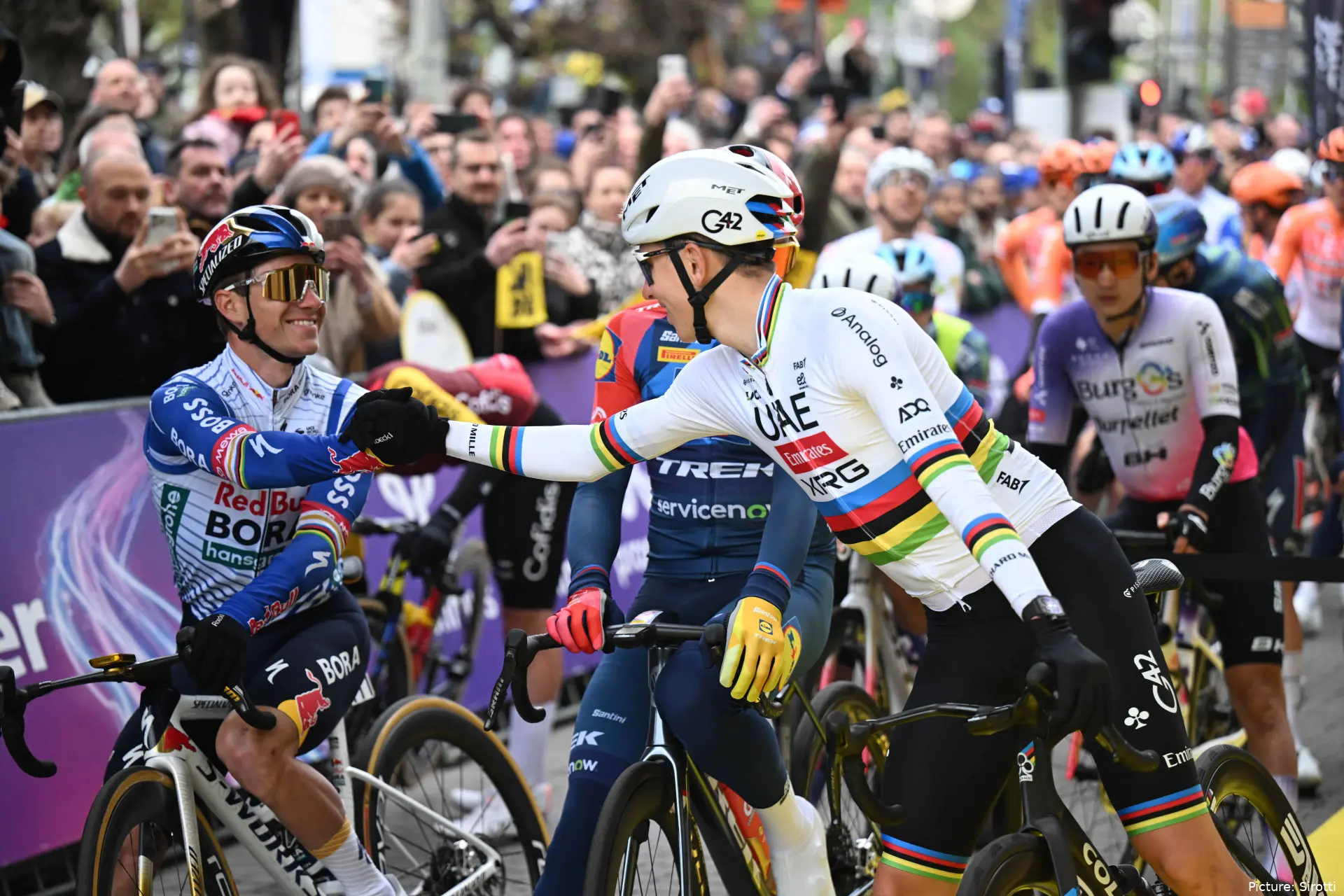
Remco Evenepoel’s place in the Tour de France hierarchy has become harder to define than it was two years ago, but Michel Wuyts believes the Belgian’s career is still being judged through an unfairly narrow lens.
The former cycling commentator and long-time Belgian analyst has pushed back against the idea that Evenepoel can only be properly measured by whether he wins the Tour. That question has followed the Olympic champion since his breakthrough, and it will return again when he lines up in Barcelona for the 2026 edition.
Evenepoel finished third at the 2024 Tour and appeared to have established himself as the clear next name behind Tadej Pogacar and Jonas Vingegaard. Since then, the picture has shifted. Pogacar has continued to raise the ceiling, Vingegaard has rebuilt his Grand Tour authority with victories at the Vuelta a Espana and Giro d’Italia, and riders such as Paul Seixas, Florian Lipowitz and Isaac del Toro have made the fight behind the big two far more crowded.
For Wuyts, though, the constant Tour-based judgment risks flattening a career that already contains achievements most riders never come close to matching. “People sometimes act as if it is disappointing when Evenepoel does not win the Tour,” Wuyts said in the Tour special of Wieler Revue.

Wuyts points to exceptional rivals
Evenepoel’s 2026 Tour build comes with pressure from several directions. Red Bull - BORA - hansgrohe have shaped a long, controlled preparation around July, while Evenepoel’s own status inside the wider GC picture is under more scrutiny than at any point since his first Tour podium.
He remains a former Grand Tour winner, a world road race champion, an Olympic champion and one of the finest time triallists in the sport. Yet the Tour continues to dominate the way his career is discussed, especially in Belgium, where the search for a home rider capable of winning yellow has carried its own weight for decades.
Wuyts believes that context around Evenepoel’s rivals is too often overlooked. “When you have to race against riders like Pogacar and Van der Poel, you come up against a level that is exceptional,” he said.
That has become the reality of Evenepoel’s era. Pogacar has built one of the most complete palmares in modern cycling while still operating at the centre of the Tour de France conversation. Mathieu van der Poel continues to define classics and cyclocross greatness in his own sphere. Vingegaard remains the one rider with repeated Tour-winning proof against Pogacar.
Evenepoel has had to chase his own place among that group while carrying Belgium’s expectations into every major target.
A career already packed with major wins
Wuyts’ defence rests on Evenepoel’s existing record, not on lowering the bar for what he might still achieve. The Belgian has already won the Vuelta a Espana, become world champion on the road, claimed Olympic gold, won Monuments and built one of the most decorated careers of his generation.
The Tour, though, has become the test that follows him everywhere. A podium finish in 2024 strengthened the idea that he could eventually move closer to Pogacar and Vingegaard, but the past two seasons have made that progression less straightforward.
His climbing and GC results have not always followed the expected line, while the number of serious challengers around him has grown. Seixas has exploded into the top level at just 19. Lipowitz already has a Tour podium and has often looked the stronger pure climber in Red Bull colours. Del Toro and Almeida add further depth to a field where Evenepoel is no longer the automatic third name.
That does not erase what Evenepoel brings. His time trialling, one-day pedigree and Grand Tour experience still give him a route into the Tour that few others can match. It does make the expectation of a Tour victory feel more complicated than it looked after 2024.
Expectations still follow Evenepoel to July
Wuyts sees the issue in the scale of the expectations now attached to Evenepoel. “It is just that expectations have now become so high that almost everything is measured against winning the Tour,” he said.
That sentence captures the pressure around Evenepoel before Barcelona. He can arrive as one of the most dangerous riders in the race without being the clear third favourite. He can be a genuine threat without being Pogacar’s equal. He can still have an extraordinary career even if yellow in Paris remains out of reach.
The 2026 Tour may yet reshape that discussion. A strong opening team time trial, a controlled mountain performance and another deep GC run would immediately put Evenepoel back at the centre of the podium fight. A difficult July would bring the old questions back just as quickly.
Wuyts’ argument is that the verdict should not depend only on one race. Evenepoel’s Tour dream remains alive, but his career has already moved far beyond the idea that it needs yellow to be validated.
Kieran WoodDeputy Editor-in-Chief
Kieran Wood is a sports journalist based in Wales and has been active in journalism since 2022. He regularly contributes to DartsNews.com and CyclingUpToDate.com, where he covers professional cycling and darts. In cycling, his work includes liveblogs from major races, including the Tour de France, the Giro d’Italia, and La Vuelta a España, alongside race reports and analysis. He has also conducted interviews with professional riders.
His reporting spans the full racing calendar, from one-day classics to stage races, with a focus on accurate, real-time coverage and clear contextual analysis. For statistics, results, and historical context, he regularly uses resources such as ProCyclingStats. To support reporting on rider activity and training context where relevant, he also references Strava.
In his work, Kieran places strong emphasis on careful sourcing, editorial accuracy, and updating articles as new, verified information becomes available.
claps 0visitors 0
Just in
Popular news

Latest comments
- It will absolutely change his tt position. Call me out if I'm wrong, when we start seeing him training on the tt bike, you will see.awp27-10-2026
- please , come on now! The Tour begins July 2, 2027!!! It is still 2026 !!!! Get a hobby or something.dave26-10-2026
- How is this relevant? Perhaps you are doing a Coleridge but not poetic
 Rafionain-Glas26-10-2026
 - Brilliantly putRafionain-Glas26-10-2026
- vingegaard will get humiliated. he might not even make the podium. he should retire, or accept being handed down the ranks.Ketterechts26-10-2026
- Bull crap...his C7 injury won't affect his TT position!frieders326-10-2026
- blah blah blah is all I see in your comment!frieders326-10-2026
- i thought they were cycling journalists. either they don‘t know the basics or they don‘t write their reports. either way suboptimal … it is not an american team anymore!Ketterechts26-10-2026
- Quiz, who said "When I watched the Worlds and the Euros, it made me miss racing of course, but I’d say that the older I get, the easier it becomes to stay away from racing and find other things I enjoy." Clue, not Elie Isabit in the doghouse now for supposing he can second guess MVDP, who has the added complication of women having a say these days in his circumstances, something Fien might have explained to him if he’d bothered asking, hope he doesn’t get a talking to for that. And speaking of that, I noticed he celebrated 10 years together in 2023 and yet in 2017 he was definitely with someone else, could get messy tonight. Bye for nowJumpyjohn26-10-2026
- Wout has the lifetime contract. I think he gets first shot no matter what.mij26-10-2026
Loading
Write a comment