Paula Blasi sets no limits: “I want to be a Tadej Pogacar; I won’t even rule out Paris-Roubaix”
Cycling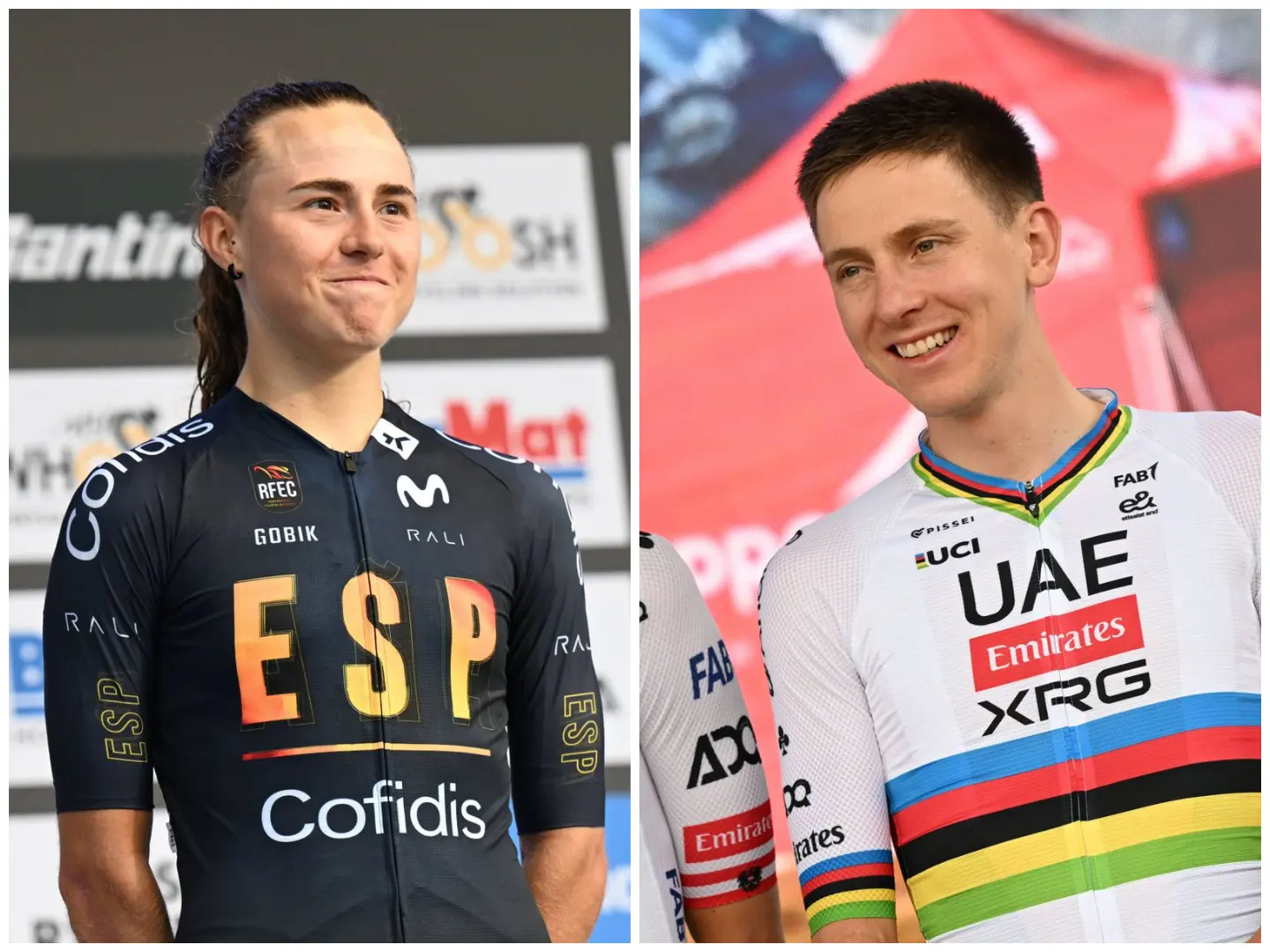
The 2026 season is proving to be Paula Blasi’s definitive breakthrough. The UAE Team ADQ rider has stacked top-tier results that place her among the leading names in international women’s cycling. Yet far from easing off after her successes, the Catalan remains as ambitious as ever and is already thinking about how to keep progressing into next year.
Winner this year of Amstel Gold Race, La Vuelta Femenina and the Tour des Pyrénées, and with standout rides in several of the calendar’s most prestigious races, Blasi tells EFE she still has ample room to improve and many goals ahead, even daring to aim at becoming the Tadej Pogacar of women’s cycling.
“I swear I’m absolutely ravenous. I still have plenty of targets this year, but I want to start again in January because I know I can do better.”
Few riders would find reasons to ask for more after a campaign like the Spaniard’s. Beyond her three headline victories, Blasi also stepped onto the podium in high-prestige races such as the Tour Down Under and La Flèche Wallonne, where she finished third; and took fifth at Liège–Bastogne–Liège.
Her next appointment is the Volta a Catalunya, from the 19th to 21st June. The race carries special meaning as it unfolds on home roads, and she personally made the case to her team to be there.
“The team told me: ‘It’s not a WorldTour race, go to Switzerland.’ I begged them, I didn’t care, even if it clashed with the Tour de France.”
The rider acknowledges that her rise has also changed how the peloton sees her. Results have shifted her status from prospect to marked contender.
“I love seeing myself up there against them, but I need to earn that confidence to say: ‘Maybe I can fight.’ Always keep respect, but stop idealising them so much — they’re rivals.”

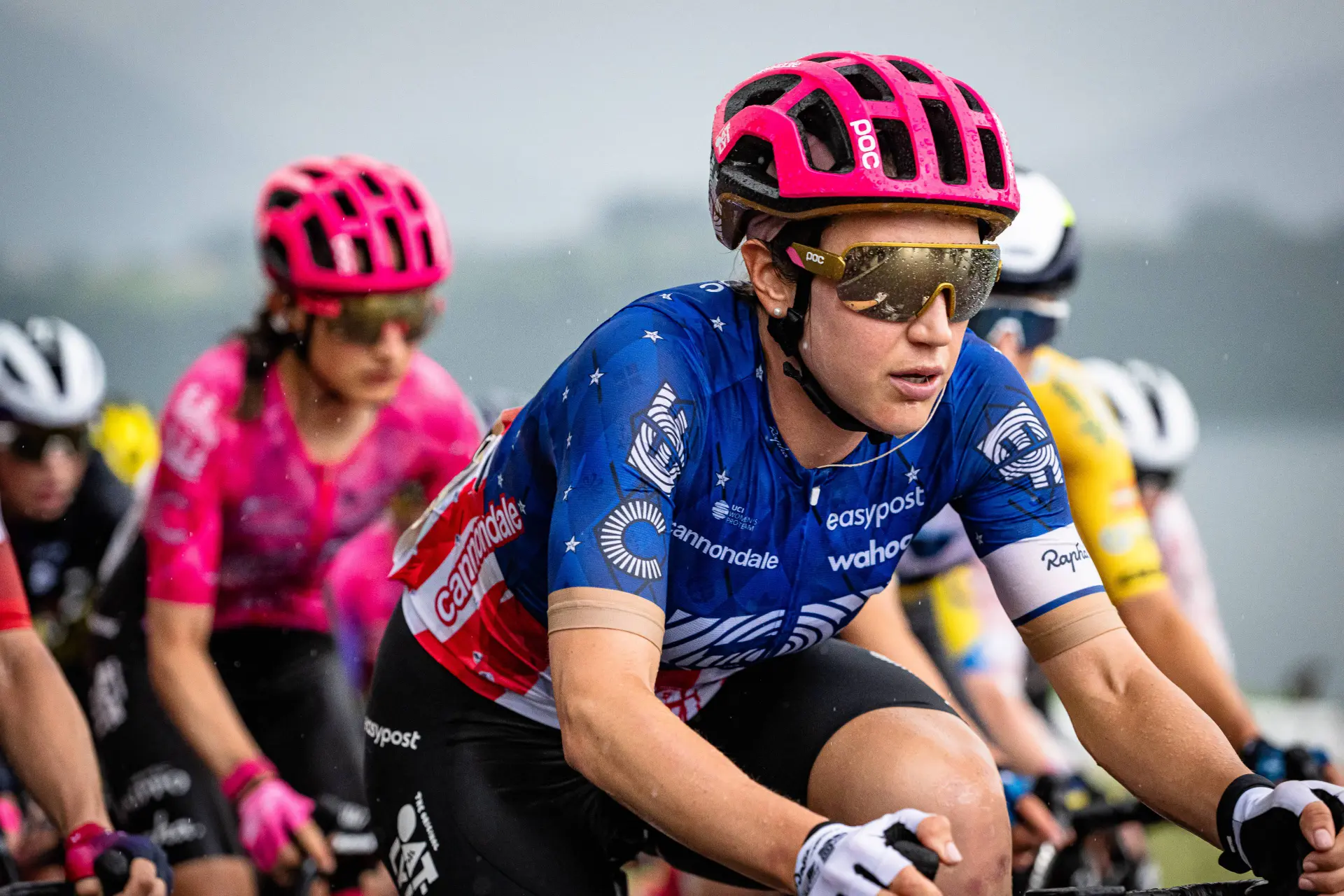
Paula Blasi in the Spanish national jersey
Read also
Despite the haul of recent months, Blasi says she is still adapting to the highest level of the professional ranks.
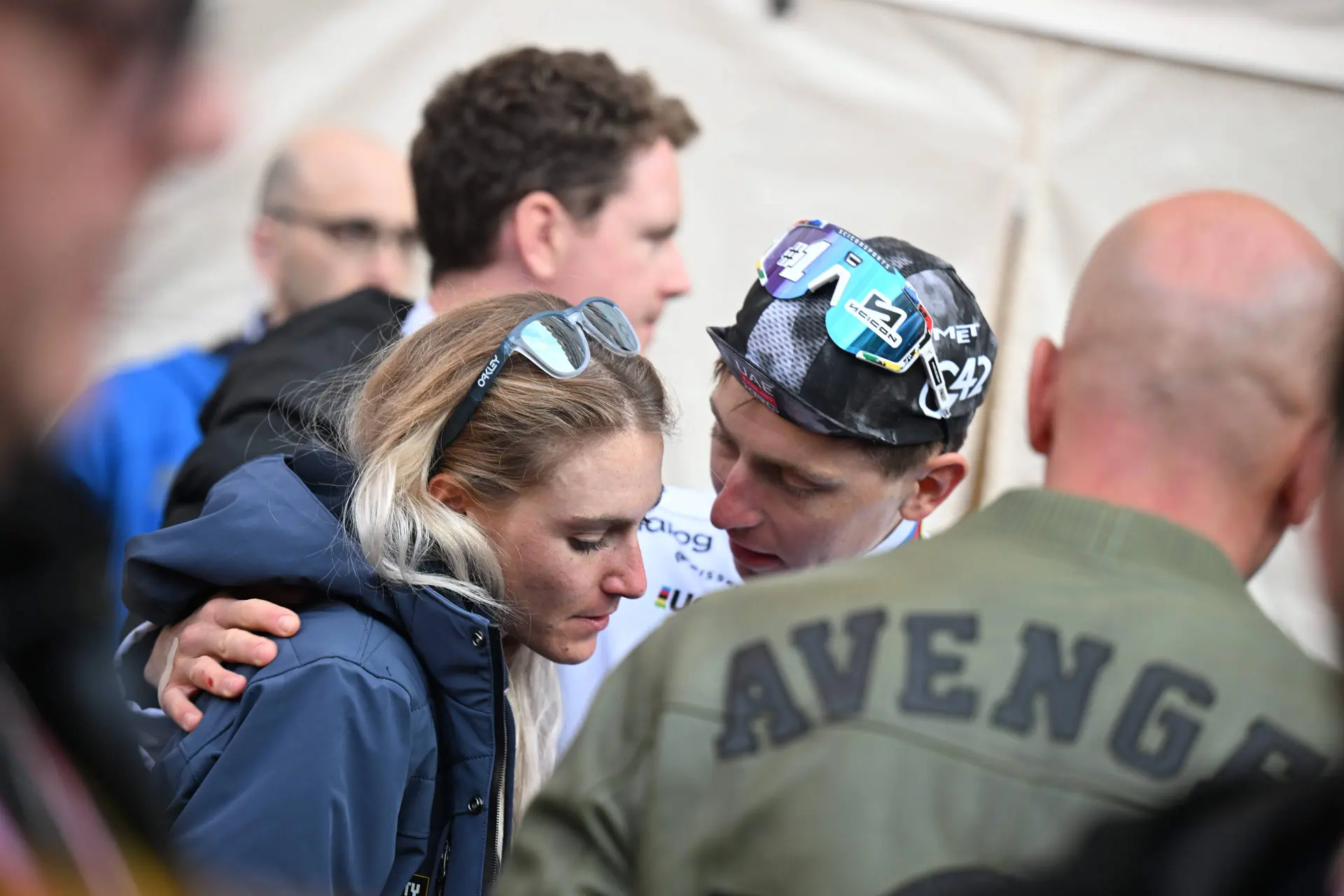
“I still see myself a bit like a ‘chick’, not so much because of my age, but because I haven’t been in the peloton that long. It feels strange when someone like Demi says hello. These are things I haven’t normalised yet, and I don’t know if I will.”
The Spaniard admits that lining up with some of the sport’s biggest names remains special, though she is steadily learning to race on equal terms with riders she watched from afar for years.
The Tour de France, an open possibility
Given Blasi’s form this season, an inevitable talking point is a possible start at the Tour de France Femmes, scheduled from the 1st to 8th of August.
She prefers caution and stresses that, beyond individual results, team-structure decisions also come into play.
“There’s a part the public doesn’t always see, which is the team side. The road puts you in your place, but the structure is set and it’s a bit difficult to go from not even being on the Tour roster to suddenly saying: ‘I’m the leader.’ I’m not scared — I like pressure. If I can be there, I will, and we’ll see.”
What is clear is that her performance has already exceeded pre-season expectations.
“The day before La Vuelta they told me: ‘Paula, there’s no pressure, we know your goal is to win in three or four years.’ But inside I was thinking: ‘I want to win it now.’”
Europeans and Worlds on the horizon
After taking the under-23 European title and the category’s world bronze in 2025, Blasi does not hide her interest in the major championships at elite level.
Even so, she prefers to take a measured view and assess how her form evolves over the coming months.
“But we have to see what shape I’m in, how the season unfolds, and take it step by step.”

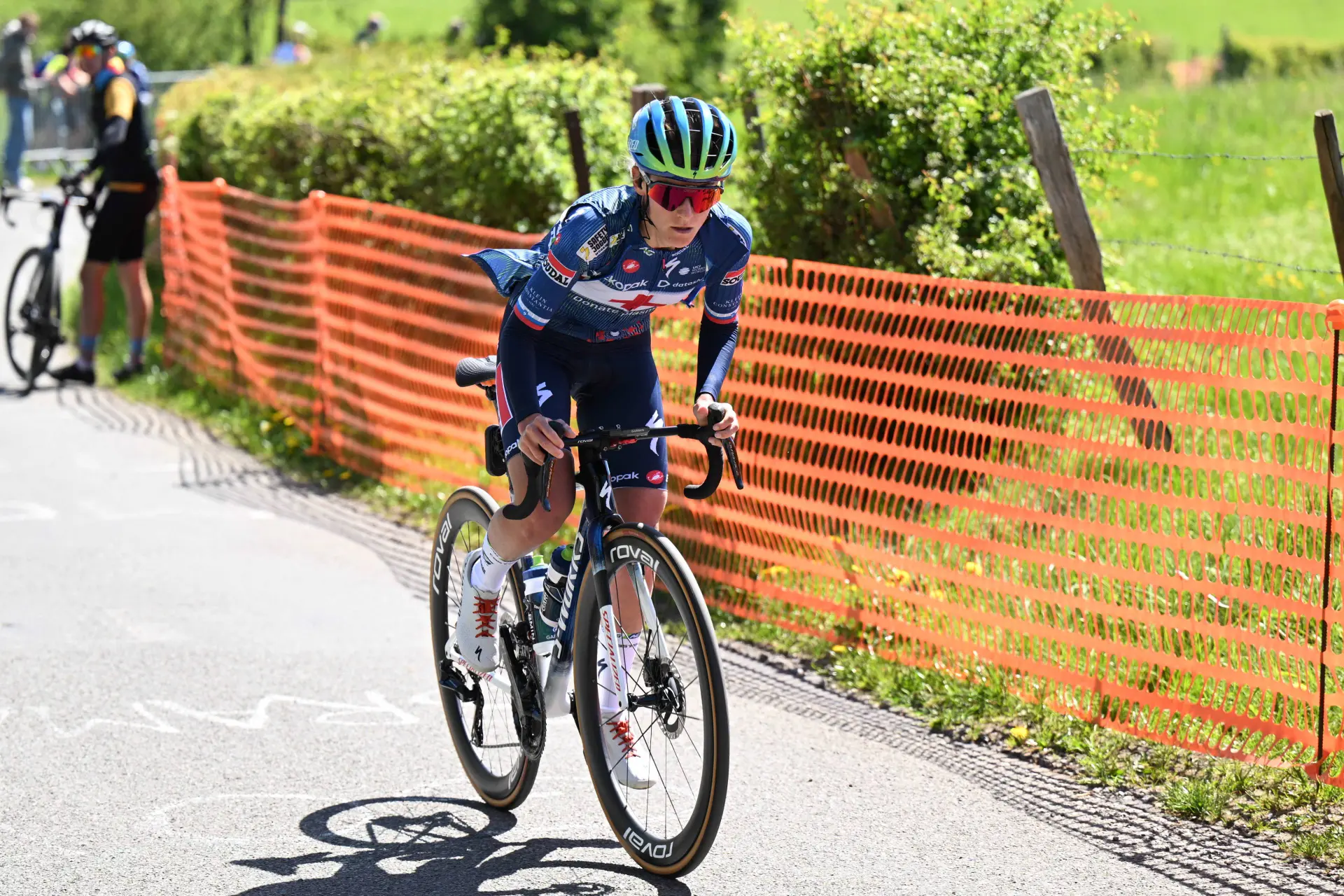
Paula Blasi after winning the 2026 Amstel Gold Race
Read also
Lessons from La Vuelta Femenina
Her debut in the Spanish stage race could not have ended better, taking the overall win, but the experience also brought key lessons.
“In a Grand Tour, the easy part is the legs. On the first days I was chatting with everyone. On day three I felt great in the legs, but I had no energy. The way I finished on Angliru, I could just as easily not have started, because I was already unwell.”
Although she didn’t win a stage, she came very close at Les Praeres and on the Angliru, where she finished second.
“I’ve never been so happy to reach the finish.”
“I had the red jersey in my head, and I was afraid I wouldn’t make it to the top. So I played it safe. I figured it’s not always good to win everything at the first attempt.”
Before conquering the Vuelta, Blasi had already shown top form in the Ardennes classics. Among those results, victory at the Amstel Gold Race marked a turning point in her season.
“Since Amstel, everything has flowed. It gave me confidence. The team treats you differently, your roles change. I needed to see they were starting to trust me.”
Even so, she admits that Liège–Bastogne–Liège left a slight feeling of a missed opportunity.
“The day after Flèche we did three and a half hours of training with very hard intervals. If I’d rested the day after Flèche, I think I could have fought for the podium. But I have no regrets, because my goal was the Vuelta. Next year I’ll approach it differently.”
Inspired by Pogacar while keeping her feet on the ground
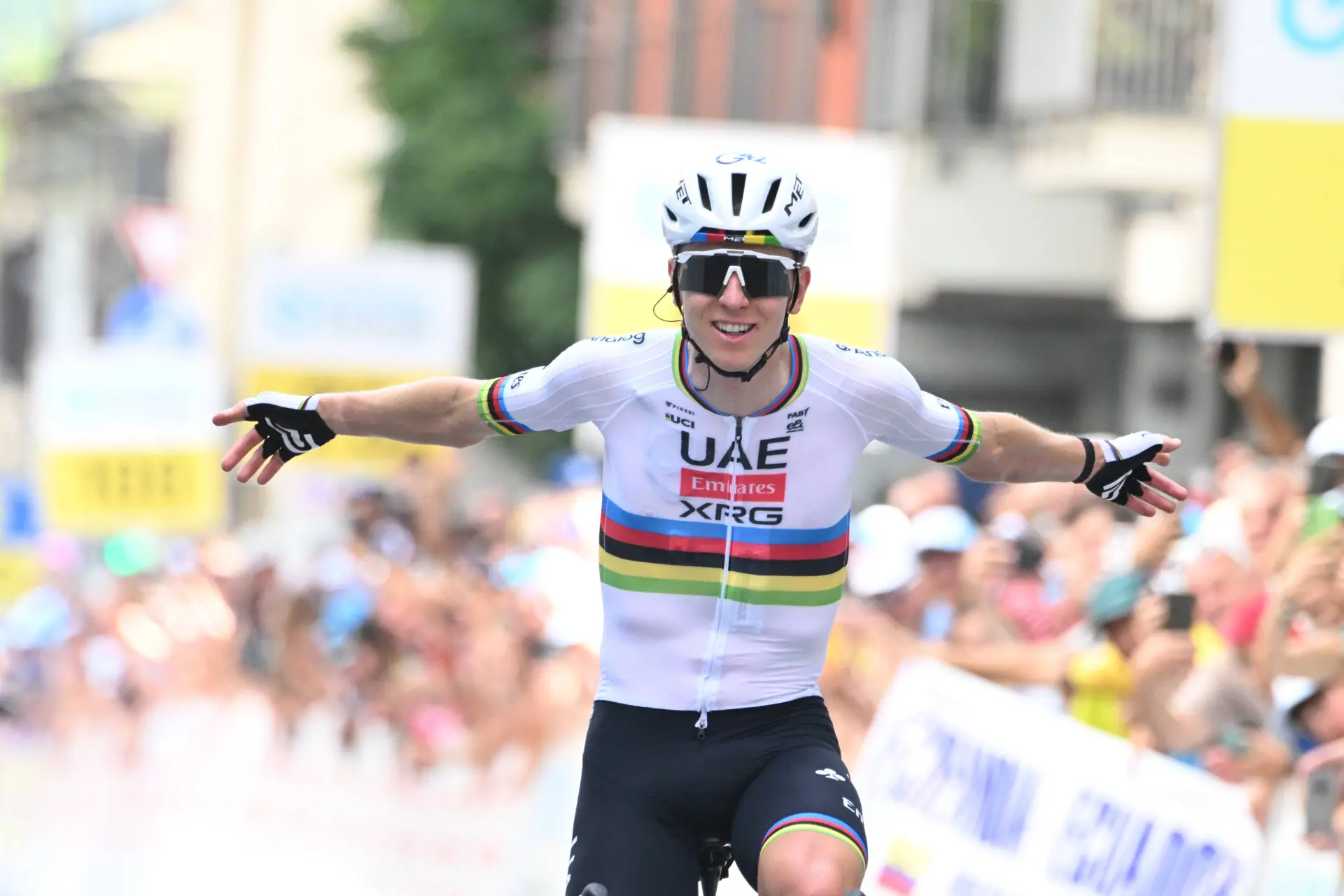
Blasi has proved competitive in very different scenarios and doesn’t want to limit herself to one race type. She won’t rule out broadening her targets in future, following a philosophy similar to her teammate Tadej Pogacar.
“I want to be a Pogacar. I think every cyclist would say that. Given how the calendar is structured, I think you can do a bit of everything, so I won’t even rule out Paris–Roubaix.”
However, the Spaniard insists that the impact of her results hasn’t changed who she is or her relationship with those who have been with her since before she reached the elite.
“I’m still the same Paula, I still have my close people. Those people, when not even my brother knew who I was, were already supporting me. That circle that you know loves you for being Paula, not for being Paula the cyclist.”
A statement that neatly sums up the moment the Catalan rider is living: one of the breakout stars of women’s cycling today, with undimmed ambition and her eyes set on everything still to come.

Jorge BorregueroWriter
Jorge Borreguero is a journalist with a degree from the Complutense University of Madrid and has been a writer for Cyclinguptodate and Ciclismoaldia since early 2023. In this role, he has played a key part in the evolution of the website, particularly as a specialist covering Movistar Team. He regularly writes race reports, analytical pieces, and in-depth features about the team, and has conducted exclusive interviews and attended multiple team presentations, providing readers with firsthand insights into one of the leading professional cycling squads.
Throughout his career, Jorge has maintained a strong focus on sports journalism, gaining experience across a variety of disciplines, including basketball and football. However, his current work is almost entirely dedicated to cycling, contributing extensively to Ciclismoaldia and its sister website Cyclinguptodate. For these platforms, he combines thorough research with detailed reporting to deliver high-quality content, ranging from race previews and results to expert analysis of teams and riders.
Jorge’s reporting is marked by accuracy, depth, and a commitment to providing readers with reliable and authoritative information. His direct engagement with teams, athletes, and events ensures that his coverage reflects firsthand knowledge and professional insight. Through his work, he has established himself as a trusted voice in professional cycling journalism, bridging the gap between the sport and its global audience while maintaining rigorous editorial standards.
claps 3visitors 1
Just in

Popular news
Latest comments
- 'Children these days'... Wout, since the caveman learned to say "Ug", older generations have always said this about younger generations. Not every young rider is a cowboy. So what's to say that the fact that Poels was respectful meant that his peers were equally so?
 Rafionain-Glas19-10-2026
 - "...In a weakened field" Most definitely ! YAWN !frieders319-10-2026
- Noted. But I had to appease his fans.MajorPayne19-10-2026
- I wonder if he'll race Challenge MallorcaRafionain-Glas19-10-2026
- Head to head time-splits: Jay Vine vs Remco Evenepoel: 10.5 km - Vine lost 45 seconds to Evenepoel 34.2 km - Vine lost a further 1:10, and was caught in the vicinity of that checkpoint. Note: I remember Vine getting caught before the second checkpoint, and ProCyclingStats log supports that, however, the gap at the second checkpoint was less than 2 minutes. 45.4 km - Vine lost only 16 seconds Of course, Vine lost less time in the middle section than the early section, but at the final segment rate, he'd have lost 15 seconds in the opening section and and 34 seconds in the middle. It is possible that Vine paced himself very well but that seems unlikely. In comparison with Stefan Küng: Kung lost: 26 seconds at T1. A further 1:11 by T2. A further 40 seconds by the finish. Relative to Evenepoel, Küng did slow down by the end. Maxime Decomble: Lost 47 seconds at T1. A further 1:20 by T2. A further 26 seconds by the finish. Mikkel Bjerg: Lost 37 seconds at T1. A further 1:34 by T2. A further 46 seconds by the finish. It is not concrete evidence that Vine cheated though it certainly doesn't absolve him. However, watching the race, I am 100% sure that Vine did not pull over and follow a different line when Remco passed him. Remco pulled away quite quickly, but the gap did not balloon and Vine definitely got aero assistance.Rafionain-Glas19-10-2026
- That ship has sailed years agovappaxbipmv19-10-2026
- He doesn't have to. I'd be perfectly happy if he loses SB if he then wins everything elsevappaxbipmv19-10-2026
- Please don't put Remco in the same sentence as Tadej. It's disrespectful to Tadej. Please make a note of this.KissinKate19-10-2026
- ....and you just described how americans are fleecing american fans as well. We don't even get the eurosport coverage you get. What you see on yurrup HBO is not available in this country. Trust me, being a cycling fan sucks everywhere.KissinKate19-10-2026
- While media outlets point to the loss of Richard Carapaz, Kasper Asgreen, and rising talents like Steinhauser as a sign of trouble, this is actually classic EF Pro Cycling tactical pivot at play. Operating on less than half the budget of state-backed super-teams, Jonathan Vaughters smartly maximized Carapaz’s return on investment by turning high salary and health setbacks into Tour stage wins, Yellow, and the Polka Dot jersey, before freeing up vital capital when his valuation peaked. Let us be completely honest here: Carapaz’s departure to NSN is strictly about securing one final massive payday before calling time on his career, rather than building a lasting sporting legacy. EF built a squad around him and gave him tactical freedom that few teams would offer, but given his ongoing health concerns and age, keeping him at that price point represented an unsustainable risk. It is very unlikely he will match the freedom or success he enjoyed at EF with his new team, making this move a pure business decision for a veteran rider cashing in on his remaining value. In contrast, while signing Tao Geoghegan Hart carries its own physical risk, it comes at a vastly different financial scale that protects EF's bottom line while offering immense upside. Replacing that climbing depth won't happen overnight, but bringing in Tao fits EF’s proven reclamation playbook perfectly by providing a low-pressure, culture-first environment for a proven Grand Tour winner to find his magic legs again. Backed by a secured core in Ben Healy, Neilson Powless, and Sean Quinn through 2029, EF isn't crumbling; they are simply resetting their wage structure, staying nimble, and betting on high-ceiling upside where richer teams only see risk.wambo19-10-2026
Loading
Write a comment