“Others might be crushed by expectations. He turns it into a game” – Paul Seixas backed to thrive under rising pressure before Liège-Bastogne-Liège test
Cycling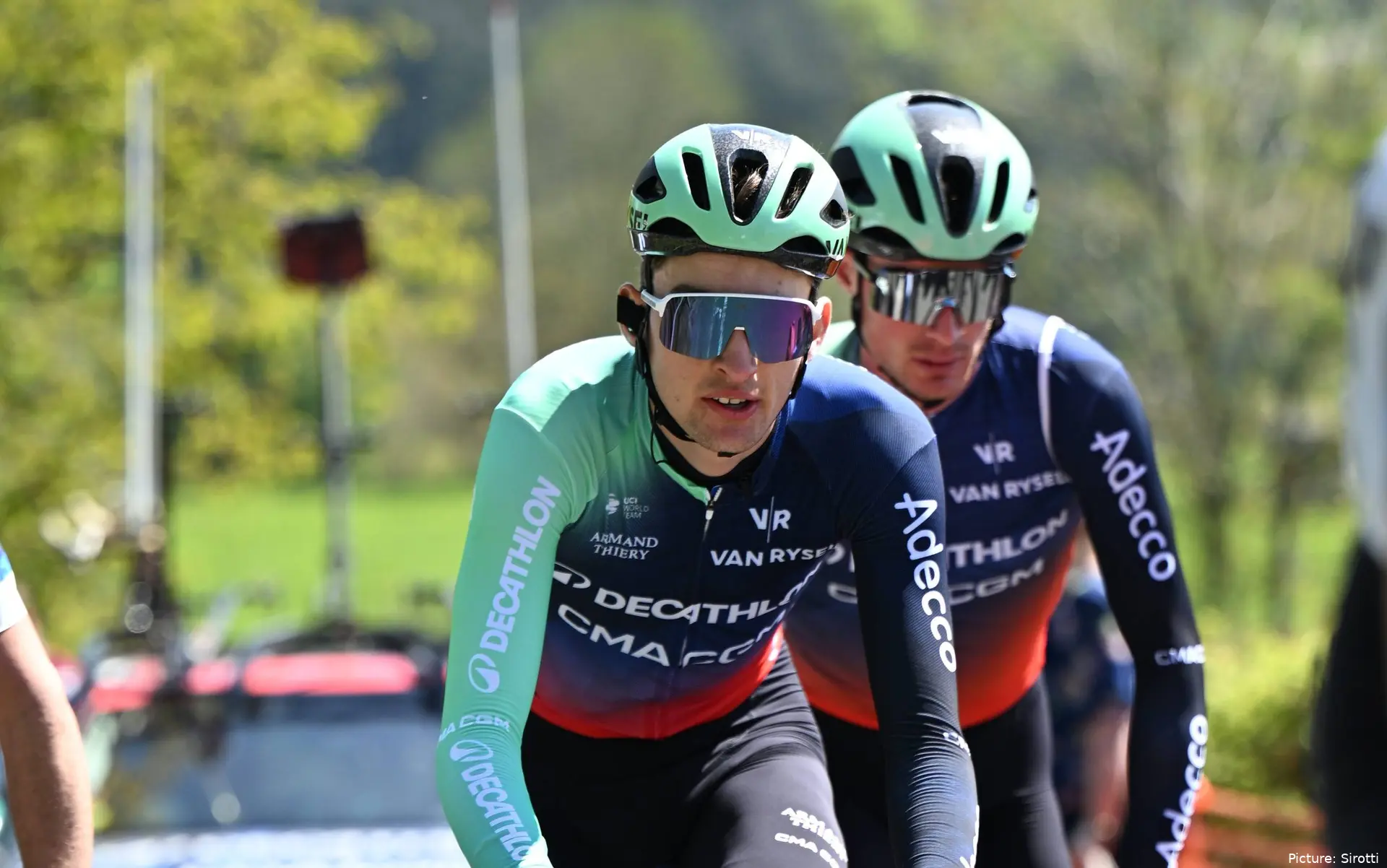
The expectations around Paul Seixas are no longer theoretical. They are immediate, unavoidable, and, ahead of Liège-Bastogne-Liège, heavier than ever.
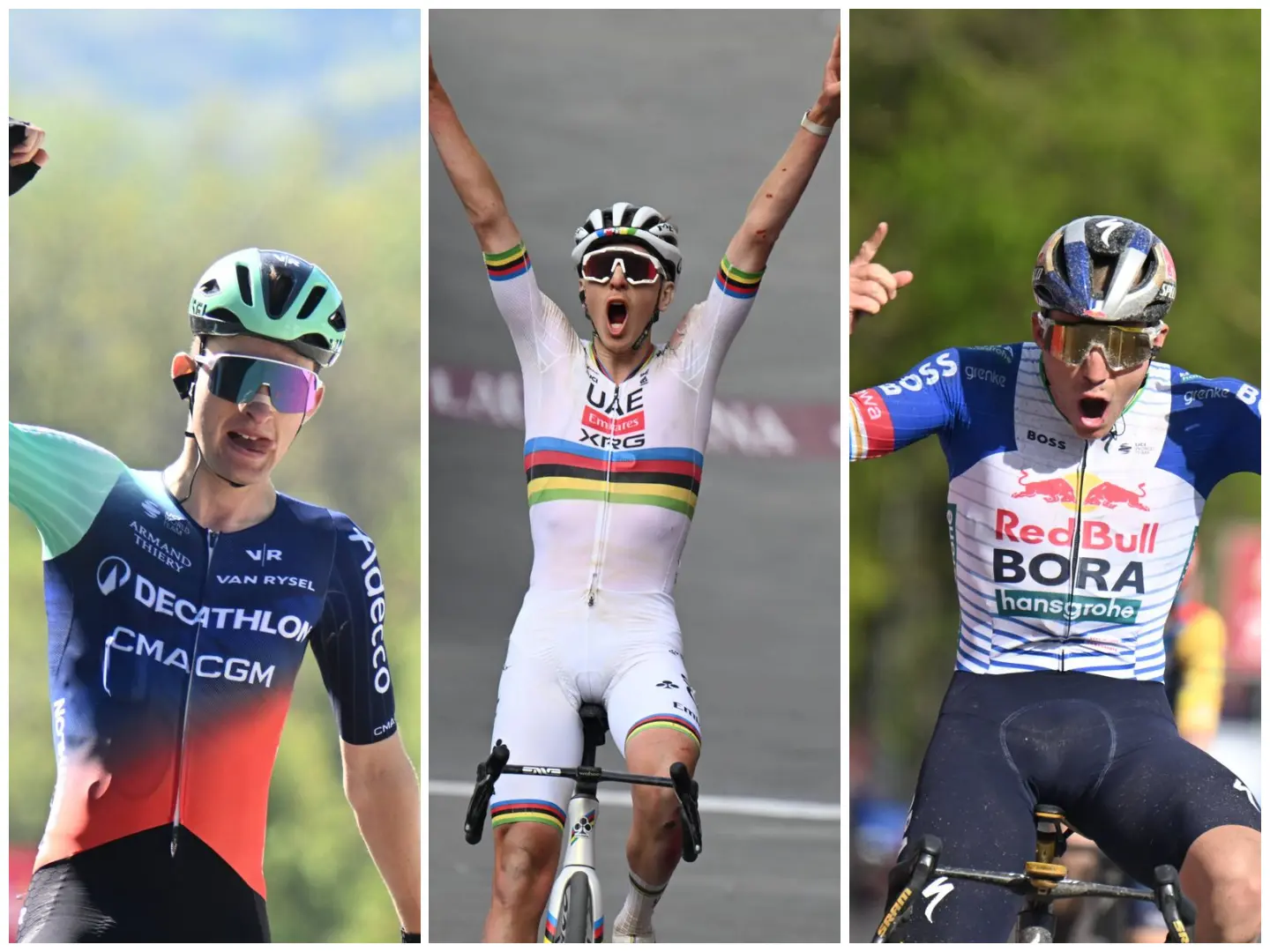
At just 19, the Decathlon CMA CGM Team leader is not arriving at a Monument as a promising outsider or a name for the future. He lines up on Sunday as a rider already being positioned among the favourites, spoken about in the same breath as Tadej Pogacar and Remco Evenepoel, and in some quarters even tipped as the Slovenian’s closest challenger. That shift changes everything.
From breakthrough talent to genuine contender
Until now, Seixas’ rapid rise has come with a degree of freedom. His second place at Strade Bianche earlier this season hinted at his level, while victory at Flèche Wallonne confirmed it in emphatic fashion. But those performances came without the full weight of expectation that now surrounds him. Liège-Bastogne-Liège represents something different.
It will be only the second Monument appearance of his career, following a seventh place at Il Lombardia in 2025. The context, however, has completely changed. Then, he was observing, learning, and quietly establishing himself. Now, he arrives with scrutiny, with pressure, and with the sense that anything less than a result would feel like a missed opportunity. That is a rare position for any rider. For a teenager, it is almost unprecedented.
A different kind of pressure
The presence of Pogacar and Evenepoel would normally define the narrative of a race like this. Instead, Seixas has been pulled directly into that conversation. That brings a different kind of burden. Not just the expectation to perform, but the expectation to compete with the very best, immediately and consistently.
It is exactly the scenario that has seen many young talents falter in the past. The step from promise to obligation is often the most difficult to manage.
And yet, within his own team, there is little sense of concern. “With that level of physical potential, others might be crushed by expectations. He turns it into a game. He has such calmness,” said Sebastien Joly, Decathlon CMA CGM’s performance director in quotes collected by Eurosport.
That assessment cuts to the heart of why Seixas continues to defy the usual trajectory.

Paul Seixas most recently won La Fleche Wallonne 2026
Detached, but not passive
The defining trait of Seixas’ season so far has not only been his results, but the way he processes them. “I’ll just remember that I won. The rest doesn’t interest me,” he said following his Flèche Wallonne victory, dismissing the surrounding noise with characteristic simplicity.
It is not a lack of ambition. Far from it. It is a deliberate narrowing of focus, one that allows him to operate without being consumed by the expectations building around him.
Teammate Tiesj Benoot has seen that first-hand. “All the French want him to be the next champion. Being able to handle that is just as important as having good legs. But Paul is really someone who stays cool.”
Oliver Naesen offered a similar perspective, describing how the pressure appears to slide off him “like water off a duck’s back”. Together, those views paint a consistent picture. Not of a rider unaware of the stakes, but of one able to keep them at a distance.
The real test comes now
That composure will be tested in a way it never has been before. Liège-Bastogne-Liège is not just another race on Seixas’ calendar. It is the moment where expectation and reality collide. Where reputation must be backed up against the strongest field in the sport, over a course that traditionally rewards experience as much as ability.
For the first time, he will not be underestimated. For the first time, he will be marked. And for the first time, he will face Pogacar not as a distant benchmark, but as a direct rival. Whether that changes anything remains to be seen. So far, nothing has. If anything, the evidence suggests the opposite. That the higher the stakes, the more Seixas leans into the simplicity that has defined his rise.
For most riders, this would be the moment where pressure begins to weigh heavy. For Paul Seixas, it may simply be the next move in a game he already seems to understand.

Kieran WoodDeputy Editor-in-Chief
Kieran Wood is a sports journalist based in Wales and has been active in journalism since 2022. He regularly contributes to DartsNews.com and CyclingUpToDate.com, where he covers professional cycling and darts. In cycling, his work includes liveblogs from major races, including the Tour de France, the Giro d’Italia, and La Vuelta a España, alongside race reports and analysis. He has also conducted interviews with professional riders.
His reporting spans the full racing calendar, from one-day classics to stage races, with a focus on accurate, real-time coverage and clear contextual analysis. For statistics, results, and historical context, he regularly uses resources such as ProCyclingStats. To support reporting on rider activity and training context where relevant, he also references Strava.
In his work, Kieran places strong emphasis on careful sourcing, editorial accuracy, and updating articles as new, verified information becomes available.
claps 0visitors 0
Just in

Popular news
Latest comments
- FYI. Pogi made his World Tour debut at the TDU in 2019. I remember it well because someone said watch out for Pogi as he did a good time up Corkscrew during training. Who would have thought he'd end up as the GOAT.Santiago25-10-2026
- FYI. Pogi's first World Tour race was at the TDU in 2019. I remember it well because someone said watch out for Pogi as he did a good time up Corkscrew during training. Who would have thought he end up as the GOAT.Santiago25-10-2026
- 50 million isnt low. But if you hire super domestiques for a million and 3rd rung leaders for 3-5 million, natural you dont have money left not the results expected. Most monuments and TDF are out of reach due to Pogi. But there were a promising 2nd rung leaders on the market and they went for broke to get Onley and Kevin. I put their entire troubles due to mismanagementabstractengineer25-10-2026
- I think it’s becoming clear that cycling got way ahead of itself for a few reasons and is now coming to the realisation that some rider salaries just exploded without justification and it snowballed until sponsors started pulling money out because THEY did not see any return on increased costs. Cycling is still a dying sport (that never moved out of the niche family) and will remain so if it doesn’t embrace and promote new ventures or manage to attract new markets. Even within cycling, fans are basically compartimentalised, (almost nobody here follows track for example), and the multiplication of possibilities hasn’t grown the sport, it has just split it into a larger number of smaller branches. If it weren’t for nation state sponsors (far too numerous already) other teams would never have (had to resort to) raised bigger budgets that are now leading to sponsor abandonment. That’s the difference between long-term steady growth and financial doping, the latter can also just blow up in your face. I will venture to wager that apart from one or two exceptional cases, rider salaries will no longer go up and are quite likely to actually drop over the next decade.Jumpyjohn25-10-2026
- You know you can post all this on idlprocycling too with your account(s) don’t you? There’s a whole bunch more articles and people there to inform.Jumpyjohn25-10-2026
- That’s the kind of word my foreign grandma would have rendered fashionable again, like flabbergasted (at her time) ;-) Perhaps he should get a pro to fill out his papers and pack his bag too, customs have become keen on controlling anyone from the balkans.Jumpyjohn25-10-2026
- Alternatively, just call Rod StewardJumpyjohn25-10-2026
- I will be in Adelaide in a shot if Pogi comes to the Tour Down Under. Fingers and toes crossed that this will eventuate, he has just got to remember to stay aware of kangaroo’s, as Jay Vine can attest to. Though can’t be any worse than some of the passionate fans in EuropeSearider25-10-2026
- "The Spaniard also highlighted Florian Lipowitz, third in the recent World Championship time trial, as a rider to watch as he continues to gain experience." Please stop the AI slop
 Rafionain-Glas24-10-2026
 - I think it's great! Now there's a real reason forcing the people-who-don't-fix-the-potholes to fix the potholes... or notRafionain-Glas24-10-2026
Loading
Write a comment