“If I can achieve even half of what Vincenzo Nibali did...” – Giulio Pellizzari emulates Italian legend with Tour of the Alps win and turns focus to Giro d’Italia
Cycling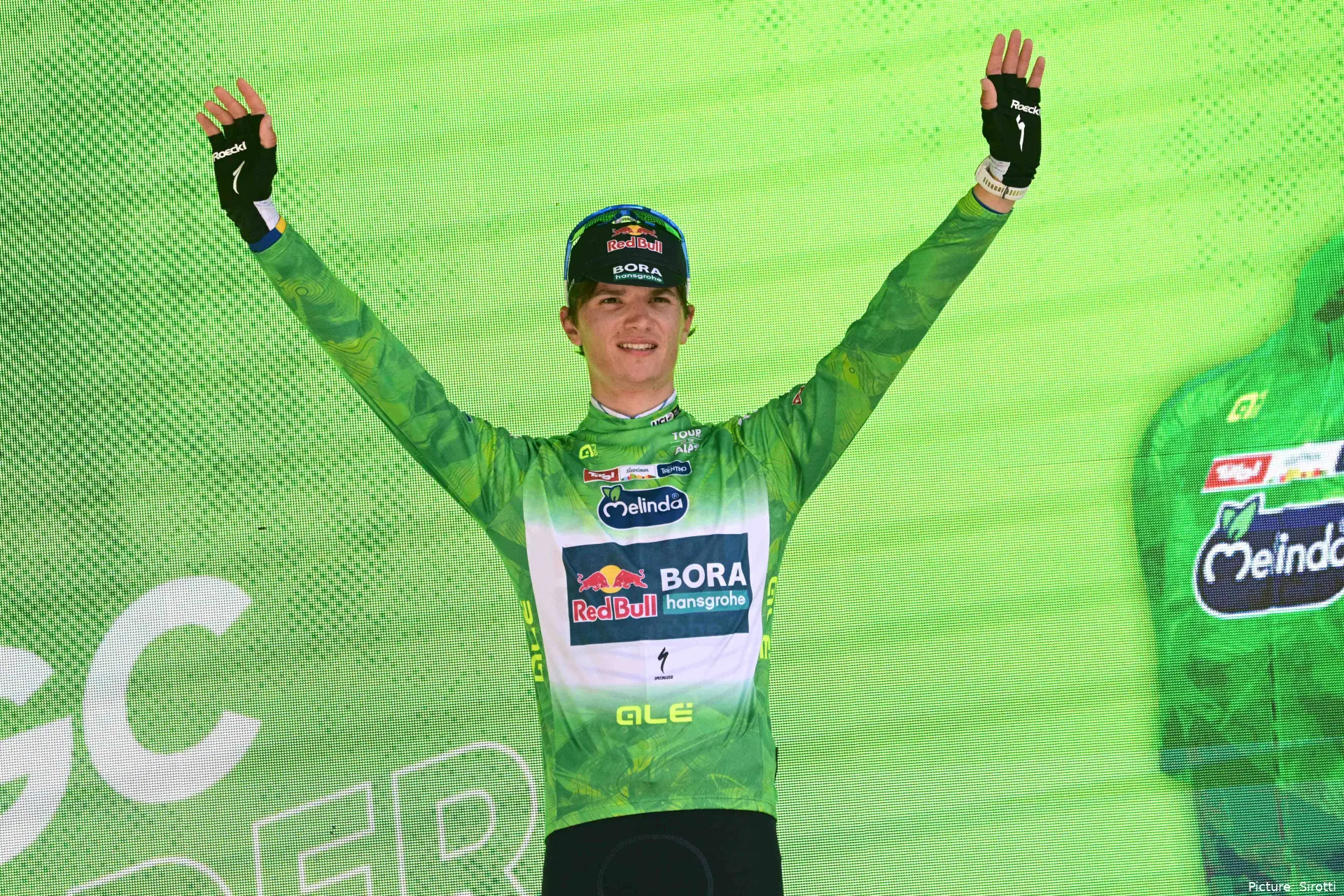
Giulio Pellizzari’s victory at the Tour of the Alps 2026 was built over five days of controlled aggression and growing authority, culminating in a decisive final-stage attack that secured both the stage win and the overall classification.
Riding for Red Bull - BORA - hansgrohe, Pellizzari arrived as a contender, but leaves as the defining rider of the race, becoming the first Italian winner since Vincenzo Nibali 13 years ago.
A week that built towards the decisive moment
Pellizzari’s success was not shaped by a single move, but by consistency across the week. After positioning himself early in the general classification, he seized control with his stage-winning performance on Stage 2, taking the leader’s jersey and placing himself under constant pressure for the remainder of the race.
From that point on, every stage became a test of control. With gaps measured in seconds rather than minutes, the Italian was required to respond to attacks, manage positioning and rely on his team across demanding terrain. “It was a very tough stage from the start,” Pellizzari said in conversation with Cycling Pro Net. “I have to thank my team-mates for the work they did today and over all the previous days.”
Final stage delivers defining attack
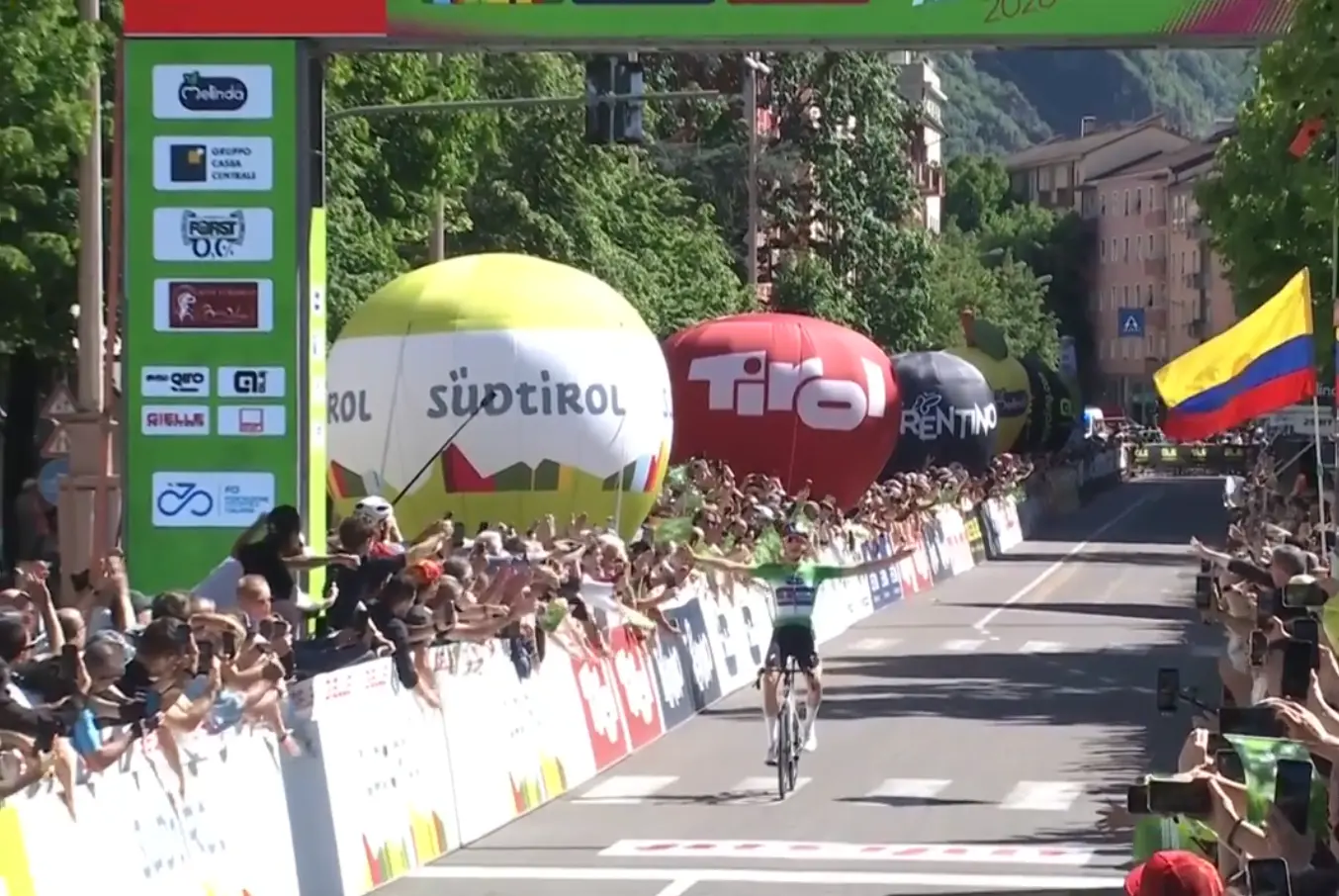
That pressure reached its peak on the final stage, where the race exploded on the climb to Montoppio.
After an aggressive opening phase and a strong breakaway that forced early control, the general classification contenders were left to decide the race on the final ascent. Pellizzari made his move with around 20 kilometres remaining, immediately creating separation from his closest rivals. “The final climb suited my characteristics,” he said. “I tried to give everything for them, and we did it.”
The attack proved decisive. While riders such as Egan Bernal and Thymen Arensman attempted to respond, the gap held steady, allowing Pellizzari to crest the climb with a crucial advantage.

Pellizzari rides clear from Arensman and Bernal on the final stage of the 2026 Tour of the Alps
Holding the advantage under pressure
From there, the race became a test of composure. “Yes, when I attacked and immediately saw a gap open,” Pellizzari said when asked when he realised victory was possible. “Then they stayed at around 10 to 15 seconds, and I thought I just had to go all in and give everything.”
The descent to the finish added another layer of risk. With chasers closing behind, Pellizzari pushed to maintain his advantage, even at the cost of taking risks. “I pushed at the maximum and maybe took a bit too much risk,” he said. “The radio was telling me not to take risks, and I made a few mistakes in some corners, but I had to keep pushing all the way to the finish.”
Confidence built through team and preparation
Beyond the final stage, Pellizzari pointed to both team support and equipment as key factors across the week. “As a team, we’re in a really good place,” he said. “I feel very comfortable with the bike, the tyres and the setup, so it’s an area where we can try to make a difference.”
However, he remained clear that the race was ultimately decided on the climbs, where his strength proved decisive against a tightly matched field.
With the Tour of the Alps victory secured, attention immediately turns to the Giro d’Italia, now just two weeks away. “The Giro is exactly two weeks away,” Pellizzari said. “Now I’ll go to altitude to finish my preparation, then we’ll head to Bulgaria. I know I need to be in my best shape in the third week of the Giro.”
The focus now shifts from one-week success to three-week endurance, but the confidence gained from this performance is clear.
A victory with historical weight
The significance of Pellizzari’s win extends beyond the immediate result. “Yes, it’s strange that it’s been 13 years since an Italian won here,” he said. “I’m happy to have brought it back home, and hopefully it’s a good sign for my career. If I can achieve even half of what Nibali did, that would already be a lot.”
After a week defined by control, resilience and a perfectly timed attack, Pellizzari leaves the Tour of the Alps not just as its winner, but as a rider carrying momentum into the next major objective of his season.

Kieran WoodDeputy Editor-in-Chief
Kieran Wood is a sports journalist based in Wales and has been active in journalism since 2022. He regularly contributes to DartsNews.com and CyclingUpToDate.com, where he covers professional cycling and darts. In cycling, his work includes liveblogs from major races, including the Tour de France, the Giro d’Italia, and La Vuelta a España, alongside race reports and analysis. He has also conducted interviews with professional riders.
His reporting spans the full racing calendar, from one-day classics to stage races, with a focus on accurate, real-time coverage and clear contextual analysis. For statistics, results, and historical context, he regularly uses resources such as ProCyclingStats. To support reporting on rider activity and training context where relevant, he also references Strava.
In his work, Kieran places strong emphasis on careful sourcing, editorial accuracy, and updating articles as new, verified information becomes available.
claps 3visitors 1
Just in

Popular news
Latest comments
- FYI. Pogi made his World Tour debut at the TDU in 2019. I remember it well because someone said watch out for Pogi as he did a good time up Corkscrew during training. Who would have thought he'd end up as the GOAT.Santiago25-10-2026
- FYI. Pogi's first World Tour race was at the TDU in 2019. I remember it well because someone said watch out for Pogi as he did a good time up Corkscrew during training. Who would have thought he end up as the GOAT.Santiago25-10-2026
- 50 million isnt low. But if you hire super domestiques for a million and 3rd rung leaders for 3-5 million, natural you dont have money left not the results expected. Most monuments and TDF are out of reach due to Pogi. But there were a promising 2nd rung leaders on the market and they went for broke to get Onley and Kevin. I put their entire troubles due to mismanagementabstractengineer25-10-2026
- I think it’s becoming clear that cycling got way ahead of itself for a few reasons and is now coming to the realisation that some rider salaries just exploded without justification and it snowballed until sponsors started pulling money out because THEY did not see any return on increased costs. Cycling is still a dying sport (that never moved out of the niche family) and will remain so if it doesn’t embrace and promote new ventures or manage to attract new markets. Even within cycling, fans are basically compartimentalised, (almost nobody here follows track for example), and the multiplication of possibilities hasn’t grown the sport, it has just split it into a larger number of smaller branches. If it weren’t for nation state sponsors (far too numerous already) other teams would never have (had to resort to) raised bigger budgets that are now leading to sponsor abandonment. That’s the difference between long-term steady growth and financial doping, the latter can also just blow up in your face. I will venture to wager that apart from one or two exceptional cases, rider salaries will no longer go up and are quite likely to actually drop over the next decade.Jumpyjohn25-10-2026
- You know you can post all this on idlprocycling too with your account(s) don’t you? There’s a whole bunch more articles and people there to inform.Jumpyjohn25-10-2026
- That’s the kind of word my foreign grandma would have rendered fashionable again, like flabbergasted (at her time) ;-) Perhaps he should get a pro to fill out his papers and pack his bag too, customs have become keen on controlling anyone from the balkans.Jumpyjohn25-10-2026
- Alternatively, just call Rod StewardJumpyjohn25-10-2026
- I will be in Adelaide in a shot if Pogi comes to the Tour Down Under. Fingers and toes crossed that this will eventuate, he has just got to remember to stay aware of kangaroo’s, as Jay Vine can attest to. Though can’t be any worse than some of the passionate fans in EuropeSearider25-10-2026
- "The Spaniard also highlighted Florian Lipowitz, third in the recent World Championship time trial, as a rider to watch as he continues to gain experience." Please stop the AI slop
 Rafionain-Glas24-10-2026
 - I think it's great! Now there's a real reason forcing the people-who-don't-fix-the-potholes to fix the potholes... or notRafionain-Glas24-10-2026
Loading
Write a comment