OPINION: The UCI does it again after making the Vuelta a Espana clash with World Championships
CyclingSaturday, 06 June 2026 at 21:30
Cycling has spent years trying to sell itself as a modern, global, professional sport. Yet every time the UCI takes certain organizational decisions, it signals the opposite. The announcement of the 2027 calendar has again left an indefensible impression: the Vuelta a España will partially overlap with the “Super” World Championships to be held in Haute-Savoie (in France, where the real business is).
It is true that, technically, not all major events will necessarily clash. The Super Worlds combine track, MTB, para-cycling, and multiple disciplines staged simultaneously every four years. It is also true the elite men’s road race could be held before the end of La Vuelta. But the fact this debate even exists is already deeply absurd.
It is impossible to imagine a football World Cup taking place while the Premier League continues. No one would accept Wimbledon’s final clashing with the season-ending ATP Finals. Nor would it make sense for the NBA Finals to be played at the same time as an Olympic basketball tournament.
But in cycling it does happen. And it happens because the UCI has spent decades showing a total inability to protect its own product. The cycling calendar looks like it was built in silos, where each organiser fights solely for its interests while the international body behaves like an absent referee.

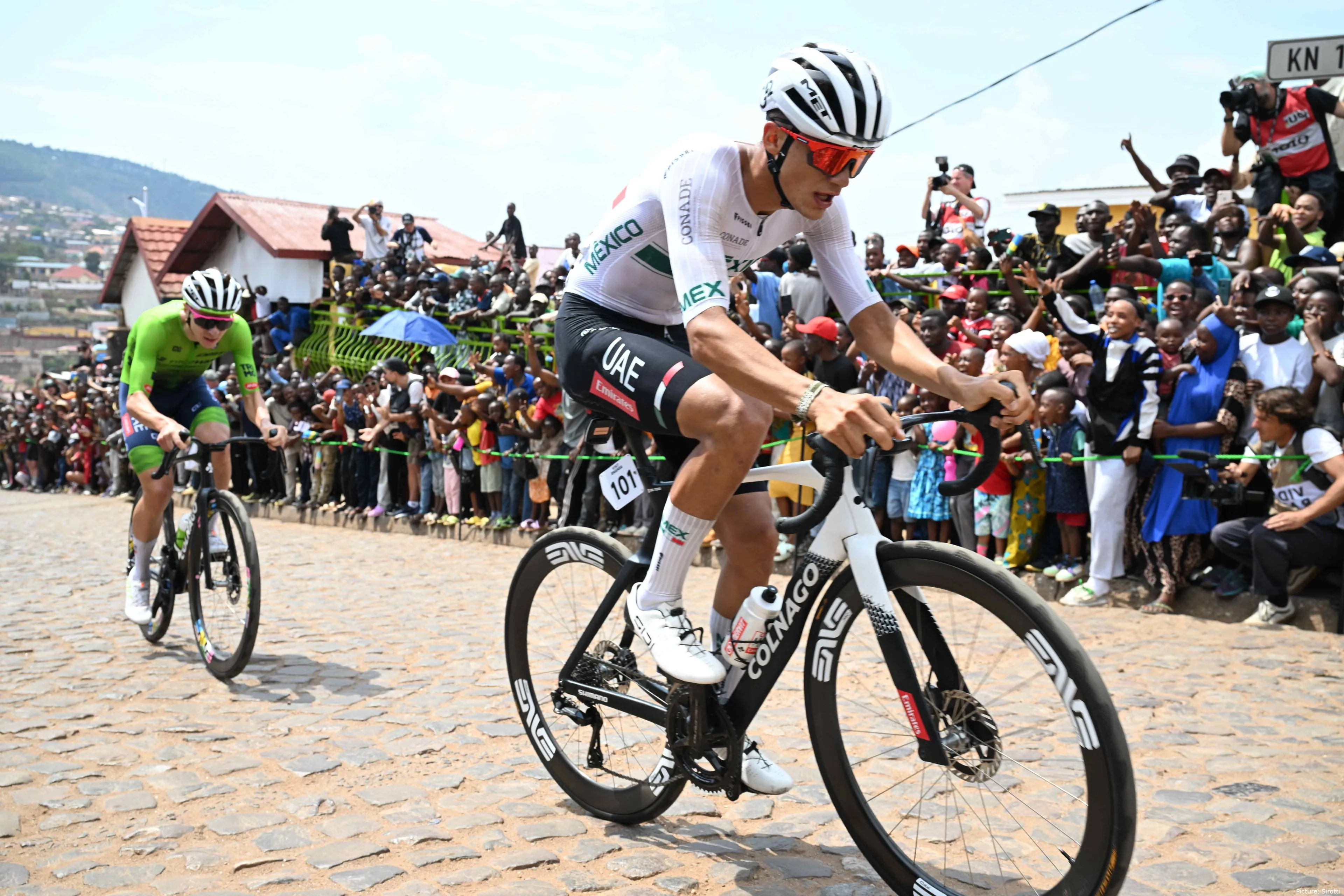
Paula Ostiz, world champion with Spain at the Kigali Worlds
Vuelta and World Championships overlap
The official announcement tries to downplay the issue. It notes that the 'Super Worlds' cover many disciplines and that the blue-riband event will probably not coincide with La Vuelta’s finale. But that does not remove the real problem: an event of that scale should never even brush against a Grand Tour.
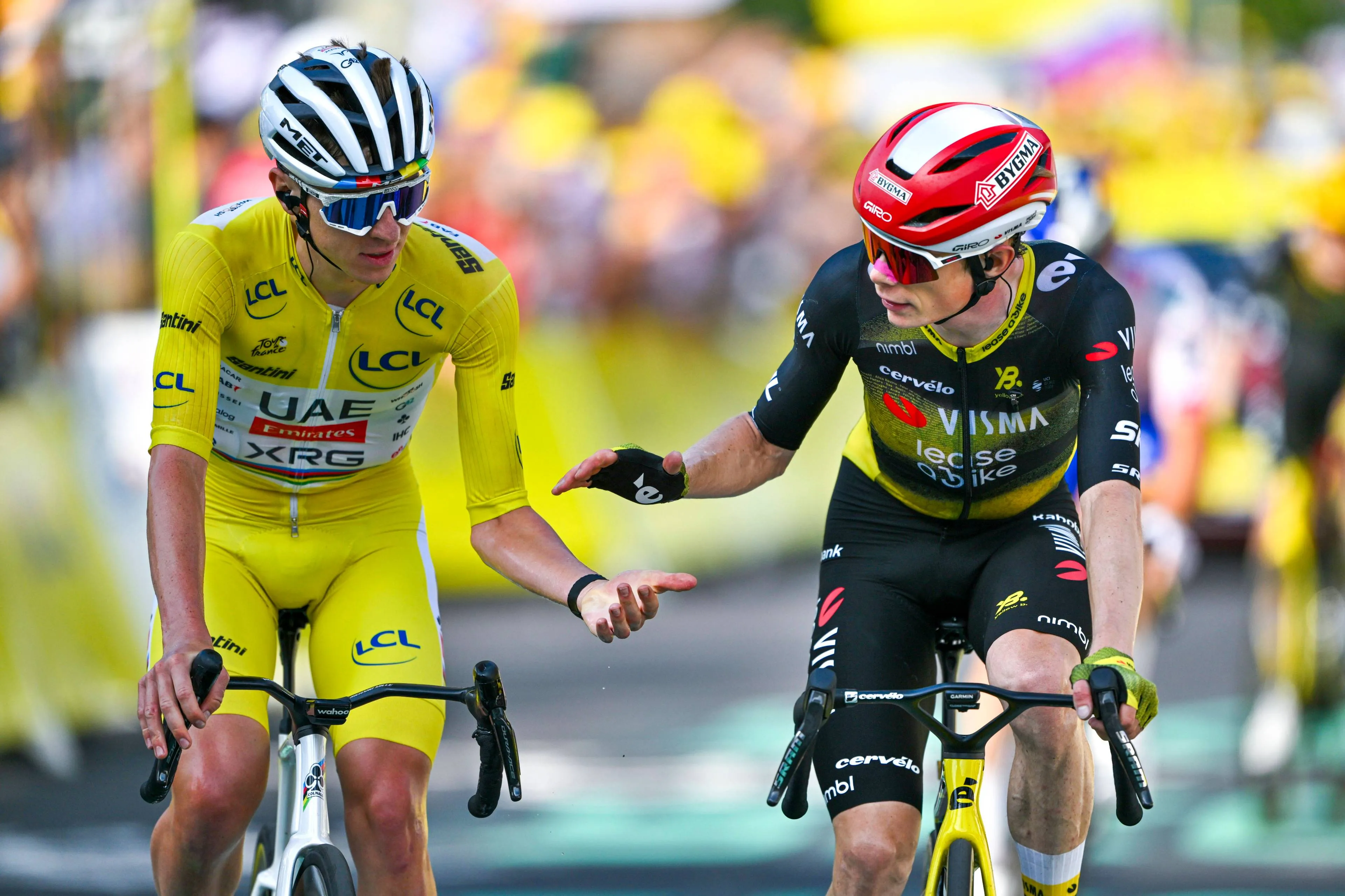
The damage is not only symbolic. It also hits riders, teams, sponsors, broadcasters, and fans. Riders must split targets, plan difficult schedules and choose between preparing a three-week race or chasing the rainbow jersey. The result is that too often no single event gathers all the big names at their peak.
The UCI constantly sells the idea of “globalisation” and “growth of cycling,” yet it cannot even order its own competitions. The most remarkable thing is that cycling does not even have a calendar that huge compared with other global sports. Which makes these collisions even harder to justify.
In any other discipline there would be absolute coordination between marquee events. International bodies understand their flagship competitions must amplify each other, not compete for media attention. In cycling, by contrast, improvisation seems normal, and teams and riders are expected to sort the chaos on the fly.
Read also
ASO, central to the embarrassment
The last point to make here is that it is “coincidentally” the Vuelta a España that overlaps with the Worlds and not the Tour de France. The Vuelta a España belongs to ASO, the same organiser of the Grande Boucle.
In short, the Vuelta and the Giro are treated as secondary (just look at this year’s dismal—if not shameful—field at the Corsa Rosa). We are told Pogacar must surpass Merckx by winning five more Lombardias. But he does not have to win five Giros, as the Cannibal did. Nor a bunch of editions at Middelkerke-Wevelgem.
Anyway, none of this is a critique of the great Pogacar - far from it. It is to tell the UCI to take its calendar seriously. It is an embarrassment to run a Grand Tour against a World Championships. Sit down and, beyond ASO not caring because the Tour already wins everything, give your calendar some decency.
claps 2visitors 2
Just in
Popular news

Latest comments
- Now this is UCI stupid - having this race in Abu Dhabi so late !frieders307-06-2026
- Pfffttttt...they can have a week or two separation from the end of the Vuelta to the RR or TT races. Lots of crying here without any definite dates!frieders307-06-2026
- Not surprising that idiots run the UCI.captmike07-06-2026
- Good article. WC shouldn't be held at the same time as Vueltavappaxbipmv06-06-2026
- Ayuso literally beat Sexy’s Ass in his first race in Trek colours. Kind of messes with your narrative. As for Remco, while he has struggled a bit, he has also delivered 8 wins and four podiums in short order. There was no one else Red Bull could have signed that would have been remotely capable of that.mobk06-06-2026
- Lefevre was literally the master of creating “tension, insecurity, and distractions”. So talk about the pot calling the kettle black. Grumpy old man whose time has come and gone.mobk06-06-2026
- Pity they had to shorten it. Was hoping to see attacks fly on the final.mobk06-06-2026
- Lidl Trek and Red Bull paid BIG money for Ayuso and Remco. Was it worth it? I don't think so. Neither of them are delivering for what they were paid for. BIG money and BIG mistakes. Ayuso and Remco are, compared to Pogi, Jonas and Seixas, second class cyclists.Ante-Ustashe06-06-2026
- so that makes it even worse for Remco, yeah I though Jonas was a bit closer to him. Remco definitely looks like a bigger rider compared to Jonas. and yeah genetics and all helps, but pure power to weight and is king. looking up weight it appears Jonas could be 10 lbs lighter even though he is 2” taller. tough to make that amount of weight up in power.mij06-06-2026
- Thinness comes at a cost to bone density and strength
 leedorney06-06-2026
Loading
3 Comments