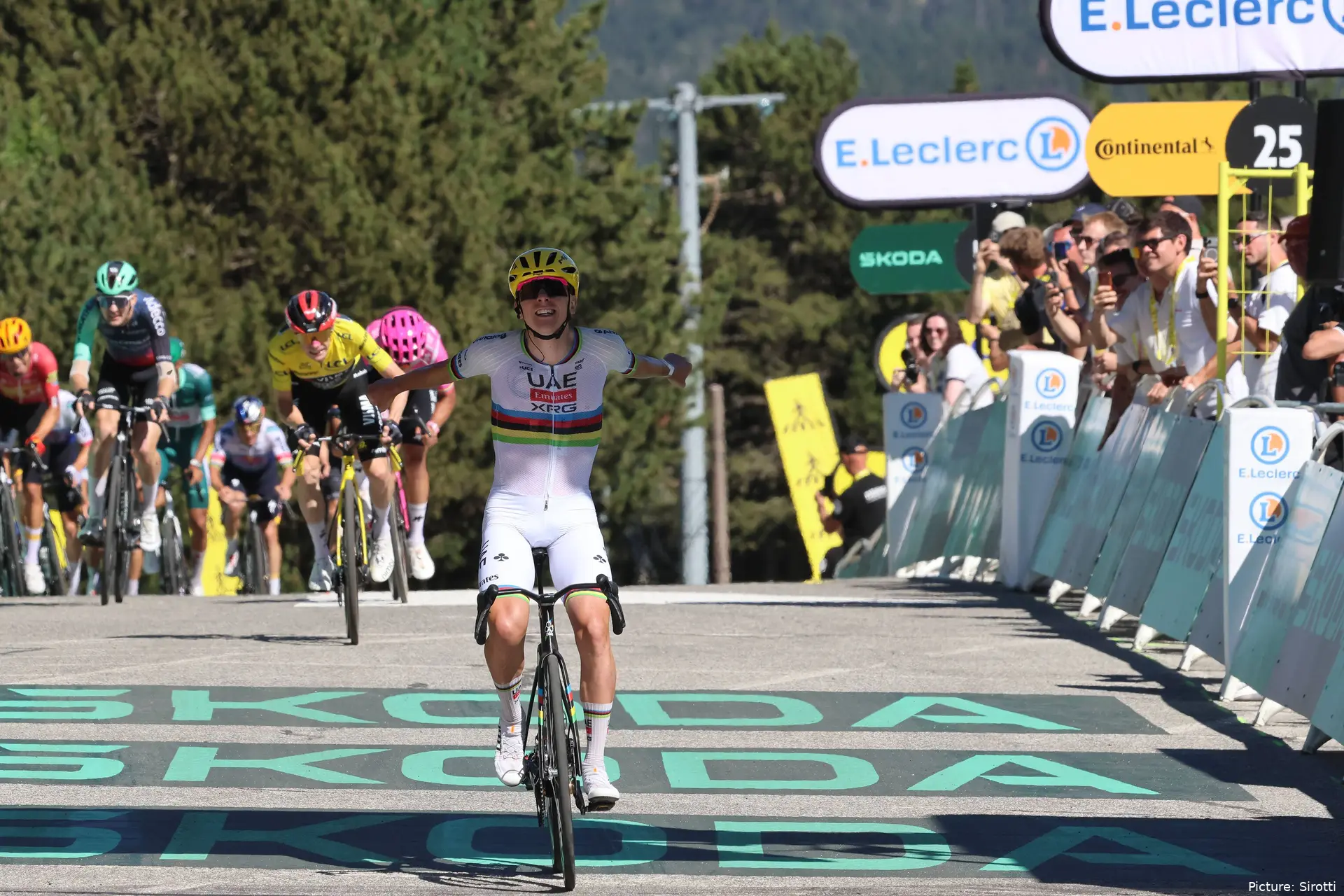
There are debates that seem to flare up on social media and vanish a few days later. Some, however, run deeper than they look. One concerns Tadej Pogacar and the dominance he exerts with UAE Team Emirates XRG: is it boring to watch a rider so clearly superior to the rest at the Tour de France and in most races he enters?
Before answering, one point needs to be clear. This is not a debate about whether what Pogacar does is right or wrong. We are talking about elite sport, and the objective never changes: win. If an athlete is clearly better than the rest, it is logical that he wins. There is nothing to reproach him for.
Sporting history is full of similar examples. Guardiola’s Barça dominated Spanish football for years. Barça handball has gone virtually unchallenged for a decade. The Barça women’s team has also imposed overwhelming superiority. When a team or athlete towers above the rest, the first thing we witness is greatness.
And that is precisely what Pogacar represents. We are likely watching the second-best cyclist in history by palmarès and impact, only behind Eddy Merckx. He delivers historic performances time and again, and his sporting stature belongs to another plane.
But sport does not live on greatness alone
It also lives on emotion. We follow sport because we want to sit in front of the TV, go to a stadium, or stand on a roadside without knowing who will win. Uncertainty is part of the spectacle. When greatness and emotion coincide, we get the best version of sport.
And that is precisely the problem current cycling presents.
This generation is extraordinary. There are Pogacar, Jonas Vingegaard, young talents like Seixas, and riders like Juan Ayuso. So much quality has rarely been gathered in one era. Yet the feeling the competition leaves is different because, today, uncertainty is very limited. That is where the debate begins. Can knowing the winner in advance become boring?
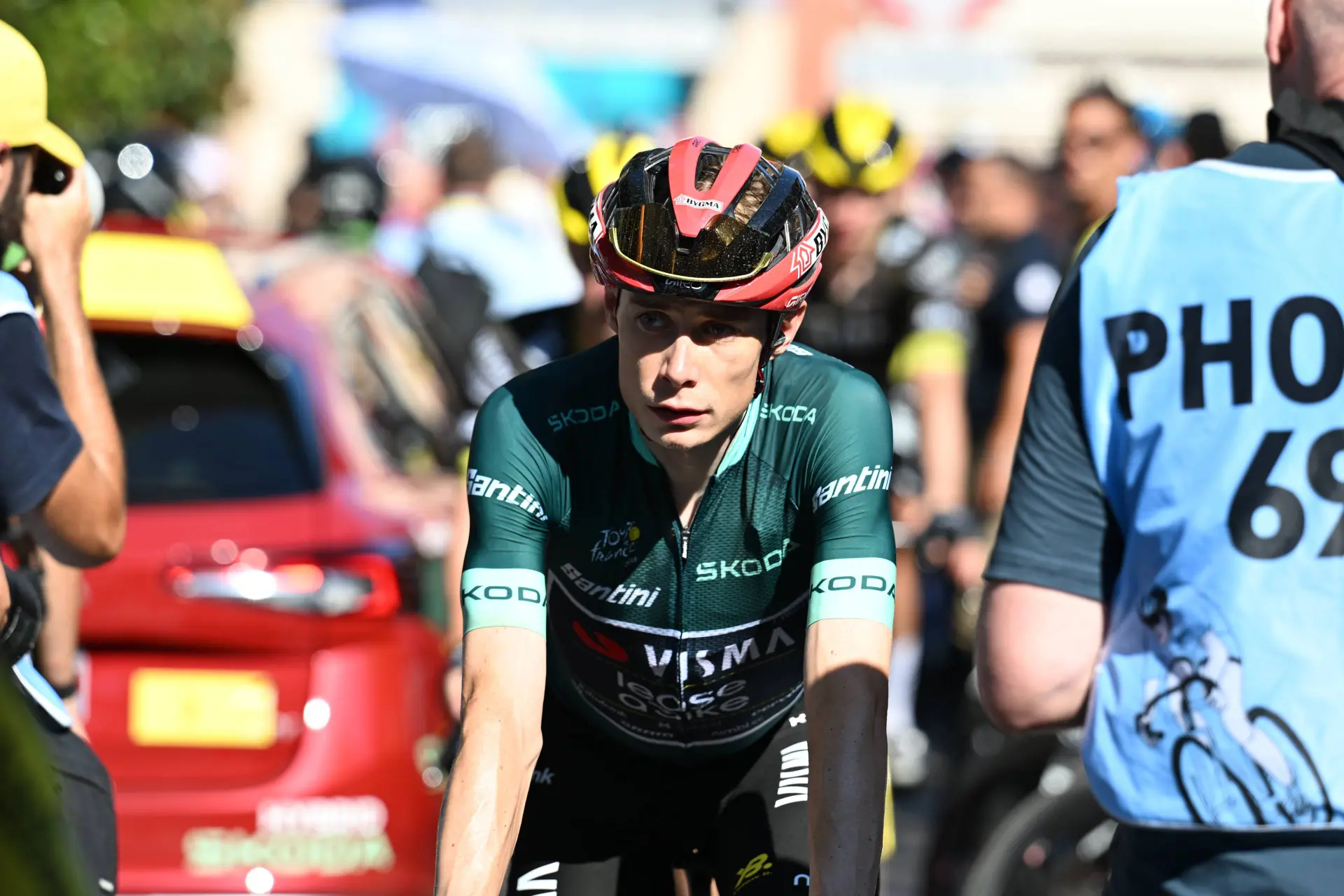
It is not exclusive to Pogačar. We saw it at the last Giro d’Italia with Vingegaard and Visma. The team controlled the race whenever it wanted. If it decided to shut down a break, the fugitives’ quality did not matter. It happened. If it wanted to set up a win for its leader, it simply did it. We are seeing exactly the same sensation at the start of this Tour de France with UAE Team Emirates.
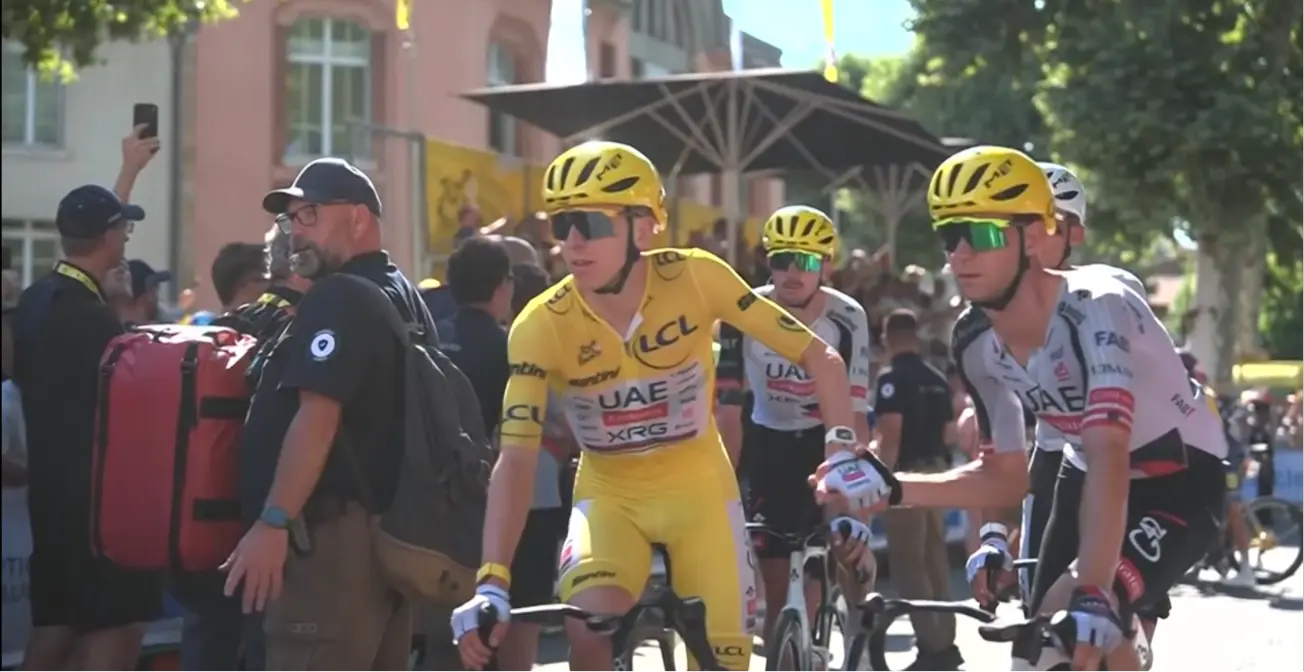
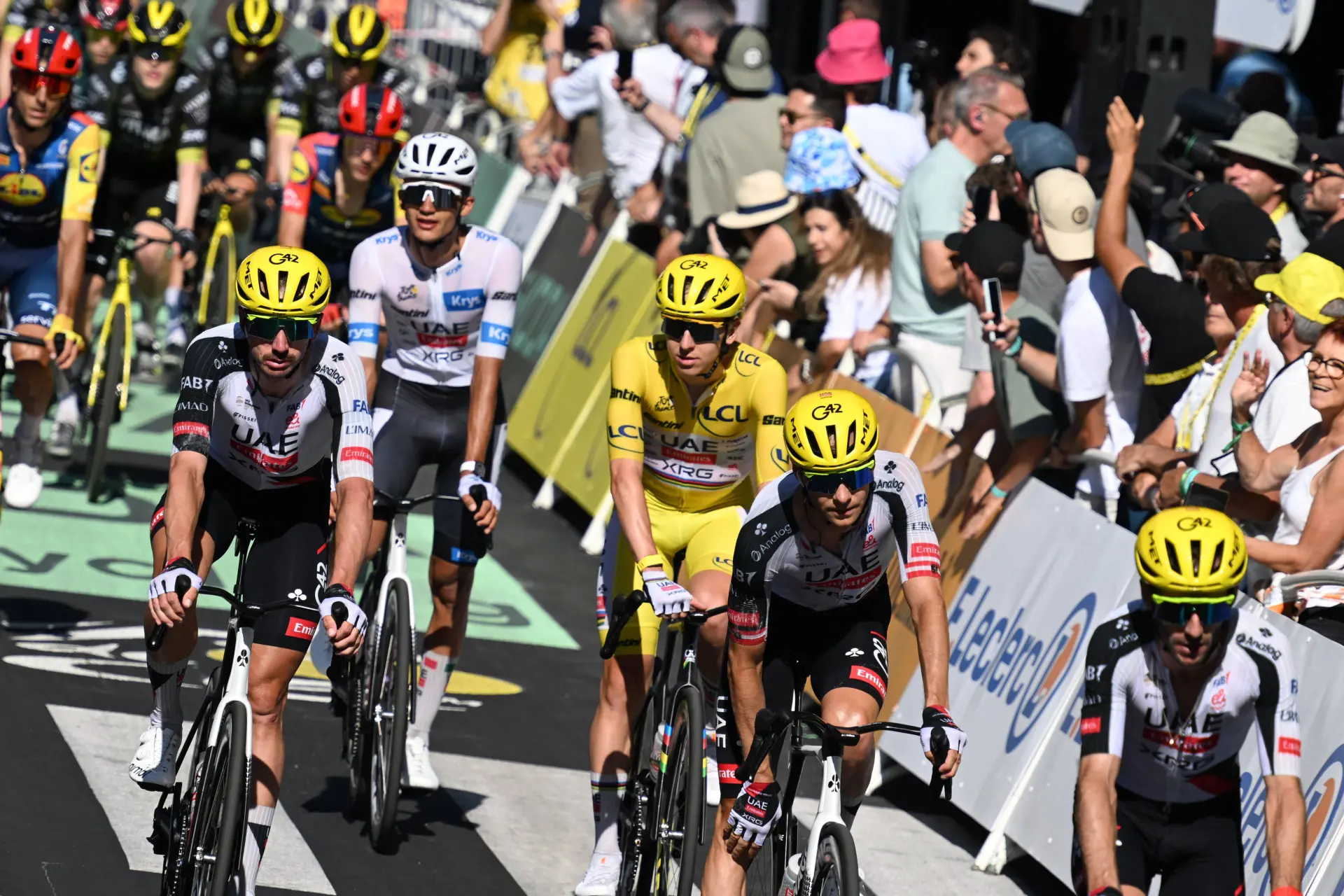
In the opening stages everything unfolded exactly as the team intended. When there was a finish that suited Pogacar, the race played to their interests. When they decided Del Toro could win, Del Toro won. When they felt keeping the yellow jersey did not suit them, they simply let the break go and ceded the lead.
In just three road stages, the race has felt as if it unfolded exactly as UAE wanted. That takes me back to a stage at last year’s Tour de Suisse.
Pogačar jumped almost unintentionally after an intermediate sprint. He opened a small gap, saw no one react, and rode solo to the line to win by a huge margin.

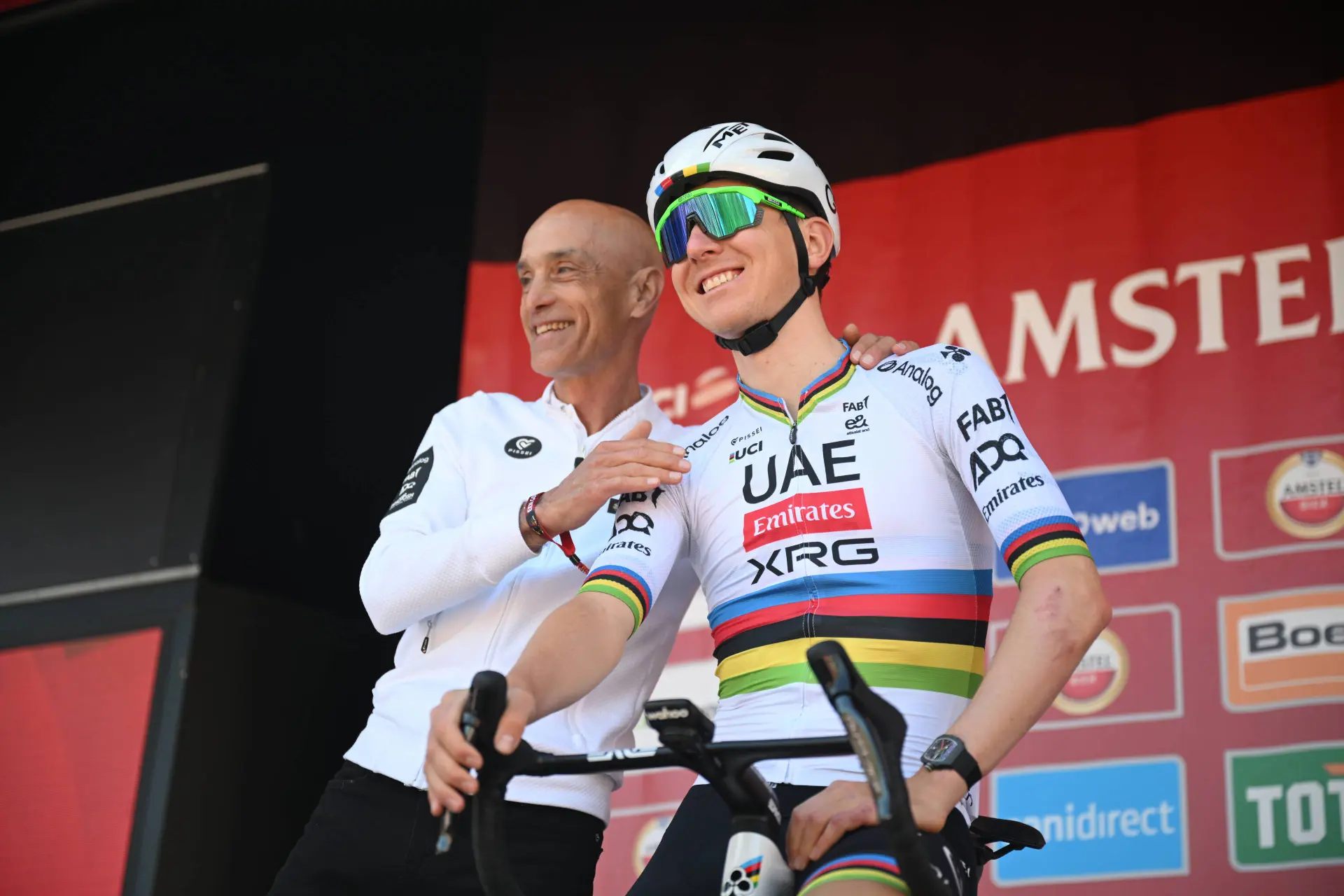
Tadej Pogacar is the best cyclist in the world
Three takeaways emerge from that stage
The first is the most common: Pogacar makes history again and shows, once more, that he is above the rest. The second is to criticise the peloton for failing to react, for letting the best rider in the world go without organising an effective chase.
But I think there is a third line of thought that links both. When a rider reaches such superiority, the rest also race intelligently.
In professional sport, victory is not the only outcome. There are podiums, top placings, prize money, UCI points, and overall classifications. If you know you have very little chance of beating the best rider in the world, it may not make sense to risk your entire race chasing him only to lose anyway.
It is a logical decision. And that very logic, in certain circumstances, reduces the spectacle. That is why I completely understand those who say Tadej Pogačar is boring.
Not because he does anything wrong. But because, in many races, the ending seems written before the competition starts.
We know he’s probably going to win. We also know he’ll often do it with a long-range attack. In some races we can even guess roughly where he’ll launch it. At Strade Bianche it feels inevitable. In Flanders it’s similar. At the Tour it depends on the route, but you can usually sense the decisive moment.
And when you know the script in advance, the thrill fades. That said, I fully understand the opposite view. Anyone who enjoys witnessing greatness is likely living through a once-in-a-generation era. We’re watching a rider make history, race after race. That also carries huge sporting value.

Tadej Pogacar, UAE star
That’s why I don’t think this debate has an absolute answer. There is no universal truth. It simply depends on what each fan looks for when they turn on the TV.
If they want suspense, it’s logical that certain races feel less engaging when the winner seems decided from the start. If they want to watch one of the greatest athletes of all time, they’re probably enjoying a golden age for cycling.
Perhaps the Tourmalet will mark a turning point in this Tour de France. If Pogacar shows crushing superiority and opens a major gap to Vingegaard in the first big mountain stage, many fans will lose some of that uncertainty that makes sport an unpredictable spectacle.
Read also
Does Pogacar make cycling boring?
But the opposite could happen too. Vingegaard could hold firm, the gap could be minimal, or he could even beat the Slovenian. If that happens, the Tour will regain the drama so many fans crave.
In the end, that’s the real takeaway. There’s no need to turn this debate into a war between those who admire Pogacar and those who say they’re bored by his dominance.
Both positions can comfortably coexist. Those who revel in greatness have every reason to do so. And those who need uncertainty to feel excitement also have every right to feel that certain races have lost some of their appeal. They are, quite simply, two different ways of living sport.
Juan LarraCycling Journalist
Juan Larra is a writer for Cyclinguptodate and editor-in-chief of Ciclismoaldia, where he has played a central role since its inception. Under his leadership, the website has become a trusted source for professional cycling coverage, offering in-depth analysis, news, and feature stories.
A sports journalist with over 20 years of experience, Juan earned his degree in Journalism from the University of Seville in 2007. He began his career covering a wide range of sports—including football, basketball, Formula 1, MotoGP, tennis, and cycling—for platforms such as the official La Liga app, Vodafone and Movistar websites, NBA Blogdebasket, and Cadena Cope, honing his skills in writing and editorial management.
In addition to his work at Ciclismoaldia, Juan contributes to Cyclinguptodate and serves as editor-in-chief for the tennis-focused site Tenisaldia. Throughout his career, he has conducted exclusive interviews with cyclists and sports figures, provided detailed analysis of competitions ranging from local Spanish races to major international events, and acted as a special correspondent at prestigious races including Paris-Roubaix, the Tour de France, and the Vuelta a España.
Juan’s combination of experience, expertise, and direct access to athletes has established him—and the platforms he leads—as authoritative voices in professional cycling.
claps 6visitors 3
Just in
Popular news
Latest comments
- He didn't even try to sprint all outvappaxbipmv18-10-2026
- Campenaerts looked like a rolling pumpkin with that all orange leaders skinsuit !frieders318-10-2026
- He can take his dumb a$$ politics somehwere else !frieders318-10-2026
- good to have her back. fingers crossed she‘ll be able to stay!Ketterechts17-10-2026
- A tenner and he wins the Tour next year, too 😂anonymouscyclist17-10-2026
- the answer is either stick to classics or GTs but not bothabstractengineer17-10-2026
- the exodus already stared with Ciccone. Already they were struggling with two sprinters, now there are three. Also Ganna will demand leadership. Gall is the most proven GC, Ayuso has the most potential. GC leadership for everybody will be impossible. Literally a UAE style mess without pogi.abstractengineer17-10-2026
- I raced as an amateur for 12 years, including six years on my country’s national road cycling team. I secured two national titles and competed in three World Championships plus more than 15 international stage races. At 23, we travelled to Italy for a training camp—or so I assumed. On a rest day, we watched a presentation about adopting a more “professional” training approach. It was crystal clear what “professional” meant. That moment first exposed me to this dilemma. After returning from Italy, I left cycling—at least at the competitive level I had known. Over the following two years, the whole team was caught doping. I hold that everyone is innocent until proven guilty. In my view, current stakeholders operate on a different scale, and the sums involved are vast. I am unsure whether any doping would ever be revealed. I try to stay positive and enjoy the show. My 2c.
 vannpelt17-10-2026
 - Fiver he wins 🤣
 leedorney17-10-2026
 - “…measures to reduce speeds.” Might as well shorten the race course to just 50km as well? ASO generates at minimum €300m a year and 30- 40% profit. Maybe stop being greedy and spend more of the profit to protect the riders instead.b3tlla17-10-2026
Loading
Write a comment