“Of all the champions I have raced with, Mathieu is the one with the most self-confidence” - Senechal singles out Van der Poel’s defining trait ahead of Paris-Roubaix
Cycling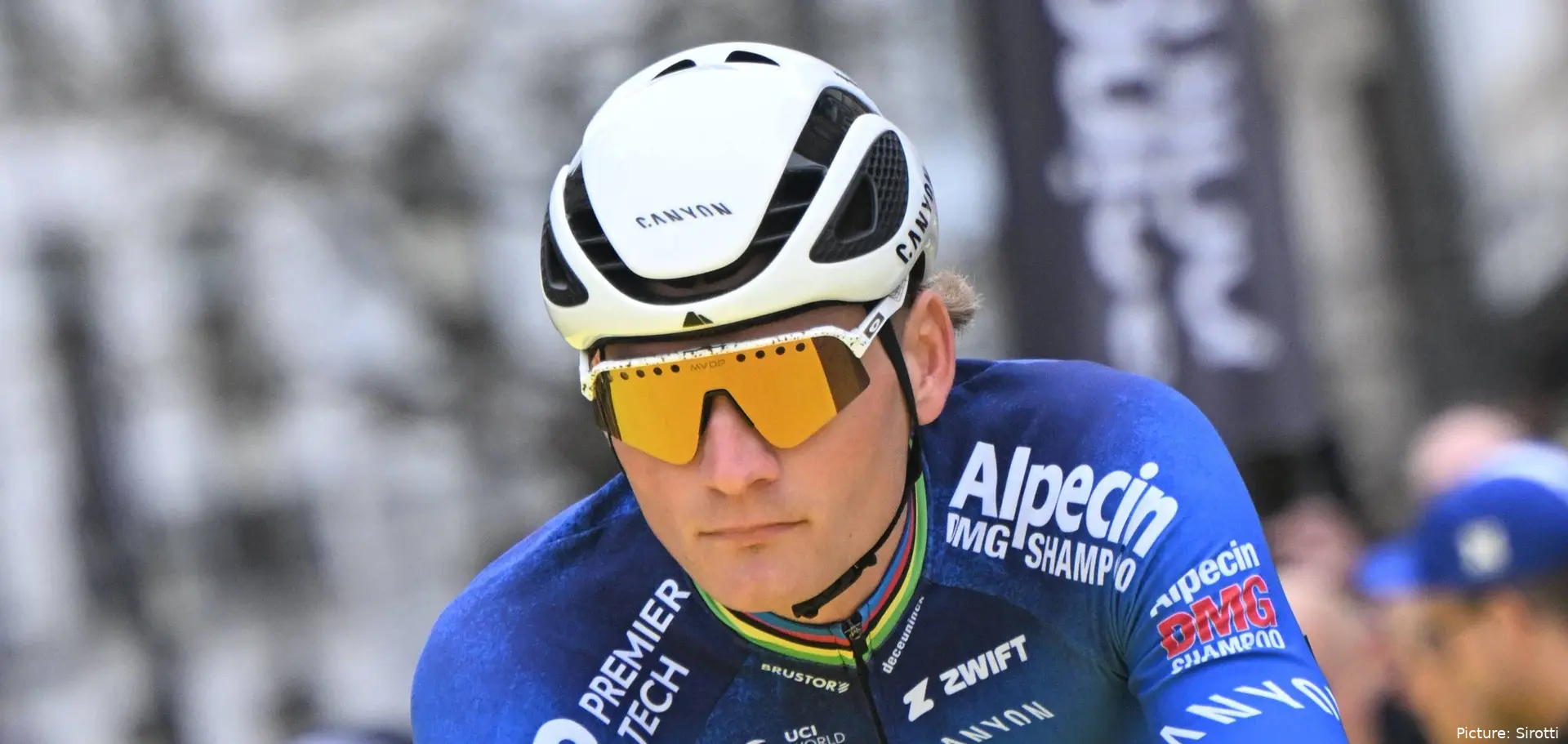
Mathieu van der Poel arrives at Paris-Roubaix 2026 on the verge of history, chasing a fourth consecutive victory in a race that has increasingly bent to his will.
The Dutchman has already established himself as the reference point on the cobbles, but according to one of his teammates, the difference lies not just in strength or skill. It is a mindset.
“Of all the champions I have raced with, I think Mathieu is the one with the most self-confidence. That is what really sets him apart from the rest,” Alpecin-Premier Tech teammate Florian Senechal said in conversation with RTBF.
A leader built for Roubaix
Senechal’s perspective carries weight. The Frenchman has shared teams with riders such as Philippe Gilbert and Julian Alaphilippe, two of the defining Classics specialists of their generation. Yet even among that company, he sees something different in Van der Poel.
“He is impressive. The way he races, how relaxed he is and how he doesn’t feel pressure,” he explains. “He doesn’t talk about the other riders, he just wants to do his own thing and fully enjoy cycling. He is a true leader who knows what he wants and is confident.”
That combination has become increasingly visible at Paris-Roubaix. Unlike races decided by repeated accelerations, Roubaix demands control under pressure. Positioning, line choice and the ability to stay calm at high speed across broken cobbles often matter as much as raw power. In that environment, hesitation can be costly. Van der Poel rarely shows any.
Flanders disappointment quickly reset
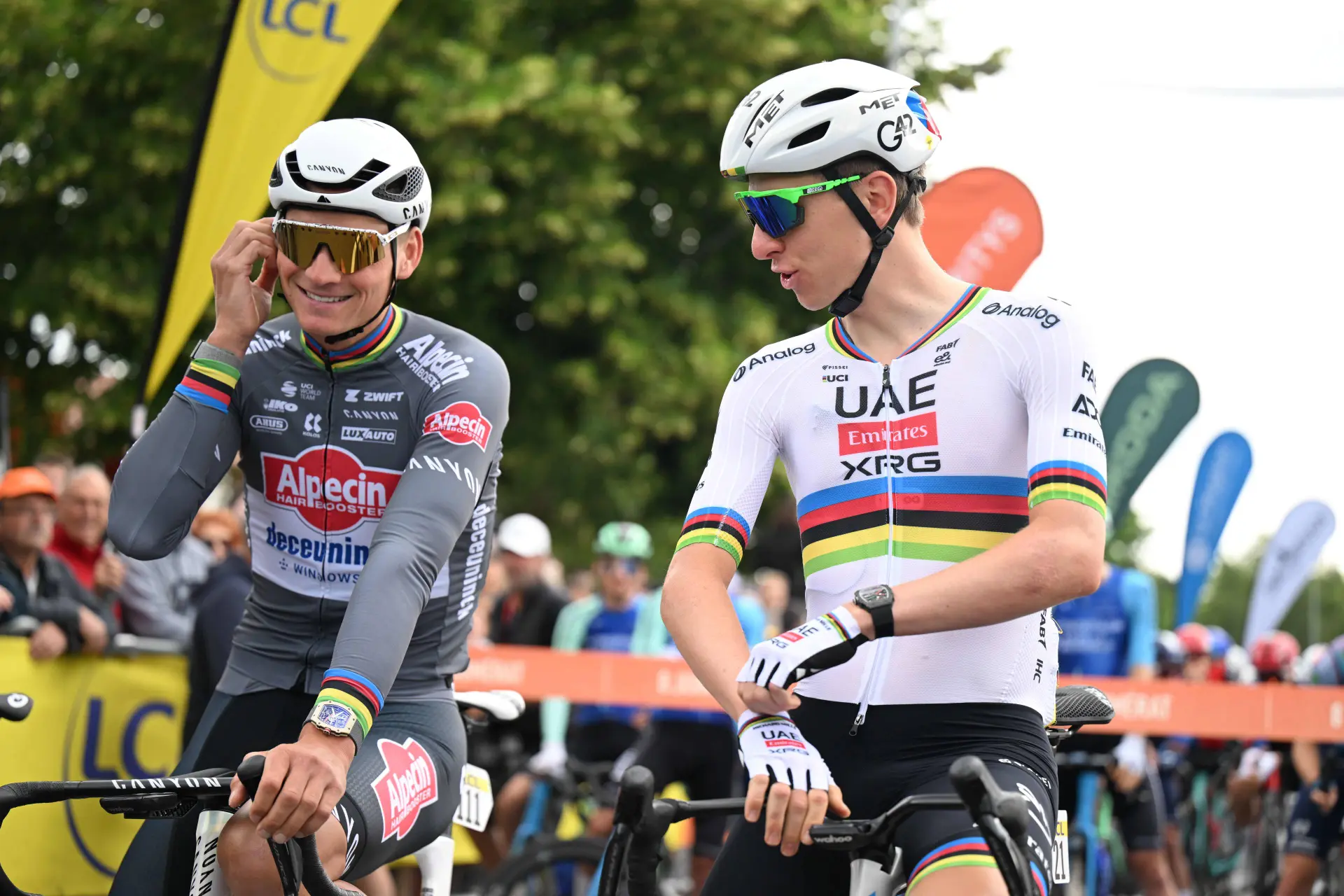
Even for a rider of his calibre, the spring has not been without setbacks. At the Tour of Flanders, Van der Poel was beaten by Tadej Pogacar, missing out on a record-equalling victory despite what many considered a near-perfect ride.
Senechal sensed that disappointment in the immediate aftermath. “Because Mathieu felt very strong. He rode a perfect race. He was so close to breaking the record because he was close to Pogacar. And his father was in the team bus, the Roodhooft brothers were there, the CEO of Premier Tech was there…”
Second place may have been a strong result on paper, but for Van der Poel, the target remains singular. “But he moved on from it quickly and is already focused on Sunday in Roubaix.”

Van der Poel finished 2nd in Flanders
Confidence meets its biggest test
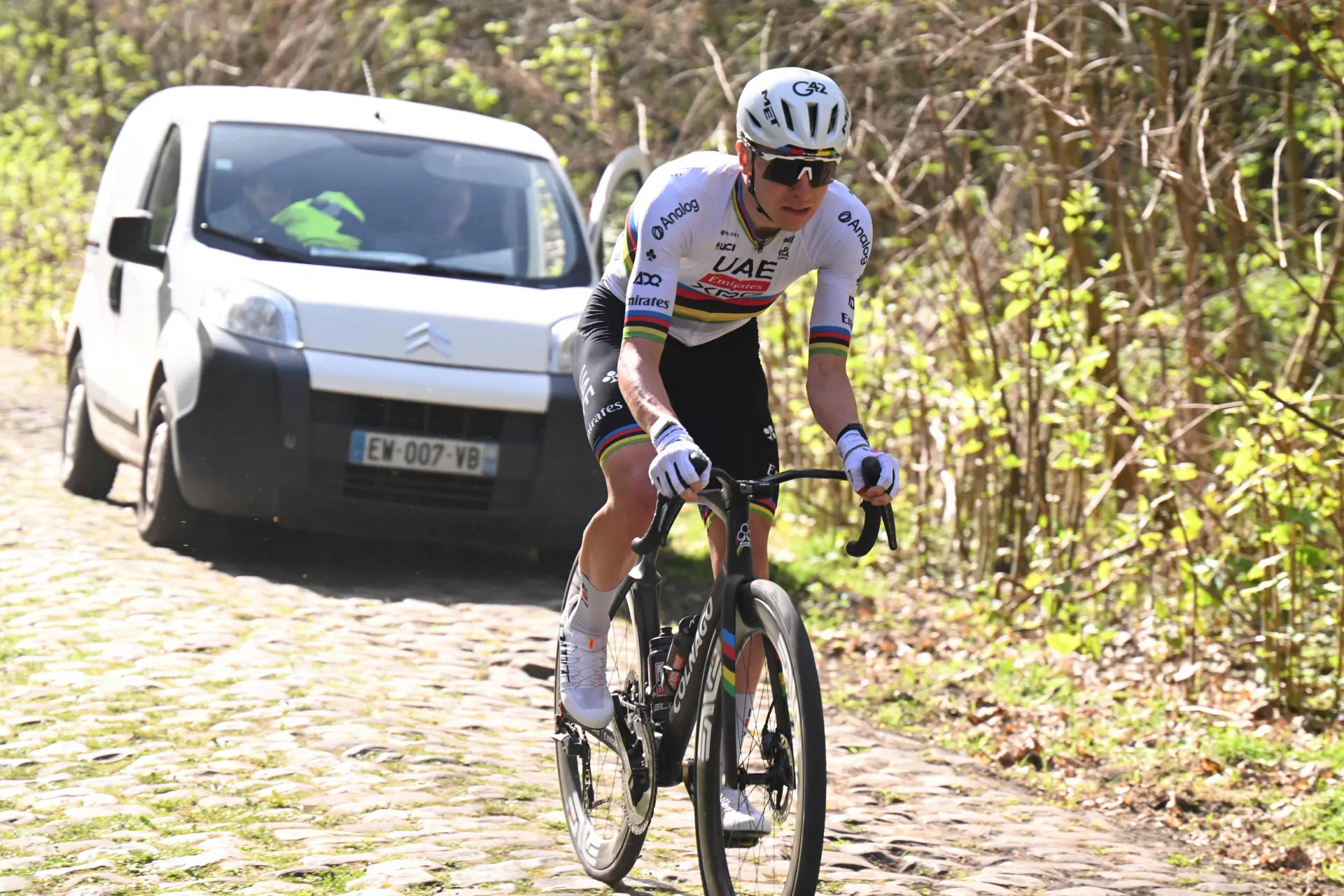
That ability to reset could prove decisive. Van der Poel enters Paris-Roubaix not only as the defending champion, but as the rider every rival must solve. Pogacar arrives in form after victories at Milano-Sanremo and Flanders, while Wout van Aert leads a Visma team looking to disrupt the established order.
Against that backdrop, the margins are thinner than ever. Yet if Roubaix has shown anything in recent years, it is that Van der Poel thrives in precisely that environment. Not because the race is predictable, but because he remains composed when it is not.
The defining edge
Strength, positioning and experience all play their part on the cobbles. But as Senechal’s comments underline, Van der Poel’s greatest advantage may be less tangible.
Confidence, not just in his legs, but in every decision he makes under pressure.
At Paris-Roubaix, that can be the difference between reacting to the race and controlling it. And as he chases a fourth consecutive victory, it may once again define the outcome.

Kieran WoodDeputy Editor-in-Chief
Kieran Wood is a sports journalist based in Wales and has been active in journalism since 2022. He regularly contributes to DartsNews.com and CyclingUpToDate.com, where he covers professional cycling and darts. In cycling, his work includes liveblogs from major races, including the Tour de France, the Giro d’Italia, and La Vuelta a España, alongside race reports and analysis. He has also conducted interviews with professional riders.
His reporting spans the full racing calendar, from one-day classics to stage races, with a focus on accurate, real-time coverage and clear contextual analysis. For statistics, results, and historical context, he regularly uses resources such as ProCyclingStats. To support reporting on rider activity and training context where relevant, he also references Strava.
In his work, Kieran places strong emphasis on careful sourcing, editorial accuracy, and updating articles as new, verified information becomes available.
claps 0visitors 0
Just in
Popular news
Latest comments
- I think he does or goes to whichever team gives him the scope to become the rider everyone thinks he'll be when Tadej stops.. that simpleslappers6612-10-2026
- I remember at one time he was mentioned in the same breath as Seixas. no more. Onley has a lot of work to do to be deserving of that.mij12-10-2026
- I hope he goes to Bahrain-Victorious to mentor Jakob
 Rafionain-Glas12-10-2026
 - I hope he stays! Cycling is more fun with Primoz, even if he is not winning.mij12-10-2026
- yes for sure, there will be more chances for him at Euro than Lombardia. I wonder if that emotion wasn't also because he knows he has now been eclipsed by a younger rider w/o his goals being checked off. At least when Seixas over takes Tadej someday, Tadej will have accomplished his major goals. He still has Roubaix left, but Seixas isn't a threat there. And he should find a year to get Vuelta. Remco now is behind at least 2 riders w/o ever having won a Tour, one monument to his name, and the next few World Championships are not Remco friendly. I would still take Remco's wins though!!!mij12-10-2026
- Remco was at 100%. He raced as expected: 15th best on the climbs and then best in the sprint of the chasing group. Exactly what he did at Liège-Bastogne-Liège, where he was on similar form. His win in Amstel was comparable to Quebec or the EurosRafionain-Glas12-10-2026
- "inside the tent pissing out" is an idiom based on a quote from President Lyndon Johnson. Not sure if you're saying you don't understand the term. The full phrase is "it's probably better to have him inside the tent pissing out, than outside the tent pissing in."wrsty12-10-2026
- Pissing out?? Who is forcing them? They can follow Ayuso's example. And they can be leaders on another team. Ayuso's example again. :)MajorPayne12-10-2026
- Hmm it's an interesting take with certain disclaimers e.g. comparing them at the same age (Pogi wasn't given chances so early in his career so we will never know), the level of the competitors in the race or tour (really hard to compare, as you would be looking at multiple competitors, let alone comparing just Seixas vs Pogi). In any case, Seixas' future certainly looks very bright, especially as he has the advantage of youth, access to new scientific knowledge/methods that weren't around when Pogi started, and most importantly has Pogi as an extremely good example to aspire to (e.g. copying training methods, nutrition, tactics, race craft, etc., to list just a few...).Pogboom12-10-2026
- > He’s so much better than Pogacar was at 20 years old It does not mean NOTHING. What is important how long you can be at the top. Most of the best riders are (really) good for 4-5 years (Alaphilippe, Sagan), of course outside this window you can win stages etc. but forget about GC winner in main tours. Talents like Pogacar (in case of GC) or MvdP (monuments or CX - 15 years being on top!!!) are rarity. It might be that if you start being good fast, you end up being good still young.averagecyclist12-10-2026
Loading
1 Comments