“Wout van Aert has won many races, but he still needs to win Paris-Roubaix” - Legendary Johan Museeuw 'hopes for Belgium' that Visma leader will succeed on the cobbles
Cycling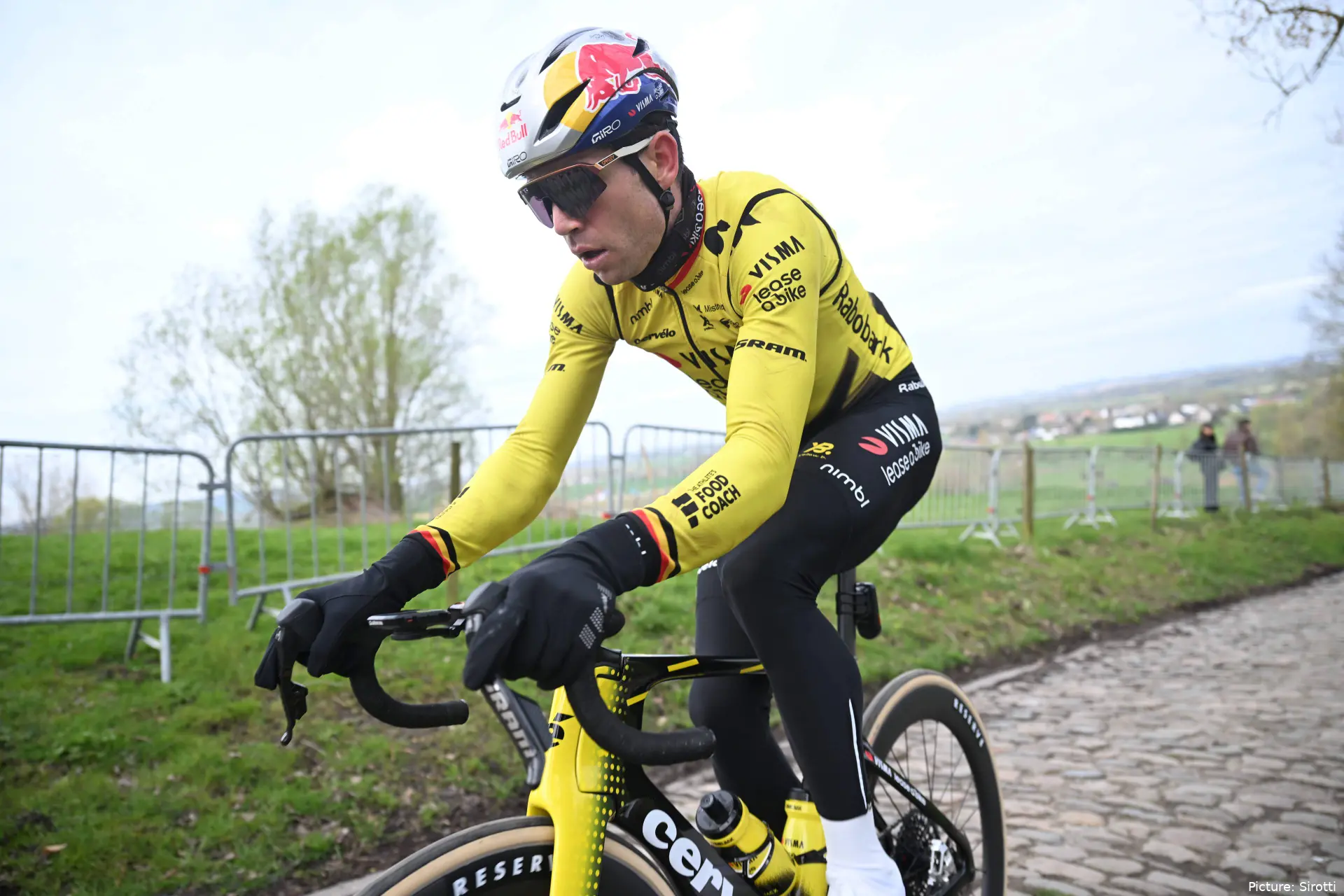
For all Wout van Aert has already achieved in cycling, there is still one race that continues to shadow the conversation around him in Belgium. Not because his palmares lacks quality, but because Paris-Roubaix carries a different kind of weight. It is the race that still feels missing.
That is the lens through which Johan Museeuw, one of the great masters of the Hell of the North, views the current Visma leader. Speaking in conversation with Cyclism'Actu, the three-time Paris-Roubaix winner did not question Van Aert’s quality or body of work. Instead, he went straight to the point: “He has won many races, he has won on Mont Ventoux, but for me he still needs to win Paris-Roubaix.”
Why Roubaix still stands apart
Museeuw’s argument is rooted in what this race asks of a rider. Paris-Roubaix is not simply another Monument to add to a list. In his eyes, it remains the hardest one-day race of them all, a very different beast from the Tour of Flanders despite the natural comparisons between the two.
As he put it, “When your name is Pogacar, it’s easy to win Paris-Roubaix, even for Van der Poel. It’s the one-day race the most difficult. It’s different from the Tour des Flandres. The distance is the same, but there are more pavés, 65 km de pavés. And on the Tour des Flandres, the pavés are on little climbs, it’s another thing than on Paris-Roubaix where the sectors are longer.”
That is what keeps drawing Van Aert back into this conversation. His versatility has never been in doubt. He has won across terrain and disciplines, and few riders of his generation can match the breadth of his success.
But Roubaix is the race that strips things back to durability, judgement and sheer resistance. Museeuw knows that better than most, and his old line still frames the race as well as any analysis can: “Paris-Roubaix doesn’t always smile on the strongest but on the most resistant.”
Not just a Belgian hope, but a Belgian expectation
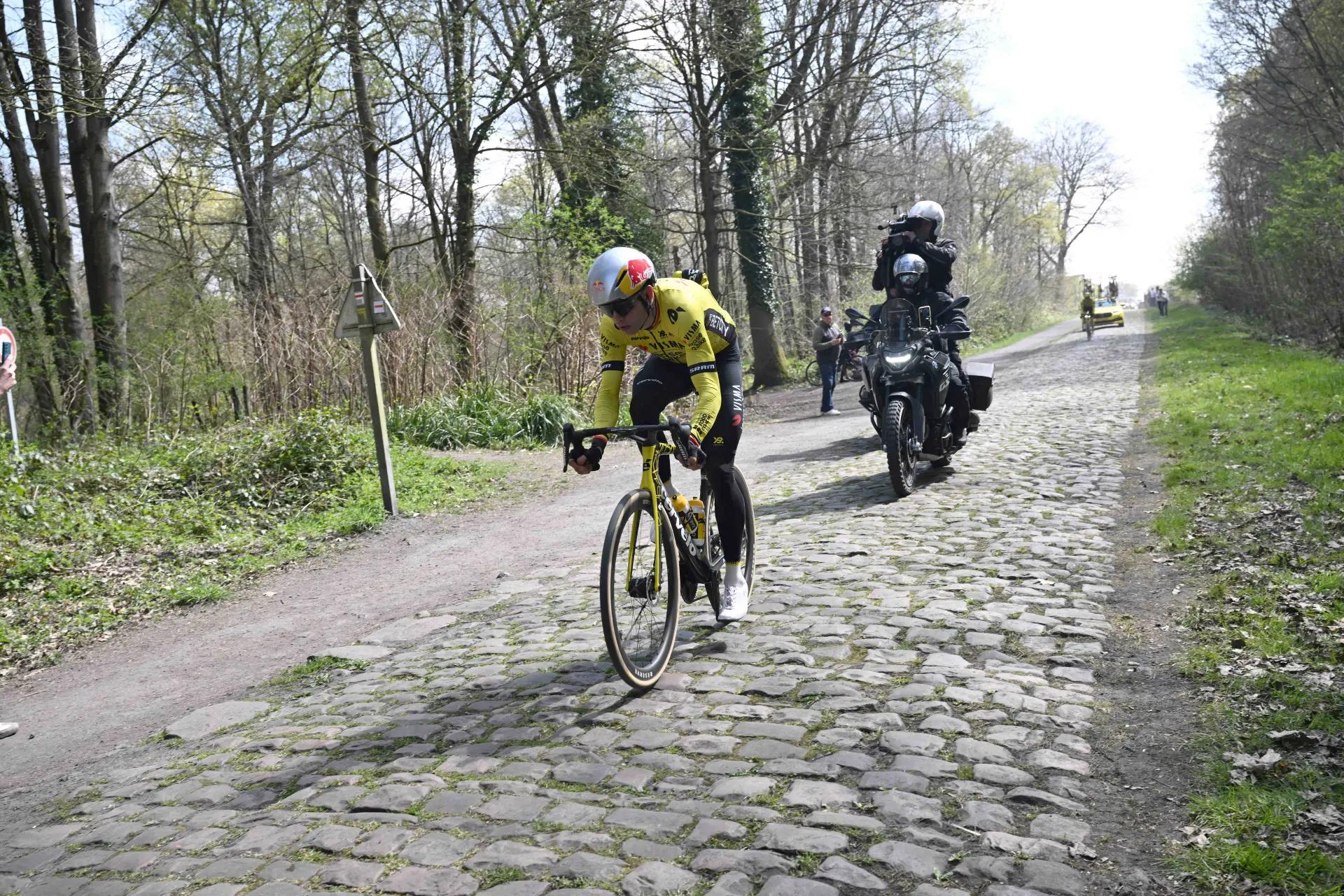
What gives Museeuw’s comments extra force is that he is not really presenting this as a personal wish. He is articulating something much broader. In modern cycling, it is easy to let the Pogacar and Van der Poel rivalry dominate every discussion around Roubaix, and Museeuw acknowledges that himself.
“When one says Pogacar or Van der Poel, it’s easy,” he said, before shifting the focus back to Van Aert and the national feeling around him: “I hope for Belgium and especially for him, that Wout van Aert will win a Classic like Paris-Roubaix, because he won only one Monument for the moment, Milan-Sanremo.”
That is the heart of the angle. Van Aert is not being framed here as a rider lacking stature. He is being framed as a rider whose talent and wider success have made Belgium crave the kind of cobbled Monument win that would feel fully in proportion with the rest of his career.
The race is open, even with the biggest names at the front
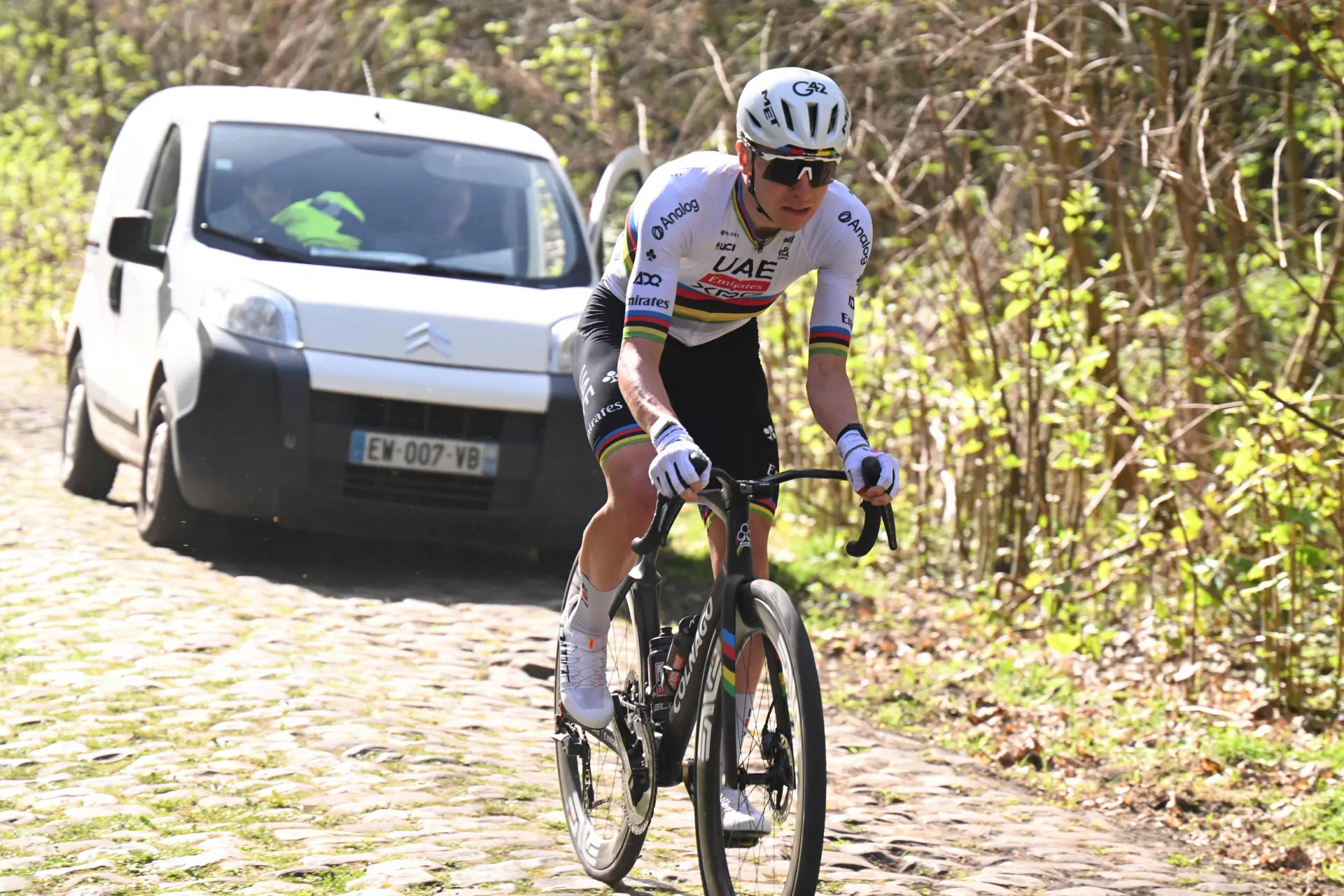
Museeuw is not romantic about the task. He knows exactly what Van Aert is up against on Sunday. Pogacar has already shown this spring that he can bend even the biggest races to his will, and Van der Poel remains the benchmark on this terrain until someone proves otherwise.
Museeuw makes that clear when discussing the Slovenian, saying: “He has won almost every race so it’s not a surprise if he wins Paris-Roubaix. On this race there, it’s going to be more complicated for him to beat Van der Poel, Pedersen, Van Aert and maybe an outsider.”
That final point matters. Roubaix, unlike many of the sport’s other biggest races, rarely stays confined to a neat hierarchy. Museeuw underlined that too, reminding everyone that “On Paris-Roubaix, there is always an outsider, because of a breakaway, of everything or nothing.” It is exactly that instability that keeps the race alive for more than just the obvious two names.
And the way the modern race is ridden only sharpens that uncertainty. Museeuw pointed to how much earlier riders now begin forcing the issue, explaining that “Now, they attack from far so Mons-en-Pévèle, Moulin de Vertain, Carrefour de l’Arbre, there are a lot of sectors where one can attack so it’s to them to decide, not to us.” That matters for Van Aert as much as anyone. In a race that can open from a long way out, the chance to shape the outcome is there if the legs are there too.
Still firmly among the men to watch
For all his emphasis on Belgium’s hopes, Museeuw is not talking about Van Aert as an outsider looking for a miracle. He still places him right in the top tier. His own podium call was telling: “For me it’s going to be Pogacar, Van der Poel and Van Aert, but it can also be Van der Poel in front of Pogacar, and it can also be, and I hope for Belgium that it will be Van Aert, Pogacar, Van der Poel, it depends a bit on the race.”
That prediction captures the tension around Van Aert perfectly. He is close enough that nobody would be shocked to see him on the podium again, and good enough that a win would never be absurd. Yet he still heads into Roubaix carrying the sense that this is the Monument that has to happen, the one result that would settle a conversation that never quite goes away.
That is why Museeuw’s words land. They are not just praise, and they are not just nostalgia from a Belgian legend. They are a reminder that Paris-Roubaix still holds a special place in the sport, and that for a rider like Van Aert, winning it would mean more than simply adding another line to an already glittering career.

Kieran WoodDeputy Editor-in-Chief
Kieran Wood is a sports journalist based in Wales and has been active in journalism since 2022. He regularly contributes to DartsNews.com and CyclingUpToDate.com, where he covers professional cycling and darts. In cycling, his work includes liveblogs from major races, including the Tour de France, the Giro d’Italia, and La Vuelta a España, alongside race reports and analysis. He has also conducted interviews with professional riders.
His reporting spans the full racing calendar, from one-day classics to stage races, with a focus on accurate, real-time coverage and clear contextual analysis. For statistics, results, and historical context, he regularly uses resources such as ProCyclingStats. To support reporting on rider activity and training context where relevant, he also references Strava.
In his work, Kieran places strong emphasis on careful sourcing, editorial accuracy, and updating articles as new, verified information becomes available.
claps 0visitors 0
Just in
Popular news
Latest comments
- I think he does or goes to whichever team gives him the scope to become the rider everyone thinks he'll be when Tadej stops.. that simpleslappers6612-10-2026
- I remember at one time he was mentioned in the same breath as Seixas. no more. Onley has a lot of work to do to be deserving of that.mij12-10-2026
- I hope he goes to Bahrain-Victorious to mentor Jakob
 Rafionain-Glas12-10-2026
 - I hope he stays! Cycling is more fun with Primoz, even if he is not winning.mij12-10-2026
- yes for sure, there will be more chances for him at Euro than Lombardia. I wonder if that emotion wasn't also because he knows he has now been eclipsed by a younger rider w/o his goals being checked off. At least when Seixas over takes Tadej someday, Tadej will have accomplished his major goals. He still has Roubaix left, but Seixas isn't a threat there. And he should find a year to get Vuelta. Remco now is behind at least 2 riders w/o ever having won a Tour, one monument to his name, and the next few World Championships are not Remco friendly. I would still take Remco's wins though!!!mij12-10-2026
- Remco was at 100%. He raced as expected: 15th best on the climbs and then best in the sprint of the chasing group. Exactly what he did at Liège-Bastogne-Liège, where he was on similar form. His win in Amstel was comparable to Quebec or the EurosRafionain-Glas12-10-2026
- "inside the tent pissing out" is an idiom based on a quote from President Lyndon Johnson. Not sure if you're saying you don't understand the term. The full phrase is "it's probably better to have him inside the tent pissing out, than outside the tent pissing in."wrsty12-10-2026
- Pissing out?? Who is forcing them? They can follow Ayuso's example. And they can be leaders on another team. Ayuso's example again. :)MajorPayne12-10-2026
- Hmm it's an interesting take with certain disclaimers e.g. comparing them at the same age (Pogi wasn't given chances so early in his career so we will never know), the level of the competitors in the race or tour (really hard to compare, as you would be looking at multiple competitors, let alone comparing just Seixas vs Pogi). In any case, Seixas' future certainly looks very bright, especially as he has the advantage of youth, access to new scientific knowledge/methods that weren't around when Pogi started, and most importantly has Pogi as an extremely good example to aspire to (e.g. copying training methods, nutrition, tactics, race craft, etc., to list just a few...).Pogboom12-10-2026
- > He’s so much better than Pogacar was at 20 years old It does not mean NOTHING. What is important how long you can be at the top. Most of the best riders are (really) good for 4-5 years (Alaphilippe, Sagan), of course outside this window you can win stages etc. but forget about GC winner in main tours. Talents like Pogacar (in case of GC) or MvdP (monuments or CX - 15 years being on top!!!) are rarity. It might be that if you start being good fast, you end up being good still young.averagecyclist12-10-2026
Loading
Write a comment