“Not working would mean admitting inferiority” – Italian ex-pro dissects Van der Poel’s Flanders dilemma before Pogacar rematch at Paris-Roubaix
Cycling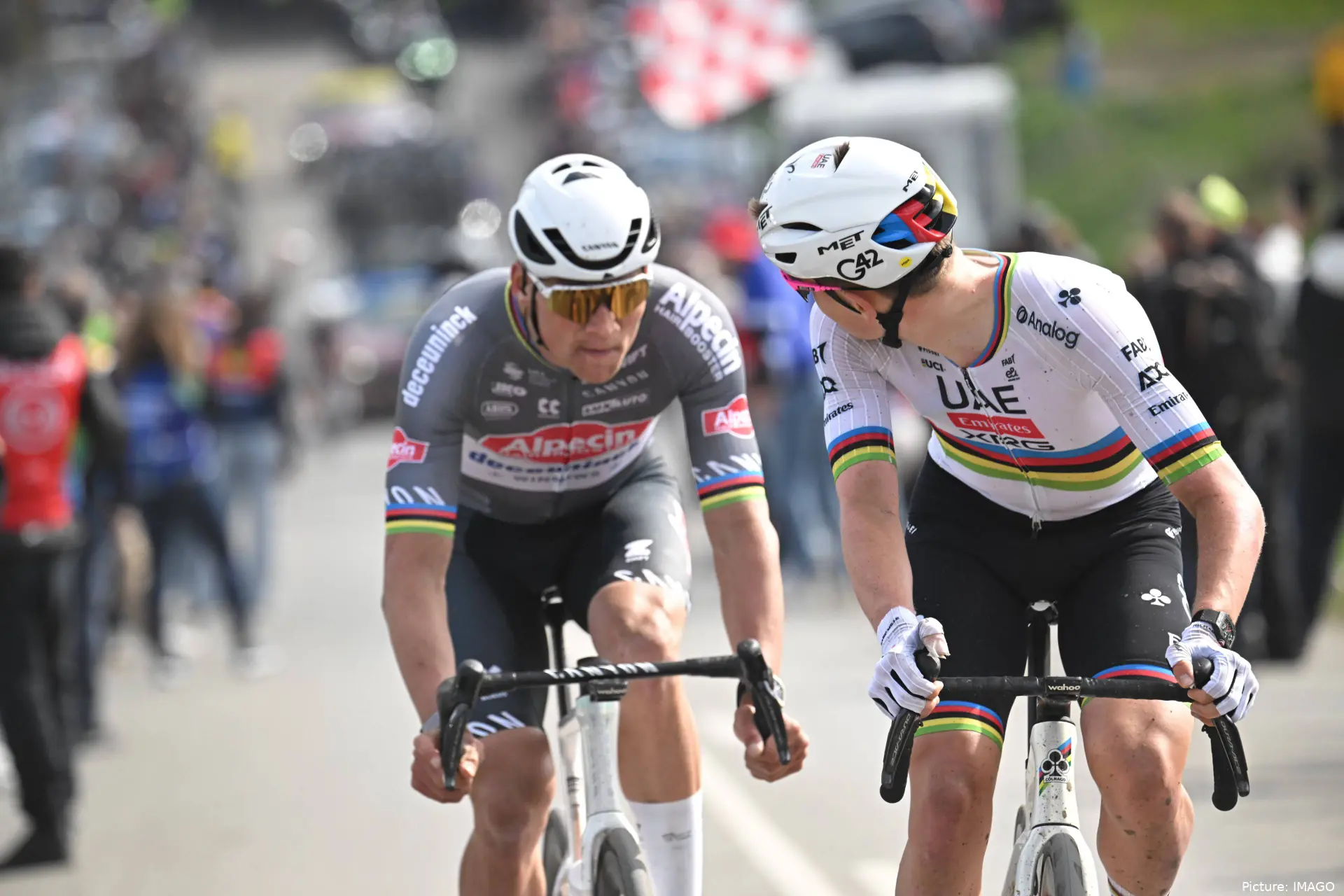
The debate that followed the 2026 Tour of Flanders has refused to fade, but the focus has already shifted to what comes next. As Mathieu van der Poel prepares to face Tadej Pogacar again at this weekend’s Paris-Roubaix, his decision to work alongside the Slovenian in Belgium continues to divide opinion, raising fresh questions over how he can approach the next chapter of their rivalry.
Now, former professional Moreno Moser has offered a more nuanced explanation of that choice, framing it not simply as a tactical call, but as something far more human.
“In commentary, I simply observed the situation, because I also sit somewhere in the middle,” Moser said in conversation with Bici.Pro. “Van der Poel works because he doesn’t want to feel inferior. Not doing so would mean admitting he is inferior.”
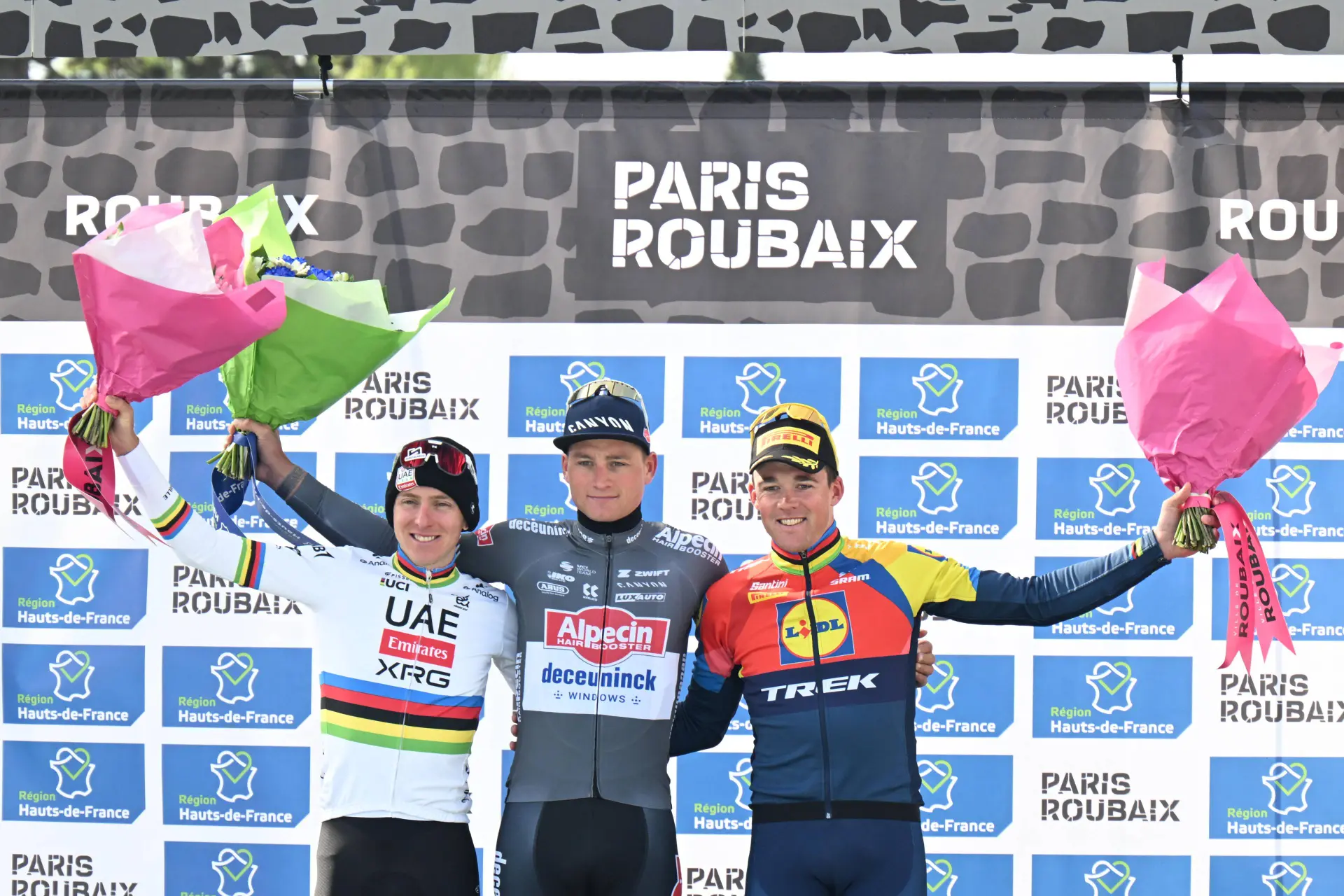
It is a line that cuts straight to the heart of the Flanders controversy. In a race where Pogacar ultimately proved the strongest on the Oude Kwaremont, the question was not only whether Van der Poel could win, but whether he was willing to race in a way that suggested he could not.
Pride, pressure and the Pogacar problem
At first glance, the criticism appears straightforward. By contributing to the pace, Van der Poel helped maintain a rhythm that suited Pogacar, allowing the Slovenian to launch his now-familiar race-winning move from a position of control. Analysts and former riders pointed to alternative scenarios, where disrupting the cooperation might have opened the door for others to return.
Moser sees that possibility too, but stops short of calling it a mistake. “If Van der Poel hadn’t worked, he might have irritated Pogacar and maybe Evenepoel could have come back and even attacked,” he explained. “Different dynamics could have developed. By working, instead, you create the scenario where the strongest rider simply holds on. And since the strongest was Tadej, then yes…”
That theoretical alternative, however, comes with its own risk. “You also have to consider that if you stop working, you risk being dropped at the first acceleration,” Moser added. “If you start being clever, don’t work, and then lose anyway, you look bad.”
There is also a more immediate cost to the path Van der Poel chose. “By choosing to work with Pogacar, Van der Poel spent the energy he had left, and he paid for it on the Kwaremont.”
It is a dilemma that has become increasingly familiar in races featuring Pogacar. His ability to sustain repeated high-intensity efforts has, in many cases, reduced tactical variation to a narrow band of choices, each carrying its own risk.
A race shaped by strength rather than strategy
There is also a more uncomfortable layer to the discussion. For all the focus on tactics, Moser suggests the outcome in Flanders may have been largely predetermined by physical difference rather than strategic nuance. “If Flanders had been raced on Zwift, the result would have been the same,” he said. “If you measured the watts per kilo, you would get the same finishing order, or very close.”
That assessment aligns with a growing sentiment within the peloton. Pogacar’s performances in the cobbled Classics have not only delivered results, but also reshaped how those races are approached. Traditional ideas of sitting on, disrupting rhythm or forcing alliances have become harder to execute when one rider can simply ride away regardless.
Van der Poel’s decision, in that context, becomes less about error and more about limitation. He committed to the move, used the legs he had, and reached the decisive moment, believing he could still match his rival. “Compared to last year, he held on much better on the Kwaremont,” Moser said. “He arrived at the key moment convinced he wouldn’t be dropped. And even Pogacar had to go very deep to drop him.”
There was also a practical logic behind not allowing the race to reset. “Everyone I’ve dropped is behind — why would I bring them back?”
Why Paris-Roubaix changes the equation
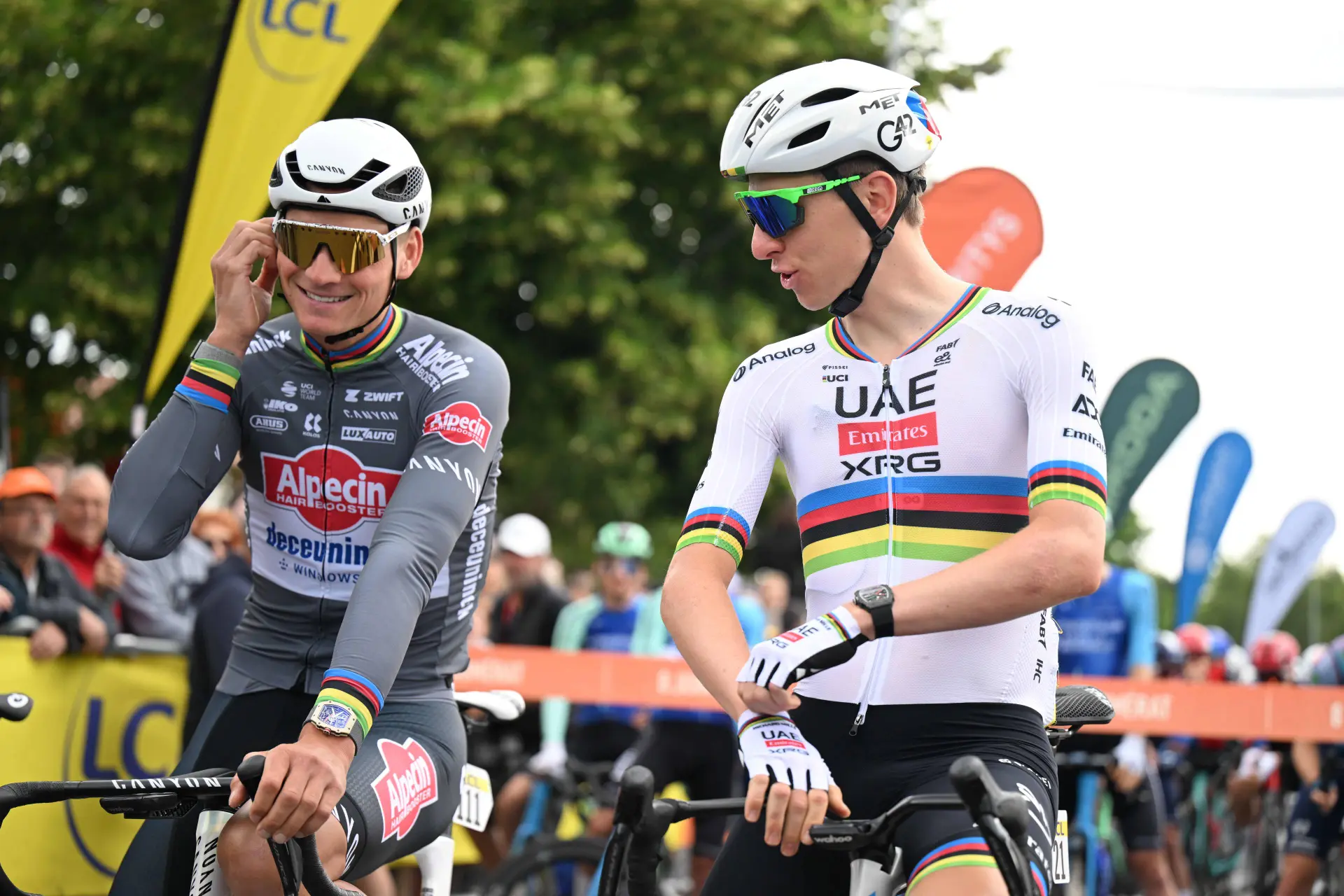
The conversation now shifts to what comes next. This weekend’s Paris-Roubaix presents a different kind of challenge, one that could reopen tactical possibilities that felt closed in Flanders. “I think he’ll win Roubaix,” Moser said of Van der Poel. “Maybe he won’t drop him on the cobbles, but in a sprint, he is superior.”
That belief is rooted in the nature of the race itself. Where Flanders has increasingly been decided by explosive efforts on climbs like the Kwaremont, Roubaix offers a longer, more chaotic test, where positioning, endurance and mechanical resilience all play a role. “No matter how strong you are, it’s harder to drop riders from the wheel,” Moser explained. “Roubaix has 150 kilometres of tension. It’s a different race.”
It is also a race where the tactical picture is less rigid. More riders are likely to remain in contention deeper into the finale, creating scenarios where cooperation, hesitation or opportunism can have a greater impact.
The defining choice still to come
That leaves Van der Poel with a familiar question, but in a new setting. Does he race Pogacar in the same way, committing fully and backing his strength? Or does he lean into the uncertainty of Roubaix and explore the kind of disruption that was only theoretical in Flanders?
Moser’s analysis suggests the answer may again come down to instinct rather than calculation. “He’s probably very proud, and pride can sometimes be a weakness rather than a strength.”
Because in a rivalry increasingly defined by fine margins and overwhelming strength, the hardest decision may not be how to beat Pogacar, but how much a rider is willing to risk in trying.

Kieran WoodDeputy Editor-in-Chief
Kieran Wood is a sports journalist based in Wales and has been active in journalism since 2022. He regularly contributes to DartsNews.com and CyclingUpToDate.com, where he covers professional cycling and darts. In cycling, his work includes liveblogs from major races, including the Tour de France, the Giro d’Italia, and La Vuelta a España, alongside race reports and analysis. He has also conducted interviews with professional riders.
His reporting spans the full racing calendar, from one-day classics to stage races, with a focus on accurate, real-time coverage and clear contextual analysis. For statistics, results, and historical context, he regularly uses resources such as ProCyclingStats. To support reporting on rider activity and training context where relevant, he also references Strava.
In his work, Kieran places strong emphasis on careful sourcing, editorial accuracy, and updating articles as new, verified information becomes available.
claps 0visitors 0
Just in
Popular news
Latest comments
- I think he does or goes to whichever team gives him the scope to become the rider everyone thinks he'll be when Tadej stops.. that simpleslappers6612-10-2026
- I remember at one time he was mentioned in the same breath as Seixas. no more. Onley has a lot of work to do to be deserving of that.mij12-10-2026
- I hope he goes to Bahrain-Victorious to mentor Jakob
 Rafionain-Glas12-10-2026
 - I hope he stays! Cycling is more fun with Primoz, even if he is not winning.mij12-10-2026
- yes for sure, there will be more chances for him at Euro than Lombardia. I wonder if that emotion wasn't also because he knows he has now been eclipsed by a younger rider w/o his goals being checked off. At least when Seixas over takes Tadej someday, Tadej will have accomplished his major goals. He still has Roubaix left, but Seixas isn't a threat there. And he should find a year to get Vuelta. Remco now is behind at least 2 riders w/o ever having won a Tour, one monument to his name, and the next few World Championships are not Remco friendly. I would still take Remco's wins though!!!mij12-10-2026
- Remco was at 100%. He raced as expected: 15th best on the climbs and then best in the sprint of the chasing group. Exactly what he did at Liège-Bastogne-Liège, where he was on similar form. His win in Amstel was comparable to Quebec or the EurosRafionain-Glas12-10-2026
- "inside the tent pissing out" is an idiom based on a quote from President Lyndon Johnson. Not sure if you're saying you don't understand the term. The full phrase is "it's probably better to have him inside the tent pissing out, than outside the tent pissing in."wrsty12-10-2026
- Pissing out?? Who is forcing them? They can follow Ayuso's example. And they can be leaders on another team. Ayuso's example again. :)MajorPayne12-10-2026
- Hmm it's an interesting take with certain disclaimers e.g. comparing them at the same age (Pogi wasn't given chances so early in his career so we will never know), the level of the competitors in the race or tour (really hard to compare, as you would be looking at multiple competitors, let alone comparing just Seixas vs Pogi). In any case, Seixas' future certainly looks very bright, especially as he has the advantage of youth, access to new scientific knowledge/methods that weren't around when Pogi started, and most importantly has Pogi as an extremely good example to aspire to (e.g. copying training methods, nutrition, tactics, race craft, etc., to list just a few...).Pogboom12-10-2026
- > He’s so much better than Pogacar was at 20 years old It does not mean NOTHING. What is important how long you can be at the top. Most of the best riders are (really) good for 4-5 years (Alaphilippe, Sagan), of course outside this window you can win stages etc. but forget about GC winner in main tours. Talents like Pogacar (in case of GC) or MvdP (monuments or CX - 15 years being on top!!!) are rarity. It might be that if you start being good fast, you end up being good still young.averagecyclist12-10-2026
Loading
Write a comment