“Not being able to retire on my own terms is very painful” – Former Visma rider still struggling to accept enforced end to his career
Cycling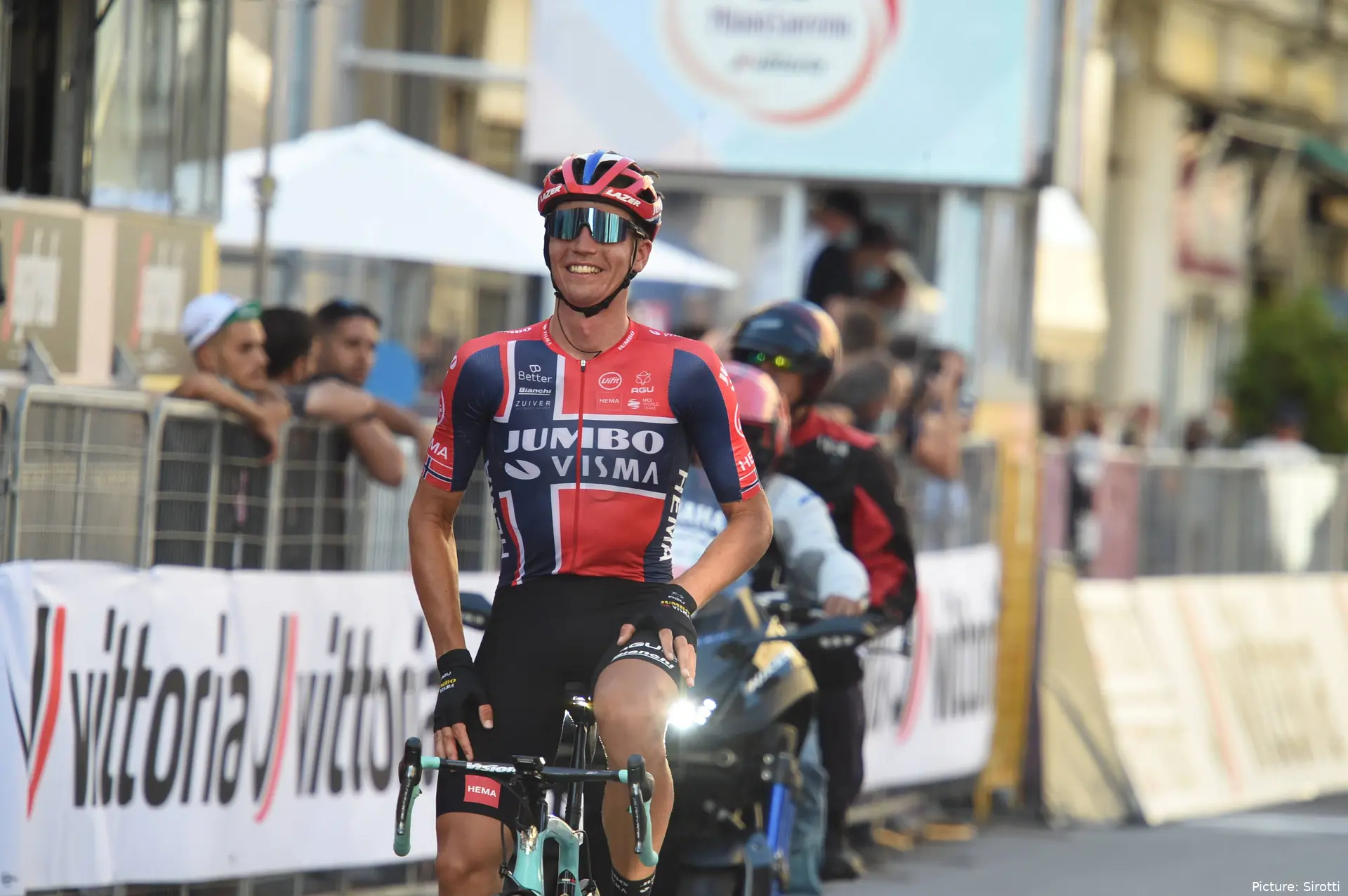
The reality of retirement is still settling in for Amund Grondahl Jansen, with the former Team Visma | Lease a Bike rider admitting that the way his career ended continues to weigh heavily weeks after stepping away from the sport.
Sharing a reflective update on Instagram after competing in ski mountaineering event Pierra Menta, the Norwegian opened up on the emotional impact of a career that did not reach its natural conclusion.
“Not being able to retire on my own terms, but because of circumstances out of my control, is very painful,” he wrote, offering a stark contrast to the light-hearted tone of the post that first confirmed his retirement earlier this year.
That earlier message, accompanied by footage of him skiing in the mountains, had hinted at a new chapter. Now, the underlying reality has come into sharper focus.
A career shaped by sacrifice, not spotlight
Grondahl Jansen’s exit from the peloton followed a difficult final stretch that had already pointed towards an uncertain future. After returning to a Scandinavian setup with Uno-X Mobility for the 2025 season, his time with the team lasted just a single year before he was released at the end of October.
While no immediate retirement announcement followed at the time, the absence of a new contract and his subsequent social media post confirmed that his professional career had come to an end at the age of 31.
For much of that career, Grondahl Jansen operated in the service of others. After turning professional with LottoNL-Jumbo, later Team Visma | Lease a Bike, he became a trusted figure within one of the peloton’s most structured teams, forming part of sprint trains and supporting leaders including Primoz Roglic. He rode multiple editions of the Tour de France and contributed to the collective strength that defined the team’s rise.
His own opportunities were fewer, but not absent. In 2019, he claimed the Norwegian national road race title before backing it up days later with victory on stage three of the ZLM Tour. Those wins stand as the defining individual moments of a career otherwise built on reliability and team work.
From forced ending to new direction
The closing chapters, however, were shaped as much by setbacks as by results. His time with the Australian structure that became Team Jayco AlUla was heavily disrupted by recurring health issues, including femoral artery problems that required multiple operations and limited his continuity in racing.
Those circumstances ultimately fed into an ending that, by his own admission, was not his to control.
“There is no doubt this race, with my friend Rusty Woods, was the best psychologist I could have found,” he added, reflecting on his participation at Pierra Menta, where he has already begun to channel his competitive instincts into a new discipline. “Now it is time to transition into life after (professional) sport.”
It is a shift that appears to be underway physically, but, as his words suggest, one that is still being processed mentally. For a rider whose career was defined by commitment to team goals and resilience through adversity, the hardest part has not been stepping away, but accepting how that moment arrived.
Kieran WoodDeputy Editor-in-Chief
Kieran Wood is a sports journalist based in Wales and has been active in journalism since 2022. He regularly contributes to DartsNews.com and CyclingUpToDate.com, where he covers professional cycling and darts. In cycling, his work includes liveblogs from major races, including the Tour de France, the Giro d’Italia, and La Vuelta a España, alongside race reports and analysis. He has also conducted interviews with professional riders.
His reporting spans the full racing calendar, from one-day classics to stage races, with a focus on accurate, real-time coverage and clear contextual analysis. For statistics, results, and historical context, he regularly uses resources such as ProCyclingStats. To support reporting on rider activity and training context where relevant, he also references Strava.
In his work, Kieran places strong emphasis on careful sourcing, editorial accuracy, and updating articles as new, verified information becomes available.
claps 0visitors 0
Just in

Popular news
Latest comments
- If it is just a statement you are right in my opinion but if it’s the Leitmotiv to how you pursue your life then things are not the same. It’s not far from another quote (origin might be hard to track) many use :Live fast, die young, which didn’t spring out of nowhere. I wouldn’t argue against a bet saying people who are constantly challenging their limits in risky activities are more likely to get injured or die. It’s not a question of blame or fault, it’s a fact those people have to live with, forcing them to constantly be able to assess to perfection, which tragically isn’t always possible, or what is your take?Jumpyjohn11-10-2026
- Unfortunately, many men consider watching their own kids to be babysitting.Vpotts11-10-2026
- At 20, Evenepoel was already amazing, Pogačar was getting started, and many others have been hailed as the next great. Seixas seems to actually have the goods - to win so young, with such skill, and so little of a career? I hope he can continue in whatever flavor he finds - Pogačar the grand tour rider who seems to enjoy the frantic classics more, Evenepoel the completist TT and RR championship rider, and so on. Seixas seems like a grand tour climber and Liége/Lombardia kind of guy, but that’s how Pogačar started off as well. This is such fun to watch, it’s a good time to be a fan of cycling.RidesHills11-10-2026
- He really does seem to have the racing intelligence of someone who’s been around much longer.Jumpyjohn11-10-2026
- I watched Il Lombardia today... :) What a loser Remco is!MajorPayne10-10-2026
- Couldn’t agree more, @RidesHills. CyclingUpToDate endeavours to ban him, but he continues to create new accounts. He was banned from CyclingNews. Whilst I used to argue against his negativity, I’ve simply lost interest. He is so utterly boring. I was initially worried he'd bully other fans, but nobody's having it. Most of us simply pay him no mind, anymore. At this point, everybody just scrolls right past him. He is quite a coward though, I’ll tell you that. His toxic comments on this site are nothing compared to what he is able to post on Twitter.anonymouscyclist10-10-2026
- C’mon, don’t follow in Horner’s footsteps. At least he had the courage to post HIS prediction ahead, I didn’t see many others disagreeing or claiming it was ridiculous.Mistermaumau10-10-2026
- @SLO: Your ridiculously rude language about riders makes it really hard to read your consistently condescending comments. "BS losers," how is it ok to talk about people like that? Also, you truly sound like you do not understand that this is a team sport, where del Toro rides for his leader and therefore doesn't follow his attacks. We can all agree that we are watching a once in a generation (really, a once in a century) rider in Pogačar, and that's great, but come on, you don't have to be a jerk when it comes to other riders. It's clear that I prefer to praise the positive in what I see, mostly because I am in awe of what these humans can do (including the ones who don't win), but your negativity about anyone but your idol is just so very very exhausting.RidesHills10-10-2026
- Huh??? You’ve obviously forgotten all the contrary you’ve been trying to sell us the last weeks. Shall I dig some out for you?Mistermaumau10-10-2026
- Doesn’t sound like it from his post-race interview. That old record you’re still playing is starting to jump a bit too often.Mistermaumau10-10-2026
Loading
Write a comment