“I noticed things were starting to run on autopilot” - Former Visma DS reflects on exit after decade at team amid winter of change
Cycling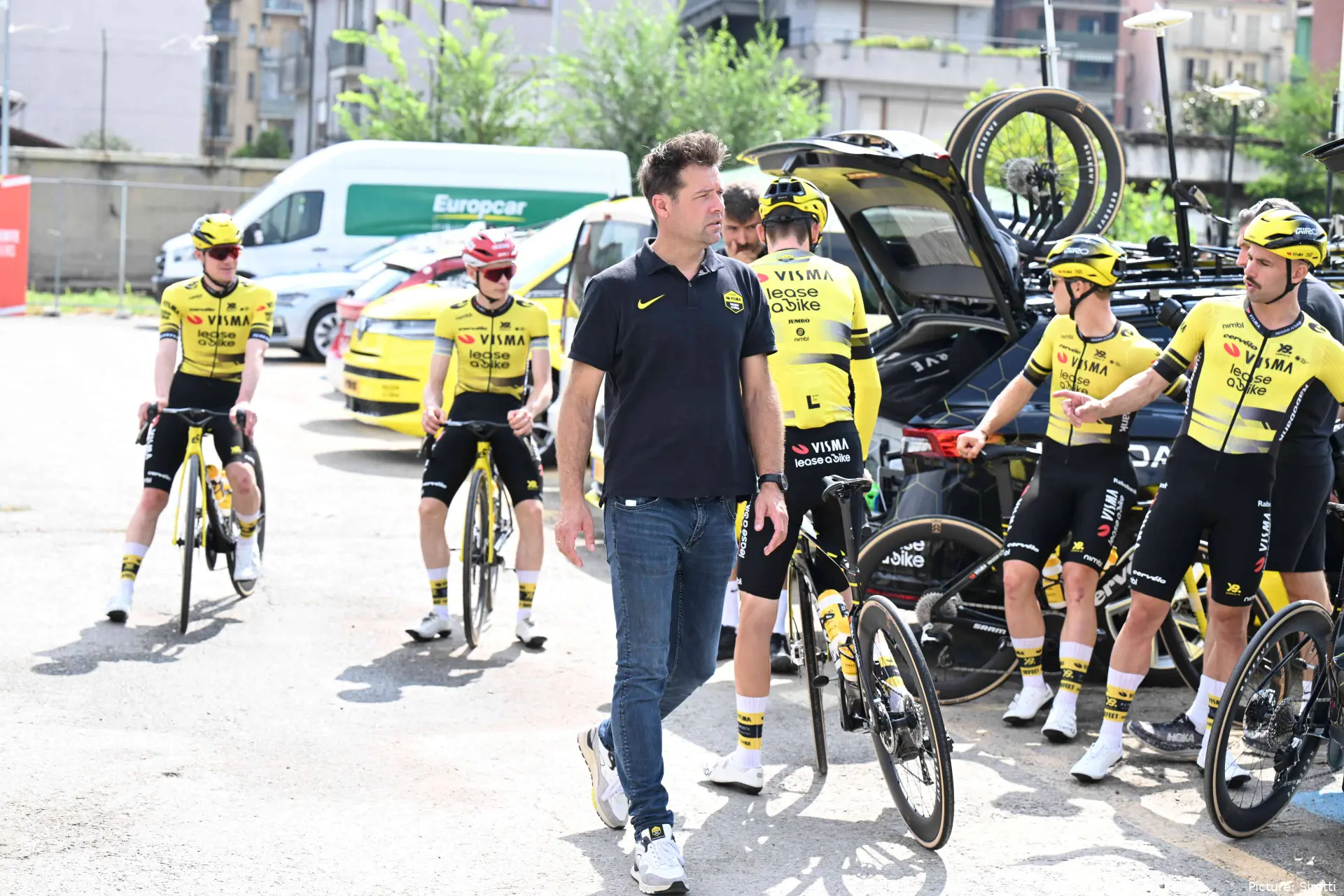
For more than a decade, Addy Engels was part of the inner machinery that helped transform what was once LottoNL-Jumbo into one of the most dominant teams the modern peloton has seen. But after ten years inside the project, the experienced Dutch sports director felt it was time to step away.
Speaking in an interview with IDLProCycling.com, Engels explained that the decision to leave Team Visma | Lease a Bike was not driven by conflict, but by a growing sense that the environment had changed after such a long period inside the same system.
“I had a fantastic time with the team and experienced incredible things,” Engels said in conversation with IDL. “But after a decade, you notice that certain processes start to become routine. I felt I was starting to go a bit on automatic pilot.”
His departure came during a winter that had already seen a number of subtle shifts around the team that once set the benchmark for innovation and structure in professional cycling.
A decade inside cycling’s most influential project
Engels joined the Dutch outfit in 2014 when the team was still competing as LottoNL-Jumbo. Over the following decade, he was part of the transformation that turned the organisation into a powerhouse capable of winning across the sport’s biggest stages.
Grand Tour victories with riders such as Jonas Vingegaard and Primoz Roglic, Monument successes and a steady stream of stage wins helped establish the squad as the peloton’s most dominant collective for several seasons.
But as the team grew, Engels’ own role evolved as well. “My role is once again more focused on the sporting side of things, whereas at Visma I was more in the background,” he explained. “I was certainly involved in races and sporting matters, but I also handled a lot of logistical tasks.”
After spending years embedded in one of cycling’s most structured organisations, the opportunity to move to Fabian Cancellara’s Tudor Pro Cycling project offered a different challenge. “You meet a lot of new people, and that gives you a fresh burst of energy,” Engels said. “I already feel quite at home; the chemistry is good, and I’m happy to be at Tudor.”

Team Visma | Lease a Bike team bus and team cars
Visma navigating a winter of change
Engels’ reflections arrive at a moment when the Dutch team is navigating a period of transition behind the scenes.
Over the past year, the structure that once powered the team’s rise has experienced a number of shifts. Long-time staff members have moved on, while the roster itself has undergone noticeable turnover as several riders departed during the off-season.
At the same time, rivals have begun to close the gap that Visma once held over the rest of the peloton. UAE Team Emirates - XRG in particular has emerged as the sport’s most dominant force, with a depth of talent and aggressive racing style that has reshaped the competitive balance at the top of the WorldTour.
Against that backdrop, Engels’ description of a system beginning to feel routine offers an intriguing glimpse into how the project may have evolved internally after years of success. “Not that it was bad: I’d been with Visma for ten years,” Engels added. “And over the last two years, I noticed things were starting to run a bit on autopilot. I enjoyed it immensely, I had a great time.”
The Dutch director was careful not to frame his departure as a criticism of the team that helped shape his career. Instead, he described it as a natural moment for change after a decade inside the same organisation. “Not that it was bad. I’d been with Visma for ten years, and I enjoyed it immensely,” he said. “But I felt that I could still take the plunge and try something new.”
For Tudor, the arrival of a director with experience inside one of cycling’s most influential teams represents another step in the Swiss squad’s steady growth. “That’s the most important thing, especially given our ambition to enter the WorldTour with the cycle that has now begun anew,” Engels explained when discussing the project’s direction. “At the same time, it was very good that the decision was made to lay a foundation first.”
For Visma, meanwhile, Engels’ departure is one more small chapter in what has already been a winter of quiet change around a team that spent much of the last decade defining the modern peloton.

Kieran WoodDeputy Editor-in-Chief
Kieran Wood is a sports journalist based in Wales and has been active in journalism since 2022. He regularly contributes to DartsNews.com and CyclingUpToDate.com, where he covers professional cycling and darts. In cycling, his work includes liveblogs from major races, including the Tour de France, the Giro d’Italia, and La Vuelta a España, alongside race reports and analysis. He has also conducted interviews with professional riders.
His reporting spans the full racing calendar, from one-day classics to stage races, with a focus on accurate, real-time coverage and clear contextual analysis. For statistics, results, and historical context, he regularly uses resources such as ProCyclingStats. To support reporting on rider activity and training context where relevant, he also references Strava.
In his work, Kieran places strong emphasis on careful sourcing, editorial accuracy, and updating articles as new, verified information becomes available.
claps 2visitors 2
Just in
Popular news
Latest comments
- They are equal in my opinion, which doesn’t make it easier for anyone.Jumpyjohn10-10-2026
- Ok, thanks for replying to that. Seems to have passed very quietly in an environment always trying to make big news out of small details. Am a little surprised as he really wouldn’t have had to exert himself enormously, he had enough time after and it was not exactly miles away so wouldn’t be surprised if there was more to it, which seems to be the case behind everything these days, like the media have discovered the best way to stay relevant is to reveal details as if it was a series, always holding enough back to create more, as if they feared running out of news ;-)Jumpyjohn10-10-2026
- Now that all the top guys are here, Remco has to win this to prove Euro was not a fluke.abstractengineer10-10-2026
- great dudemij10-10-2026
- they gotta get this fixed. it is atrocious.mij10-10-2026
- this team is stackedmij10-10-2026
- I would not put Paul Seixas as a fave over Remco.mij10-10-2026
- Skelly will be next. If the leader is far above, its simple like Pogi and ALmeida/Del Toro. But we saw Skelly beat Ayuso in the TDF where Ayuso was leader.abstractengineer10-10-2026
- Yes man that would draw a crowdwrsty10-10-2026
- That is what is called "dreaming". "The victory was quite close" . minutes is not close for a GT. anything above 2 minutes is a comfortable victory, above 5 minutes a overwhelming victory and Remco did not even tryabstractengineer10-10-2026
Loading
Write a comment