“No one else is compared to him like that” - Robbie McEwen says Jonas Vingegaard is returning to Tadej Pogacar standard amid Giro d’Italia dominance
Cycling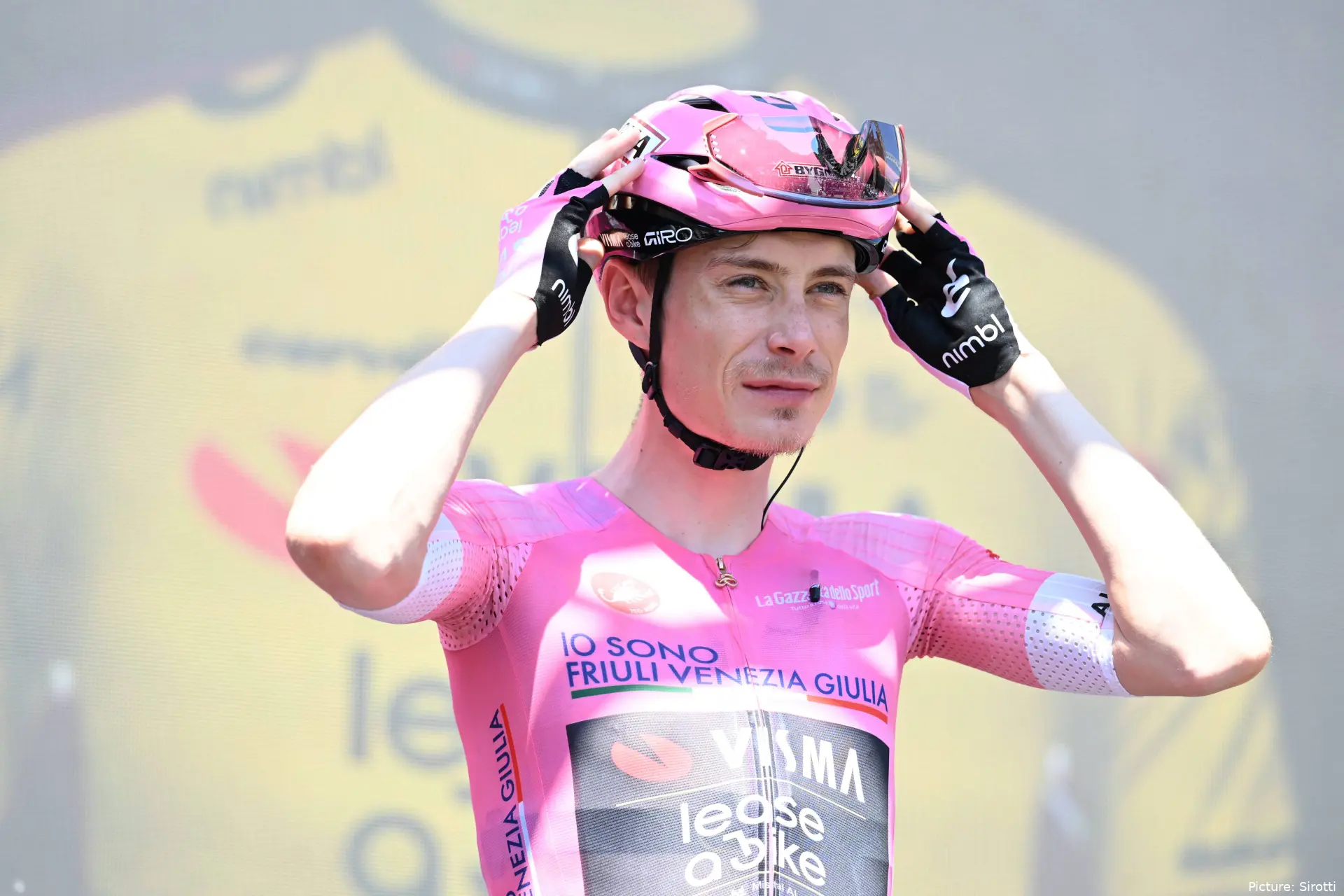
Jonas Vingegaard’s fourth stage win of the 2026 Giro d’Italia has pushed the race deeper into his control, but it has also reopened the wider question that follows him into every Grand Tour season: how close is he now to the Tadej Pogacar level?
Vingegaard extended his overall lead to more than four minutes with victory on Stage 16, continuing a Giro that has moved from early uncertainty into clear Visma | Lease a Bike dominance. Yet for Robbie McEwen, speaking on TNT Sports, the most interesting part is not simply that Vingegaard is winning again. It is that his performances are beginning to point back towards the rider who twice defeated Pogacar at the Tour de France.
McEwen sees Vingegaard moving back towards his Tour-winning peak
“I think we've seen arguably a better Jonas than this when he beat Tadej Pogacar to win the Tour de France twice,” McEwen said. “But I do believe he's on his way back towards that.”
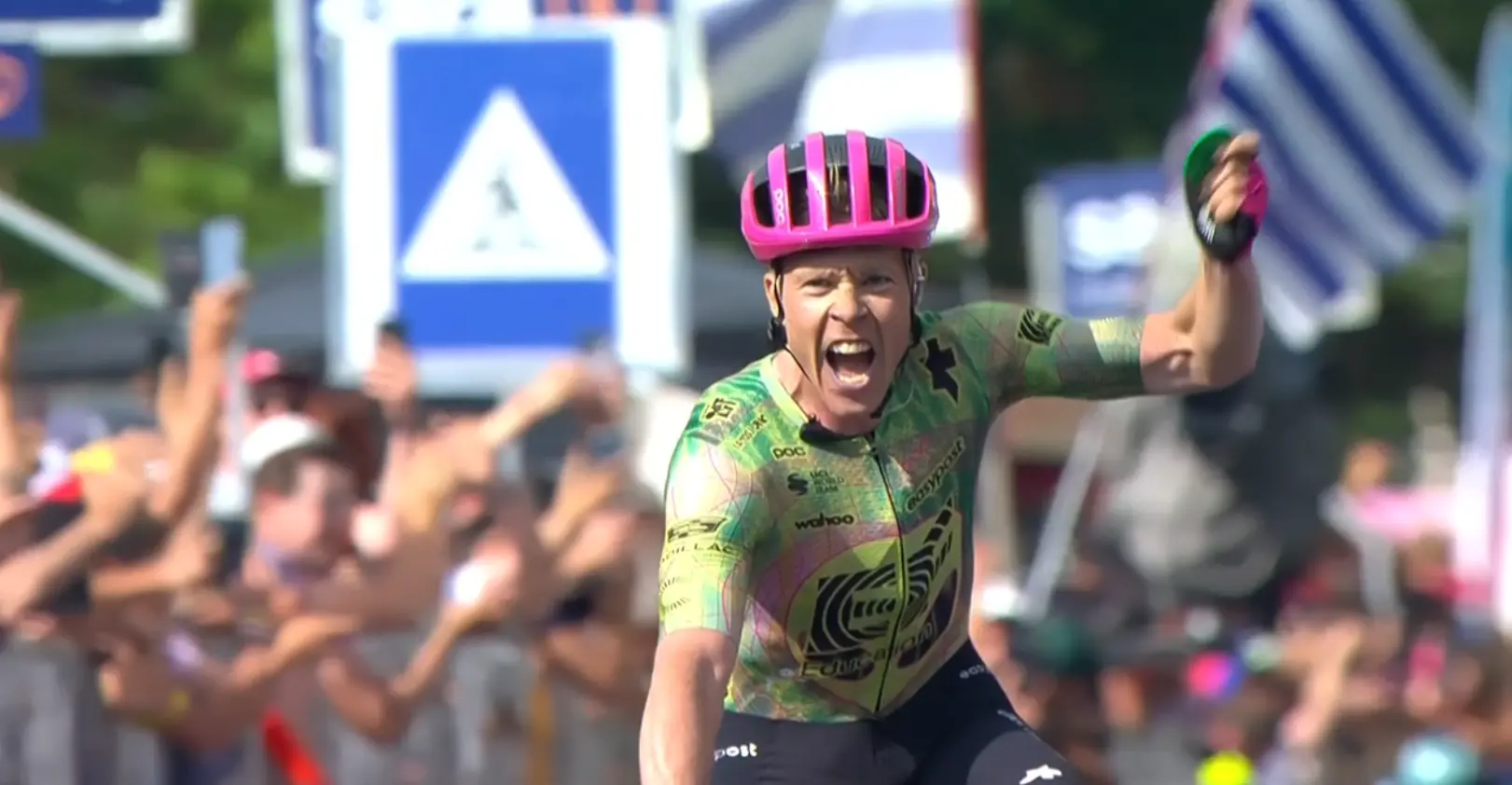
That is the balance around Vingegaard’s Giro. He has won four stages, taken the Maglia Rosa, strengthened his advantage in the mountains and turned the race into a fight for the podium behind him. At the same time, the standard he is judged against remains the one he set in the Tour de France.
McEwen also pointed to the longer recovery arc since Vingegaard’s serious crash at Itzulia Basque Country in April 2024, where he suffered a collapsed lung, broken collarbone and several broken ribs. “Coming back from that crash, it's not something you're completely healed from just because you start racing again; it's a long-term rebuild to get everything working like it should. Injuries are very complex,” he said.
Vingegaard’s Giro has not been without questions. His Stage 10 time trial was below the level many expected, and Visma later confirmed he had been among the riders affected by illness during the race. Since the Giro moved back into the high mountains, however, he has responded with the authority that once made him Pogacar’s defining Grand Tour rival.

Jonas Vingegaard at the 2026 Giro d'Italia
“No one else is compared to him like that”
The Pogacar comparison can be harsh, but McEwen framed it differently. For him, being measured against Pogacar at all is a reflection of Vingegaard’s status.
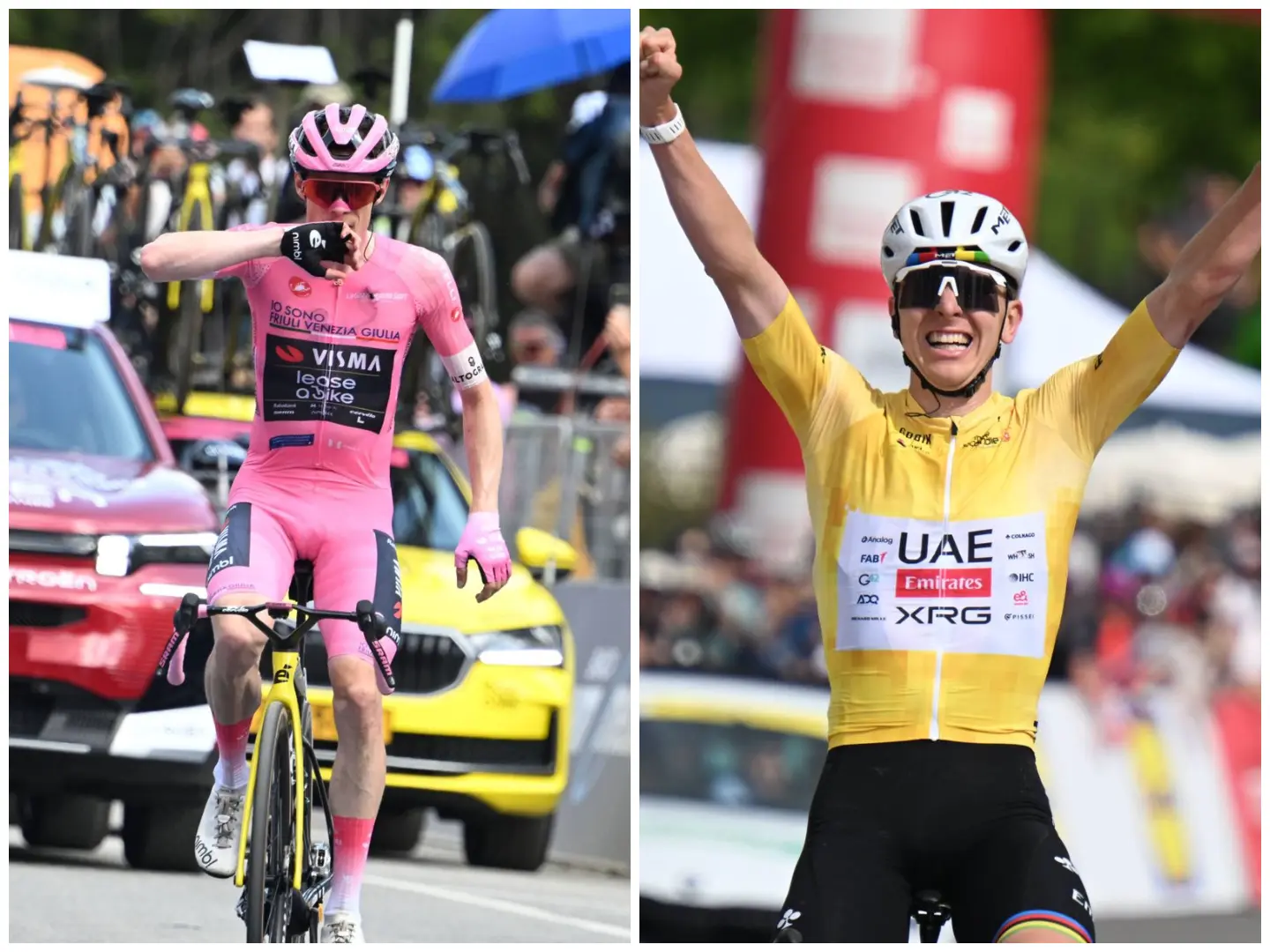
“It's also a massive privilege to be mentioned in the same breath and be compared to Tadej Pogacar,” McEwen said. “To be compared to him like that, no one else is compared to him like that, unless you talk one-day races and Mathieu van der Poel. In Grand Tour racing, there's almost nobody who compares but this guy does.”
That line captures Vingegaard’s place in the sport. Most riders are judged against the field. Vingegaard is judged against Pogacar. Even while he is dominating the Giro, the debate quickly shifts to what it means for the Tour and whether he is rebuilding towards the level required to challenge the Slovenian again.
Pogacar has taken firm control of cycling’s biggest narrative since Vingegaard’s 2024 crash, adding further Tour de France success and continuing his dominance across the sport. Vingegaard’s Giro response has not closed that debate, but it has made it impossible to ignore again.
Townsend points to Pogacar’s uninterrupted rise
Rory Townsend added another layer to the discussion, arguing that Pogacar’s relatively smooth career path has played a part in the gap that has opened since Vingegaard’s crash.
“[Vingegaard] does look in brilliant form,” Townsend said. “I feel bad for bringing it up; it's very hard to work out where he's at without his old rival to compare him to. The proof will be there at the Tour; we’ll be able to see what it's like.”
Townsend pointed to Pogacar’s consistency as a major factor in his rise. “Tadej is so dominant in our sport today and, when you actually look at his career arc up till now, he hasn't had loads of setbacks really. I think he broke his wrist at one point but he was still riding the whole way through,” he said. “A key part of our sport is just consistency of training. As long as you're able to deliver week on week, month on month, the trajectory of your career continues to grow.”
For Vingegaard, the path has been less linear. The Giro now looks like the clearest evidence yet that he is rebuilding not just results, but authority. Stage wins are stacking up, the GC lead has expanded, and the old Tour comparison is back in full force.
Townsend added: “I think that's why Tadej has got to where he is now. Of course, he's a phenomenal athlete, but on some level, there's a certain amount of luck that maybe Jonas and other guys along the way [haven’t had]. It's something to consider when having these conversations.”
Vingegaard still has to finish the job in Italy, but the Giro has already changed the tone around his season. The question is no longer whether he can control this race. It is whether this is the road back to the only comparison in Grand Tour cycling that really follows him.

Kieran WoodDeputy Editor-in-Chief
Kieran Wood is a sports journalist based in Wales and has been active in journalism since 2022. He regularly contributes to DartsNews.com and CyclingUpToDate.com, where he covers professional cycling and darts. In cycling, his work includes liveblogs from major races, including the Tour de France, the Giro d’Italia, and La Vuelta a España, alongside race reports and analysis. He has also conducted interviews with professional riders.
His reporting spans the full racing calendar, from one-day classics to stage races, with a focus on accurate, real-time coverage and clear contextual analysis. For statistics, results, and historical context, he regularly uses resources such as ProCyclingStats. To support reporting on rider activity and training context where relevant, he also references Strava.
In his work, Kieran places strong emphasis on careful sourcing, editorial accuracy, and updating articles as new, verified information becomes available.
claps 9visitors 9
Just in
Popular news
Latest comments
- I raced as an amateur for 12 years, including six years on my country’s national road cycling team. I secured two national titles and competed in three World Championships plus more than 15 international stage races. At 23, we travelled to Italy for a training camp—or so I assumed. On a rest day, we watched a presentation about adopting a more “professional” training approach. It was crystal clear what “professional” meant. That moment first exposed me to this dilemma. After returning from Italy, I left cycling—at least at the competitive level I had known. Over the following two years, the whole team was caught doping. I hold that everyone is innocent until proven guilty. In my view, current stakeholders operate on a different scale, and the sums involved are vast. I am unsure whether any doping would ever be revealed. I try to stay positive and enjoy the show. My 2c.
 vannpelt17-10-2026
 - Fiver he wins 🤣
 leedorney17-10-2026
 - “…measures to reduce speeds.” Might as well shorten the race course to just 50km as well? ASO generates at minimum €300m a year and 30- 40% profit. Maybe stop being greedy and spend more of the profit to protect the riders instead.b3tlla17-10-2026
- he also had quite the life off the bike during his pro years. he used his celebrity status to full affect.mij17-10-2026
- Nairo and Froome’s battles were great.mij17-10-2026
- I think it is a good sign to have only signed a couple of riders. it shows their system is working - retention of their own riders and using their development squad. As for retention of their own riders, they won a GT, a monument, they took a points jersey in another GT. They have a U23 WC. They have multiple one day and one week race wins. Keep the core. Their development squad has delivered fantastic results. And for all the talk of Vismas decline, their culture must be amazing since no one signed elsewhere. That is a very GOOD sign.mij17-10-2026
- Why is it beyond people's intellectual capabilities to stop accusing others of doping without proof? How are we supposed to live in a world where suspicion is evidence of guilt?This is pure infantile asinine nonsense.
 Brucegel17-10-2026
 - is that the standard for sharing thoughts here?OCexile17-10-2026
- If he was less brilliant than usual at the Tour, then I don't even want to imagine his 'usual' level of brilliance.Cooldude17-10-2026
- ok, i take back my wish. you’re right, i didn’t stop to think about how much i was damaging the sport. that was a close one. sometimes i forget how much power i wield and how capricious i can be…OCexile17-10-2026
Loading
6 Comments