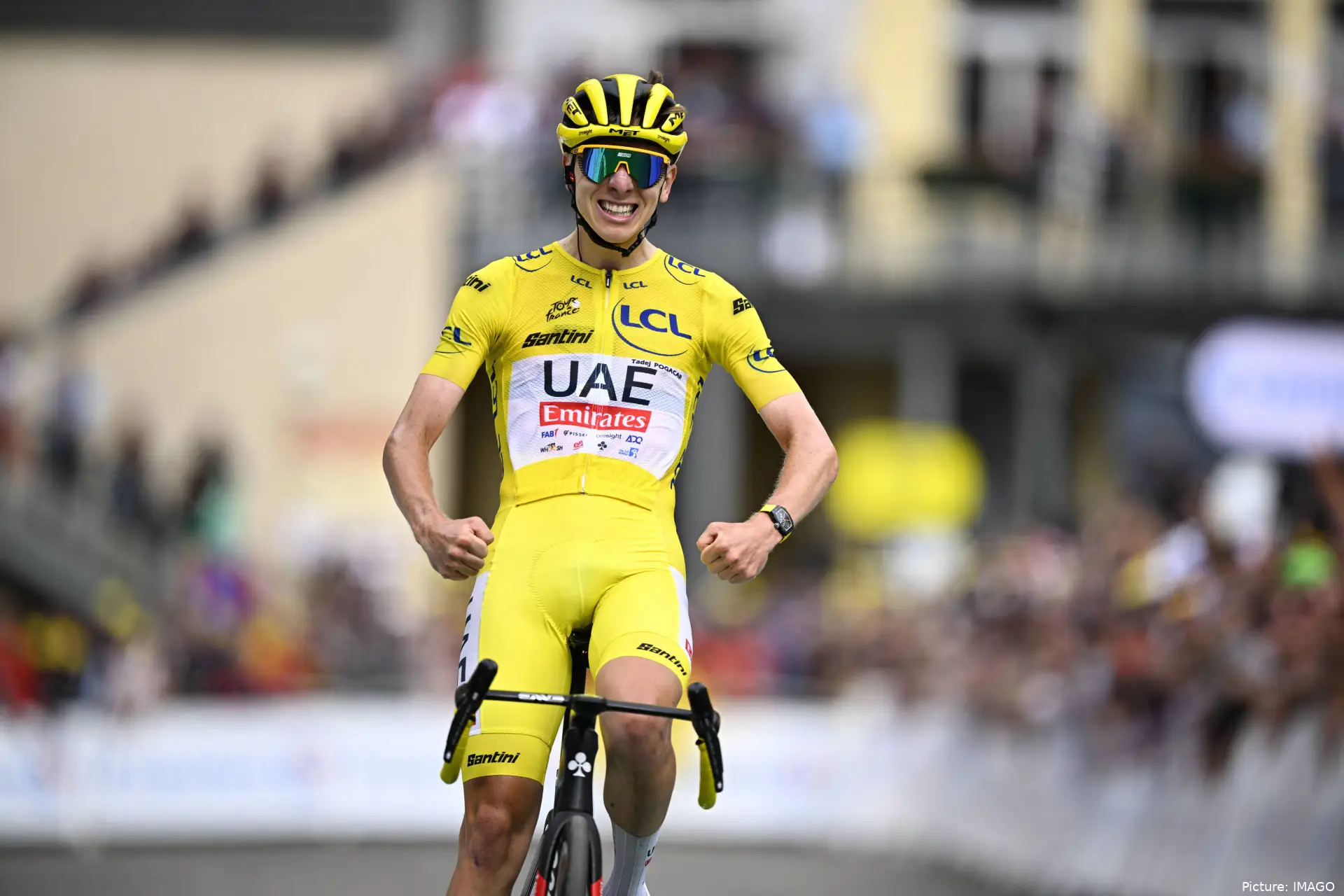
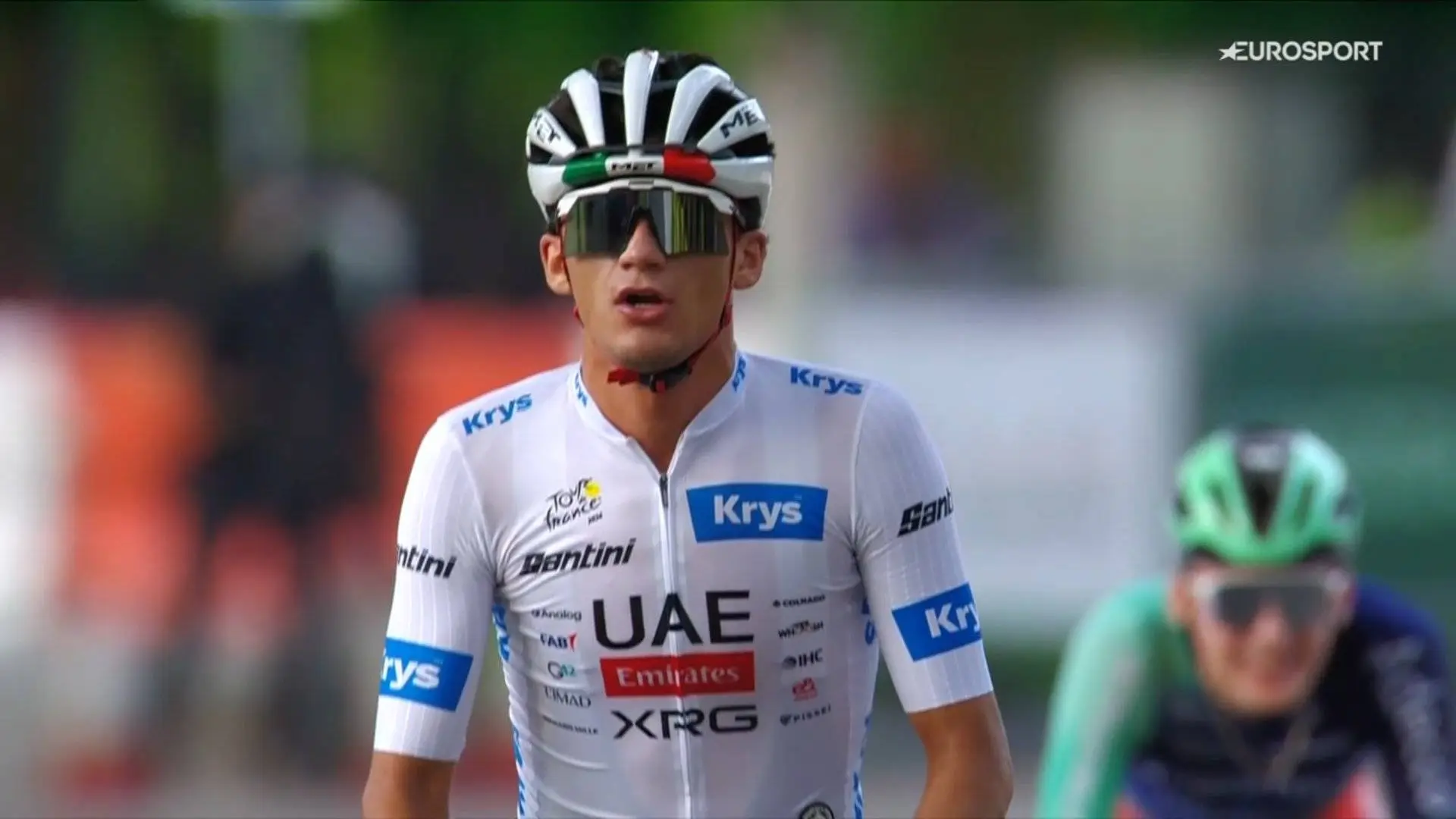
Nils Politt recently went on a podcast and has given a lot of insight on Tadej Pogacar and UAE Team Emirates' Tour de France. A lot of interesting statements were issued by the German but alongside them some that some riders many not be so fond of, which is that the team has a blacklist of riders who are not friends of the team.
"Tadej and Remco like each other, both on and off the bike. They are friends, which isn’t the case with Vingegaard. Tadej and Jonas respect each other but don’t necessarily like each other," Politt said in the Schlag & Fertig podcast. "In the peloton, you have friends and riders you’re not so fond of. On our team bus, there’s also a list of riders who are friends and a blacklist. You don’t want to be on that list". Although this won't necessarily explain some of UAE's tactics during the Tour, it hints at the existence of personal reasons to chase down breakaways.

Often during the Tour, riders of other teams were often frustrated at the lack of opportunities to win and specially lack of freedom given to breakaways - something that is now more common during the year as well. The Slovenian ended up winning six stages. After winning both summit finishes in the Pyrenees ambitions to win stages were not as sharp to win stages. The German says that on stage 20 there was even an attempt to give freedom to other riders: "We had prepared for that stage very intensively. The team wanted to win there, but Tadej said in the morning on the bus: 'We’ve already won four stages. If we win this one too, they’re going to get angry with us.'"
In the end the breakaway was controlled and a GC battle ensured on the final climb. Jonas Vingegaard attacked the climb hard, but Pogacar didn't give any favours to the Dane. "I told him that if you can win a stage, you should just do it. Tadej hesitated, so we sent Marc Soler ahead. But Evenepoel’s team closed it down. I genuinely think Tadej would have let him win if they had been ahead together, but there’s no mercy for Vingegaard".

"With Tadej, you can’t come up with a strategy. You devise a plan, but on the bike, he wants you to go even faster," Politt says. "But you can’t go any faster. 'Four minutes, give it everything you’ve got!' But the others in your wheel still have to keep going, you know. Fortunately, I’ve also managed to slow him down a few times." However no-one could slow him down on Plateau de Beille where he gained meaningful time on his rivals but above all set power numbers that were previously unseen in pro cycling, according to estimations (which also saw Vingegaard and even Remco Evenepoel do career-best efforts):
"That Tadej went minutes faster than Pantani, you can’t really compare that anymore. Our bikes are now 6.8 kilos, back then they were 9 kilos. All our equipment is tested to ensure it’s the fastest: helmets, socks, base layers... That wasn’t the case before;" Politt argues. "People don’t realize what we do for it and that what happened in the past is really no longer possible. We have to be available for doping checks literally all day long, and in the Tour, Tadej was tested every day and sometimes even twice a day. They would come into the bus before a stage, where he had to provide a sample. An intrusion into privacy. But the questions are part of it, and we know that too."

Politt also commented on former teammate Primoz Roglic who had to abandon the race due to another crash. Politt was not surprised at the outcome of the Red Bull - BORA - hansgrohe's leader: "He’s ridden the Tour six times and has crashed out three times. His crashes are, of course, widely covered, and there wasn’t much he could do about this one in the Tour. But there are crashes of his that make us all wonder what he’s doing. In that second week, 160 riders passed through that corner without any issues, and he crashes".


Rúben SilvaEditor-in-Chief
A founding contributor to CyclingUpToDate since its launch in January 2022, Ruben Silva has played a central role in shaping the site’s editorial direction and long-term growth. Before joining the project, he built his experience through independent blogging at Echelons Hub and by producing race previews for Ciclismo Internacional, developing a strong analytical voice rooted in daily engagement with professional cycling.
Beyond editorial work, he has been closely involved in the expansion and coordination of CyclingUpToDate’s wider network, helping establish and support sister platforms across multiple languages. This includes ongoing collaboration with CiclismoAlDia (Spanish), CiclismoAtual (Portuguese), WielrennenUpToDate (Dutch), and RadsportAktuell (German), contributing to a shared editorial vision and consistent international coverage.
He also helps oversee editorial governance across the network, setting standards for accuracy and consistency and coordinating updates or corrections when needed.
Originally from the Porto metropolitan area in Portugal, he holds a bachelor’s degree in Geography. His path into cycling journalism was shaped not through formal media training, but through independent reporting, community engagement, and sustained on-the-ground involvement in the sport.
Over the course of his career, he has conducted approximately 100 interviews across road cycling and cyclocross, ranging from one-to-one conversations and online formats to press conferences and on-site pre- and post-race coverage. His interviews include leading riders, team managers, and prominent figures within cycling media: Tadej Pogacar, Jonas Vingegaard, Mathieu van der Poel, Primoz Roglic, Wout van Aert, Joao Almeida and Tom Pidcock; managers like Patrick Lefevere and Joxean Matxin; and YouTube personality Bryan Kennedy (BKXC)...
Within 18 months of launch, he helped grow CyclingUpToDate’s English-language platform into one of the most-read cycling news websites, built entirely from the ground up. As both a professional journalist and lifelong cycling enthusiast, his focus remains on delivering accurate, timely, and well-contextualized coverage.
claps 30visitors 20
Just in


Popular news
Latest comments
- There really was nothing in it. Schreiber was so much faster, and Brand was fighting to stay in the wheel in the sprint. Schreiber did move a bit, but to say she closed the door doesn't make sense because Brand couldn't enter it anyway, abd she wasn't impeded.
 Rafionain-Glas08-11-2026
- He should have been allowed to go to Movistar. Right now both arent a good fit for each other and are just wasting each other's time and effortabstractengineer08-11-2026
- Thibau Nys does exactly what Iserbyt is calling forRafionain-Glas08-11-2026
- i did not see it. was the relegation justified or an overly hard decision? and don‘t cross riders deviate from straight lines all the time? bumping into each others when they cut corners, etc … why being more strict with the rules on the finish sprint?Ketterechts08-11-2026
- seems like we are advertising the website with pointless comments…Ketterechts08-11-2026
- So?Jumpyjohn08-11-2026
- The UCI do have their favorites.
 Front24208-11-2026
- On a positive note, you maybe notice turning this topic into a discussion has the benefit of eliminating certain participants who do not see how they can turn it back to their sole interest ;-)Jumpyjohn08-11-2026
- People see what they want to. I am actually the opposite of your accusation, probably more of a rebel than most of you who don’t get the big picture. The difference is, I don’t go moaning publicly about the consequences of my transgressions, I understand the need for rules and I take my OWN responsibility when deciding to ignore or break them or doing so involuntarily. I will also not hesitate to state my case or argue vehemently when relevant, sometimes it works, sometimes it makes things worse but that’s the price to pay for principles and having character.Jumpyjohn08-11-2026
- That may be but that was unknown to others and nothing says that’s the whole truth. Again, don’t try to misinterpret, it is a call and technically it is correct. Besides, even if there is a valid reason, that does not disqualify the ruling or punishment as far as the rules have been developed. I don’t think they’re as far as in football where for handball there is a distinction (in some ways and specific cases) between intentional or not. And football can be just as harsh and people live with it, eg the offside rule, also judged to within tiny fractions but often wrong or ignored. It’s the nature of every collective organisation and sometimes I wonder if our rebellion against it isn’t seated in the feelings we carry from the injustices we’ve felt personally, like being flashed driving 1km/h too fast when we are explained limits are just a security measure but we are absolutely certain not to have endangered anyone with our transgression. The problem is, nobody has better solutions and no 2 people have the same interpretation of where a limit should be.Jumpyjohn08-11-2026
Loading
23 Comments