“It’s a work in progress” – Lotto urge patience after Arnaud De Lie fades early at Kuurne - Bruxelles - Kuurne
Cycling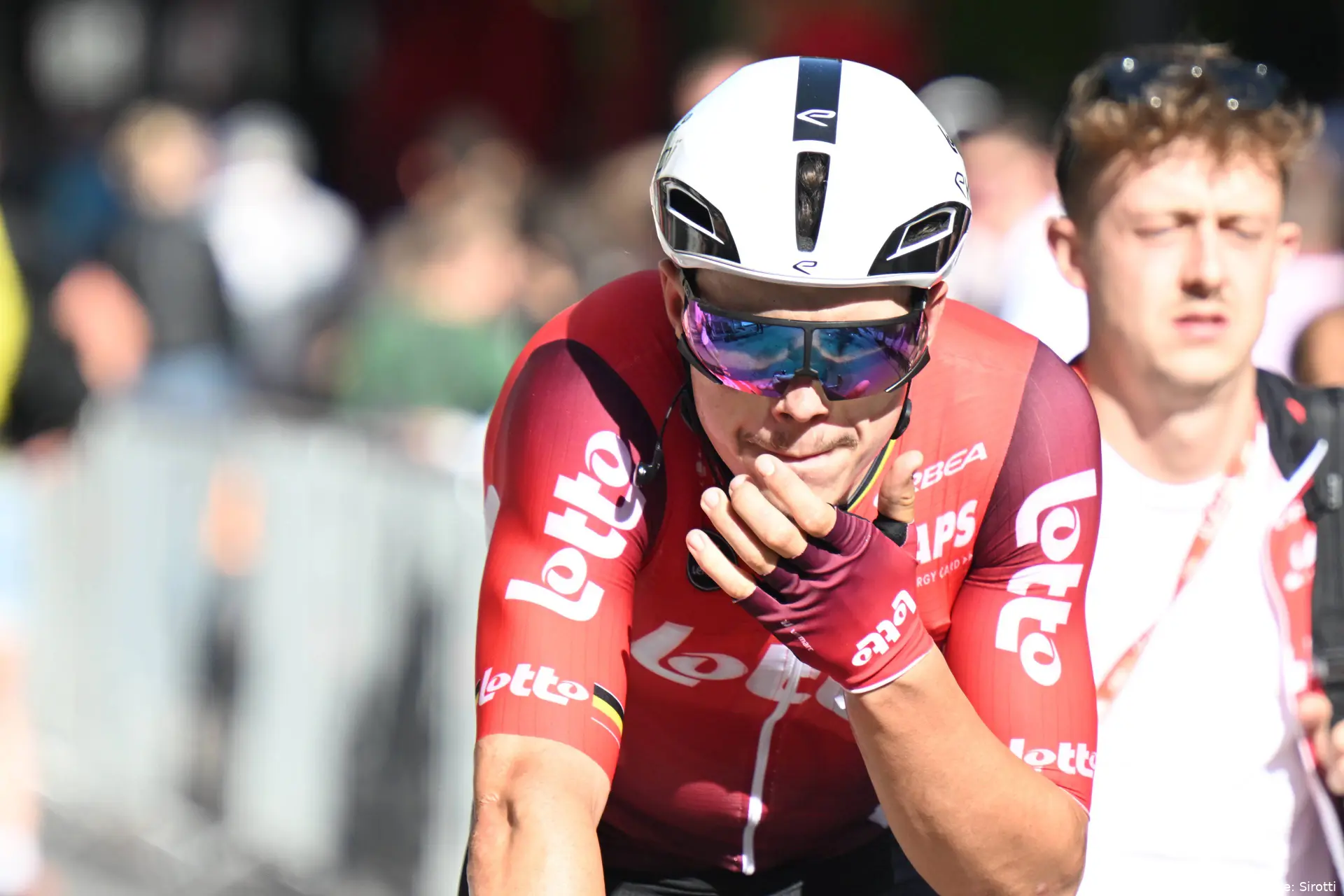
Arnaud De Lie’s name was missing from the decisive phase of Kuurne - Bruxelles - Kuurne, and for a rider billed as one of the major sprint threats of Opening Weekend, that absence raised eyebrows.
Inside the Lotto-Intermarche camp, however, there is no sense of alarm. “It’s a work in progress,” sports director Aike Visbeek said afterwards in quotes collected by HLN. “We knew that before we started the spring.”
De Lie was distanced in the hill zone, despite arriving at the start with confidence.
“He felt super before the race,” Visbeek explained. “In the team meeting, the plan was to push hard in the hills so it would become a sprint for riders like Brennan and Arnaud. In the end, he cracked there. We had Steffen De Schuyteneer as a second option, and we played that card afterwards.”

Managing expectations after a race against time
The fade came on a day shaped by pressure in the hills and crosswinds that repeatedly split the field. For Lotto, the script had been clear: increase the pace in the decisive terrain to reduce the sprint field and give De Lie a manageable finale.
Instead, the Belgian was among those who slipped out of contention as the race intensified.
Visbeek suggested the explanation may lie as much in Saturday at Omloop Het Nieuwsblad as Sunday. “This could be a reaction from yesterday. He went deep then. It’s also a matter of race hardness that he’s still missing at the moment.”
That race hardness is central to the broader picture. De Lie spent the off-season working his way back from an ankle injury, and his build-up to the spring was described internally as tight.
“It was a race against time to get him ready, and that seems to have worked,” Visbeek said. “We’re not worried. You also have to look at the full picture. We have a strong team, Arnaud is focused and motivated. We rode a solid Opening Weekend, but in the end we’re left empty-handed.”
Building towards Tirreno
Rather than viewing Kuurne as a setback, Lotto see it as part of a progression. “De Lie definitely still needs next weekend to continue building towards Tirreno-Adriatico,” Visbeek added.
For now, the emphasis remains on development rather than immediate results. Kuurne may not have delivered the sprint opportunity Lotto envisaged, but internally the focus is on conditioning, continuity and patience.
If this spring is indeed a work in progress, Lotto are determined not to judge it too early.


Kieran WoodDeputy Editor-in-Chief
Kieran Wood is a sports journalist based in Wales and has been active in journalism since 2022. He regularly contributes to DartsNews.com and CyclingUpToDate.com, where he covers professional cycling and darts. In cycling, his work includes liveblogs from major races, including the Tour de France, the Giro d’Italia, and La Vuelta a España, alongside race reports and analysis. He has also conducted interviews with professional riders.
His reporting spans the full racing calendar, from one-day classics to stage races, with a focus on accurate, real-time coverage and clear contextual analysis. For statistics, results, and historical context, he regularly uses resources such as ProCyclingStats. To support reporting on rider activity and training context where relevant, he also references Strava.
In his work, Kieran places strong emphasis on careful sourcing, editorial accuracy, and updating articles as new, verified information becomes available.
claps 0visitors 0
Just in
Popular news
Latest comments
- Only one person would say such a thing here. Sorry to burst your bubble but I’m afraid that window of opportunity has now closed. You can beat some of the people all of the time and all of the people some of the time but you can’t beat all of the people all of the time.Jumpyjohn19-10-2026
- Both prizes are actually pathetic, almost amateur like, not even covering the cost of participatingJumpyjohn19-10-2026
- It depends on how you define doping and you would do well to give your definition so we can see how against it you are. If you consider the use (as a hypothetical example) of a new beneficial artificial product unknown to anti-doping agencies ok without considering asking them if it would constitute doping if you told them about it then we’re never going to agree on who could be or couldn’t be doping and according to what threshold, moral, statistical, legal, comparative. In football even financial doping is now consideredJumpyjohn19-10-2026
- I can’t wait to follow Pogi's races in 2027. Cycling will be exciting again!!!PogiSloFans19-10-2026
- I saw it for quite a while and the stats back it up
 Rafionain-Glas19-10-2026
 - Hope he can make a redemption by winning all grand tour or all monuments in single seasonZamorano19-10-2026
- great for Brandon to get this monkey off his back - first win in Rainbow has got to feel good.mij19-10-2026
- they are super good.mij19-10-2026
- agree
 Davide19-10-2026
 - good to see Quinn finish the season off with a win .well done captain america...Davide19-10-2026
Loading
Write a comment