“It feels slightly embarrassing” - Ned Boulting hits out at British Cycling over European Championship road race no-show
Cycling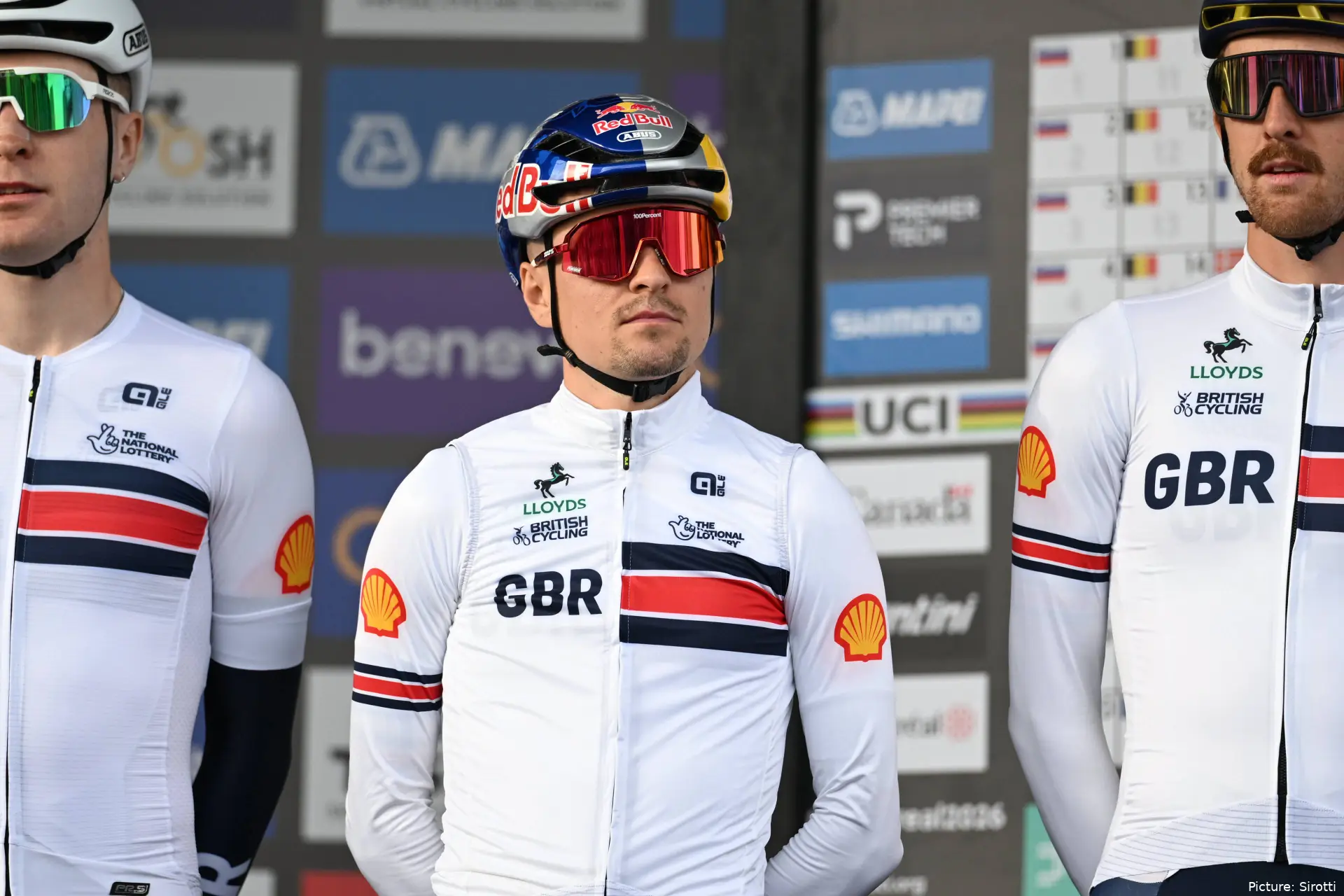
Great Britain have been represented at the European Championships in Slovenia this week, but when Remco Evenepoel and Demi Vollering fought for the elite road titles, there was no British jersey in either peloton.
British Cycling deliberately opted against sending teams for the men's or women's road races, instead repeating the time-trial-focused approach it took to the championships in 2025.
That decision drew criticism from Ned Boulting and David Millar, who questioned both the sporting logic and where road racing currently sits within British Cycling's priorities. "It hasn't been properly explained, maybe they can't explain it, maybe they don't want to explain it," Boulting said on the For The Love of Cycling podcast. "But it feels bad. It feels slightly embarrassing, actually."
British Cycling's selection for Slovenia was built almost entirely around the time trials. Callum Thornley and Lauren Dickson were chosen for the elite events, while Ben Wiggins was selected at under-23 level. Ethan Hayter had initially been due to ride the men's elite TT before withdrawing.
The federation described the policy before the championships as a continuation of its 2025 strategy, concentrating its resources on riders it believed had the best chance of producing results against the clock.
Britain's involvement at the Europeans has been inconsistent for much of the event's short history. There were road and time-trial squads between 2018 and 2020 and again in 2023, but no British participation in 2021, 2022 or 2024, before the move towards TT-only selections over the past two editions.
"What's the grassroots for?"
Boulting pointed towards the considerable expense involved in staging Britain's major domestic road races, including the men's and women's Tours of Britain, with policing and logistics making them particularly costly events to organise.
Millar questioned how that investment fits with Britain then sitting out one of Europe's major international road championships. "What's the grassroots for? Because eventually [you want to] be able to develop British racers, give them inspiration, motivation to kind of race, and yet we're not sending a team, which is the ultimate outcome, you'd think, of sponsoring the women's Tour," he said. "It's a little bit strange."
Boulting believes the answer lies partly in British Cycling's long-standing emphasis on the track and the Olympic cycle. "When you really boil it down, British Cycling, it's about the track, and it's about the four-year Olympic cycle," he said.
The European Championships did fall immediately after the World Championships in Montreal and before the final major one-day races of the season, while professional-team commitments and the cost of sending another national squad also had to be factored in.
Even so, Britain still sent riders to contest the time trials while leaving both elite road races empty.

Oscar Onley in action for Britain at the recent World Championships
Georgi and Backstedt among those left at home
The absence was particularly noticeable on the women's side. Pfeiffer Georgi had finished 11th in the World Championship road race in Montreal and continued racing afterwards, while Zoe Backstedt had taken silver in the elite World Championship time trial.
Boulting felt both could have been competitive on the Slovenian road course. "It would have been a course that would have suited Zoe Backstedt much better [than the World Championships in Montreal]," he said. "Pfeiffer Georgi too."
Neither was selected for the European Championship road race, while Backstedt was also absent from the time trial despite her silver medal in Montreal.
Read also
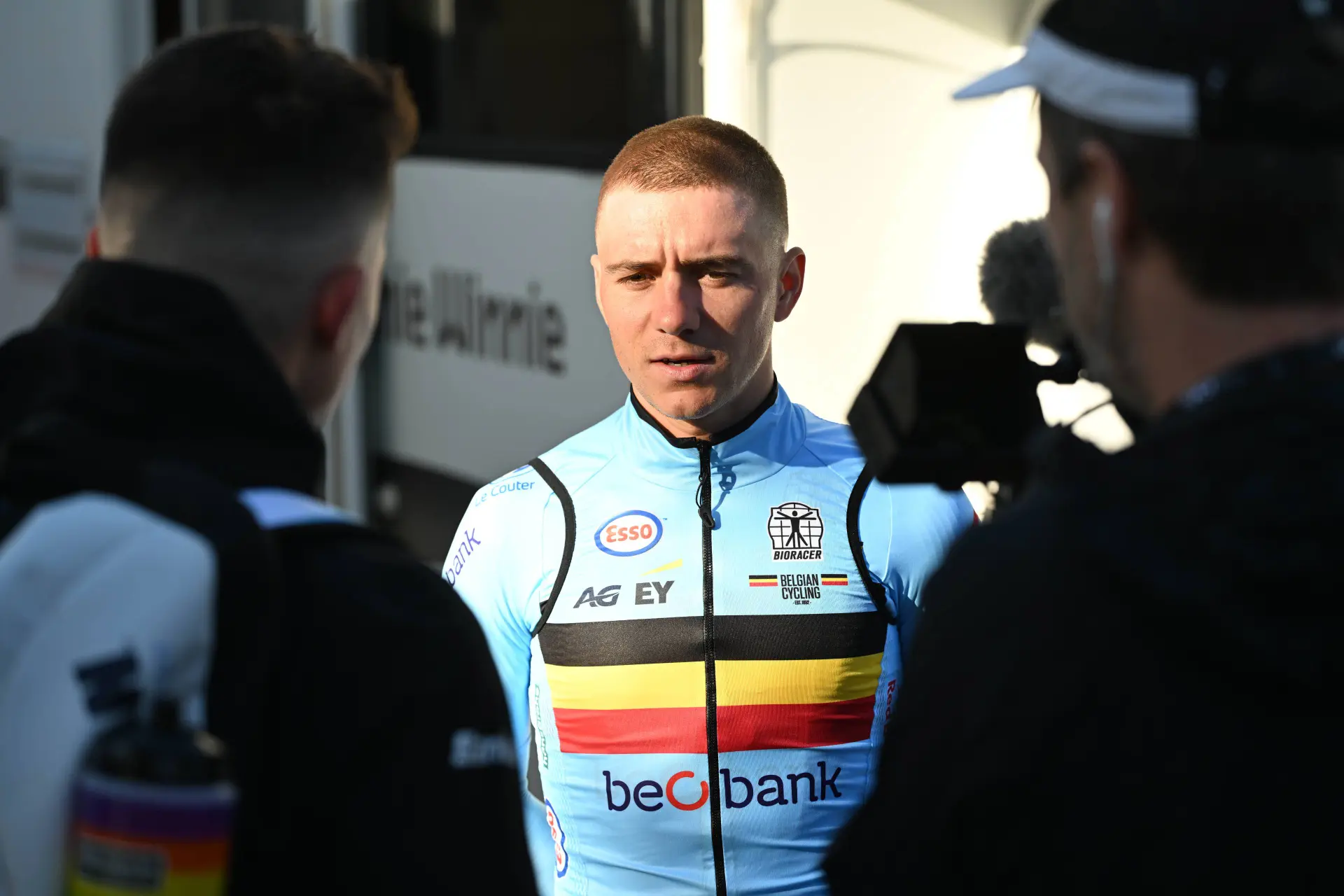

There were options on the men's side too. Tom Pidcock had finished seventh at the World Championships, but Britain again chose not to enter the elite road race as Evenepoel eventually beat Giulio Ciccone in a photo finish.
There is obviously no guarantee any of those riders would have returned home with a medal, but the decision to not send them was clearly not forced by a lack of available quality. British Cycling chose to concentrate its European Championship programme elsewhere.
Boulting and Millar's criticism therefore reaches beyond one missed road race in Slovenia, with the wider debate now centred on how Britain's domestic road investment, rider development and international championship programme are meant to fit together.
Kieran WoodDeputy Editor-in-Chief
Kieran Wood is a sports journalist based in Wales and has been active in journalism since 2022. He regularly contributes to DartsNews.com and CyclingUpToDate.com, where he covers professional cycling and darts. In cycling, his work includes liveblogs from major races, including the Tour de France, the Giro d’Italia, and La Vuelta a España, alongside race reports and analysis. He has also conducted interviews with professional riders.
His reporting spans the full racing calendar, from one-day classics to stage races, with a focus on accurate, real-time coverage and clear contextual analysis. For statistics, results, and historical context, he regularly uses resources such as ProCyclingStats. To support reporting on rider activity and training context where relevant, he also references Strava.
In his work, Kieran places strong emphasis on careful sourcing, editorial accuracy, and updating articles as new, verified information becomes available.
claps 0visitors 0
Just in
Popular news
Latest comments
- Zonneveld continues his "I hate Pogi rhetoric"slappers6607-10-2026
- Some tagline to his career.... If it wasn't for Pogislappers6607-10-2026
- The reason for that is that although the camera is recording at 1300 fromes per second it isn't capturing all the movement. The bicycles are travelling at such a high speed with the wheels spinng at a high revolution at the same time, that even 1300 frames per second does not capture all of the movement. The techy term for that is rolling shutter. It is further compounded by how the camera shoots each frame. Each single frame is scanned from top to bottom. That takes time even if done even at a high speed. Multiply that single frame time period by 1300 frames that have to be scanned and an overall time delay is happening. The bent spokes you see are a compounded image of the spoke movement being stopped on every frame at that moment. "rolling shutter." The cameras gubbins then creates an image showing this movement as best it can. To eliminate this issue would need a much faster camera shooting at many times the 1300 per second frame rate or use a camera with what is called a "global shutter" Global shutters eliminate much of that wubble you see in the spokes. Motion picture cameras have a global shutter. You will rarely see odd shaped moving images in high quality films.Prorodsandstuff07-10-2026
- yes I should have qualified the all continents. maybe they can do a TdF TT prologue there - it seems the TdF route planning committee is always looking for a novel and inconvenient place to start a race. then McEnremcoe could truly be an all continents winner.mij07-10-2026
- although he'll never be able to beat a healthy pogi in a grand tour, this year's tdf has demonstrated that in his absence he can probably win any grand tour...Ketterechts07-10-2026
- Nothing has changed, even after all these deaths. The UCI has blood on its hands.Pogboom07-10-2026
- I'm a retired pro photographer. We have been having a debate on this issue on a photography forum. Is the image we see that the ECF has issued accurate? In truth it is debatable. Why? What they are describing is basically high speed photography using a camera that shoots at 13000 frames per second. That is thirteen thousand single images every second. They are than using a process that most keen photographers know as "stacking." Each image taken within the set time period that the camera is set to shoot is then laid one on top of the other to get a single high resolution image. Does it tell the truth about the winning bikes position? Therein is the debate! My opinion is that unless you see the actual line on the road and its position relative to the actual finish line on the road and not a manufactured digital line purporting to be the finish line, there will always be questions on the accuracy of the image that the ECF has produced.Prorodsandstuff07-10-2026
- Take the thrown? Really?Trooph07-10-2026
- Maybe consider that it helps him work himself up into pushing his energy? A lot of people never start or do anything without some catalyst based on or created through negative feelings. Saying all continents is no longer acceptable without qualification, it must now be starred ;-) The amateur world of pioneers and seekers of thrills and fame has long since declared you have not been or won on all continents until you’ve included Antartica, to the great and sad loss of that place’s merit of having stayed more or less undiscovered by useless visitors.Jumpyjohn07-10-2026
- Now Hills33, don't you turn your back on me... you hear? They're all against me, because together they think, they have more power, but it ain't working for them. They keep losing out.PogiSloFans07-10-2026
Loading
Write a comment