A Tour hero, a doping record and one decision he wished he could undo: the complicated story of Didi Thurau
Cycling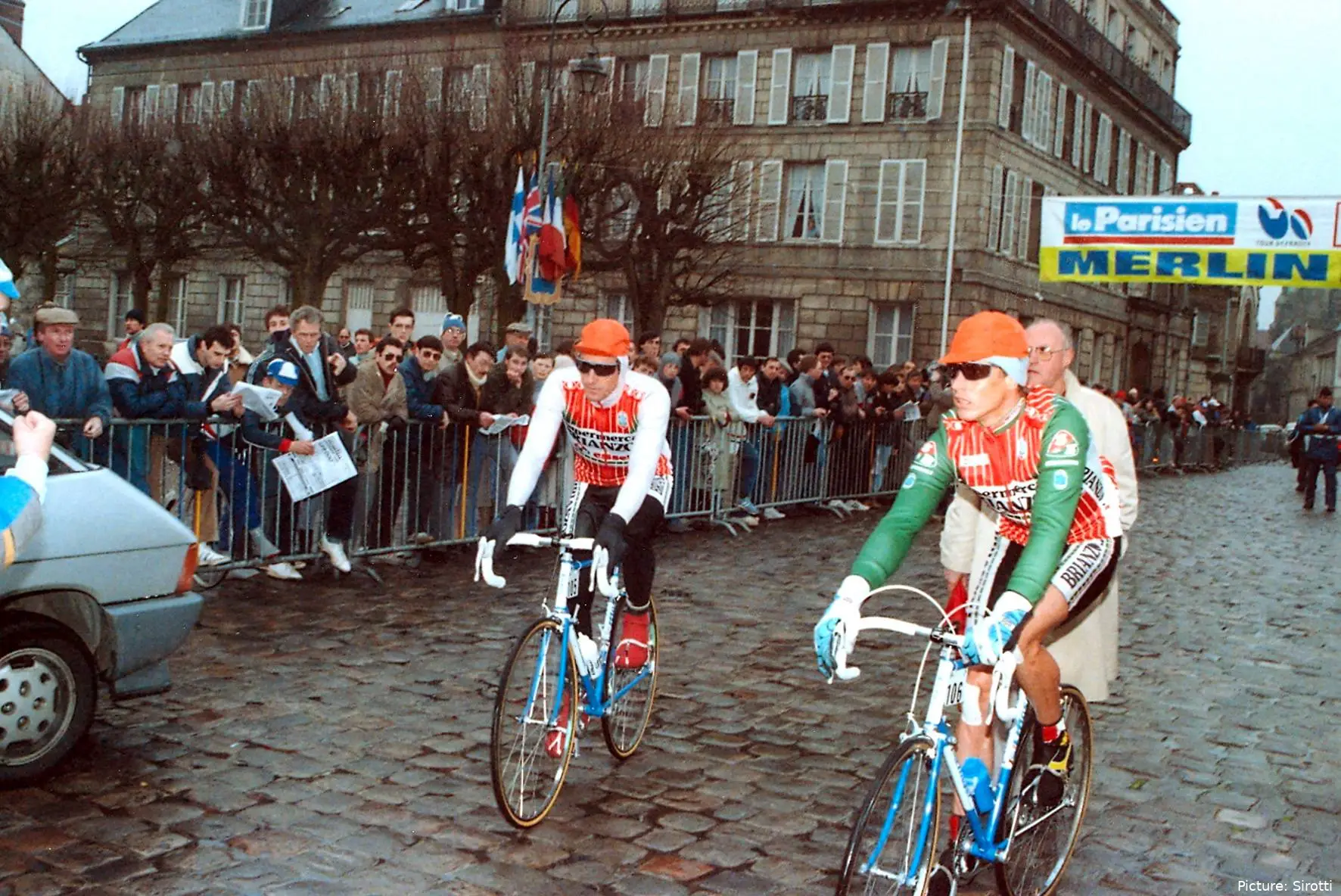
This is the fourth profile in our Cycling Legends series, revisiting the riders whose careers shaped the sport through their victories, rivalries and own memories.
Dietrich “Didi” Thurau seemed destined to become Germany's first Tour de France winner. In 1977, aged just 22, he took the yellow jersey on his debut, wore it for 15 days and finished fifth overall. The Tour made him a national star almost overnight.
He went on to win Liege-Bastogne-Liege, take two silver medals at the World Championships and collect victories on road and track. Yet the career that began with such promise never quite matched the expectations created by that summer. Thurau’s story is one of rare talent and extraordinary fame, but also of choices he later regretted, doping cases and moments of indiscipline.
Didi Thurau’s first inspiration: Helmer Boelsen and the Frankfurt races
Born in Frankfurt on 9 November 1954, Thurau grew up in a family that followed cycling. His parents took him to the Rund um den Henninger-Turm race, where he later said he first wanted to become a cyclist. He began racing as a boy, joining the RSC Edelweib at 11.
The journalist Helmer Boelsen noticed Thurau at a junior race in 1967 and wrote about the young rider. That makes Boelsen an early advocate who recognised his promise, rather than a coach who discovered or trained him. Thurau later called Boelsen “the father of my passion for cycling”.

Dietrich Thurau and Francesco Moser at the 1986 Trofeo Baracchi time trial
Thuraus' talent developed on both the track and the road. In 1974, he was part of the West German team pursuit squad that won the amateur world title in Montreal. That year he also turned professional, at first drawn by the earning opportunities in six-day track racing. He would win 29 six-day races between 1975 and 1988, a record of versatility that sat alongside his road ambitions.
Bernard Thévenet, Hennie Kuiper and Eddy Merckx: Thurau’s Tour de France debut
Thurau had already won two German road championships, in 1975 and 1976, before he arrived at the 1977 Tour de France. The previous year, he had finished fourth in the Vuelta a España, winning five stages and the points classification. He was more than a time-trial specialist or sprinter, though the high mountains would prove the toughest test of his stage-racing ambitions.
The 1977 Tour opened with a five-kilometre prologue at Fleurance. Thurau won it, beating his TI-Raleigh teammate Gerrie Knetemann by four seconds and Eddy Merckx by eight. He took the yellow jersey on the first day and had a clear target: keep it until the race reached Germany. He did just that, becoming a sensation at home as the Tour crossed the border.
Thuraus' main rivals in that race included the reigning champion Bernard Thévenet, Hennie Kuiper, Lucien van Impe and Merckx, who was riding his final Tour. These were rivals in the competitive sense, not necessarily personal antagonists. The final standings show Thévenet winning, Kuiper second and Van Impe third, with Thurau fifth, 12 minutes and 24 seconds behind the Frenchman.
The yellow jersey stayed with Thurau until the mountain time trial to Avoriaz. Two days later, on the Alpe d’Huez stage, he lost more than 12 minutes to Thévenet. The climb exposed the gap between the young German and the strongest climbers, but the overall result remained remarkable: fifth place, five stage wins including the prologue, and victory in the young rider classification.
Thurau later described the experience as overwhelming. “It was an exciting year for such a young guy,” he said in a 2012 interview to Neue Westfalische, recalling the jersey and the almost simultaneous attention that followed. “A bit too much at once for a simple Frankfurt boy.”
His popularity reached far beyond cycling fans. When he returned to Freiburg, an estimated half a million people came to see him. The “Blond Angel” had become a public figure and a symbol of renewed German interest in cycling. The Tour did not make him champion, but it gave him a platform few riders of his generation could match.
Francesco Moser and the 1977 World Championships
The Tour was not Thuraus' only major achievement that year. At the World Championships in San Cristóbal, Venezuela, he took silver in the road race behind Italys' Francesco Moser. Thurau later remembered the finish with regret. In 2012, he said he had been beaten by Moser’s experience in the sprint.
Nearly five decades later, he recalled that Moser had suffered a puncture in the finale, but Thurau had failed to recognise the opportunity quickly enough. He described himself as “a fool not to take advantage of it” in a 2026 interview with Tuttobiciweb.
That silver medal, the Tour performance and Germany's Sportsman of the Year award all came in the same season. The attention was intense, and the expectations were immense. The Nordic broadcaster NDR later described how quickly Thuraus' profile rose, and how the fame may have affected the decisions that followed. That is a retrospective interpretation, not a single proven explanation for what happened next.
Peter Post, Ti-Raleigh and the career choices he regretted
Thuraus' mentor at TI-Raleigh was team manager Peter Post, one of the most influential figures in professional cycling at the time. After his breakthrough, Thurau left the team to become the sole leader of the Belgian IJsboerke squad. In hindsight, he believed that decision cost him. “I should not have left Peter Post's Raleigh team,” he said in 2012.
He also pointed to the demands of track racing. Six-day events offered good money, and promoters were eager to book him after his 1977 success. Thurau said he sometimes rode as many as 15 six-day races in one winter.
“For me, under the circumstances at the time, the money wasn’t on the road but on the track,” he recalled. “I won thirty six-day races.” The number is his own recollection; biographical records commonly list 29 wins.
The NDR’s retrospective on Thurau’s career also points to the decision to become the sole leader at IJsboerke, his father’s influence over career choices, and the strain of too many six-day races. Thurau himself acknowledged mistakes.
But his career cannot be reduced to one team change or one winter schedule. His own account explains how he viewed those choices later; it does not establish them as the only reasons his Tour results declined.

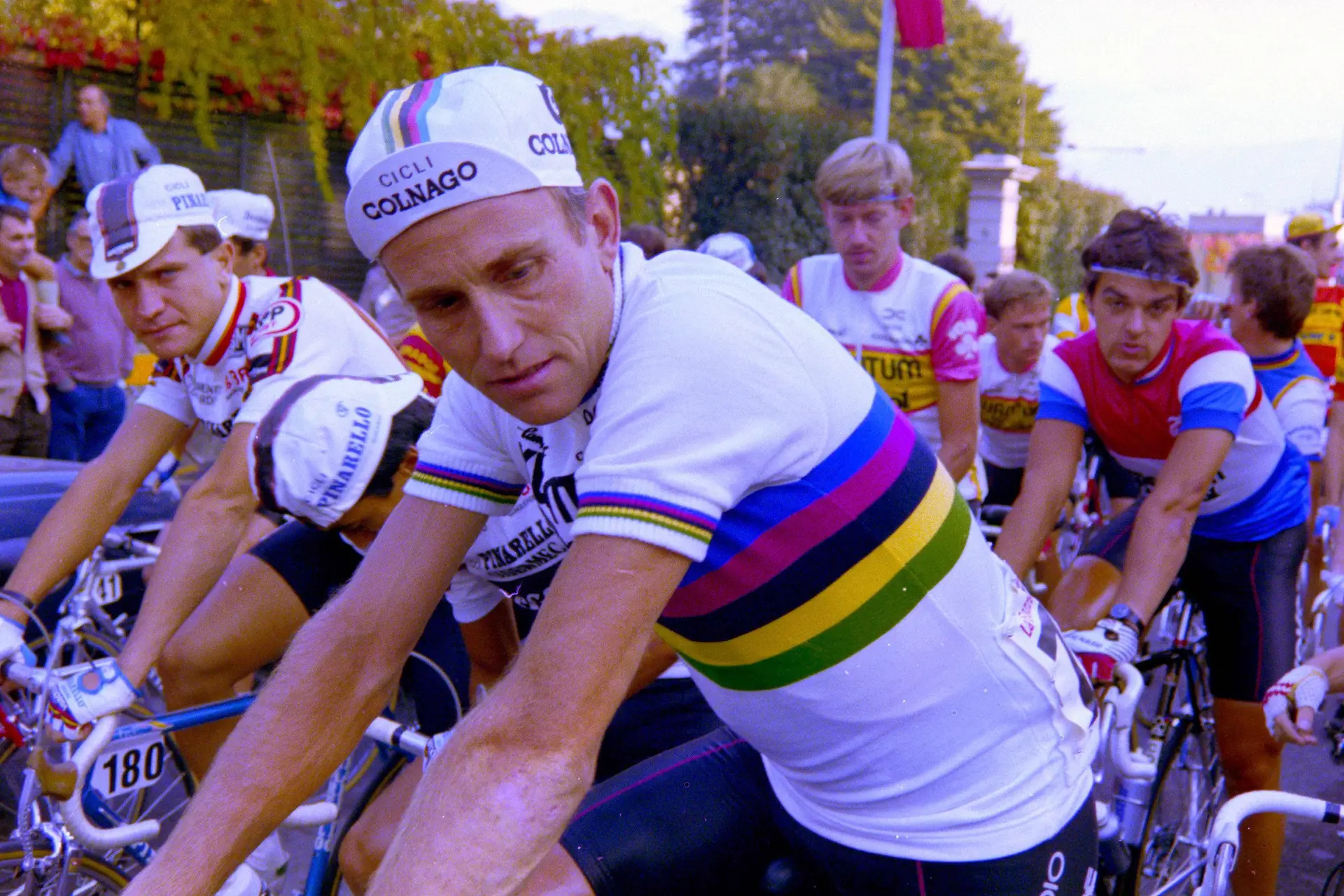
Dietrich Thurau riding in the slipstream of world champion Gerrie Knetemann at the 1979 Circuito Di Gatteo Mare
Jan Raas, Bernard Hinault and major road victories
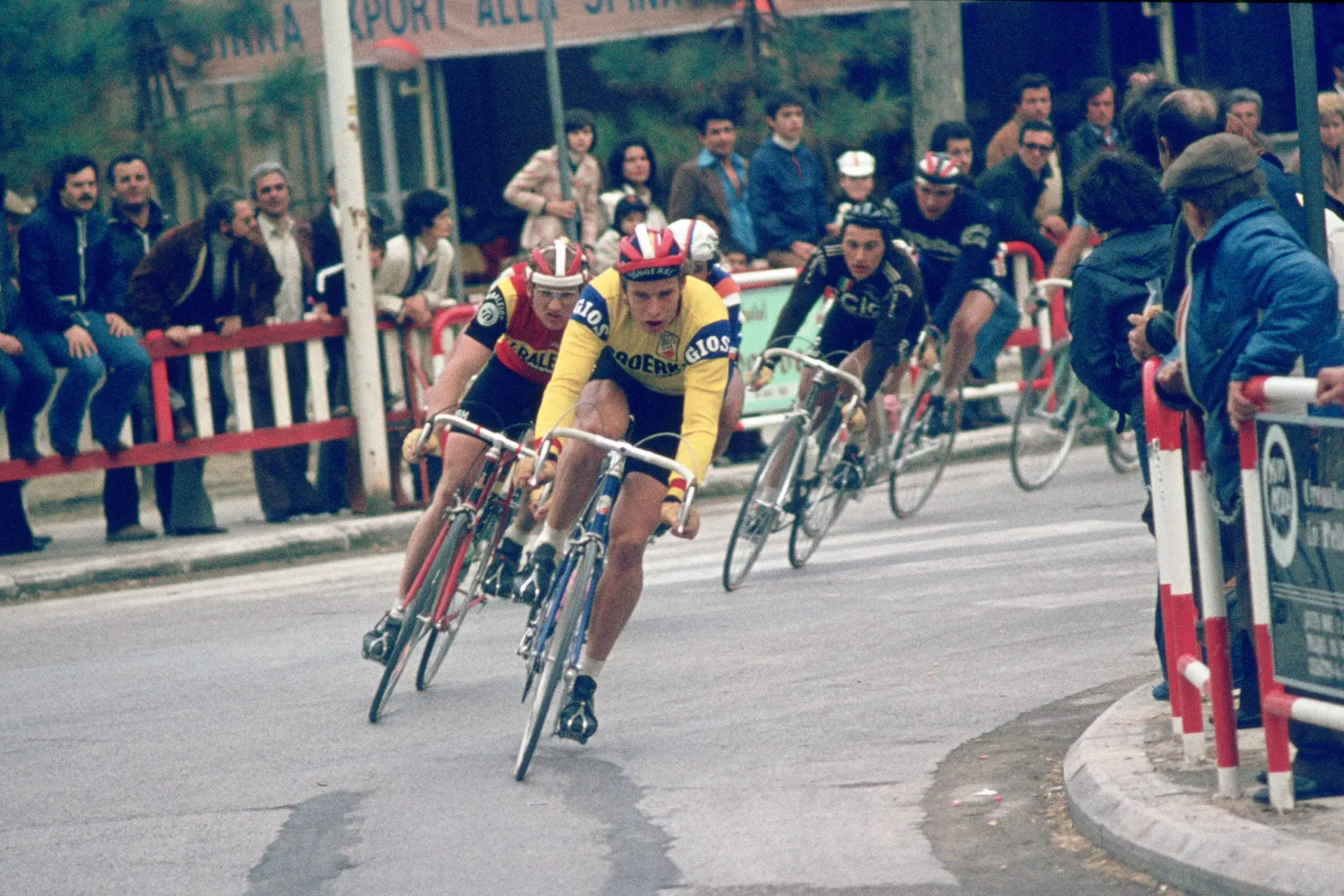
Thurau did continue to win. In 1978, he took the Meisterschaft von Zürich and two Giro d’Italia stages. The following year brought his most important one-day victory: Liège-Bastogne-Liège. He beat Bernard Hinault, already one of the sport’s most formidable riders, to win the Ardennes classic.
That was not their only notable meeting. Thurau finished third at Paris-Roubaix, fifth at the Giro and fourth at the Vuelta during his career. At the 1979 World Championships in Valkenburg, he took a second silver medal, this time behind the Netherland's Jan Raas.
His record suggests a rider who could compete across different terrains and formats, even if he never again came close to the Tour podium.
| Year | Result | |
| 1974 | World champion, team pursuit | Won the amateur title with West Germany in Montreal |
| 1976 | Fourth, Vuelta a España | Won five stages and the points classification |
| 1977 | Fifth, Tour de France | Wore yellow for 15 days, won five stages and the young rider classification |
| 1977 | Silver, road World Championships | Finished behind Francesco Moser |
| 1978 | Meisterschaft von Zurich; two Giro stages | Added a major one-day win and Grand Tour stage victories |
| 1979 | Liège-Bastogne-Liège; second, road Worlds | Beat Bernard Hinault at Liège and took silver behind Jan Raas |
Thurau also remained connected to people he had raced with. He described Guido Bontempi as “a dear friend” whom he had rediscovered at the Tour of the Alps. The two had ridden a Milan Six-Day race together.
Another lasting friendship was with Ruud Bakker, Thuraus' masseur during his racing years. “A friend to this day,” Thurau called him in 2012. He said they had discussed the use of stronger substances before the 1977 Tour, but decided against it. “We didn’t do it,” he said to the Neue Westfalische.
Doping: admissions, positive tests and disputed cases
Doping became a major part of Thuraus' public legacy. In April 1980, he was fined 1,000 Swiss francs after missing a anti doping control at Gent-Wevelgem. A separate positive test at the Tour de Romandie was not sanctioned because of a procedural error.
A case at the German national championships was dropped after the B sample tested negative. These episodes should be kept distinct: the tests did not all result in the same finding or penalty.
In 1987, Thurau tested positive for anabolic substances (nandrolone) during the Tour de France. He was relegated to last on the stage and received a fine and a one-month suspended suspension.
Years later, he acknowledged using banned substances during his career. In the 2012 interview, he said that a young rider felt there was little choice if he wanted to compete at the front. He also said his 1977 Tour had been ridden clean, a claim that should be understood as his own account.
Thurau later compared the substances used in his era with EPO and systematic blood doping that became associated with later decades. That comparison was his assessment, not a reason to minimise the cases documented from his own career.
1985 Tour de France expulsion,Tennis, Guido Bontempi and later life
Doping was not the only controversy. During the 1985 Tour, Thurau received a time penalty for drafting behind a vehicle. He reacted by physically confronting the race commissaire who had imposed it and was expelled from the race. The incident, reported at the time and recalled in later accounts, is one of the clearest examples of how Thurau’s temper could damage his sporting reputation.
After cycling, Thurau worked in real estate and became closely involved in tennis, particularly through his son Urs, whom he coached. He said that he had left cycling behind after his racing career and turned to tennis to stay fit.
In 2019, he told the German press agency DPA: “Today I would choose to be a tennis professional. It gives me more pleasure. The Tour de France is special too, but the effort is inhuman”.
Thurau has not entirely left cycling behind. In April 2026, aged 71, he appeared at the Tour of the Alps as a guest of honour and spoke with old friends, including Bontempi. In a separate interview to Schwabische Post before the Ostalb-Giro, he said he wanted to ride for enjoyment rather than chase a time: “I don’t have anything left to prove. I had enough stress in the past.”
The legacy: a brilliant, unfinished career
Didi Thuraus' place in cycling history rests on more than 15 days in yellow. He was a world champion on the track, twice a road world silver medallist, winner of Liège-Bastogne-Liège and one of the most successful German riders of the 1970s.
His 1977 Tour debut remains one of the sport’s defining stories: a young rider takes the lead, carries it into his home country and becomes a national phenomenon.
Read also

But Thuraus' career also invites questions about what might have been. His own reflections point to leaving Peter Post, riding too many six-day events and failing to manage the fame and money that followed his Tour breakthrough.
The doping cases and the 1985 expulsion are part of the record too. His story is therefore neither a simple tale of squandered genius nor one of triumph alone.
It is the account of a remarkable rider whose achievements were real, whose mistakes were consequential, and whose later recollections help explain how he understood both.
Carlos Silva is a writer for CyclingUpToDate.com, where he contributes race reports, interviews, analysis pieces, and live coverage of the international cycling calendar. Holding a degree in Sports from the Jean Piaget Institute, he combines academic knowledge of performance, training, and competition with hands-on journalism experience in professional cycling.
Throughout his career, Carlos has conducted interviews with leading figures in the sport, including Alberto Contador, Joaquim Rodríguez, Óscar Pereiro, João Almeida, Isaac del Toro, Derek Gee, John Degenkolb and Geraint Thomas. These conversations reflect direct engagement with Grand Tour winners, Classics specialists, and emerging talents.
He has provided on-site coverage at major events ranging from the Vuelta a España to the Tour de France, alongside stage races such as Vuelta a Andalucía, Volta ao Algarve, Volta a Portugal and O Gran Camiño. Covering the mythical climbs of the Giro d'Italia remains one of his professional ambitions.
Carlos is responsible for liveblog coverage of all major WorldTour races and beyond, including the Tour de France, Giro d'Italia and Vuelta a España. His reporting integrates verified data from ProCyclingStats to ensure statistical accuracy, contextual depth, and analytical precision.
A lifelong cycling enthusiast, he approaches storytelling across written, photographic, and video formats with a focus on credibility, tactical insight, and informed race interpretation.
claps 1visitors 1
Just in
Popular news


Latest comments
- waiting for pogislo‘s praise …😉Ketterechts16-11-2026
- This is dumb, he won 7 Tours against equal competition. He might be a complete prick, but he still be every other doped rider.textrips16-11-2026
- I think these two just like to stir the pot! 😆Lozza16-11-2026
- McNulty has said himself he’s not particularly good in the high mountains, so seems very far-fetched to me! Stage win yes.Lozza16-11-2026
- McNulty has said himself he’s not particularly good in the high mountains! So hardly likely to be a TdF contender!Lozza16-11-2026
- WTF?MajorPayne16-11-2026
- top 10 at bestabstractengineer16-11-2026
- Classic 👍
 leedorney16-11-2026
- Simples he is pro rider if he does not like it retire. He gets well paid to get results. I get so sick of the Bull about MH issues we all have issues instead of whinging and moaning either give 100% to get the result you are paid for by the team or retire. Vin has let Pogi get into his head and even Remco. Make up your mind fish or cut bait.paultryan200216-11-2026
- Happening too often. quote from somebody else , put into the mouth of the the star rider for clicksabstractengineer16-11-2026
Loading
Write a comment