“If you charge €5, that doesn’t mean it’s no longer for the people” – Wout van Aert joins growing debate around calls to introduce ticketing at cycling's biggest races
Cycling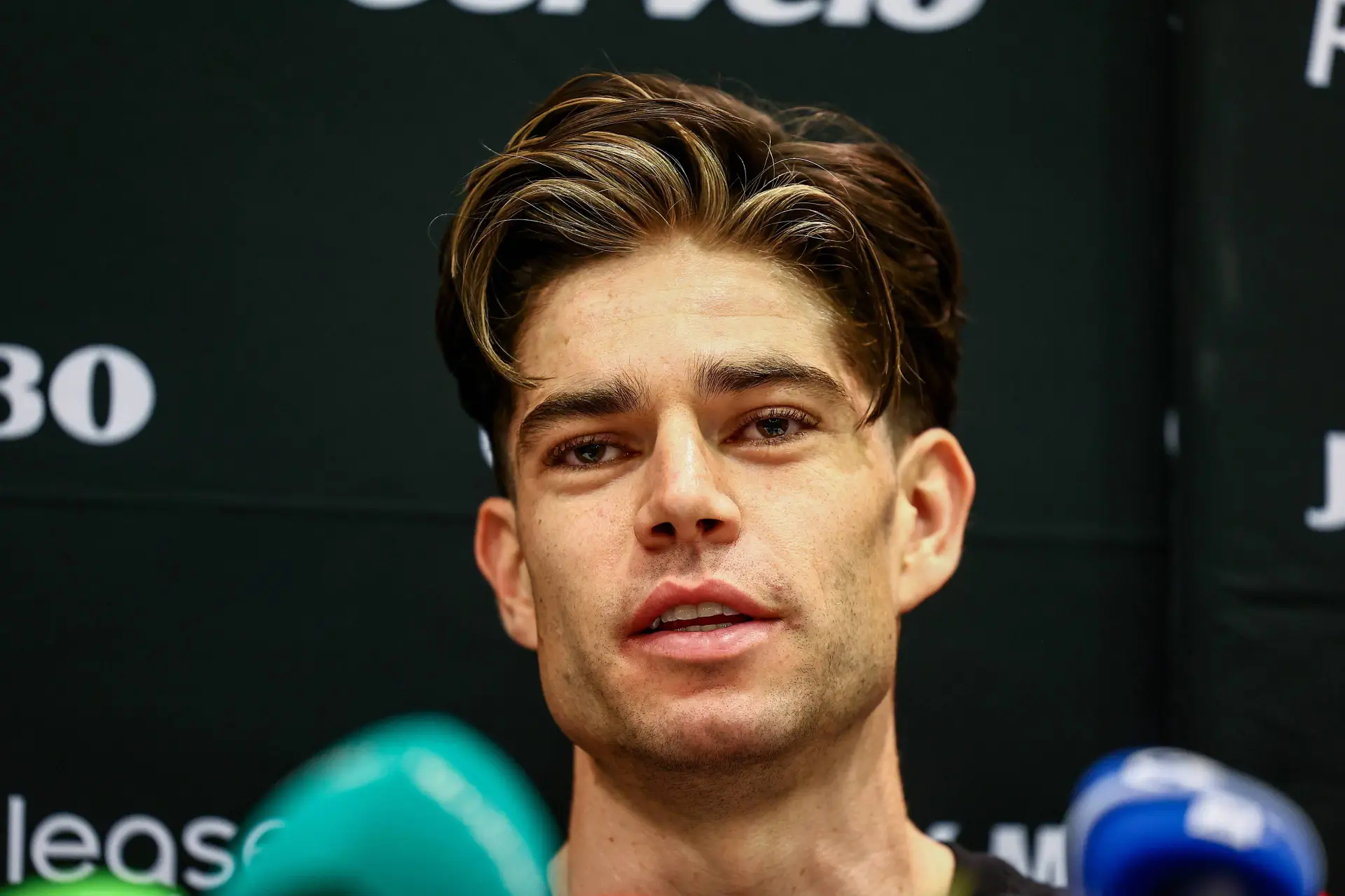
Wout van Aert has stepped directly into cycling’s increasingly heated discussion over ticketing at major races, arguing that asking fans to pay a small fee does not betray the sport’s roots as a people’s pastime.
Speaking to De Tijd, the Team Visma | Lease a Bike star pointed to cyclocross as proof that paid access and a popular atmosphere can coexist.
“If you charge €5 entry fee, that doesn’t mean it’s no longer for the people. The cyclocross asks for entry money, and nothing is more ‘of the people’ than that,” he said.
At a time when proposals to charge spectators on iconic climbs and in high-demand zones are becoming more visible – and more controversial – Van Aert’s comments place one of the peloton’s most influential riders firmly on the side of those who believe ticketing should at least be on the table.
Van Aert: cycling is “too fragile” without revenue from within the sport
Van Aert’s reasoning goes beyond a simple culture-war argument over whether fans should pay. For him, the question is bound up with the structural weakness of a sport that still depends almost entirely on outside sponsors to survive.
He warned that the current model leaves teams exposed the moment a backer steps away. “I think that fragility would be much less of an issue if, alongside sponsorship income, there were also revenues coming from the sport itself,” he explained. “From TV rights, for example, or other organisations.”
That line neatly connects the ticketing debate to the broader discussion about how cycling funds itself. Entry fees on certain climbs or in specific fan zones are being explored by some as one part of a wider mix of new income streams: TV rights distributed differently, more structured hospitality, and paid spectator areas at the most in-demand points on the course.
Van Aert also drew a clear contrast with the way American leagues handle their finances. “When I see how the NBA controls its playing field, while still letting teams enjoy what comes in from TV money: cycling can learn a lot from that.”
In that sense, ticketing is not presented as a magic solution, but as one element in a broader move towards the kind of centralised, shareable revenues that other sports have already embraced.
A rider’s view from the heart of the sport
Crucially, Van Aert framed his comments not just as a theoretical exercise, but as a reflection of how races actually function for teams on the ground. He underlined that the biggest events in the calendar depend entirely on riders and squads turning up – yet those same teams see little financial return for doing so.
“Correct me if I’m wrong, but a major race like the Ronde or the Tour stands or falls with us — the riders and teams who come to take part. But as a team we don’t even receive compensation that covers the cost of that participation. That should really be a minimum. The pie could be divided more fairly.”
That perspective helps explain why riders are now engaging more openly with ideas that were once considered untouchable. For teams operating on tight budgets, any additional, stable revenue that ultimately flows back into the sport – whether from TV, hospitality, or carefully managed ticketing – is seen as a potential way to reduce that fragility Van Aert keeps coming back to.
Slotting into an already-noisy ticketing debate
Although Van Aert’s interview stands on its own, it drops into a debate that has been steadily building around proposals to charge fans in specific, high-pressure locations.
Former team boss Jerome Pineau pushed the subject into the spotlight with his high-profile call to “privatise” a key mountain stage and introduce paid access and VIP structures on one of the sport’s most famous climbs.
Italian voices have also been prominent in the conversation: one of our earlier pieces highlighted Paolo Bettini’s view under the line “It’s right that fans should pay”, while another centred on Filippo Pozzato’s argument that supporters must understand they are “not wasting money” when they pay for access and services around big races.
In a conversation where so much has been framed as all-or-nothing, Van Aert speaking out is a clear signal from one of the sport’s biggest stars that cycling can explore new revenue without abandoning the very fans who built it. Whether those same fans will agree however, is another matter.
Kieran WoodDeputy Editor-in-Chief
Kieran Wood is a sports journalist based in Wales and has been active in journalism since 2022. He regularly contributes to DartsNews.com and CyclingUpToDate.com, where he covers professional cycling and darts. In cycling, his work includes liveblogs from major races, including the Tour de France, the Giro d’Italia, and La Vuelta a España, alongside race reports and analysis. He has also conducted interviews with professional riders.
His reporting spans the full racing calendar, from one-day classics to stage races, with a focus on accurate, real-time coverage and clear contextual analysis. For statistics, results, and historical context, he regularly uses resources such as ProCyclingStats. To support reporting on rider activity and training context where relevant, he also references Strava.
In his work, Kieran places strong emphasis on careful sourcing, editorial accuracy, and updating articles as new, verified information becomes available.
claps 20visitors 13
Just in
Popular news
Latest comments
- If he wants to be top dog , why is he staying at UAE. Its the worst way to learn how to win the important races which he is starting a a domestique to Pogi. Sexias has a monument he doesnt.abstractengineer26-11-2026
- He had already given the lead up on the mountain itself, and it was lost Wout or no wout because to pull back Yates, he needed carapaz and carapaz absolutely refused to work with him. They have never won a GT outside of Pogi.abstractengineer26-11-2026
- 🤞for NO crashes!!!Lozza26-11-2026
- Ah good, it’s been amended! 👏Lozza26-11-2026
- He will attempt this in 2028 provided in 2027 he wins Roubaix, the Tour and the Vuelta.Renz26-11-2026
- Merckx said that Pogi could race the Giro, Tour and Vuelta in a single season? Pogi said: "I can’t rule that out. In fact, I’ll try it sooner or later, but certainly not in 2027. I'm feeling great at the moment. I'm training and eagerly looking forward to getting back to racing. I'm confident that I can return to the same level, or even a higher one. Life moves fast, very fast. Sometimes you need a break; you need to stop for a while. That's what I needed. If I hadn't taken a break, my body would simply have forced me to.”PogiSloFans26-11-2026
- The only 4 things Pogi needs to win next year are: 1) Paris Roubaix 2) Tour de France 3) World Championships 4) La Vuelta There is no cyclist at this moment that is capable of winning these four races in the same year. NOBODY except Pogi. Of course that doesn't mean he's gonna win them all, but he's the only one that can do it. I think his "biggest problem" will be Paris Roubaix (MVDP and WVA)... or a bad crash in any of the four races.PogiSloFans26-11-2026
- yeer lozz i get that but Trek went all in for Ayuso when they maybe could have went all in for el toro loco. then the bought the derek now Felix ..Only results will tell and imo they need to win one of the big 3week races nex year.
 Davide26-11-2026
- But Ayuso was the one who was unhappy and wanted to leave. Del Toro happy at UAE.Lozza26-11-2026
- I've no doubt they were all doped, but saying those three weren't GC riders to start is just plain wrong. Who looked at Chiapucci and thought "That's my man for the Classics"?megasmacky26-11-2026
Loading
13 Comments