"They ran out of time" - Delayed negotiations cost Netcompany INEOS one of its American talents
Cycling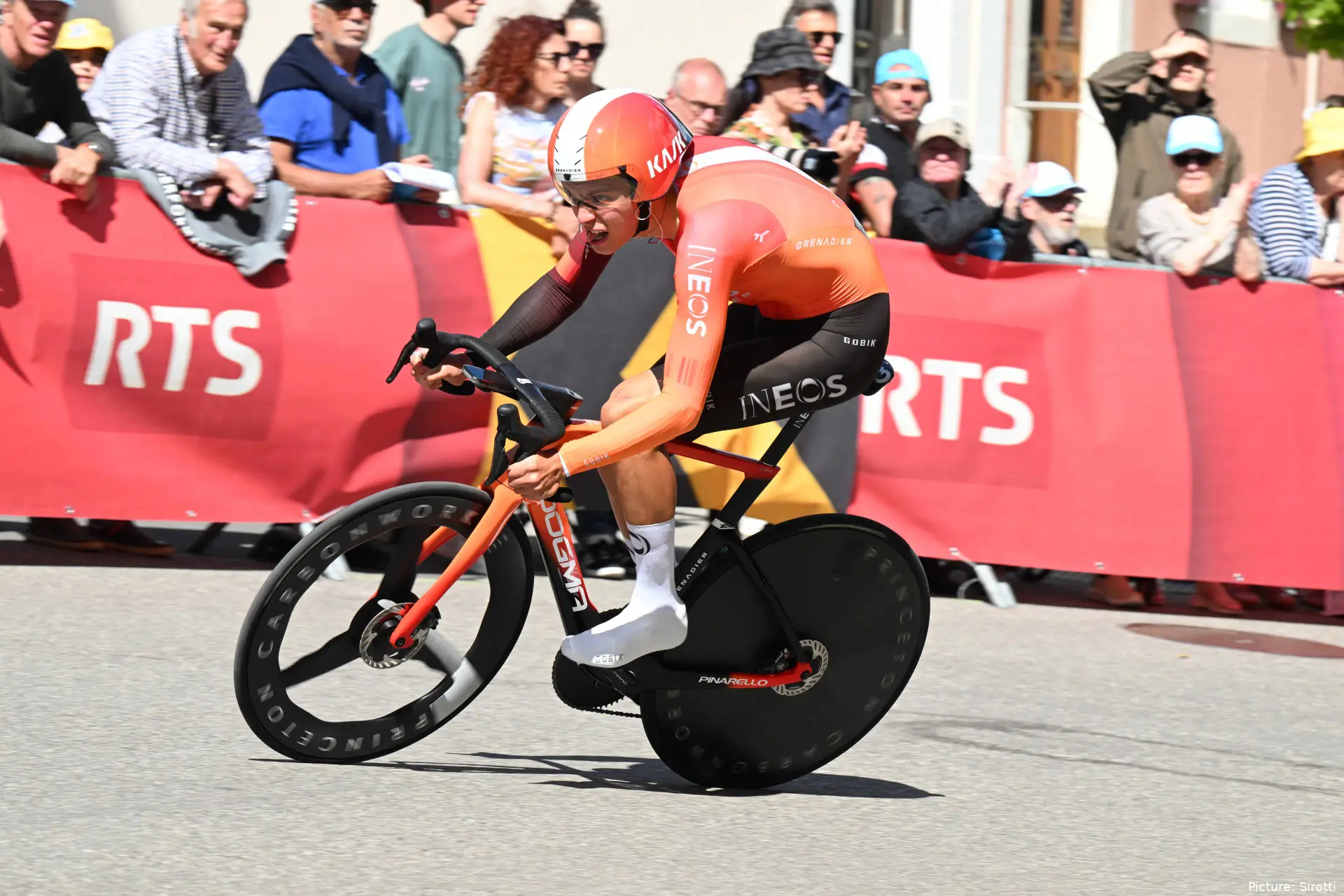
Artem Shmidt is one of NSN Cycling Team's signings into the 2027 season. At the team's media day, the American rider spoke to CyclingUpToDate in an online press conference, in which he spoke about his goals, time trialing expertise, and why he departed Netcompany INEOS.
The American rider, 22 years of age, turned professional with Netcompany INEOS in late 2024, as part of the team's project to develop a set of riders into the top level of the sport. His time with the team came to an end this fall, with him signing a three-year deal with NSN.
Speaking to CyclingUpToDate and other news outlets in a video press conference this Wednesday afternoon from the team's hotel in Dénia, Spain, Shmidt revealed that there were conversations with NSN Cycling Team well before the Tour de France; and that Netcompany INEOS' delayed response to such negotiations led the team to lose its time trial specialist.
Shmidt largely praised the team's time trial expertise, including guidance from the likes of former time trial world champions Filippo Ganna and Tobias Foss; as well as what they taught him in the art of time trialing. Shmidt is now a two-time reigning American time trial champion, and will carry the stars and stripes over to the Swiss team.
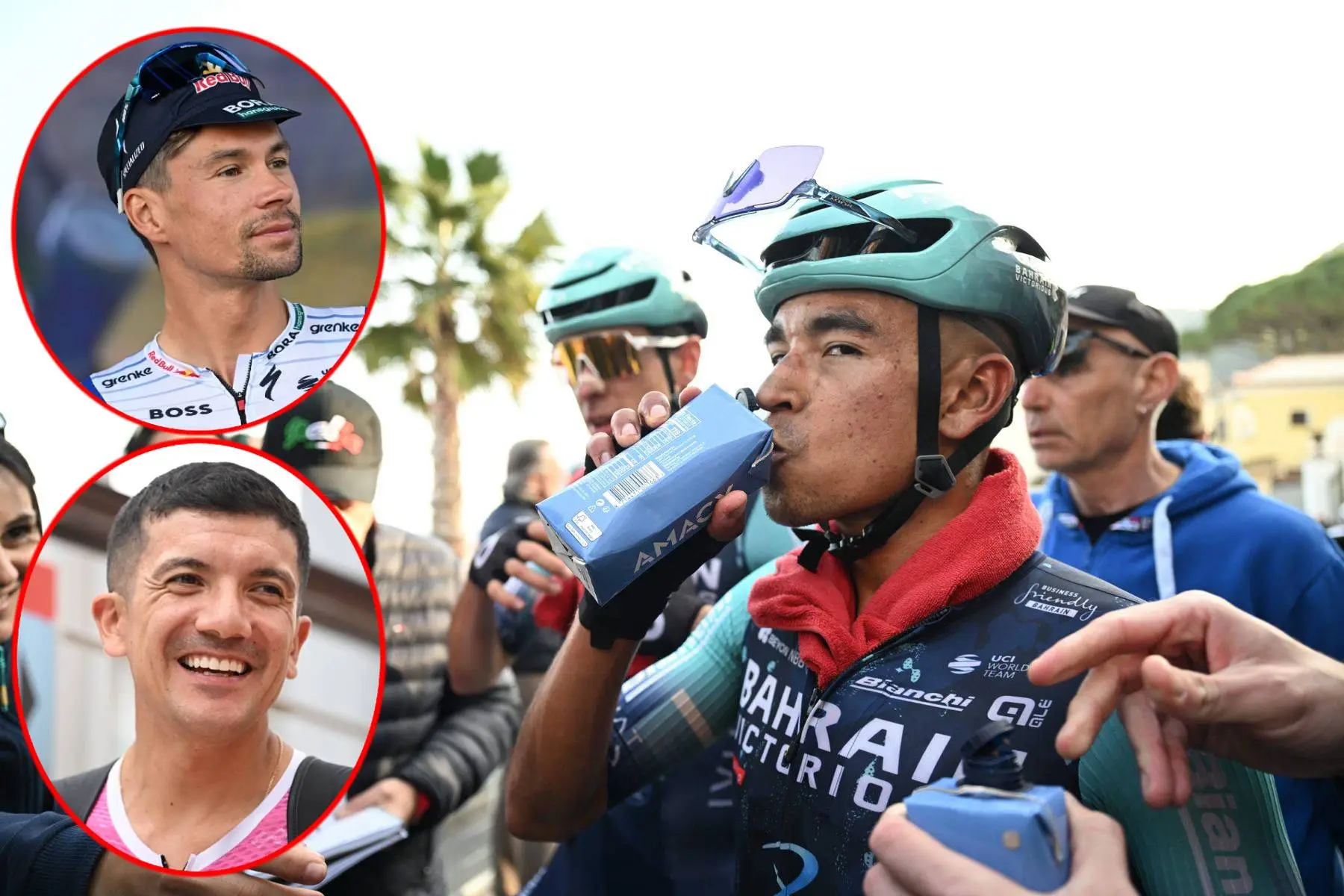
Shmidt discussed at length the motivations for joining NSN, what his role will be in the team and how he is ready to take on responsibilities, whether that is racing with a free role, or helping out new signings such as Kasper Asgreen in the classics; or Primoz Roglic and Richard Carapaz in the stage-races.
The American rider also provided insight into what he believes is the right track for young riders to grow into professional cycling, warning against sudden moves into the World Tour, and how balancing personal life with cycling at such a young age can become a trap for some riders.
Full press conference Artem Shmidt - 25th November 2026
*Conducted alongside Velo, Cyclingnews and In de Leiderstrui.
Question: How the deal came together with this team? What made you think the time was right to leave INEOS?
Answer: Yeah, I mean, I think the team reached out to me quite early. I don't remember the exact date, but sometime in the spring. And, you know, I was pretty keen off the bat. The team, you know, I was really surprised with how the team races and it really attracted me. And, you know, the team has this aggressive racing style, front foot racing, these kinds of things.
So like from day one of my talks with them, I was already quite keen. And then, yeah, obviously it takes a while to figure out contract and how many years and role, and this and that stuff. So by the time we got things figured out, it was already probably around Tour [de France] time, maybe just right after the Tour.
And then, yeah, I talked with INEOS basically out of respect for them. I wanted to let them know what was happening. I was talking to other teams, this and that. And you guys (the journalists in the media call, ed.) probably know that sometimes it takes a little bit long to get things done with Netcompany. And you know, just basically they ran out of time, let's say. And I ended up signing with NSN, which I'm super grateful for, looking forward to it and can't wait to get things started.
Q: What kind of role will you have within SN? Do you get more chances to race for yourself or what was attractive to you?
A: For sure. I mean, I think it's hard to sit here in November and think about role and the races I'm going to do. I have no idea the races I'm going to do. I mean, I have an idea in terms of, when they signed me, they said basically classics and time trials. That's the two things they kind of need to work on. And that's the things they want to improve. I think by signing me and Kasper [Asgreen] and now [Primoz] Roglic, I think they've definitely improved. At least with Roglic, the time trial and the GC stuff; with me and Kasper more of the TT stuff and the classics team. So I presume I'll do some kind of classics block.
I don't know if I'll do everything, I don't know if I'll do the big ones, I don't know if I'll do the small ones. But no I think some kind of classics, some kind of week-long stage races with time trials, you know, that kind of thing. And then in terms of role, to be honest, I have no idea. They basically hinted at me getting more of a late role towards races, having that aggressive racing style that I kind of like to do.
You know, I won in [Classique] Dunkerque with a late attack. You know, I like to not have a leash on and just like race aggressively. Race with, how to say, basically not overthinking too many things, you know, just race off instincts. And I think this is the perfect team for me, for me to do that. So I'm really looking forward to it.
Q: What did you not have at INEOS that you hope to find with NSN?
A: I think I came to Ineos as a not so good under-23. You know, I came to Ineos as a 20-year-old kid, and when you have so many good riders in the team, there's a hierarchy in the team, you know? So my whole goal when I signed to INEOS was to learn as much as possible as I can on my neo-pro contract. So it was going to learn from guys like Pippo (Filippo Ganna, ed.), guys like Geraint Thomas, guys like Fossey (Tobias Foss, ed.), [Michal] Kwiatkowski. You have so many of these legends on the team.
And I was trying to learn as much as possible from them. And then to even come and win a couple races at that time as a neo-pro was already something I didn't expect. You know, that was just a bonus. My whole goal was just to learn as much as possible. And then now to hopefully come to NSN hopefully I can try to become the best version of myself. You know, I'm not saying I'm going to become a leader or anything like this, but I just want to help the team win some races that I know I can do.
Help the team develop and time trials, help our GC guys that we just signed and help the team get as many wins as possible. That's my whole goal now.
Q: You already have friends within the team or people that have helped you come together with them?
A: For sure. Yeah. I mean, I think the team has been super, super helpful. Like technically I'm not even on the team yet, it's still November and I've already gotten a lot of support. You know, I live in Andorra and the team has a service course in Girona and they've already given me some equipment and this and that. And just like the energy from the team here at training camp has been nothing but positive and, you know, it's been really, really good.
And then, yeah, the guys also have been super positive and super welcoming. You know, I think there's some young guys on the team my age, you know, Jens Verbrugghe, these kinds of guys I've been getting along with super well. I'm ready I'm excited to get things started.
How Artem Shmidt developed into American time trialing champion
Q: First of all, what attracts you so much in the time trialling kind of thing?
A: Good question. You know, time trials hurt obviously, so it's quite weird to be attracted to them, but I've been good at them ever since I started bike riding. I think my first ever race as a cyclist was a time trial and I was with my dad. We were back in the US and he was kind of like, 'Just go out there and see where you end up', you know? And I was able to win the time trial in the local age category.
And I think from that day, like time trialing has just been my thing and I've always just been good at it, you know? And then recently, I think just with the equipment that INEOS had with my position, with the rider style that I am with, being more of a motor and just the way I like to... I like to train and everything, I like to train quite hard. And I think everything just fit perfectly into the characteristics of a time trialist and to be able to learn from guys like Filippo [Ganna], [Joshua] Tarling, [Michal] Kwiatkowski, these kinds of guys that are super good in time trials, [Tobias] Fossey, it just kind of made sense, you know? And that's kind of what attracted me to it.
Q: Can you tell me a little bit what you can learn at INEOS from a guy like Ganna, for example, and what brings you the confidence that you now with Cube (NSN's bike supplier for 2027, ed.). Also at NSN can make the next step in being a leader in time trials?
A: For sure. I mean, I think from I just, the first thing that comes to mind is when I was with INEOS, they teach you certain breathing tactics, they teach you certain ways to go around the corner, where to ride on the road... Certain techniques that you may not know. When I was an under-23 and things like that, that helps me already improve from under-23's to the pro ranks and be able to take those techniques and the way I trained from INEOS into NS., I think it will already keep me hopefully at the high level, I hope.
And then to learn from, the riders, like you said, I did a couple time trials with Filippo [Ganna] and just learning the cadence he pedals at, or following his racing lines on the pre-race ride - like the course preview... Just being able to follow him and seeing how he handles the course and where he pushes, where he rests, you know, this is also important. You don't want to do a time trial where you're always riding at the same line. You know, you have to figure out a time trial where you want to push more, recover a bit more, to get the fastest time possible. And, you know, to learn from guys like him is incredible for my career.
Q: You mentioned hierarchy there when talking about INEOS. Does that make it hard to kind of develop as a young rider and do you get any sense of that vibe or something similar at NSN; or does it feel more like a level playing field for a lot of the team there?
A: I don't think it's necessarily a bad thing. I think it's just normal. You know, you come into whatever you're coming into - it might be a cycling team, it might be a job and there's always like a boss, there's guys that have been on the team for a long time and these kind of things. And I think it was quite normal, especially because I didn't come into the team as this great like under-23 or junior prospect, you know, so I didn't get an opportunity right away.
But yeah I think it's quite normal and I think it's actually good for the young guys to to not get opportunity right away because it doesn't create this level of stress. You know, if you come into a team from juniors and you're this great prospect or whatever you automatically like get opportunities in races. And it might be good if you can handle that pressure, but the pressure also might not be super good and it might be hard to deal with. So I think actually going through the hierarchy and racing with no pressure and if like when I went Dunkirk, it was like I had a free role and it's like, you're not the leader, but if you have the legs and something clicks on this day, you can go do it. But you don't have the pressure of being a leader, you know, and that's why I think it's good for the young guys to actually grow within, within the team.
And I think with NSN now, for sure there's going to be some pressure for me, but I think now that I've won a couple of races already, I know I can do it. So it's a little bit different going into it already, knowing you can do it. And now it's just like, okay, I know what I need to do. I know the work I need to put in... I know the little things I need to do, and it should just be click and play.

Artem Shmidt at the 2026 Montréal World Championships
Q: Can you talk a bit about the experience of winning worlds [championships] as a teammate of Brandon McNulty's, and that kind of 33 years of waiting for the US to win a men's road race. And then that kind of elation at the end of it, how was that for you?
A: Oh, man, I think in terms of riders being there it was like one of the greatest experiences a rider can have. Obviously, I think if you're the one winning, maybe it's a bit more surreal, but just being there teammates with them - me and him were there for one and a half weeks together, we both did the time trial. Seeing him lead into the race, it was something unbelievable, to be honest.
And all those, all those boys know each other super well. I'm a bit younger than all of them. You know, I think Brandon's 28, although other guys are like, on 26, 25. So they all know each other, they raced juniors together, they were like brotherhood, I was a bit younger, so I never got to cross paths with them. But like a lot of those boys in that team, like Sean [Quinn] and Riley [Sheehan] are some of my best friends now. And so you know, when when when together with them, I was just super grateful and super, super happy to be there. And I'm super stoked for Brandon, I think he deserves it a lot. Obviously, probably if he rode for a different team he could win a lot more races than he does riding for UAE and working for Tadej [Pogacar]. And for him to win worlds, I think is like, just awesome.
Artem Shmidt warns young riders rising into the World Tour
Q: What would you say about the kind of, I guess, success story of teams like Hot Tubes and Hagen Berman of developing US cycling back from having been in quite a dark place in the early 2000s, 2010s; and then rebuilding it to this new generation of riders?
A: Yeah, I mean, I think if you look at the US talent now, it's the best it's probably ever been. We have so many riders in the US, you know, we have Brandon, we have when Matteo [Jorgenson], Sean, Riley... I can name you 12 guys, you know, they're super, super good. And I think that's because the programmes like Hot Tubes, like Hagens...
Finally after all those years of developing those guys, that its finally clicked, and now we see the result of it clicking now in the in the World Tour. And yeah, I mean, those teams are still going on now. So I think they're going to keep bringing US talent, keep finding US talent, which is hard. Because, you know, there's not a lot of races in the US, there's no races in the US, there cycling is not a big sport in the US. So chapeau Hagens for finding those, you know, those riders that usually aren't even cyclists and making them cyclists and one of the top guys. So yeah, it's awesome to see.
Q: So many riders are turning pro very young, even yourself jump from juniors going to the World Tour. Just from your experience and what you've seen, is there maybe a danger in that? Or is there something maybe staying into the year or two at a lower level might help a rider's development? Or what's your view?
A: Yeah I think it really depends on the nationality of riders. You know, if you have a Belgian guy, if you have a Spanish guy that can still live with their parents, can go World Tour and they can still be at home, and they have that support from their family and friends, and still live at home. I think that's super important. For US riders or Australian riders, I would really recommend doing under-23 first, just because I've seen guys personally, that went pro as Americans or as Aussies, whatever, and they have to deal with... You move to Europe, so you're not living with your parents anymore, you have to do normal stuff, you have to cook for yourself, clean for yourself, do do all these things that your parents would usually take care for you.
And I have to do that plus balancing being a professional rider, which is not easy, you know. So I would really recommend US riders or Australian riders or overseas riders, just in general, to do a year or two years of devo at least, just so they can figure their life out first, and not have that stress of being a pro. And then when they turn pro, they already have the visa, the apartment, they know how to live on their own, and these kind of things. So that's my recommendation.
Q: Because how were you originally recruited by Ineos? Did you have an agent already shopping for you? Or how did that work?
A: So yeah, I turned pro when I was 20. So I did a year and a half on Hagens Berman. But before that, I already moved to Europe when I was 17, 18. I was racing for between a couple teams, I was bouncing around between the team called Cannibal in Belgium, junior team, I think they're now connected to Bahrain Devo. And then I was racing for Hot Tubes back in America, or when Hot Tubes come over to Europe.
So I'd race the classics or whatever with Cannibal; Hot Tubes would come over end of the spring, I'd race a little bit with them, go back with them for nationals, come back again, race for Cannibal and then Hot Tubes in the fall for some fall races. So I already had like, two and a half years under the belt of living in Europe by myself as a junior, as a U23. And then I turned pro. And thankfully, I already had all that base and just knowledge of living by myself already built up, you know?
Read also
Q: Because we talked about the time trial, of course, and your love for time trialling. But what's your love with the classics also, because you did them for the first time in 2026? Where can we expect you being at your best and what kind of type of races?
A: Yeah, I really fell in love with the classics just because I've grown up watching them, you know, like you grow up watching them, everyone kind of tells you already that you're going to be a classics rider and everything. So I was already quite mentally prepared to be a classics rider and to go into that category of racing style.
And then actually doing them, I don't think there's a greater feeling in the world than going up [the Oude] Kwaremont for the third time in a bike race with thousands of people screaming at you in Belgium, with those passionate Belgian fans, you know? So that was a quite incredible feeling. And yeah, I don't know if that answered your question or if I just rambled off a little bit (laughs, ed.).
Rúben SilvaEditor-in-Chief
A founding contributor to CyclingUpToDate since its launch in January 2022, Ruben Silva has played a central role in shaping the site’s editorial direction and long-term growth. Before joining the project, he built his experience through independent blogging at Echelons Hub and by producing race previews for Ciclismo Internacional, developing a strong analytical voice rooted in daily engagement with professional cycling.
Beyond editorial work, he has been closely involved in the expansion and coordination of CyclingUpToDate’s wider network, helping establish and support sister platforms across multiple languages. This includes ongoing collaboration with CiclismoAlDia (Spanish), CiclismoAtual (Portuguese), WielrennenUpToDate (Dutch), and RadsportAktuell (German), contributing to a shared editorial vision and consistent international coverage.
He also helps oversee editorial governance across the network, setting standards for accuracy and consistency and coordinating updates or corrections when needed.
Originally from the Porto metropolitan area in Portugal, he holds a bachelor’s degree in Geography. His path into cycling journalism was shaped not through formal media training, but through independent reporting, community engagement, and sustained on-the-ground involvement in the sport.
Over the course of his career, he has conducted approximately 100 interviews across road cycling and cyclocross, ranging from one-to-one conversations and online formats to press conferences and on-site pre- and post-race coverage. His interviews include leading riders, team managers, and prominent figures within cycling media: Tadej Pogacar, Jonas Vingegaard, Mathieu van der Poel, Primoz Roglic, Wout van Aert, Joao Almeida and Tom Pidcock; managers like Patrick Lefevere and Joxean Matxin; and YouTube personality Bryan Kennedy (BKXC)...
Within 18 months of launch, he helped grow CyclingUpToDate’s English-language platform into one of the most-read cycling news websites, built entirely from the ground up. As both a professional journalist and lifelong cycling enthusiast, his focus remains on delivering accurate, timely, and well-contextualized coverage.
claps 0visitors 0
Just in
Popular news
Latest comments
- 🤞for NO crashes!!!Lozza26-11-2026
- Ah good, it’s been amended! 👏Lozza26-11-2026
- He will attempt this in 2028 provided in 2027 he wins Roubaix, the Tour and the Vuelta.Renz26-11-2026
- Merckx said that Pogi could race the Giro, Tour and Vuelta in a single season? Pogi said: "I can’t rule that out. In fact, I’ll try it sooner or later, but certainly not in 2027. I'm feeling great at the moment. I'm training and eagerly looking forward to getting back to racing. I'm confident that I can return to the same level, or even a higher one. Life moves fast, very fast. Sometimes you need a break; you need to stop for a while. That's what I needed. If I hadn't taken a break, my body would simply have forced me to.”PogiSloFans26-11-2026
- The only 4 things Pogi needs to win next year are: 1) Paris Roubaix 2) Tour de France 3) World Championships 4) La Vuelta There is no cyclist at this moment that is capable of winning these four races in the same year. NOBODY except Pogi. Of course that doesn't mean he's gonna win them all, but he's the only one that can do it. I think his "biggest problem" will be Paris Roubaix (MVDP and WVA)... or a bad crash in any of the four races.PogiSloFans26-11-2026
- yeer lozz i get that but Trek went all in for Ayuso when they maybe could have went all in for el toro loco. then the bought the derek now Felix ..Only results will tell and imo they need to win one of the big 3week races nex year.
 Davide26-11-2026
- But Ayuso was the one who was unhappy and wanted to leave. Del Toro happy at UAE.Lozza26-11-2026
- I've no doubt they were all doped, but saying those three weren't GC riders to start is just plain wrong. Who looked at Chiapucci and thought "That's my man for the Classics"?megasmacky26-11-2026
- Maybe a poor translation, but what does “snubbed off” mean?Lozza25-11-2026
- well he is in the wrong team then why comment and basically says im no.2 and will have to wait to be No.1 when he could have a team built around him. but then maybe he gets things from UAE . this is the rider trek should have targeted instead of ayuso.Davide25-11-2026
Loading
Write a comment