“I was just hanging on” - Shari Bossuyt stuns with late surge on chaotic, crash-marred stage 2 at La Vuelta Femenina 2026
Cycling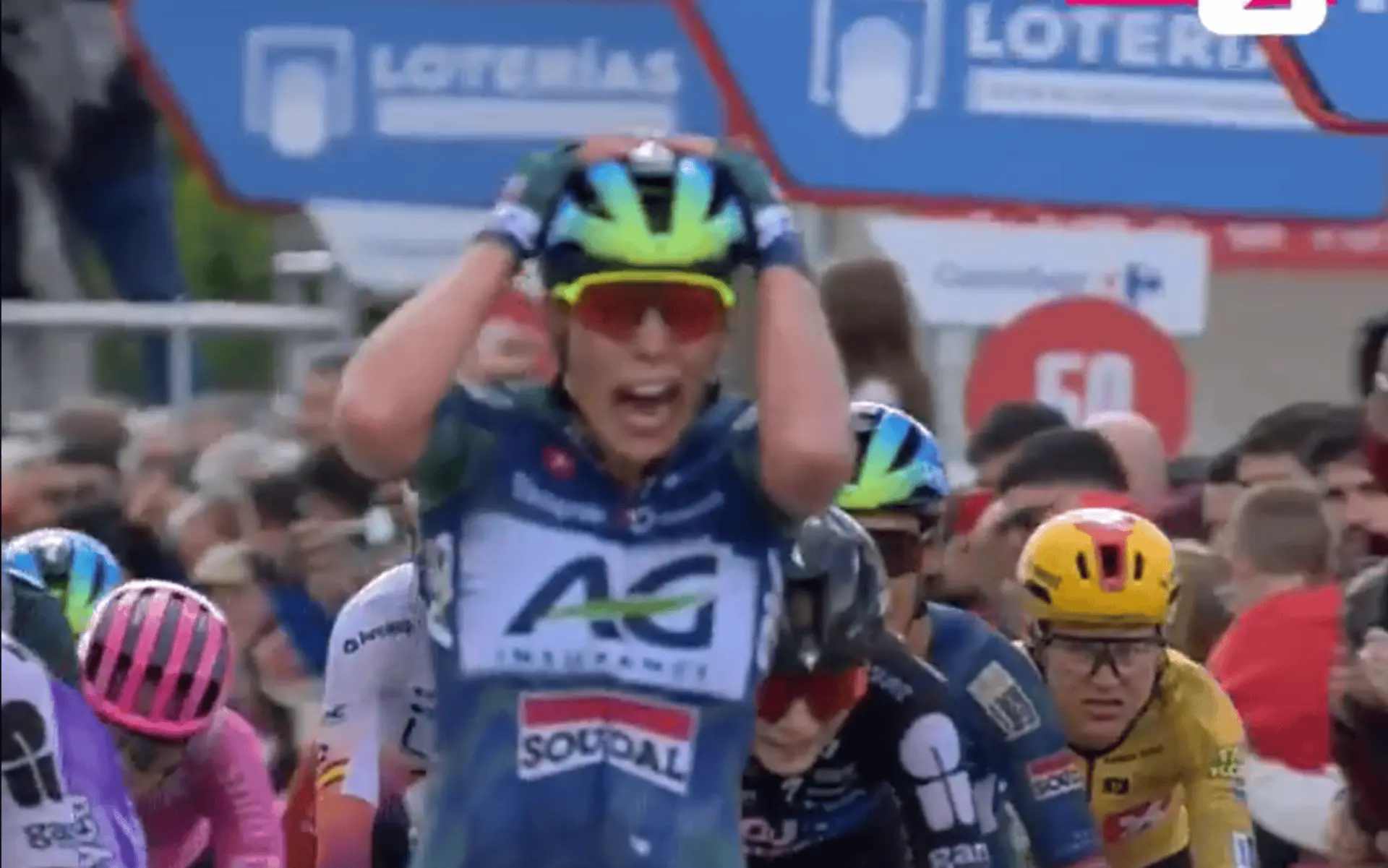
Shari Bossuyt was not the rider expected to win Stage 2 of La Vuelta Femenina 2026. Not on a day that fractured the race, and not from the position she found herself in approaching the final kilometre. Yet in San Cibrao das Viñas, she timed it perfectly.
“This victory means a lot to me. I was not expecting to pull this off, and especially not today,” she said afterwards. “At the final kilometre, I was just hanging on.”
A stage that stripped the race down
The second stage never settled. An uphill start and constant pressure kept the pace high, with no real opportunity for the peloton to reset.
By the final phase, that effort had reduced the group to its strongest riders. Bossuyt was still there, but only just. “I tried to move up, but it was not possible because of the high pace and I was quite far off the back,” she explained.
Chaos reshapes the finale
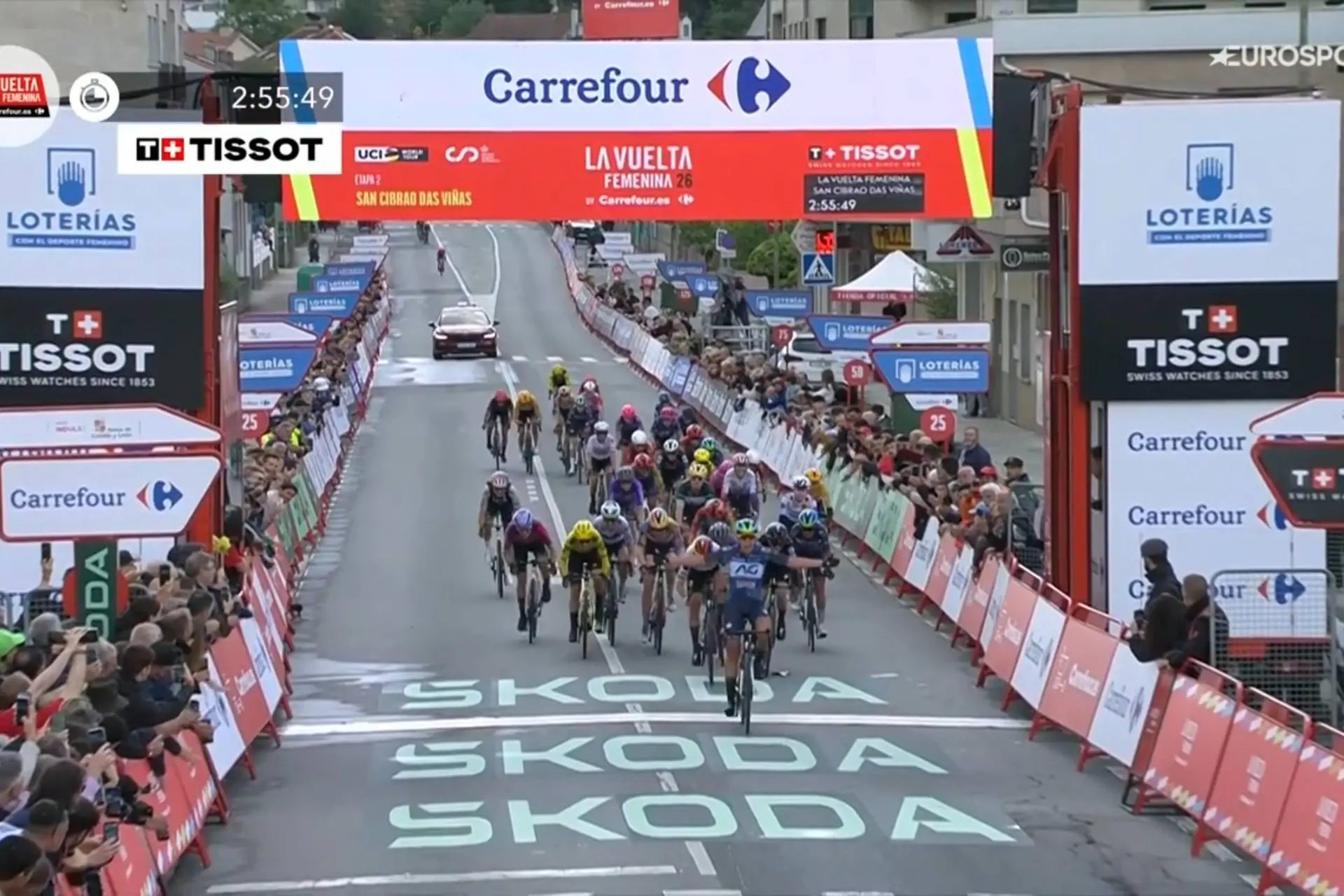
The stage shifted again in the closing kilometres. Race leader Noemi Ruegg crashed and was forced to abandon, removing the red jersey and opening the general classification in an instant. At the same time, the reduced group heading to the finish remained tightly packed, with no clear control.
Bossuyt’s opportunity came just after the climb. “And then on the downhill ahead of the finish I came with a lot of speed out of the corner and just went for my sprint,” she said. “We had a plan for me to fight in the sprint, but it depended a lot on what happened on the climb in the final five kilometres. I managed to hold on and then finish it off.”
In a finale shaped by hesitation and fatigue, that move proved decisive.
A win taken, not controlled
Behind her, others had arrived with clearer expectations. Lotte Kopecky was in position before her sprint faltered, while several general classification contenders focused on limiting losses after the disruption earlier in the finale.
Bossuyt’s win came from a different place. Not from control, but from recognising the moment when it opened. On a stage defined by chaos, the rider who was “just hanging on” was the one who finished it.

Kieran WoodDeputy Editor-in-Chief
Kieran Wood is a sports journalist based in Wales and has been active in journalism since 2022. He regularly contributes to DartsNews.com and CyclingUpToDate.com, where he covers professional cycling and darts. In cycling, his work includes liveblogs from major races, including the Tour de France, the Giro d’Italia, and La Vuelta a España, alongside race reports and analysis. He has also conducted interviews with professional riders.
His reporting spans the full racing calendar, from one-day classics to stage races, with a focus on accurate, real-time coverage and clear contextual analysis. For statistics, results, and historical context, he regularly uses resources such as ProCyclingStats. To support reporting on rider activity and training context where relevant, he also references Strava.
In his work, Kieran places strong emphasis on careful sourcing, editorial accuracy, and updating articles as new, verified information becomes available.
claps 0visitors 0
Just in

Popular news
Latest comments
- considering he went from not finishing stages to top 10, its pretty goodabstractengineer15-10-2026
- Nah , he lost, he could not make that upabstractengineer15-10-2026
- Its more of a teardown rather than a rebuild.abstractengineer15-10-2026
- Have you considered the impacts of his crash?
 Rafionain-Glas15-10-2026
 - Sven is Belgian you twatRafionain-Glas15-10-2026
- 👍👍👍PogiSloFans15-10-2026
- First: If there has been a translation error then I gave you my answer... sarcasm. Second: The author knows nothing on the state of doping within the peleton. His guess is no better than yours or mine. Maybe he's having an illusion, his own misinterpretation of reality. PS: No, I didn't miss the point of your post.PogiSloFans15-10-2026
- hey, brother. well, it took some real jerry-rigging this time, but you found a way to talk about your hero in response to an article that’s 100% about cyclocross and has 0% to do with pogačar. a bit inelegant — “cyclocross doesnt matter so i’m going to just talk about tadej” — but you’ve certainly shown commitment.OCexile15-10-2026
- All very good, we know what the word means. But you missed the point of my post. There are two questions to answer. Quote: "Has there been a translation error, or is the author of the piece making a comment on the state of doping within the peleton?!Cyclingsbestfan15-10-2026
- Hey awp, what's your beef with Pogi? So Seixas wins Lombardia and now he's going to demolish Pogi next year or what? You have to understand, Pogi isn't "old" yet, he can be on his highest level until he's 32 or 33 years old, that's another 4 to 5 years. What more does he need? For many cycling experts he's already the G.O.A.T. and he will keep proving it for the next few years. So what are you trying to say, that 10 years from now young cyclists will be beating Pogi??? Common, pull yourself together and stop making a fool of yourself. Capish? PS: What was this BS?: "I'm not sure Tadej could have beaten him last Saturday. But with his experience he may have been able to." !?!?!? Can you hear yourself? All of a sudden you think Pogi could have lost? Why does your brain work this way?PogiSloFans15-10-2026
Loading
Write a comment