"Does Jurgen Foré really know who I am?" - Departing Quick-Step rider questions management after surprise exit
Cycling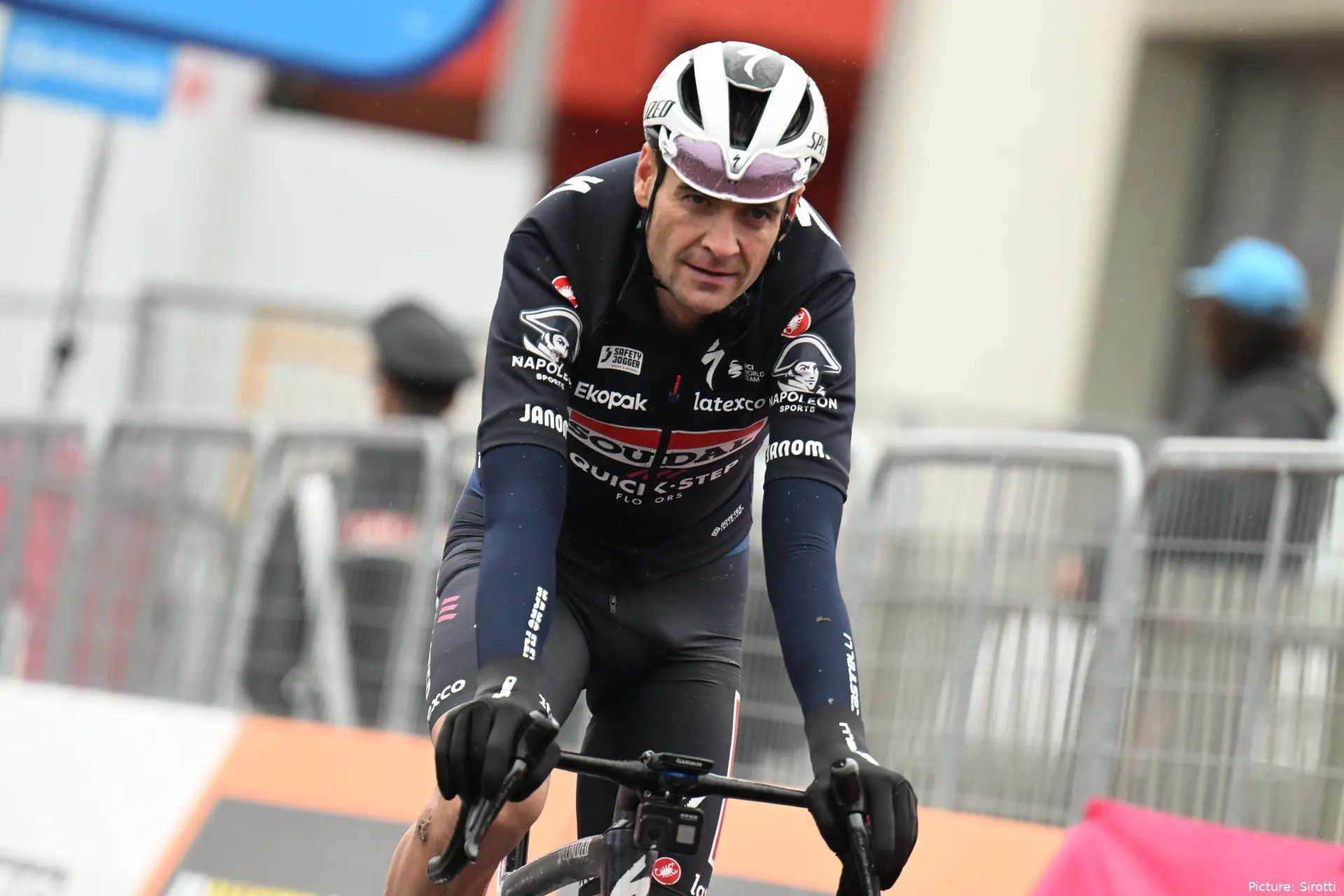
After more than a decade of service with Soudal - Quick-Step, Pieter Serry is being shown the door — and he’s not hiding his disappointment.
In a candid interview with Het Nieuwsblad, the 36-year-old Belgian didn’t hold back in questioning the decision-making at the heart of the team he’s called home since 2013. At the centre of his frustration: team boss Jurgen Fore.
“I ask myself: does Jurgen really know who I am?” Serry said. “I mean, I haven’t really had the chance to prove myself this year. That’s already difficult when you’re a domestique. But it’s like my whole season just slipped away without anyone truly seeing what I was doing.”
A Bolt from the Blue
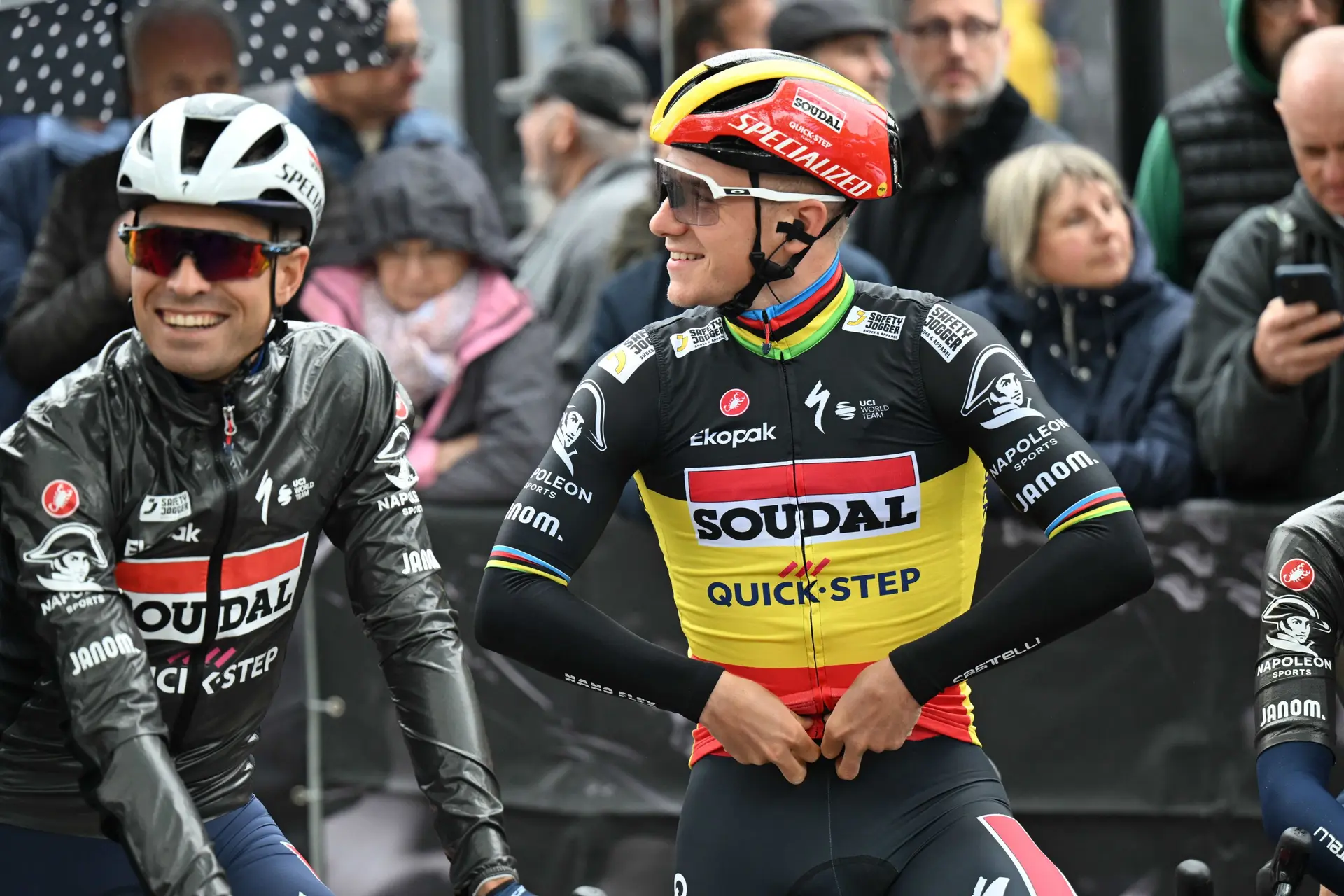
Rumours of Serry’s departure had been circulating since the Ardennes Classics, but when confirmation finally came, it hit hard. For a rider who has spent over a decade playing the loyal lieutenant — most often doing the unseen work in support of team leaders — the news came as a shock. “Jurgen was afraid of the dreaded ‘one season too many’,” Serry acknowledged. “And fair enough — I’ll be 37 in November. But still, I had to swallow hard – twice.”
It’s not just the timing that stung, but the manner in which the decision seemed to contradict earlier assurances. Only last winter, Serry says, team coaches were telling him he had years left at the top. “They said: ‘You’ve still got time, we know you take care of yourself.’ And I do — I’ve followed every training schedule to the letter. Just last year, I was still in the (pre-)selection for the Tour de France.”

Serry has been a long-standing member of The Wolfpack
A Career in the Shadows
While his name rarely made the headlines, Serry has been a constant, reliable presence within Quick-Step’s vaunted Wolfpack. His performances rarely grabbed the spotlight, but within the peloton, his work rate and professionalism were widely respected.
Still, in a results-driven sport, opportunities to shine are few and far between for riders in his role. Serry referenced this year’s Strade Bianche as a case in point: “After 100 kilometres, I gave my bike to Mattia Cattaneo. He was named leader that morning, so I did what was asked. But of course, that meant my race was over. That’s how it goes when you’re a helper — your work’s often invisible.”
His season had been built around the Giro d’Italia, but those plans fell apart unexpectedly. “I’d done a high-altitude training camp to prepare, but when I got back after three weeks in the mountains, I was told they’d chosen someone else. I thought: ‘Wait, what?’ Then came the bad news about my contract. At that point, I knew I wasn’t going to the Tour either.”
“Where Did I Fall Short?”
The rationale behind his departure? Serry says he was given little in the way of concrete explanations. “Do you really drop off that much in a single year? I asked: ‘Where did I fall short?’ But I never got a real answer.”
Health was mentioned — a somewhat ironic justification, given Serry’s long track record of comebacks from serious injuries. “It’s true, your body takes a beating after 15 years as a pro. I’ve had heat stroke, broken both collarbones and a vertebra in my neck. Last year I got hit by a car while training and ended up with double vision. But I always recovered fully — often surprisingly fast. I’m almost 37, yes, but I don’t have problems with my back or knees. I’m fit.”
Even as he fought to stay sharp mid-season, tragedy struck again. The death of his grandfather just before the Belgian Championships meant yet another missed opportunity to show his worth. “It’s all gone strangely this season,” he reflects. “Cycling can be a brutal world sometimes.”
Serry’s departure marks the end of one of the longest-serving careers within Quick-Step’s modern era — and for many fans and insiders, it’s hard not to feel that his story highlights a wider issue in professional cycling: the undervaluing of those who give everything but rarely stand atop the podium.

Kieran WoodDeputy Editor-in-Chief
Kieran Wood is a sports journalist based in Wales and has been active in journalism since 2022. He regularly contributes to DartsNews.com and CyclingUpToDate.com, where he covers professional cycling and darts. In cycling, his work includes liveblogs from major races, including the Tour de France, the Giro d’Italia, and La Vuelta a España, alongside race reports and analysis. He has also conducted interviews with professional riders.
His reporting spans the full racing calendar, from one-day classics to stage races, with a focus on accurate, real-time coverage and clear contextual analysis. For statistics, results, and historical context, he regularly uses resources such as ProCyclingStats. To support reporting on rider activity and training context where relevant, he also references Strava.
In his work, Kieran places strong emphasis on careful sourcing, editorial accuracy, and updating articles as new, verified information becomes available.
claps 4visitors 4
Just in
Popular news
Latest comments
- how it is "We’ve taken another big step forward for next year" he just lost in lombardia to a 20 year old, and two 30+ year olds. and not even top 10 for WCRR.abstractengineer19-10-2026
- This is similar to Lebron. first he said i need to consult my family , my daughter, need respectable money blah blah blah and then dont care about family , dont care about money, only onion rings, am off to Philly, very very far from family. Off season should be with family more, no?abstractengineer19-10-2026
- I hope he comes back strong for a proper battle with Tadejmij19-10-2026
- congrats to a great career and good retirement.mij19-10-2026
- Any artificial product should be reported.Any team that doesn't should be stripped of wins and fined.I know that this level of transparency does not and will never exist.All anyone can do is continue to test riders on a regular and surprise basis.If the test comes back clean then all any of us can assume is the rider is clean.
 Brucegel19-10-2026
 - Also, it's supposed to be hard to gain an advantage from drafting off Remco because he is so aero.Hills3319-10-2026
- How would stats back it up? You realise tactics involved could mean Vine saved his legs for a faster finish? Some riders can choose to go all out and fade later in the ride, others can hold steady state the whole way, and others can have a reserved start and power up later in the ride. You can't judge just by the stats unless you have power data to be able to prove Vine is riding faster even though he is putting out the same or less power (suggesting drafting). I'm sure the stats prove that Vine didn't cheat because UCI would monitor the stats to make sure this exact scenario doesn't happen (and disqualify them for drafting if the stats proved it).Pogboom19-10-2026
- Only one person would say such a thing here. Sorry to burst your bubble but I’m afraid that window of opportunity has now closed. You can beat some of the people all of the time and all of the people some of the time but you can’t beat all of the people all of the time.Jumpyjohn19-10-2026
- Both prizes are actually pathetic, almost amateur like, not even covering the cost of participatingJumpyjohn19-10-2026
- It depends on how you define doping and you would do well to give your definition so we can see how against it you are. If you consider the use (as a hypothetical example) of a new beneficial artificial product unknown to anti-doping agencies ok without considering asking them if it would constitute doping if you told them about it then we’re never going to agree on who could be or couldn’t be doping and according to what threshold, moral, statistical, legal, comparative. In football even financial doping is now consideredJumpyjohn19-10-2026
Loading
Write a comment