"Beyond demotivating" - Classics rival says Tadej Pogacar's dominance has taken away all hope from the peloton
Cycling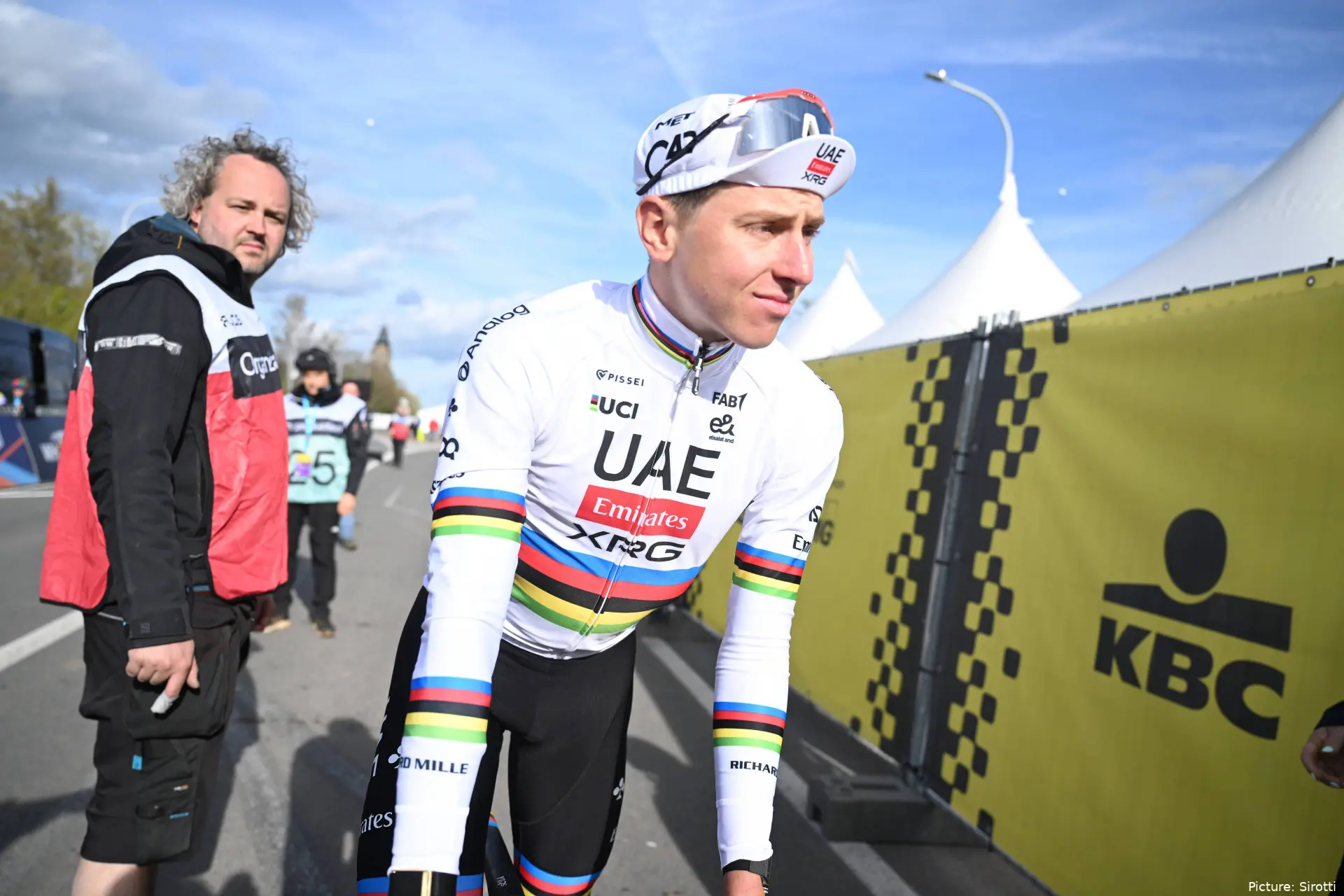
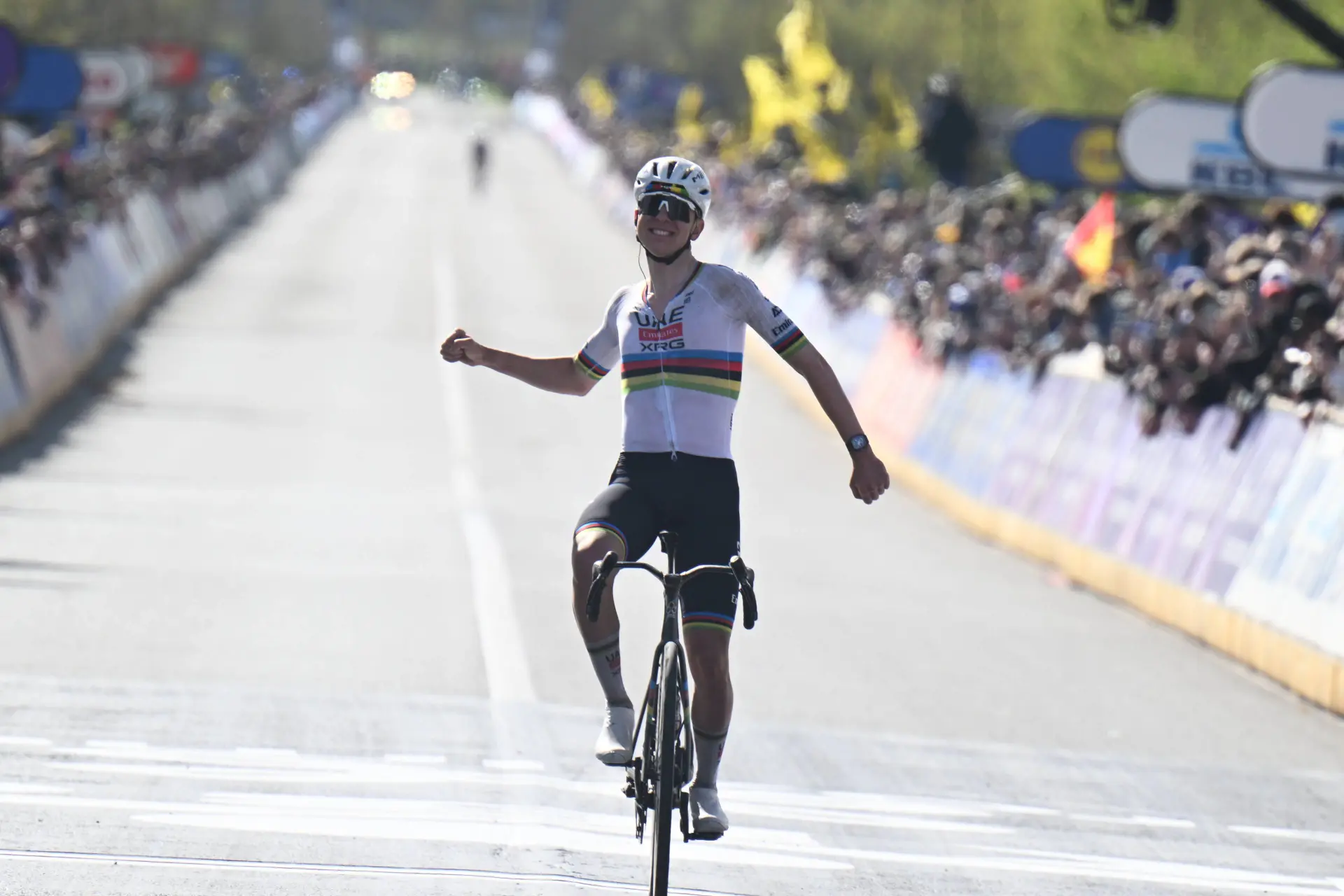
Tadej Pogacar’s latest Tour of Flanders victory did more than add another Monument to his palmares. It left even those racing against him struggling to explain what they are up against.
Among them was Decathlon CMA CGM Team rider Oliver Naesen, who offered one of the clearest reflections on just how far the Slovenian has pushed the limits of the sport. “What Tadej is doing goes beyond demotivating,” Naesen said in conversation with HLN after finishing 13th in Flanders. “This is something else. It takes away all hope.”
A different kind of dominance
Pogacar’s win in Flanders followed a pattern that is becoming increasingly familiar. The race fractured on the key sequence of climbs, and when the decisive move came on the Oude Kwaremont, even Mathieu van der Poel was unable to respond.
For Naesen, that is where the difference lies compared to more traditional forms of dominance. “Demotivating is when someone is very good, you can’t drop him, and he beats you in the sprint,” he explained. “This is something else.”
Rather than a race decided in the final moments, Pogacar is now shaping outcomes much earlier, forcing separation in a way that leaves little room for alternatives.
A peloton split apart
Naesen also pointed to how that level of performance is changing the structure of the race itself. “He’s a ten-star rider,” he said, describing a hierarchy that is becoming harder to ignore. “Even they can’t stay with him when the course gets a bit harder.”
In Flanders, that reality played out clearly. Pogacar rode clear, Van der Poel was left chasing, and behind them, riders like Remco Evenepoel and Wout van Aert were forced into their own race.
It is not simply that Pogacar is winning. It is how cleanly he is separating himself from riders who would normally define the outcome.
When the usual answers disappear
That shift has consequences beyond a single result. At Milano-Sanremo earlier this spring, Pogacar had already shown he could force a selection in a race that rarely produces one. In Flanders, he did it again on terrain designed to create differences, but with a level of control that removed any doubt about the outcome.
For those behind, the familiar responses are becoming less effective. Each time the gap is closed, it opens again. Each attempt to follow becomes harder to sustain. Over time, that begins to change how the race is approached altogether.
Naesen’s conclusion reflects that growing sense inside the peloton. “It takes away all hope,” Naesen explains.
Looking ahead to Roubaix
The question now is whether that same dominance carries into Paris-Roubaix, a race that traditionally resists this kind of control.
The flatter terrain and longer cobbled sectors offer fewer opportunities to force the repeated accelerations that have defined Pogacar’s recent wins. In theory, it brings more riders into contention. In practice, though, Flanders has already shown how difficult it is to rely on theory alone.
For Naesen and the rest of the peloton, the challenge is no longer just finding a way to beat Pogacar. It is working out whether that way still exists at all.


Kieran WoodDeputy Editor-in-Chief
Kieran Wood is a sports journalist based in Wales and has been active in journalism since 2022. He regularly contributes to DartsNews.com and CyclingUpToDate.com, where he covers professional cycling and darts. In cycling, his work includes liveblogs from major races, including the Tour de France, the Giro d’Italia, and La Vuelta a España, alongside race reports and analysis. He has also conducted interviews with professional riders.
His reporting spans the full racing calendar, from one-day classics to stage races, with a focus on accurate, real-time coverage and clear contextual analysis. For statistics, results, and historical context, he regularly uses resources such as ProCyclingStats. To support reporting on rider activity and training context where relevant, he also references Strava.
In his work, Kieran places strong emphasis on careful sourcing, editorial accuracy, and updating articles as new, verified information becomes available.
claps 9visitors 3
Just in

Popular news
Latest comments
- Bummed to see an Austrian guy not make it on what is nominally (ok ok not really) a German team. He didn't have a good 2026, and I hope that he finds his footing at Bardiani. They've got a long history of excellent coaching and development.RidesHills27-10-2026
- Subject to the top riders DNS DNF or sick/crash.abstractengineer27-10-2026
- Pogi has no challenger since 2024. Jonas is one level below, Remco has no balls, Sexias is too young. Whether ASO acknowledge or not is immaterialabstractengineer27-10-2026
- People keep referring to Pogačar and mountain-top finishes, and sure, he's succeeded on those often enough. Thing is, he succeeds on mountains, period. How often has he attacked on a climb, made time on the descent, and added time on the flat run in to the final? Often enough that they'd have to remove mountains for it not to be a Pogačar route. And then they'd have hills, and the guy who has won Flanders 3 times isn't going to suffer there, either. So if you remove those they have sprints and TTs, and last year he was mixing it up in a few sprints, as well. So, yeah, good luck folks. Let's see how he recovers before we make too many other claims. The seasons from 2024 to 2026 are three of the top 10 best cycling seasons ever (Merckx has something like 5 of the remaining), and I'm going to predict that 2027 is going to be up there with them.RidesHills27-10-2026
- The US has gone through a long convoluted process of defining how athletes can make money off their "Name, Image, and Likeness," and I see the point that Pederson and the other athletes are making here. Also, how very Mads Pederson to say, "Everyone has seen the somewhat tacky advertisements." You can almost see that sly smile on his face when he says it.RidesHills27-10-2026
- Vine coming from his background and then succeeding on a team full of superstars, so great. He's got solid wins (GC and TT), would be even more successful in the TT if he didn't live in the era of Ganna and Evenepoel, and seems to have a thing for the Vuelta. Aren't something like 1/3 of his wins there? (Checks procyclingstats - yes, 5 of the 14) Great guy, and I wish him all the success he can find!RidesHills27-10-2026
- Such a soft spot for Vine. To watch him come from the Zwift Academy to the levels he is at, now, is incredible. Always rooting for a Vine win.anonymouscyclist27-10-2026
- glad you're still making it happen!mij27-10-2026
- With the exception of Axel Laurence, the rest are in their 30's. My opinion is I think, perhaps, we're beginning to see the effects of younger riders coming into the pro ranks. I believe we're going to see those effects in the coming years. All teams are looking for the next Pogi, Jonas & Seixas. Of course, Seixas hasn't proved himself yet. He's just a kid. I believe he will though. Remco is a strange case. I believe if he can overcome being erratic, he should wn a few Tours, What do you guys think?Paggss27-10-2026
- And, at 2% he'll still destroy the competition...Paggss27-10-2026
Loading
2 Comments