“Beyond 40 degrees you can’t race”: Former Italian pro calls for a heat protocol as extreme temperatures push cyclists to their limits
CyclingThursday, 10 September 2026 at 09:00
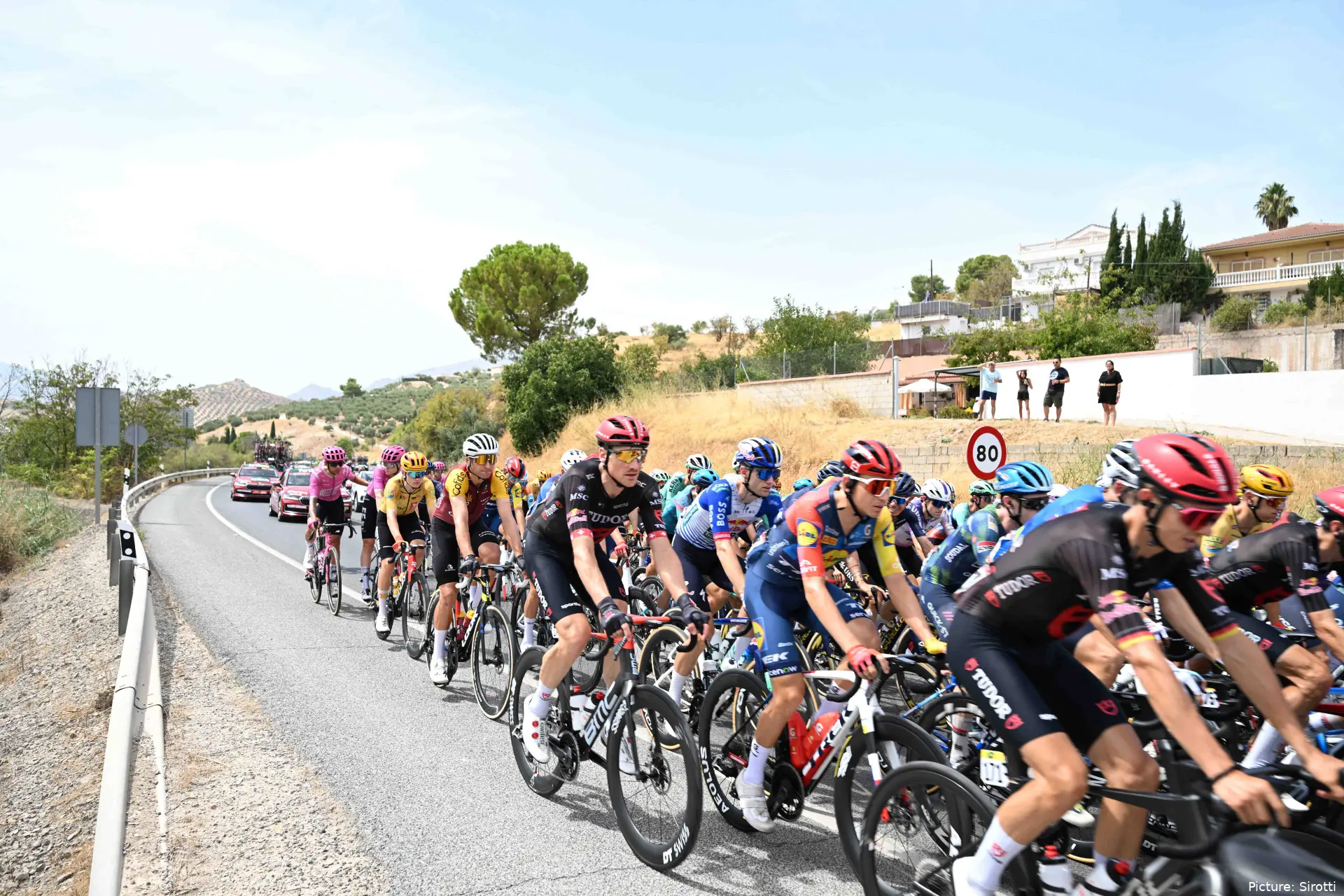
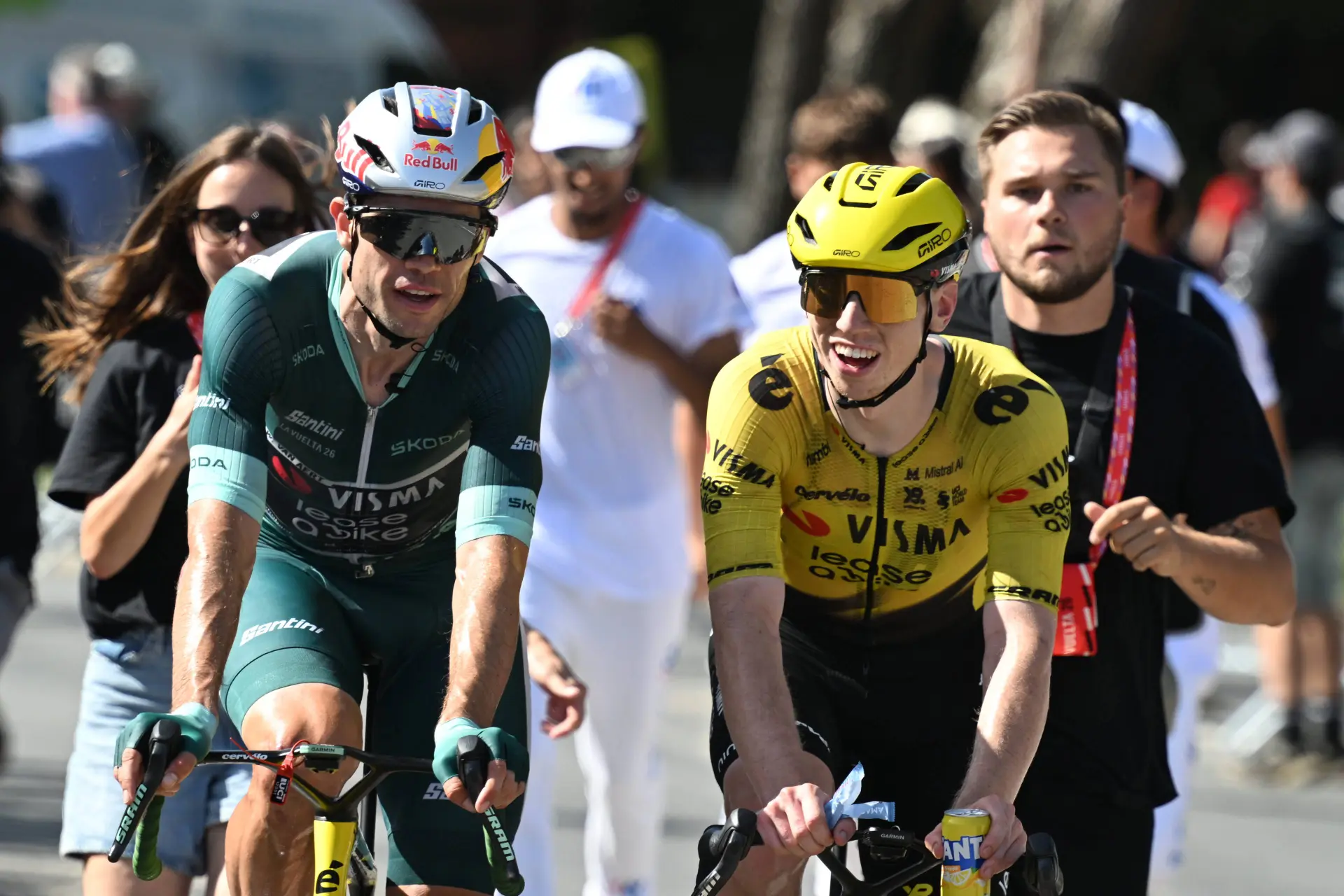
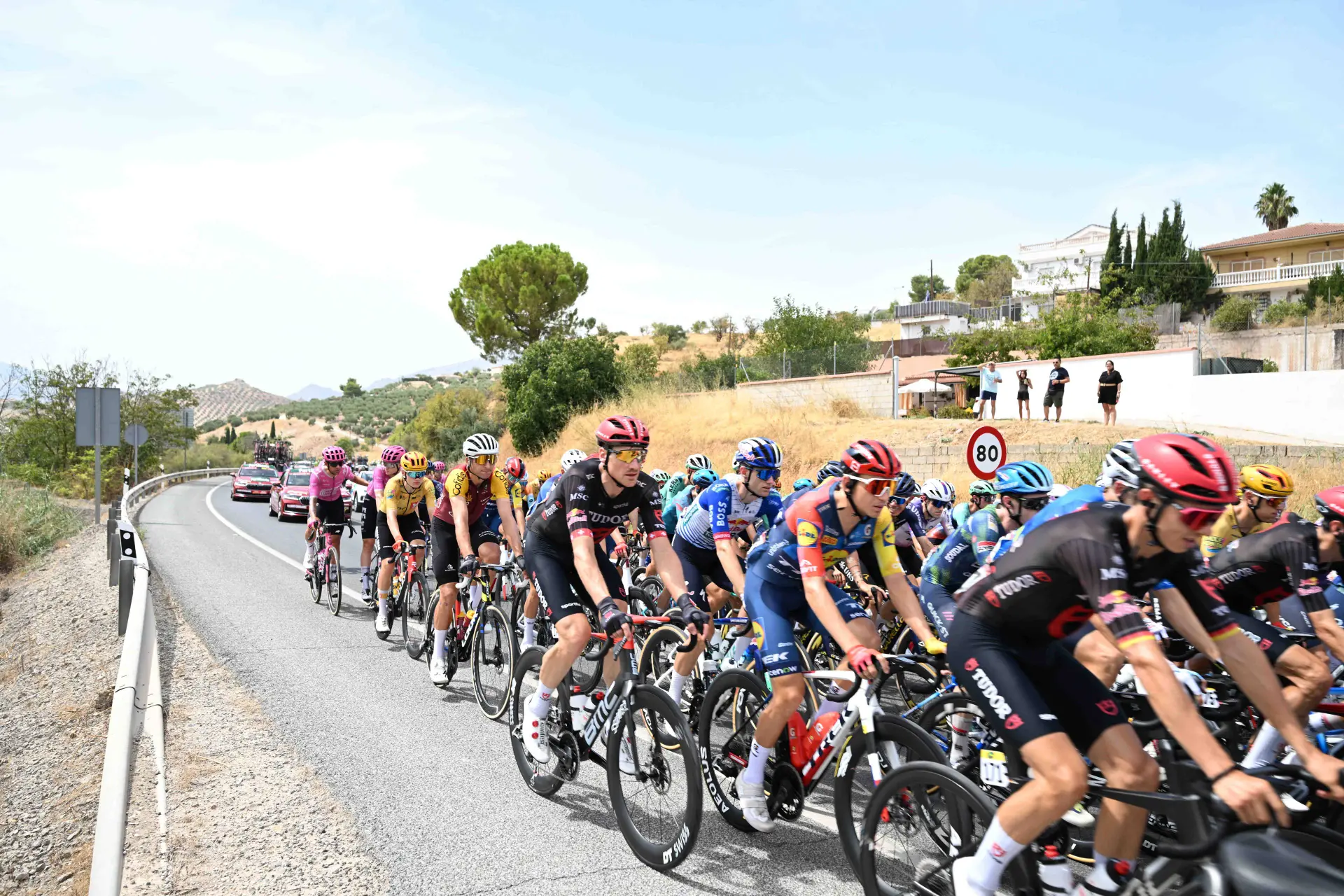
Extreme heat has become one of the defining challenges of this summer’s cycling season. Riders at both the Tour de France and Vuelta a España have repeatedly raised concerns about racing in temperatures that can push the human body to its limits, reigniting the debate over whether cycling needs clearer rules for extreme heat.
Among those calling for action is former professional Filippo Pozzato, who now works as a race organizer. He believes the sport should treat excessive heat in much the same way it already treats extreme cold and other dangerous weather conditions.
“I have been saying for years, since I was racing, that there should also be a specific weather protocol for heat, just like the one that applies to rain and cold,” Pozzato told Bicisport. “Just as there is a minimum temperature of three degrees, below which doctors have established that you cannot race, there should also be a maximum temperature.”
The issue has become particularly prominent at the Vuelta, where several riders have spoken openly about the conditions. Enric Mas called for the peloton to discuss whether racing should continue in extreme heat, while Matthew Brennan said he would not be surprised to see riders needing to be taken away by ambulance.

Chris Harper sprays water on himself in an attempt to keep cool amid the Tour de France 2026 heatwave
Pozzato wants heat treated as a genuine weather emergency
Brennan's comments were especially striking after stage 15, when the British rider revealed that his bike computer had recorded an average temperature of 41 degrees Celsius. For Pozzato, that should be enough to trigger a clear limit.
“For me, beyond 40 degrees you can’t race. I am not a doctor, but it is obvious that high-level physical exertion should not take place at certain temperatures,” he said. “We saw what happened to Sinner in Paris: do we want someone to die?”
Pozzato believes the current regulations are inconsistent. “Races are canceled because of cold or rain, but not because of heat. Instead, heat must also be considered a weather emergency.”
His concerns are not based solely on what he has seen from the roadside. During his own professional career, Pozzato experienced the potential dangers of extreme temperatures firsthand.
“In Oman, for example, one day everyone’s tubular tires were blowing out on a descent because the carbon was melting, and at the time we still didn’t have disc brakes,” he recalled. “I already tried to raise the issue back then, but nobody listened to me. I repeat: we work with doctors, so let’s define a protocol that establishes precise rules.”
Read also
Earlier starts could offer a practical solution
One proposal that has emerged during recent races is to move stages several hours earlier, allowing riders to complete the most demanding part of the route before temperatures reach their daily peak. Pozzato, who now has experience on the organizational side of the sport, believes such a change is technically possible.
“Technically, I would say yes. Essentially, you would bring forward all the logistical operations by three or four hours. It could be inconvenient, but it doesn't seem like an insurmountable problem,” he explained. “The day still lasts 24 hours: if you start earlier, you wake up earlier, so the night before you have dinner earlier and go to bed earlier.”
There is, however, one major obstacle that cannot be solved simply by changing the timetable: the spectators. “The problem I see, though, concerns the public. I don't know how many people would get up at six in the morning to watch the start of a cycling race.”
The debate also extends beyond individual stages. With climate change producing more frequent and intense heatwaves, some have argued that cycling's entire calendar needs to be reconsidered.
“I have been saying for some time that the calendar needs to be reformed, but I don't think it is realistic to think about moving all three Grand Tours as a whole,” he said. “At most, they could be brought forward or pushed back by ten days or so, but that would hardly change anything in terms of temperatures.”
Félix SernaCycling Journalist
Félix Serna is a writer at CyclingUpToDate and has been part of the team since 2025. He covers professional cycling across both the men’s and women’s calendars, with a focus on UCI rankings, race developments, and rider performance. His work includes interview-based reports, liveblogs, and tournament coverage designed to provide clear, accurate context throughout the season.
In his reporting, Félix regularly uses ProCyclingStats for results, statistics, and historical reference. He places strong emphasis on careful sourcing, editorial accuracy, and updating articles promptly when new, verified information becomes available. He holds a bachelor’s degree in International Studies.
claps 0visitors 0
Just in
Popular news
Latest comments
- Boring comment chump.whit2pet10-09-2026
- Soft
 Front24210-09-2026
 - I feel he will be like Chris Froome after his accident never getting back to his best. I hope EF can get the best from him and Carapaz if he does not go to Ineos takes him under his wing.paultryan200210-09-2026
- No no... don't spin your words around with me. Your last sentence tells me everything: @whit2pet: "All in all I think that most World Tour cyclists ARE PAID FAIRLY." Are these your words? Yes they are. NO, THEY ARE NOT PAID FAIRLY. Shame on you and stop your BS. Capish?PogiSloFans10-09-2026
- I made that exact comment in my response, but as you are clearly unintelligent you failed to pick it up. Rather than justify your position you chose to make borish comment. Slide back under your rock chump.whit2pet10-09-2026
- "All in all I think that most World Tour cyclists are paid fairly." ??? Reading a foolish and stupid statement like that makes me think: Stop watching cycling and start watching dart throwing or American wrestling. You don't even deserve an answer because of your foolishness and probably won't understand it. But I'll give it a try: Everything centers around the fact that the owners of the Grand Tours and Monuments like ASO - Amaury Sport Organisation, and others, are not interested in sharing their big television and sponsorship profits. BIG PROFITS!!! Why? Because they are f**** greedy, wanting more money constantly. They prioritize personal financial gain over ethics, fairness, or the well-being of cyclists... the same cyclists that make money for them.... Do you understand this? If not, go find yourself a corner!!!PogiSloFans10-09-2026
- With cycling being a "free to watch sport", how do you propose to raise the income to pay the cyclists more? The owners of the grand tours and monuments are not interested in sharing profits and with the sport refusing to make alterations to the Euro Centric calendar, the opportunity to increase income for the teams is extremely limited. All in all I think that most World Tour cyclists are paid fairly.whit2pet10-09-2026
- Hey Jumpyjohn... let your words become gold!!!PogiSloFans10-09-2026
- Pogi, being the G.O.A.T. ... should be getting, at least, 20 million euros per year.... Remco 10 million... Jonas 8.5 million ... etc. etc. All cyclists are being payed shit, compared to other sports. Competitive road cycling is undeniably one of the most brutal and physically demanding sports in the world... when evaluating pure endurance, suffering, and environmental risks such as crashes, heat, cold, rain, sleet, road furniture.PogiSloFans10-09-2026
- Yes, I’m tipping on around 1 minute lost in the TT but it’s best to remember anyone can have an off day or an incident and lose minutes if it’s at the wrong moment.Jumpyjohn10-09-2026
Loading
1 Comments