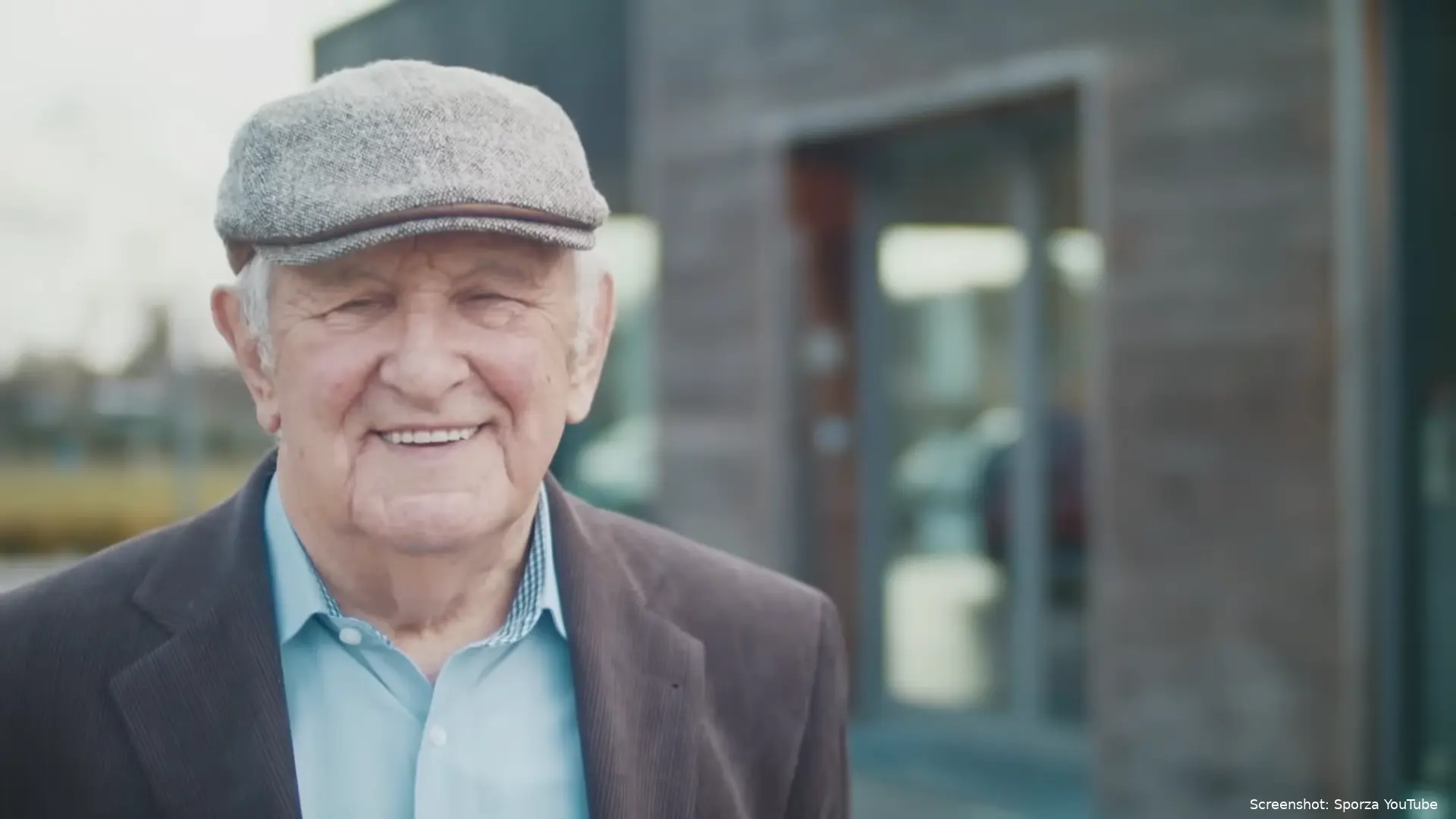
Belgian cycling legend Frans Verbeeck has died at the age of 85. The former Belgian road race champion, winner of the Amstel Gold Race and La Fleche Wallonne, was one of Eddy Merckx’s best-known rivals before building another lasting legacy through the cycling clothing company Vermarc Sport.
His death was confirmed by Vermarc, the family business he founded after retiring from professional cycling.
“It is with great sadness that we announce the passing of Frans Verbeeck, former cyclist and founder of Vermarc Sport,” the company said in a statement. “We are grateful for everything Frans built and for the lasting impact he had on the company and so many others. Our thoughts are with his family and loved ones. We wish them strength during this difficult time.”
Born in Langdorp on 13 June 1941, Verbeeck raced alongside Merckx, Roger De Vlaeminck and Walter Godefroot during one of the strongest generations in Belgian cycling history.
The Flying Milkman who rebuilt his career
Verbeeck initially turned professional in the early 1960s but walked away from the sport in 1966 after a difficult experience at the Volta a Catalunya. A throat infection and a badly swollen foot forced him to abandon the race. While arranging his journey home, his bicycle was stolen outside an airport, leaving him to make his way between the terminal and his hotel on foot despite his injury.
He decided to stop racing and took over a milk round in Wilsele to support his wife Angele and their family. Two years later, his father offered to help him find another bicycle while friend Roger Bollen volunteered to cover his insurance. Verbeeck returned to competition in 1968, spending the early part of his comeback combining morning deliveries with training and racing.
The routine earned him the nickname the “Flying Milkman”, but it was his willingness to train throughout the winter that helped transform his career.
While many riders of his generation took extended breaks during the off-season, Verbeeck continued working through the colder months. He repeatedly tackled a steep, sandy climb in the Kesselse Bergen on a fixed-gear bicycle, initially struggling to reach the summit before eventually completing the ascent 40 times in a single session.
His breakthrough arrived at the 1970 Omloop Het Volk. Verbeeck had already delivered cream to local bakers that morning before travelling to Ghent in an old Volkswagen, arriving shortly before the start and winning one of the biggest races on the Belgian calendar. He added the Amstel Gold Race in 1971 before winning Omloop Het Volk for a second time in 1972, beating a group that included Merckx.
Further victories followed at La Fleche Wallonne in 1974, E3 Prijs Harelbeke in 1975, Scheldeprijs in 1976 and Brabantse Pijl in 1977. He also won the Tour de Luxembourg overall in both 1975 and 1976.
Verbeeck finished 15th at the 1965 Vuelta a Espana, where he was second behind Rik Van Looy in the points classification, and placed 16th overall at the 1972 Tour de France. He also contributed to Watney-Maes’ victory in a team time trial at the 1973 Tour.
Read also
Rivalry with Merckx and eight Monument podiums
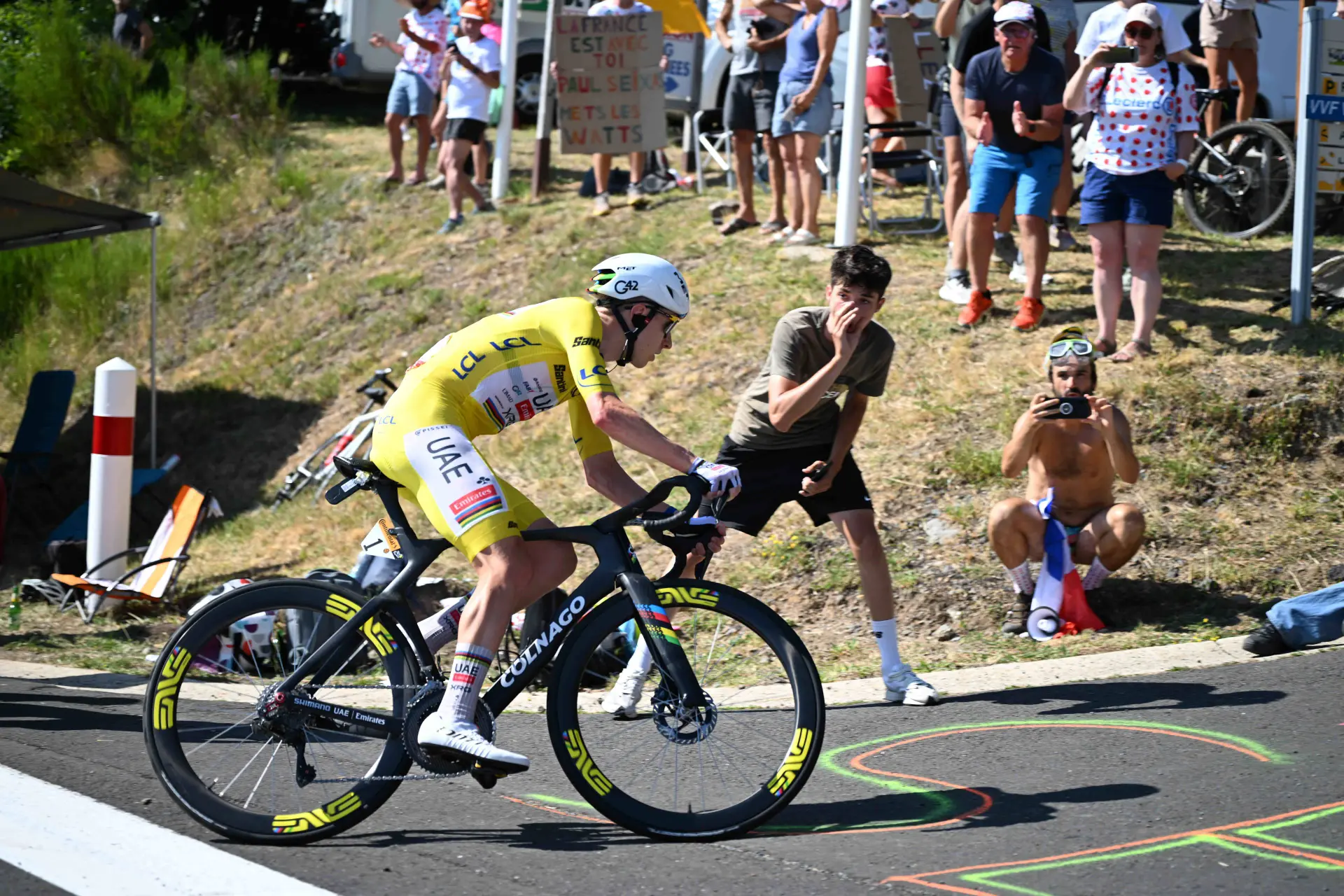
The strength of Verbeeck’s generation meant even his finest performances regularly brought him into direct competition with Merckx. During the spring of 1973, he finished second behind his compatriot at Gent-Wevelgem, the Amstel Gold Race and Liege-Bastogne-Liege. The latter was decided by the narrowest of margins after Verbeeck mistook the location of the finishing line.
His opportunity for revenge arrived at the Belgian national championships in Soumagne that June. Merckx attacked alone, and efforts by other leading riders to close the gap came to nothing. Verbeeck eventually bridged across near the top of a climb on the final lap, refused to help with the pace and beat Merckx in the sprint to become Belgian champion. His young son Marc was the first to reach him afterwards, making his way past the police and onto the podium to celebrate alongside his father.
Verbeeck finished on the podium of cycling’s Monuments eight times without winning one. He was third at the Tour of Flanders in 1972 before finishing second in 1974 and 1975, while Liege-Bastogne-Liege brought four podium appearances and Il Lombardia another in 1971.
His most celebrated encounter with Merckx came at the 1975 Tour of Flanders. Merckx attacked on the Oude Kwaremont with more than 100 kilometres remaining, and Verbeeck was the only rider able to follow. The pair rode clear of the rest of the field before Merckx finally distanced his companion in the closing kilometres. Verbeeck finished second, with third-placed Marc Demeyer crossing the line more than five minutes after the winner.
Afterwards, an exhausted Verbeeck gave Belgian commentator Fred De Bruyne an interview that became part of the country’s cycling folklore. “It’s unbelievable, Fred, the way he rides. You can’t describe it. I suffered enormously,” Verbeeck said. “I have to tell it like it is: he rides five kilometres per hour too fast for us. I don’t know what it is.”
Although their rivalry produced some of the most memorable battles of the era, Verbeeck and Merckx remained friends after their racing careers ended.
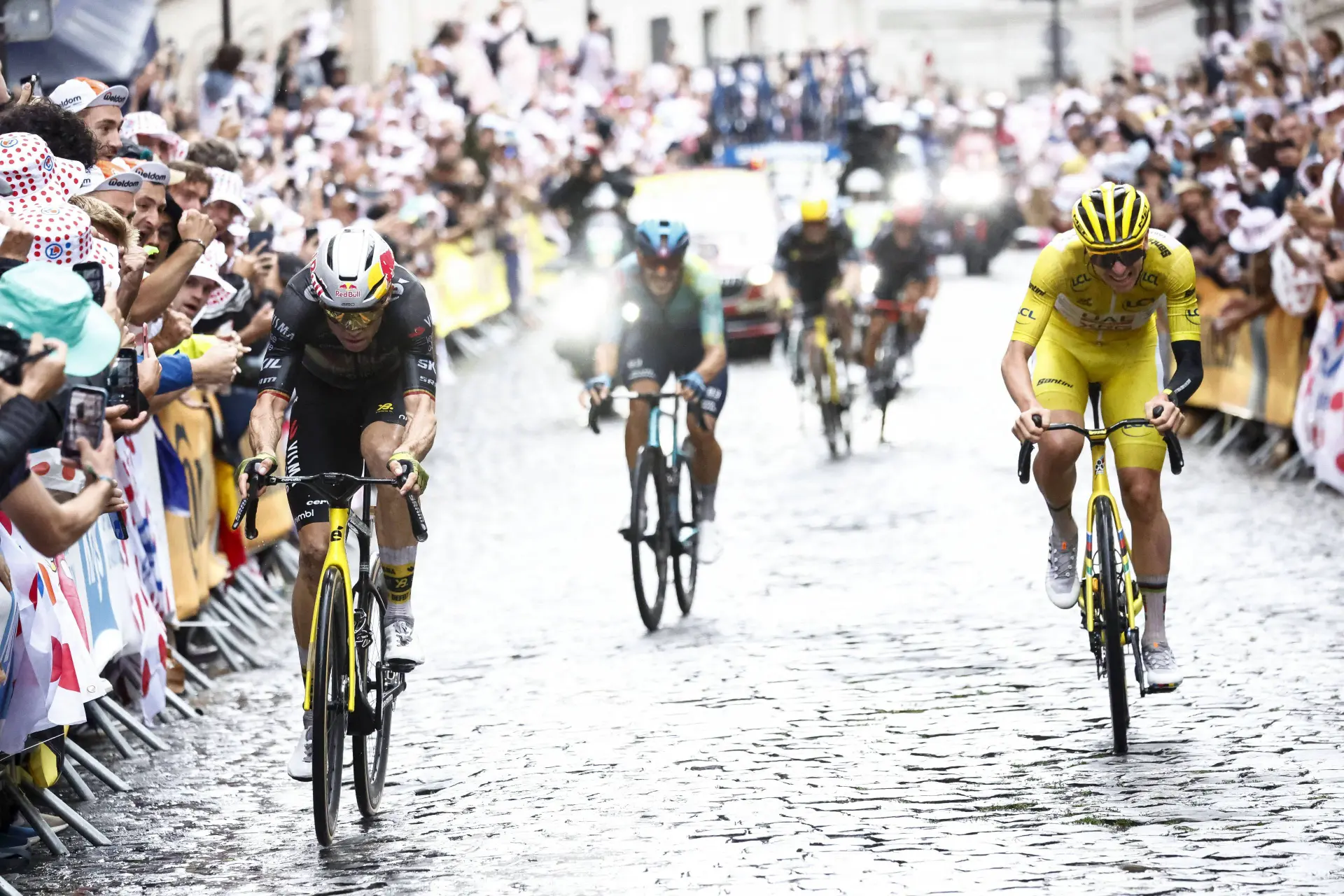
A family legacy through Vermarc Sport
After retiring in 1977 at the age of 36, Verbeeck founded Vermarc Sport in Wezemaal. The company’s name combined the opening letters of his surname with the first name of his son Marc, who later took over the running of the business.
Vermarc grew into one of Belgium’s best-known cycling clothing manufacturers, supplying professional teams, amateur clubs and riders across several generations.
Partnerships with teams connected to Patrick Lefevere and Lotto helped establish the company at the highest level of the sport, with riders including Johan Museeuw and Tom Boonen wearing its clothing.
Verbeeck also remained closely involved with cycling in the community where he had lived since 1978, supporting youth racing and events around Rotselaar and Wezemaal.
In 2021, Rotselaar awarded him honorary citizenship in recognition of his sporting achievements, his work with young riders and the international success of Vermarc. The company he founded continues under the leadership of his son Marc, carrying the Verbeeck name into another generation of Belgian cycling.
Kieran WoodDeputy Editor-in-Chief
Kieran Wood is a sports journalist based in Wales and has been active in journalism since 2022. He regularly contributes to DartsNews.com and CyclingUpToDate.com, where he covers professional cycling and darts. In cycling, his work includes liveblogs from major races, including the Tour de France, the Giro d’Italia, and La Vuelta a España, alongside race reports and analysis. He has also conducted interviews with professional riders.
His reporting spans the full racing calendar, from one-day classics to stage races, with a focus on accurate, real-time coverage and clear contextual analysis. For statistics, results, and historical context, he regularly uses resources such as ProCyclingStats. To support reporting on rider activity and training context where relevant, he also references Strava.
In his work, Kieran places strong emphasis on careful sourcing, editorial accuracy, and updating articles as new, verified information becomes available.
claps 0visitors 0
Just in

Popular news
Latest comments
- This Remco-friendly (and Seixas-friendly?) route was almost certainly designed to reduce Pog's dominance. But as Prudhomme has said straight out, now he thinks Pog's accident will have reduced his dominance anyway.Hills3323-10-2026
- We also don't know how much Pog was really putting into gaining time. Feels like watching Usain Bolt, where you can only wonder how much faster he'd have gone if he was sprinting 100% to the line, instead of being two feet ahead and starting to pull up with ten yards to go. If any of the other riders really started to close in on Pog, I do think he'd simply have gone even deeper and crushed them. I would really like that kind of race though, none of this "4 minutes lead by the first rest day" trouncing. So if introducing more TT and less summit finish makes the race go more to the wire, I'm all for that. I don't think it'll change the outcome necessarily, but it'll make the whole thing less of a foregone conclusion by week 2.wrsty23-10-2026
- That nearly is 7 mins and you win GTs comfortably by 2 mins. Remco fans - he almost won the TDF, He beat Pogi twice in the mountains this year.abstractengineer23-10-2026
- What would be your preferred Tour design then? Just out of interestwrsty23-10-2026
- I like Remco but even I'll admit he didn't get anywhere close to Pogacar, just like everyone else.megasmacky23-10-2026
- That's what y'all said this year, "remco will come fifth"bruins3022-10-2026
- That used to be the norm, 100 kms of TTs. Now look at the '87 route...acem8222-10-2026
- Well, crashes can happen, so it's not impossible...acem8222-10-2026
- that would be kinda cool. there is a lot of untapped potential. which I'm sure the UCI will overlook. in order to get sock length correct.mij22-10-2026
- Nice! Now Remco can finally show that he cannot win the Tour!!! 😂😂😂PogiSloFans22-10-2026
Loading
Write a comment