16 Tours de France, six second places and one unforgettable triumph - The extraordinary story of Joop Zoetemelk
Cycling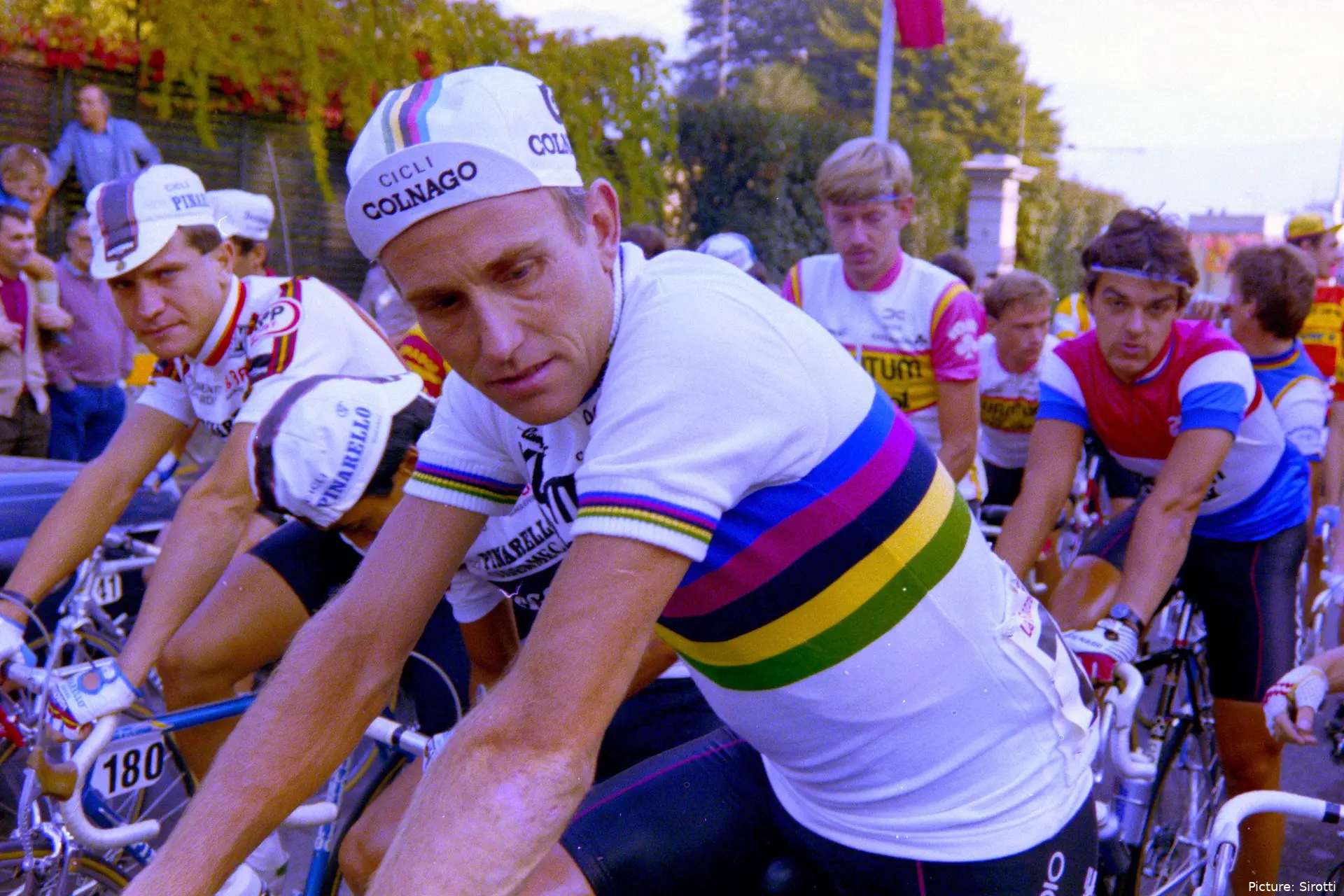
This is the latest installment in CyclingUpToDate’s Cycling Legends series, revisiting the careers, rivalries, and defining moments of cycling’s great champions.
Joop Zoetemelk started and finished all 16 Tours de France he rode. He won one, finished second six times, and claimed ten stage victories. He also won the 1979 Vuelta a Espana and the 1985 world road race title. For years, the Dutchman was remembered as the man who came close, but his career was much more than a long series of near misses.
He spent almost two decades among the strongest riders in the peloton, faced champions from different generations, and returned from injuries that might have ended another career. His Tour victory came at 33, after five second places. His world title followed five years later, when he was 38. The Tour’s official record confirms that Zoetemelk completed all 16 of his starts, a mark that remains unmatched.
Joop Zoetemelk’s first bike, Swift Leiden and Egbert van’t Oever
Cycling was not Zoetemelk’s first sporting passion. Growing up in Rijpwetering, he was a speed skater. On his 16th birthday, his mother gave him a racing bike so he could continue training during the summer. Within days, a group from Swift, the cycling club in nearby Leiden, rode past his home.
“I went after them and could keep up,” Zoetemelk recalled in an interview with ONS Magazine. The riders invited him to join Swift, and he soon began winning local races. It was a simple beginning: a boy on a new bike, chasing a passing group and discovering that he could stay with them.

Joop Zoetemelk, ready to race in the 1985 Il Lombardia whilst wearing the rainbow jersey as road world champion
The move from skating to cycling was gradual. In a winter without ice, Zoetemelk asked his skating coach, Egbert van’t Oever, for advice on staying fit. Van’t Oever drew up a training program so he could try cyclocross. In 1965, Zoetemelk became Dutch cyclocross champion. He later recalled that he enjoyed competing, whether he finished first, second, or third. Training was never a burden, he said. He did it because he loved sport.
Herman Krott and Joop Zoetemelk’s road to Mexico City
Zoetemelk’s early progress brought him into the Dutch amateur system. He won Olympic gold in the 100-kilometer team time trial at the 1968 Mexico City Games, riding with Fedor den Hertog, Jan Krekels, and René Pijnen. The following year, he won the Tour de l’Avenir, then considered a major proving ground for young stage racers. In 1970, he turned professional.
One person who helped turn that promise into a professional career was Herman Krott, the influential leader of the Amstel amateur team. Zoetemelk later said he owed Krott a great deal. Krott had brought him into the Olympic team, and after the Games he encouraged him to consider turning professional. Zoetemelk was working as a maintenance carpenter in Leiden and had only recently taken up cycling seriously. Krott asked what he earned in construction and told him that professional cycling could pay three times as much. His advice was practical: give it two years, and return to the trade if it did not work out.
The gamble paid off quickly. In the first Tour de France of his career, Zoetemelk finished second overall. Jan Janssen, the 1968 Tour winner, remembered seeing the young Flandria rider chase down a breakaway almost single-handedly. Janssen was sitting behind him and wondered who the small, powerful rider was. By the finish, he knew the name. Zoetemelk had placed second in his first tour.
Eddy Merckx and Luis Ocaña in the Tour
Zoetemelk’s first two Tour podiums came in 1970 and 1971, both behind Eddy Merckx. He later described the challenge plainly: he had been trying to win the Tour against Merckx, “which was something else.” Merckx was not simply one rival among many. He was the dominant rider of the era, capable of winning across different kinds of races and controlling the Tour with a force few could match.
Luis Ocaña became another major opponent, particularly when Merckx was absent from the Tour. Ocaña won the 1973 edition, with Zoetemelk among the leading challengers. In 1971, both men were caught up in a dramatic crash on the Col de Menté. Ocaña’s Tour ended there, while Zoetemelk went on to finish second behind Merckx. Their careers repeatedly placed them in the same contest for the race’s top places.
Zoetemelk’s own career was nearly cut short in 1974, when he suffered a serious crash in the Midi-Libre. In a later conversation with Janssen, he said the effects stayed with him for several years. The timing was cruel. Merckx’s dominance was fading, but Zoetemelk was still recovering. Bernard Thévenet won the Tour in 1975 and 1977, while Lucien Van Impe won in 1976. Zoetemelk believed those could have been his years if he had been fully fit. He was second again in 1976, but later recalled that he still had bad days and setbacks that had not been part of his normal racing.
Bernard Thévenet, Lucien Van Impe and Hennie Kuiper
Van Impe was more than a name on the winners’ list. In 1976, he and Zoetemelk were both in contention for the Tour, and Van Impe’s climbing helped him take the race. Hennie Kuiper was another important rival in the same period. Kuiper finished second in the 1977 Tour and again in 1980, this time behind Zoetemelk. Their rivalry was shaped by the way the Dutch public viewed them: both were leading contenders, but only one could win each race.
A difficult period in Zoetemelk’s career also included a doping sanction. After the 1979 Tour, a positive test and positive counter-analysis led to a ten-minute penalty. He remained second overall behind Hinault. It is part of the record of that season and should sit alongside the sporting story, rather than disappear from it.
Zoetemelk, Bernard Hinault and the 1979 Vuelta
Zoetemelk’s 1979 season brought him a Grand Tour victory at last. He won the Vuelta a Espana, finishing ahead of Francisco Galdós and Michel Pollentier. The title proved that he could win a three-week race, but the Tour remained the result he wanted most.
That same year, he again faced Bernard Hinault at the Tour. Hinault had beaten him in 1978 and won the 1979 edition by more than 13 minutes. Yet the final stage offered a glimpse of their rivalry at its most direct. Zoetemelk attacked on the Champs-Élysées, prompting Hinault to chase him down. The two eventually contested the stage victory in a sprint, with Hinault taking the win. The Dutchman had spent much of his career measuring himself against the Frenchman, but their relationship was not simply hostility between two champions.
In a 2020 interview with Helden, Zoetemelk said they remained close after racing. “In the race we were rivals, but outside it we were colleagues,” he said, adding that they visited each other’s homes. It is a revealing detail about the peloton of that generation: a fierce sporting rivalry could coexist with a lasting friendship.
Peter Post and the 1980 Tour
Zoetemelk had finished second to Hinault in 1978 and 1979, and the team time trial was one reason he decided to change teams. Peter Post had repeatedly tried to recruit him to TI-Raleigh. Zoetemelk initially felt comfortable with his French team, but the Raleigh squad had a major advantage in the team time trial. In 1979, Zoetemelk lost three minutes to Hinault in that discipline. He decided it was time to try Post’s team.
The agreement was made on Zoetemelk’s terms. He told Post not to push him or dictate how he prepared. Post accepted, and Zoetemelk later said the team director let him follow his own approach. It was a notable fit: Post’s formidable organization and strong team could support a leader who preferred to manage himself.
The 1980 Tour did not begin like a triumph in waiting. Zoetemelk later remembered that he had stomach problems and rode poorly in the opening days. The cobbled stage cost him time, and Hinault took the yellow jersey. Even within Raleigh, confidence in Zoetemelk’s chances was not universal. Janssen’s interview with him recalls the pressure around the team and the way Post remained composed while the race began to slip away from his new leader.
Then Hinault’s persistent knee problems forced him to abandon while he was still leading. His withdrawal changed the shape of the race, but Zoetemelk still had to complete the remaining stages and defend his position. He took the yellow jersey and carried it to Paris, finishing 6 minutes and 55 seconds ahead of Kuiper. After five second places, the Tour had finally become his. Zoetemelk called the 1980 victory the crowning achievement of his career.
The familiar line “The Tour is won in bed” is closely associated with Zoetemelk, but the story behind it is more interesting than the slogan. He explained that the idea came from Krott, who urged riders to rest after a stage instead of staying up with friends. Zoetemelk repeated Krott’s advice, and journalists condensed it into the famous phrase. In a recent interview, he said he still preferred to go to bed early, usually before ten.

Joop Zoetemelk and Bernard Hinault are having a fierce battle on the Col du Galibier, in the 1979 Tour de France
Bernard Hinault, Gerrie Knetemann, Greg LeMond and the 1985 world title
Hinault was not the only rider with whom Zoetemelk shared a bond beyond the race. Gerrie Knetemann was among his closest Dutch teammates at TI-Raleigh. When Zoetemelk won the 1980 Tour, Knetemann took his hand, and the two crossed the Champs-Élysées finish together, one of the defining images of the victory. They were also photographed skiing together away from the peloton. These moments do not establish a formal ranking of Zoetemelk’s “best friends,” but they show a warm relationship with a teammate who had been part of his Tour-winning team.
Zoetemelk’s Tour victory was not the final defining moment of his career. In 1985, at 38, he won the world road race championship in Giavera del Montello, Italy. He had raced the World Championships many times and had already finished fourth and fifth, but the rainbow jersey had eluded him.
The race nearly ended for him after a crash and a wheel change. Jacques Hanegraaf waited, helping Zoetemelk return to the peloton. In the decisive phase, Dutch teammates Johan van der Velde and Adrie van der Poel were also among the riders expected to contend. Zoetemelk later described how he found himself with a small gap after the pace slowed. He thought he was attacking to draw the Italians out and open the way for Van der Velde. Instead, he kept riding.
Behind him, Claudio Corti chased but could not close the gap. Greg LeMond and Moreno Argentin finished three seconds back. Zoetemelk had gone from believing he was opening the race for a teammate to realising that he was about to become world champion. He said later that even now he found it hard to believe he had won.
General Classification and Major Race Victories
| Race | Wins | Years |
| Paris–Nice | 3 | 1974, 1975, 1979 |
| A Travers Lausanne | 5 | 1975, 1976, 1977, 1978, 1979 |
| Tour de France | 1 | 1980 |
| Vuelta a España | 1 | 1979 |
| Tour de Romandie | 1 | 1974 |
| Tirreno–Adriatico | 1 | 1985 |
| Paris–Tours | 2 | 1977, 1979 |
| World Championships – Men’s Road Race | 1 | 1985 |
| La Flèche Wallonne | 1 | 1976 |
| Amstel Gold Race | 1 | 1987 |
Jan Raas and Zoetemelk life after racing
Zoetemelk’s wider palmarès included three Paris-Nice titles, two Paris-Tours victories, the 1976 Flèche Wallonne, Tirreno-Adriatico in 1985 and the 1987 Amstel Gold Race. He had planned to stop after becoming world champion in 1985, but the rainbow jersey persuaded him to continue. He later described 1987 as his farewell season. The Amstel Gold Race was his last major victory.
Retirement did not take him away from cycling. After working with his wife at a hotel, he accepted a public-relations position with his final team, offered by manager Jan Raas. In a 2017 interview with Vélo 101, Zoetemelk said he had never wanted to leave the sport and stayed with the organisation through its years as Rabobank. He was not interested in becoming a television pundit. He preferred to remain in the background.
Read also


He did, however, speak about the sport and the riders who came after him. In a 2007 interview with Nieuwsblad, he reflected on his time as a sports director and said he was not someone who needed to shout at riders. He believed professionals should know what their job required. He also pushed back against the old “wieltjeszuiger” label, saying it had angered him because it did not reflect the truth. Those comments fit the portrait that emerges from his interviews: a quiet man who did not seek the spotlight, but who could be firm when he felt his career had been misrepresented.
Zoetemelk continued to follow the races that had shaped his life. In 2026, he said he still watched the finales of familiar events and remained proud of what he had achieved. His career was not simply a long wait for one Tour victory. It was a sequence of comebacks, second places, wins across different kinds of races and a final world title that arrived when many riders would already have retired. The Tour de France, the Vuelta and the rainbow jersey tell the headline version. His own memories fill in the harder parts: the first club riders he chased, the years recovering from a crash, the teammates who helped him, and the rivals who became friends.
Carlos Silva is a writer for CyclingUpToDate.com, where he contributes race reports, interviews, analysis pieces, and live coverage of the international cycling calendar. Holding a degree in Sports from the Jean Piaget Institute, he combines academic knowledge of performance, training, and competition with hands-on journalism experience in professional cycling.
Throughout his career, Carlos has conducted interviews with leading figures in the sport, including Alberto Contador, Joaquim Rodríguez, Óscar Pereiro, João Almeida, Isaac del Toro, Derek Gee, John Degenkolb and Geraint Thomas. These conversations reflect direct engagement with Grand Tour winners, Classics specialists, and emerging talents.
He has provided on-site coverage at major events ranging from the Vuelta a España to the Tour de France, alongside stage races such as Vuelta a Andalucía, Volta ao Algarve, Volta a Portugal and O Gran Camiño. Covering the mythical climbs of the Giro d'Italia remains one of his professional ambitions.
Carlos is responsible for liveblog coverage of all major WorldTour races and beyond, including the Tour de France, Giro d'Italia and Vuelta a España. His reporting integrates verified data from ProCyclingStats to ensure statistical accuracy, contextual depth, and analytical precision.
A lifelong cycling enthusiast, he approaches storytelling across written, photographic, and video formats with a focus on credibility, tactical insight, and informed race interpretation.
claps 0visitors 0
Just in
Popular news

Latest comments
- Mathieu and Wout!!! You must start in CX this winter! (hope you reading comments here...) ;-)averagecyclist12-11-2026
- Who made you site boss?Lozza12-11-2026
- This shows so well you’ve never ventured out to a cycling event and checked out spectators.Jumpyjohn12-11-2026
- I preferred the one about amateur riders and passing (perhaps to explain why he can’t ride at 220 which would probably be more effective to return to shape).Jumpyjohn12-11-2026
- Not just ManU, far worse in some minority sports ventures.Jumpyjohn12-11-2026
- From your writing it sounds like you’ve been sharing your views with people here for quite a while, quite presumouptuous for a new profile.Jumpyjohn12-11-2026
- Which is amazing given his weight and size, though, unlike in boxing and some rare instances we haven’t a clue what his fighting weight was. Anybody know why these “public” figures floated around are considered as being accurate?Jumpyjohn12-11-2026
- That’s a first point, everyone can have an off year or just stagnate before a new upward cycle. What would have been more interesting is including Skjelmose’s performance into the discussion, things have also been expected from him after several performances in the past but he hasn’t really progressed either, his TdF was basically what you would have expected but he’s 26 and been kind of stuck at this level for at least 2-3 years. Maybe he’s a late developer or maybe he needs something to change but as manager I’d be just as demanding and worried about both. Perhaps the recruitment concept was to have enough talent so at least one every year would be in shape and they’ve just been unlucky. Don’t want to rub it in but you could even say Mads lost a notch, so is it the riders or is it more to do with the team?Jumpyjohn12-11-2026
- Bingo...I was also going to say that young pretty women are obsessed Pogi fan girls... who are chasing him. All glossy "____" (blank) about Tadej. PS: You can all fill in the "blank" yourselves, whatever you prefer. The definition of glossy is: It looks unusually shiny, glazed over, watery, or vacant/unfocused.PogiSloFans12-11-2026
- Are you able to discuss ANYTHING without making a reference back to your Special 1? It’s almost as if you’re paid by his marketing team to improve his ranking in search results.Jumpyjohn12-11-2026
Loading
Write a comment