“After what Isaac is doing, there are more and more Mexicans in Europe” – Rising Quick-Step talent hails Del Toro’s impact on Mexico's cycling growth
Cycling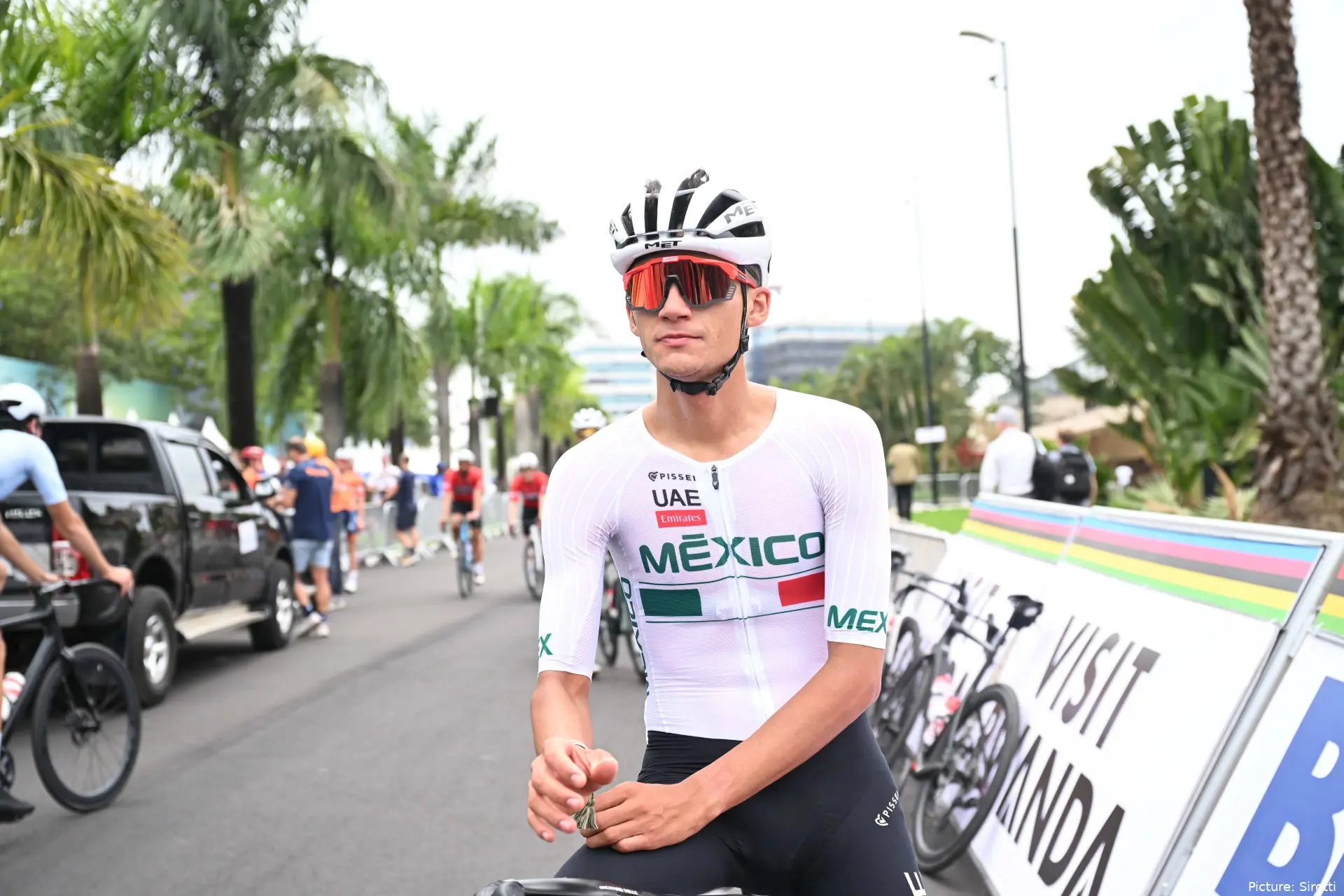
At just 18 years of age, Jose Said Cisneros has already secured a place within one of cycling’s most respected development structures. The Mexican climber has stepped up to the Soudal - Quick-Step Devo Team, the official pathway to the Soudal - Quick-Step WorldTour squad, capping a rapid rise that began only three years ago.
Speaking from San Marino, where he is currently based, Cisneros reflected on his journey in an interview with Avituallamiento Ciclista, and inevitably, the conversation turned to fellow Mexican Isaac del Toro.
From Jalisco to Europe in three years
Born on 23 April in Jalisco, Cisneros discovered cycling almost by accident during the pandemic. What began as a family rule to reduce screen time quickly evolved into something more serious.
“I discovered cycling during the pandemic. My mum always told us that before using the phone, we had to do some sport. My brother and I started going out on the bike… and as time went on, I liked it more and more.”
He did not begin taking the sport seriously until the age of 15, relatively late compared to many European riders who grow up within structured development systems. “I’ve been in cycling for relatively little time compared to others who started at five or six.”
Cisneros describes himself primarily as a climber but believes he is adaptable. “I adapt well to all conditions. I think I’m quite complete.” Standing 1.70 metres tall and weighing between 50 and 52 kilos, his physique suits mountainous terrain and general classification ambitions.
Learning the European peloton
His potential soon attracted attention. In 2023, he was contacted by AR Monex Pro Cycling Team, a Mexican structure based in San Marino. After several tests and a training camp in Mexico City, he made the move to Europe.
The difference was immediate. “In Mexico, a peloton might be 20 riders, and after a while, only 10 are left contesting the race. In Italy, there are more than 100, and everyone is at the same level. If someone drops back, it’s because they punctured.”
For Cisneros, the key contrast lies in depth and numbers. “In Mexico, there isn’t such an exaggerated number of cyclists who can go and compete, and not everyone can be at the front.”
His progression accelerated in his second junior year, as he corrected early mistakes. “You realise what you were doing wrong, and you try not to repeat it. I was always focused on what I wanted to achieve.”
Rwanda breakthrough and national success
Many international observers first noticed him after finishing 17th at the World Championships in Rwanda, on a demanding circuit.
“It was a hard circuit. For me, it was even more demanding because of my weight; it’s not the same holding 400 watts weighing 60 kilos as weighing 50. But I like hard races, and I knew I had good legs.”
Domestically, he also claimed the Mexican junior road title and finished second in the time trial. “I knew I could do it. Maybe in the time trial I arrived with my legs a bit swollen from travelling, but that helped me in the road race.”
Read also
The Isaac del Toro effect
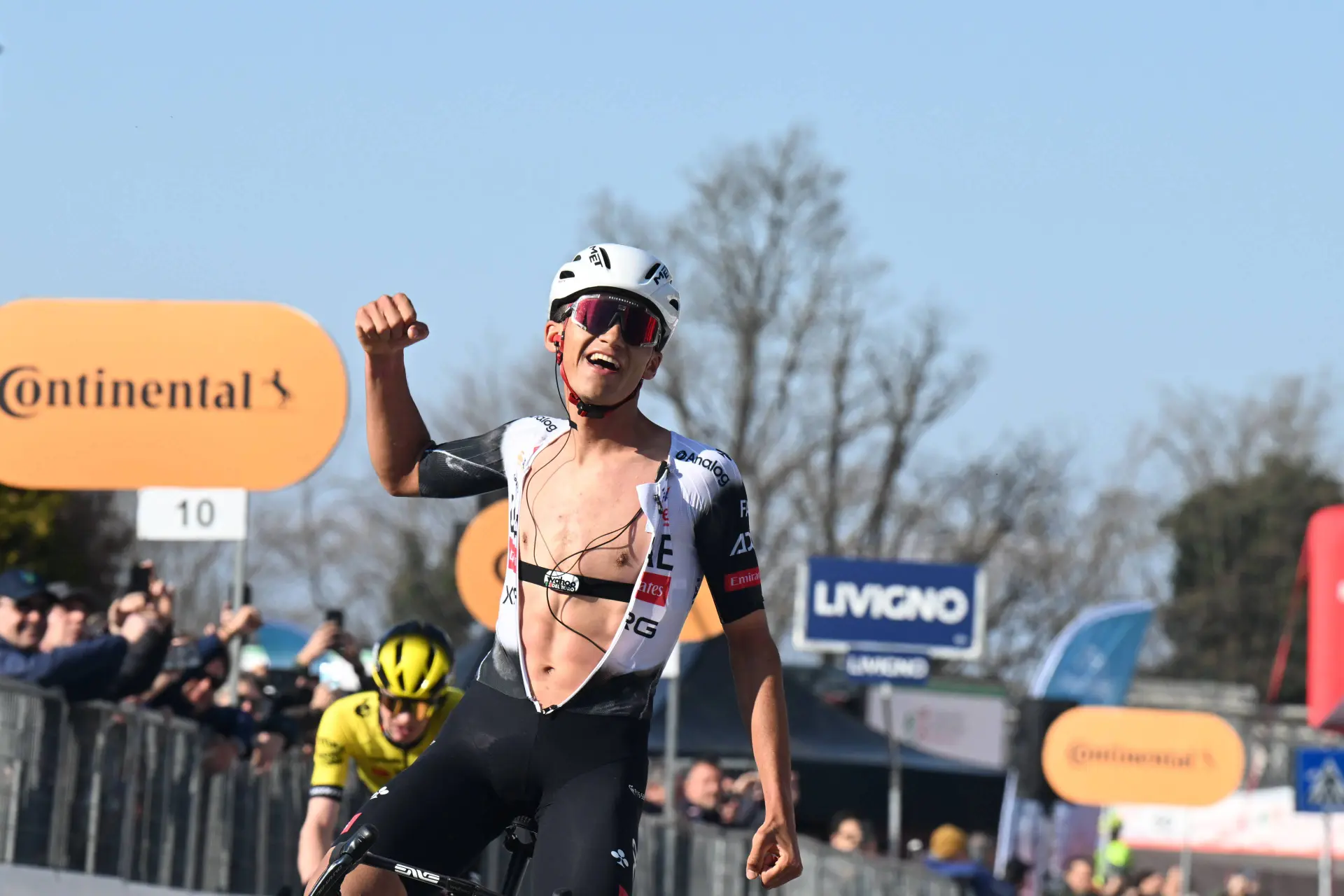
Cisneros is part of a new generation of Mexican riders establishing themselves in Europe, and he is clear about the influence of Isaac del Toro. “After what Isaac is doing, there are more and more Mexicans in Europe. And many more are coming behind.”
He is equally direct in his assessment of Del Toro’s rise. “It’s quite impressive how he improved so much in such a short time. I don’t think any cyclist has had such rapid progress.”
According to Cisneros, the growth of Mexican cycling has been gradual but consistent. “For three or four years, there have been a few Mexicans in Europe, but now there are more and more of us.”
The move to Soudal Quick-Step
Consistency proved decisive in attracting interest from Soudal Quick-Step. Rather than relying on isolated victories, Cisneros regularly placed inside the top 10 and top 15 in European races.
“People who know the sport see who is constantly getting into the races. I tried to make the top 10 in every competition.”
Contact with the Belgian team developed throughout the season, culminating in a training camp in Belgium and a confirmed move to the development squad.
“It’s extremely professional. You live alongside riders who win stages in Grand Tours or can win them. Every day I’m learning.”
He also highlighted his relationship with Brazilian team-mate Henrique. “We communicate very well. It’s easier to live together when you share a language.”
Tour of Rwanda debut and GC ambitions
His official debut with the team is set to come at the Tour of Rwanda, a race that already holds positive memories for him.
Looking ahead, his ambitions are clearly defined. “I see myself as a rider for stage races, for the general classification.”
For 2026, his focus remains measured. “First, learn as much as possible and then do everything I can to make the best possible debut with the team.”
Despite his short time in the sport, Cisneros speaks with maturity, and optimism.
“If cycling is something you truly like, don’t hesitate to do it. Like everything, there are good days and bad days, but there are more good ones than bad.”
With only three years of competitive racing behind him and already embedded in one of cycling’s leading development systems, Said Cisneros embodies the steady international growth of Mexican cycling, a movement he believes is only just beginning.

Kieran WoodDeputy Editor-in-Chief
Kieran Wood is a sports journalist based in Wales and has been active in journalism since 2022. He regularly contributes to DartsNews.com and CyclingUpToDate.com, where he covers professional cycling and darts. In cycling, his work includes liveblogs from major races, including the Tour de France, the Giro d’Italia, and La Vuelta a España, alongside race reports and analysis. He has also conducted interviews with professional riders.
His reporting spans the full racing calendar, from one-day classics to stage races, with a focus on accurate, real-time coverage and clear contextual analysis. For statistics, results, and historical context, he regularly uses resources such as ProCyclingStats. To support reporting on rider activity and training context where relevant, he also references Strava.
In his work, Kieran places strong emphasis on careful sourcing, editorial accuracy, and updating articles as new, verified information becomes available.
claps 0visitors 0
Just in

Popular news


Latest comments
- Well, he did come close, especially on stage 18. And Pogačar certainly would have heard of him at least. And no-one ever said that Pogačar being BFFs with Callum was a condition for Callum challenging him
 Rafionain-Glas22-11-2026
- she should go for it!mij22-11-2026
- literally one of the dumbest of all dumb headlines used here. Challenging Tadej??? I doubt Tadej even knows this rider exists.mij22-11-2026
- but they are aware of sock height, riding in the super tuck, mismatched uniforms, and handle bar width.mij22-11-2026
- yes Merlier missed the early races in the middle east where he traditionally takes a lot of wins. I’ll give stuyven his dues as a domestique. that isn’t what he was signed for, and with no personal wins it was a failure. he was signed to win races.mij22-11-2026
- You haven't proven a single thing, with every post you are losing credibility.awp22-11-2026
- Yes, may God bless him and you too, would you like me to say a prayer for you? 😂awp22-11-2026
- He is one rider who isn't afraid of taking on Pogi unlike no balls Remcoabstractengineer22-11-2026
- No no my friend, I have proven all my arguments. But you saying that "God" exists is your problem, not mine. Under common logic and debate principles, whoever asserts that something exists ("God exists") carries the burden of proving it. In other words, the burden of proof is the obligation to provide evidence or logical justification for a claim. Ad acta!!!PogiSloFans22-11-2026
- pure class!Ketterechts22-11-2026
Loading
Write a comment