“You can even die from heatstroke” - Doctor’s stark warning for 2026 Tour de France after scary Elisa Longo Borghini collapse
Cycling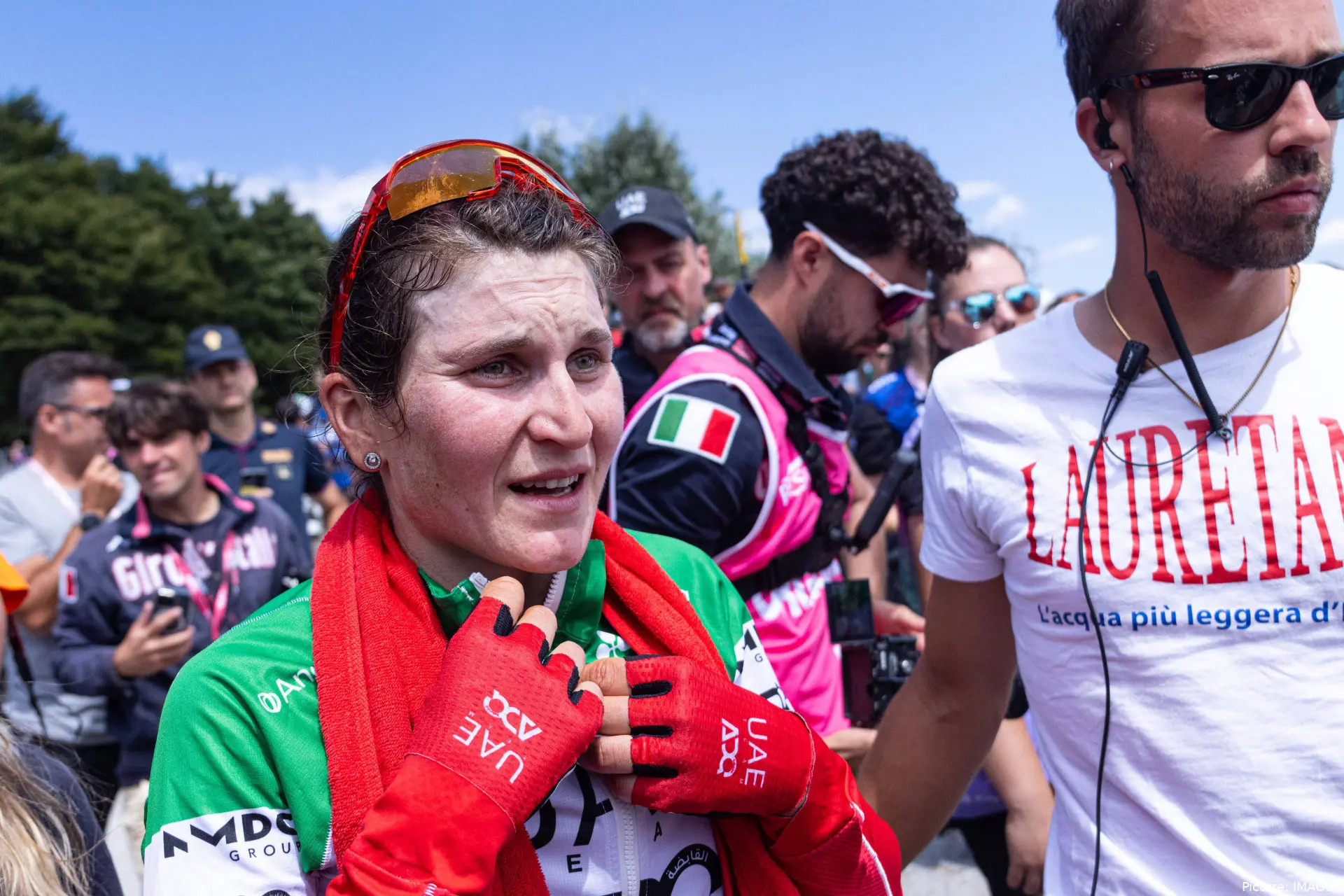
The 2026 Tour de France starts in Barcelona on July 4 with extreme heat already one of the biggest safety concerns around the race, and Dr Emilio Magni has warned that heatstroke can become fatal if riders remain exposed for too long.
The warning comes after Elisa Longo Borghini’s dramatic collapse at the Tour de Suisse. The Italian began the final stage just 10 seconds behind Marlen Reusser, but after suffering heatstroke, she finished 9’56” down and could barely remember the final climb, apart from taking a feed from Paolo Slongo.
Speaking to Bici.Pro, Magni, head doctor at XDS-Astana, said heatstroke should not be confused with riders simply struggling through a hot day.
“Heatstroke is an important, very important medical condition that comes from exposure to very high temperatures and a high level of humidity for long periods,” Magni explained. “The body struggles to maintain its heat-dispersal systems, especially in the form of sweating. There comes a point when it can no longer get rid of the thermal energy it takes in, and that creates an emergency condition.”
“You can even die from heatstroke”
Teams have become used to ice vests, ice socks, cold drinks, extra feeds and frozen supplements in summer races, while the Tour de France already has a protocol for extreme weather. Magni said the risk remains acute once exposure to heat and humidity continues for hours.
“If you interrupt the conditions that caused the symptoms, everything stops,” he said. “But if you continue to remain exposed to these environmental situations, it is obvious that from sunstroke you move to heatstroke, which is a real emergency. In short, you can even die from heatstroke.”
Magni described sunstroke as the warning stage, with headache, disorientation and nausea. Heatstroke follows when the body can no longer control its internal temperature.

Elisa Longo Borghini had a worrying day in the heat at the 2026 Tour de Suisse
“It really is a short circuit, a blackout”
“The brain’s thermoregulation systems,” he said when asked what goes wrong. “Our body temperature varies from 36 to 37 degrees, both for daily life functions and sporting ones. If the deviation is minimal, the problems can be managed. Otherwise, all the brain connection systems, then those of cardiac activity, vasodilation and circulatory activity go haywire. It really is a short circuit, a blackout.”
Longo Borghini’s memory loss from the final climb matches one of the symptoms described by Magni. In a race, confusion and disorientation can arrive while a rider is still trying to follow wheels, take feeds and reach the finish.
“The enzymatic reactions that contribute to muscle contraction, and therefore to physical exercise, take place optimally at around 37 degrees,” Magni continued. “If you bring the body to 40 degrees, you can no longer even pedal, because these enzymes go haywire and no longer catalyse the reactions needed for contraction.”
Ice, bottles and race-day limits
Magni said XDS-Astana’s heat protocol begins before the start, with “super-hydration” and lighter nutrition to reduce the strain on the body. Ice vests are used before stages, while ice and repeated cooling are used during races wherever possible.
“The first thing to do is super-hydration, definitely, because you have to put the body in a position to use its water reserves abundantly,” he said. “Then a light diet that does not put too much strain on the body, which in certain phases will be busy with other things. And then the usual precautions: before the stages, the ice vest, and in the race more ice and more ice again.”
Feeds have also become more frequent, allowing teams to pass up ice as well as bottles and food. Magni still called them temporary remedies. “One of the treatments for heatstroke is to go into a cool environment and lower the temperature also through cold contact: water or clothing, ice packs and whatever you can use,” he explained.
On the road, riders remain in the same sun, humidity and reflected heat from the asphalt until they stop, the stage ends or the conditions change. Ice and cold fluids can reduce the strain, but they do not remove the exposure.
Magni said organisers must now account for extreme heat as part of modern racing. “We have to acknowledge that these blessed climate changes are no longer just talk, they are reality,” he said. “Therefore sporting events should also take them into account. The protocol for extreme conditions exists, but here, in certain cases, the extreme has become the rule.”
The Tour leaves Barcelona less than two weeks after Longo Borghini’s collapse in Switzerland. If similar conditions follow the peloton into July, heat protocols, medical calls and cooling strategies could become part of the race from the opening weekend.

Kieran WoodDeputy Editor-in-Chief
Kieran Wood is a sports journalist based in Wales and has been active in journalism since 2022. He regularly contributes to DartsNews.com and CyclingUpToDate.com, where he covers professional cycling and darts. In cycling, his work includes liveblogs from major races, including the Tour de France, the Giro d’Italia, and La Vuelta a España, alongside race reports and analysis. He has also conducted interviews with professional riders.
His reporting spans the full racing calendar, from one-day classics to stage races, with a focus on accurate, real-time coverage and clear contextual analysis. For statistics, results, and historical context, he regularly uses resources such as ProCyclingStats. To support reporting on rider activity and training context where relevant, he also references Strava.
In his work, Kieran places strong emphasis on careful sourcing, editorial accuracy, and updating articles as new, verified information becomes available.
claps 0visitors 0
Just in
Popular news


Latest comments
- BTW the list of classics you gave from PCS is participation, not winning
 Rafionain-Glas07-10-2026
 - Yes, though we saw that last week already.Jumpyjohn07-10-2026
- Or that riders get out in time.Jumpyjohn07-10-2026
- Hope he doesn’t stick with it just for that, would hate to see him exhibiting any has been footballer behaviour.Jumpyjohn07-10-2026
- Yep, that’s about it, couldn’t imagine someone wouldn’t get that.Jumpyjohn07-10-2026
- Time for your meds I thinkJumpyjohn07-10-2026
- No surprise here. Nice the oldies are having success, not the first discipline where you expect age to be an advantageJumpyjohn07-10-2026
- Any idea why Remco wasn’t there, Lombardia?Jumpyjohn07-10-2026
- Thanks for your explanations but you got one detail wrong, it’s not 1300 but 13000, which means at 46.8km/h (to make it easy) a frame every mm. Even if it was only 1300, it would be extremely unlikely (but theoretically possible with bike throwing) that between 3 consecutive frames (nothing to do with the composite image shown) one rider might straddle back or forward by a few mm in the hidden moments in between frames but at 13000 that’s impossible as it would mean actually travelling backwards between 2 frames as you cannot otherwise recede 2mm during the time to travel forward 1 mm.Mistermaumau07-10-2026
- Clownboy come up from his parents basement retreat !frieders307-10-2026
Loading

🛑In France, people are frying eggs and bacon right on their windowsills due to an extreme heatwave - temperatures have soared past 45°C (113°F), prompting authorities to issue the highest red-level weather alert. Rail services across France have been severely disrupted,
Write a comment