The UCI has put a definitive end to the licence controversy with a decision that directly affects cases like, among others, Carlos Verona’s. The international body has made it clear that riders must process their licence in the country where they reside, shutting the door on alternatives such as registering in their country of origin.
A ruling that reinforces the position of the Andorran Cycling Federation and leaves no room for the workaround some professionals had explored amid the dispute.
In the midst of a standoff with the Andorran federation, Verona chose to process his licence in Spain, a decision he framed as a matter of personal consistency after disagreements over the new financial terms imposed in Andorra.
However, the UCI’s statement invalidates such manoeuvres. The rule is clear: the decisive criterion is residency, regardless of a rider’s nationality. This reading backs the Andorran body and removes support for those who had opted for that alternative path.
Read also
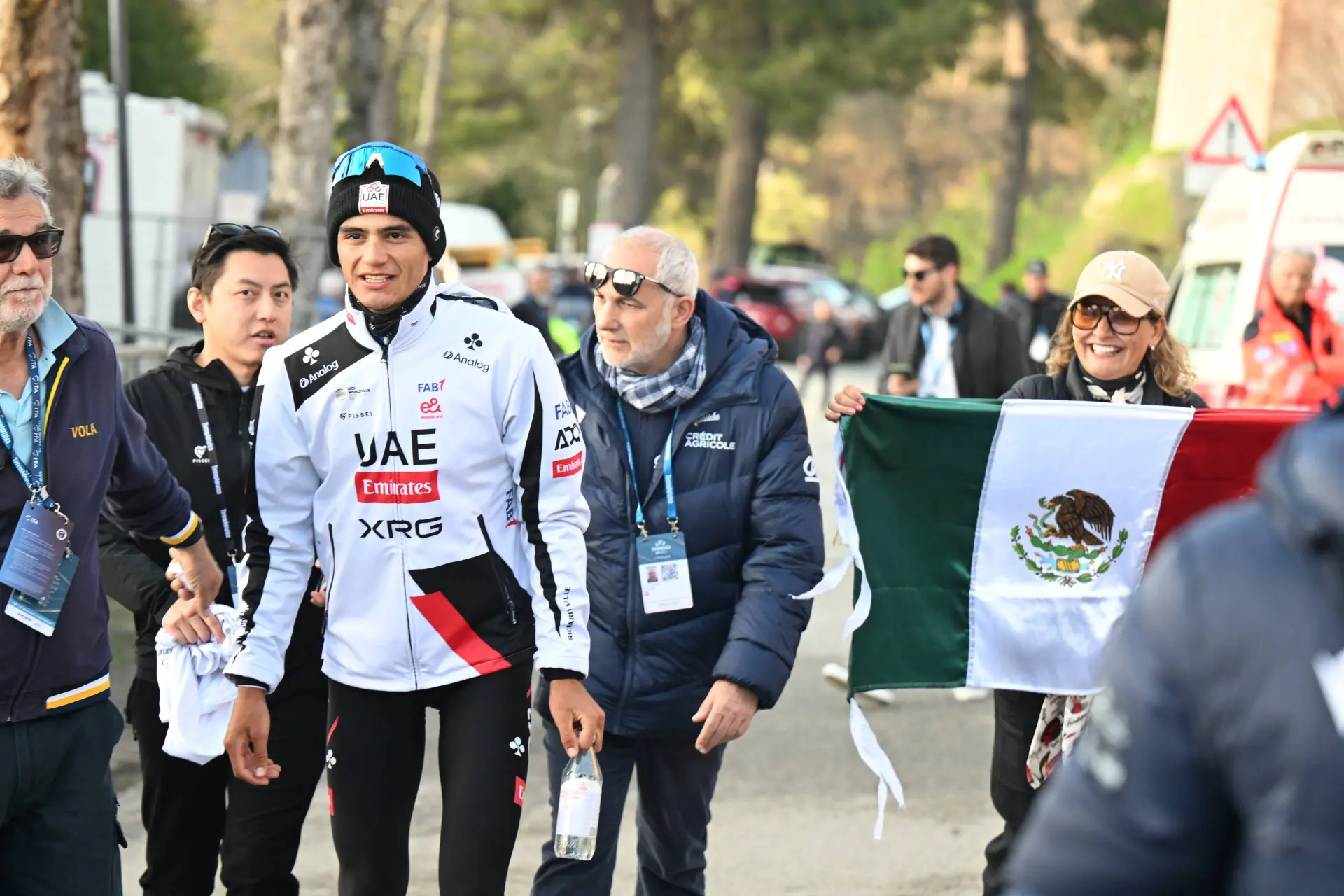
How the dispute began
Everything was triggered by changes pushed through by the federation, which initially proposed a refundable deposit of more than €8,000 as a guarantee against potential doping cases. The measure, widely opposed in the peloton, was eventually turned into a higher licence fee that doubled the cost.
Verona was among the most vocal critics of the process, questioning both substance and method. His discontent, part of a broader unease among riders based in Andorra, led him to distance himself from the federation’s management.

Carlos Verona, rider for Lidl-Trek.
UCI strengthens the federation’s hand
Far from allowing room for interpretation, the UCI has reaffirmed that the requirement to process a licence in the country of residence remains fully in force. In addition, the body has validated all licences already issued for the 2026 season, including those managed under the previous system.
The review also revealed that more than a dozen professionals residing in Andorra were not even registered with the local federation, a situation now under scrutiny following the international decision.
Case closed, message delivered
With this ruling, the UCI not only closes the controversy but also sends a direct message to the peloton: there is no leeway to choose where to take out a licence based on convenience.
For riders like Verona, the landscape changes entirely. The rule no longer admits interpretation: whoever lives in a country must compete under that country’s licence.
The UCI’s ruling marks a significant victory for smaller national federations. For years, the Andorran Cycling Federation provided a 'low-friction' environment for the world's elite, but as the population of pro riders in the principality swelled to over 100, the infrastructure and anti-doping costs became unsustainable under the old fee structure.
By backing the federation's right to double its fees and require anti-doping deposits, the UCI is signaling that pro riders can no longer treat their residency purely as a tax-saving exercise. They must contribute to the cycling ecosystem of the country where they actually train and live, regardless of the cost relative to their home nation.
UCI License Rule FAQ:
- Rule: License must match country of residence.
- Impacted Riders: Carlos Verona and ~12 other pros living in Andorra.
- Penalty for Non-Compliance: Potential suspension or invalidation of race results.
- Effective Date: Immediate/Enforced for the 2026 season.

Kieran WoodDeputy Editor-in-Chief
Kieran Wood is a sports journalist based in Wales and has been active in journalism since 2022. He regularly contributes to DartsNews.com and CyclingUpToDate.com, where he covers professional cycling and darts. In cycling, his work includes liveblogs from major races, including the Tour de France, the Giro d’Italia, and La Vuelta a España, alongside race reports and analysis. He has also conducted interviews with professional riders.
His reporting spans the full racing calendar, from one-day classics to stage races, with a focus on accurate, real-time coverage and clear contextual analysis. For statistics, results, and historical context, he regularly uses resources such as ProCyclingStats. To support reporting on rider activity and training context where relevant, he also references Strava.
In his work, Kieran places strong emphasis on careful sourcing, editorial accuracy, and updating articles as new, verified information becomes available.
claps 0visitors 0
Just in

Popular news
Latest comments
- Nothing. Against Pogi nothingabstractengineer18-10-2026
- He didn't even try to sprint all outvappaxbipmv18-10-2026
- Campenaerts looked like a rolling pumpkin with that all orange leaders skinsuit !frieders318-10-2026
- He can take his dumb a$$ politics somehwere else !frieders318-10-2026
- good to have her back. fingers crossed she‘ll be able to stay!Ketterechts17-10-2026
- A tenner and he wins the Tour next year, too 😂anonymouscyclist17-10-2026
- the answer is either stick to classics or GTs but not bothabstractengineer17-10-2026
- the exodus already stared with Ciccone. Already they were struggling with two sprinters, now there are three. Also Ganna will demand leadership. Gall is the most proven GC, Ayuso has the most potential. GC leadership for everybody will be impossible. Literally a UAE style mess without pogi.abstractengineer17-10-2026
- I raced as an amateur for 12 years, including six years on my country’s national road cycling team. I secured two national titles and competed in three World Championships plus more than 15 international stage races. At 23, we travelled to Italy for a training camp—or so I assumed. On a rest day, we watched a presentation about adopting a more “professional” training approach. It was crystal clear what “professional” meant. That moment first exposed me to this dilemma. After returning from Italy, I left cycling—at least at the competitive level I had known. Over the following two years, the whole team was caught doping. I hold that everyone is innocent until proven guilty. In my view, current stakeholders operate on a different scale, and the sums involved are vast. I am unsure whether any doping would ever be revealed. I try to stay positive and enjoy the show. My 2c.
 vannpelt17-10-2026
 - Fiver he wins 🤣
 leedorney17-10-2026
Loading
Write a comment