“This wasn’t part of the plan” - Former Giro d’Italia winner Richard Carapaz faces race against time as surgery just weeks before start threatens to derail Maglia Rosa bid
Cycling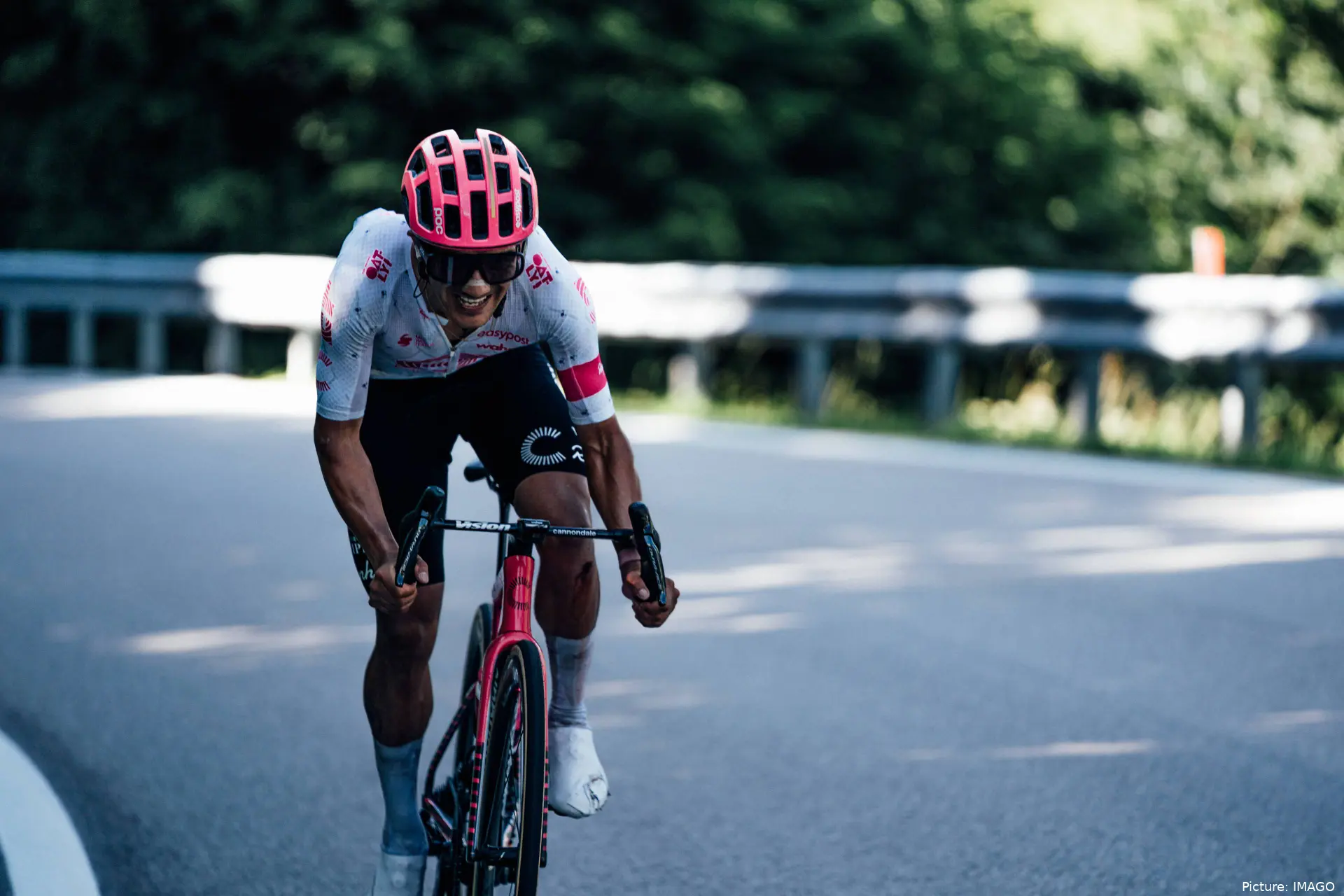
Richard Carapaz’s Giro d’Italia preparation has been thrown into uncertainty at the worst possible moment, with the Ecuadorian confirming he has undergone surgery just five weeks before the race he has built his season around.
The former winner, who returned to the podium as recently as last year, revealed the news himself, outlining both the timing of the procedure and the immediate shift in focus towards recovery ahead of the May start.
“It wasn’t part of the plan, but it was handled in the best possible way. Last night I underwent a procedure for a perineal condition. Everything went as expected and successfully. From today, I’m fully focused on recovery and getting back to my best level ahead of the Giro,” he captioned an image of himself in a hospital bed on Instagram.
A disrupted build-up at a critical moment
For Carapaz, the issue is not simply the operation itself, but when it arrives. The final weeks before a Grand Tour are typically reserved for sharpening form, locking in climbing condition, and fine-tuning race intensity. Instead, his preparation has been forced into a recovery phase, removing the opportunity to build momentum through racing or structured training blocks.
That shift comes on top of an already uneven start to his 2026 season. A delayed return to racing and a relatively quiet Volta a Catalunya campaign, where he finished tenth overall despite a more encouraging showing on the Queralt stage, had already left him playing catch-up compared to his rivals.
Now, with time lost at the most decisive point of his build-up, the challenge becomes not just reaching the start line, but doing so at a level capable of competing over three weeks.

Carapaz finished 3rd at the 2025 Giro
Giro ambitions under pressure after 2025 near miss
The timing carries added weight given Carapaz’s recent history at the race. Just twelve months ago, he was firmly in the fight for overall victory, ultimately finishing on the podium after a sustained battle that slipped away late on. That performance reinforced his status as one of the Giro’s most consistent contenders, adding to his breakthrough overall win earlier in his career.
It is that pedigree which makes this setback more significant. Carapaz is not targeting a stage win or opportunistic result, but a return to the top of the general classification against a field expected to include some of the strongest stage racers in the sport.
With rivals arriving off uninterrupted preparations and structured build-ups, even a small deficit in readiness can prove decisive across three weeks.
Carapaz’s focus is now entirely on compressing his recovery into the limited time available, with the aim of reaching the Giro at full capacity. Whether that proves achievable will define not just his race, but the trajectory of his entire season.


Kieran WoodDeputy Editor-in-Chief
Kieran Wood is a sports journalist based in Wales and has been active in journalism since 2022. He regularly contributes to DartsNews.com and CyclingUpToDate.com, where he covers professional cycling and darts. In cycling, his work includes liveblogs from major races, including the Tour de France, the Giro d’Italia, and La Vuelta a España, alongside race reports and analysis. He has also conducted interviews with professional riders.
His reporting spans the full racing calendar, from one-day classics to stage races, with a focus on accurate, real-time coverage and clear contextual analysis. For statistics, results, and historical context, he regularly uses resources such as ProCyclingStats. To support reporting on rider activity and training context where relevant, he also references Strava.
In his work, Kieran places strong emphasis on careful sourcing, editorial accuracy, and updating articles as new, verified information becomes available.
claps 2visitors 2
Just in

Popular news
Latest comments
- Pelizzaari is not Remco's domestiqueabstractengineer24-10-2026
- YetJumpyjohn24-10-2026
- Nibali got into the lead because he wanted the team car further forward in the caravan (I love this as a sign of tactical thinking). He solidified the lead on the rainy cobbles day when he was just brilliant, while other contenders crashed out on the wet roads. Strategic and skillful, yes, but the English roads weren’t as decisive as they might seem.RidesHills24-10-2026
- The Domedancy is the one designed for Seixas - anaerobic short climbs. Seixas isn't as good with the long climbs
 Rafionain-Glas24-10-2026
 - no i just type inivitable facts, nothing else. I wish UAE wasnt so damn good but hey the reality is they are. Visma on opposite direction crashing with no money and riders, coaches leaving mid contract ffs..i wish that wasnt the case but im not pretednig its not real when it is reality... RbH and Lidl i UAE cloesst opponents now thats clear. But if were real how can you stop that team with del toor and pogacar (greatest ever rider they made him) and you have mcnulty as a dom with (who would be captain in other teams and wins world and 10 more behind him..) history also says their the best team by far so what you want me to say? fake and be delusional and tell myself things? Its not a matter for praising anyone its a matter of beeing real nothing else, i wish visma for instance was better and like before but they cant buy any proper climbing guys cause their broke...heck they cant even keep their riders and coaches who flee mid contract what you want me to do lol.miguel24-10-2026
- Far as I recall, Nibali used the 2012 tdf UK stages to win it, most wanting to get them over with, cept he built his lead in them.. Armstrong's wrong, IF and it's an IF, the summers good in '27 like 26 then it'll be attritional.. if it's 'normal, then it'll be 50/50 on the weather, also the roads are VERY VERY narrow, very windng + on the 2nd steep short little climbs I know cause it goes thru my arse 👍
 leedorney24-10-2026
 - ❤️Lozza24-10-2026
- No, it's not about him crashing... he just won't win. Ad acta.PogiSloFans24-10-2026
- I'm always gutted to see the road season come to an end, but the excitement for cyclocross to kick off totally makes up for it.anonymouscyclist24-10-2026
- Nah, Pogi will Baby Hulk - "smash" - Remco. Ad acta !!!PogiSloFans24-10-2026
Loading
Write a comment