"They live each on their own": Expert discusses the tension between Dutch stars Demi Vollering and Anna van der Breggen
Cycling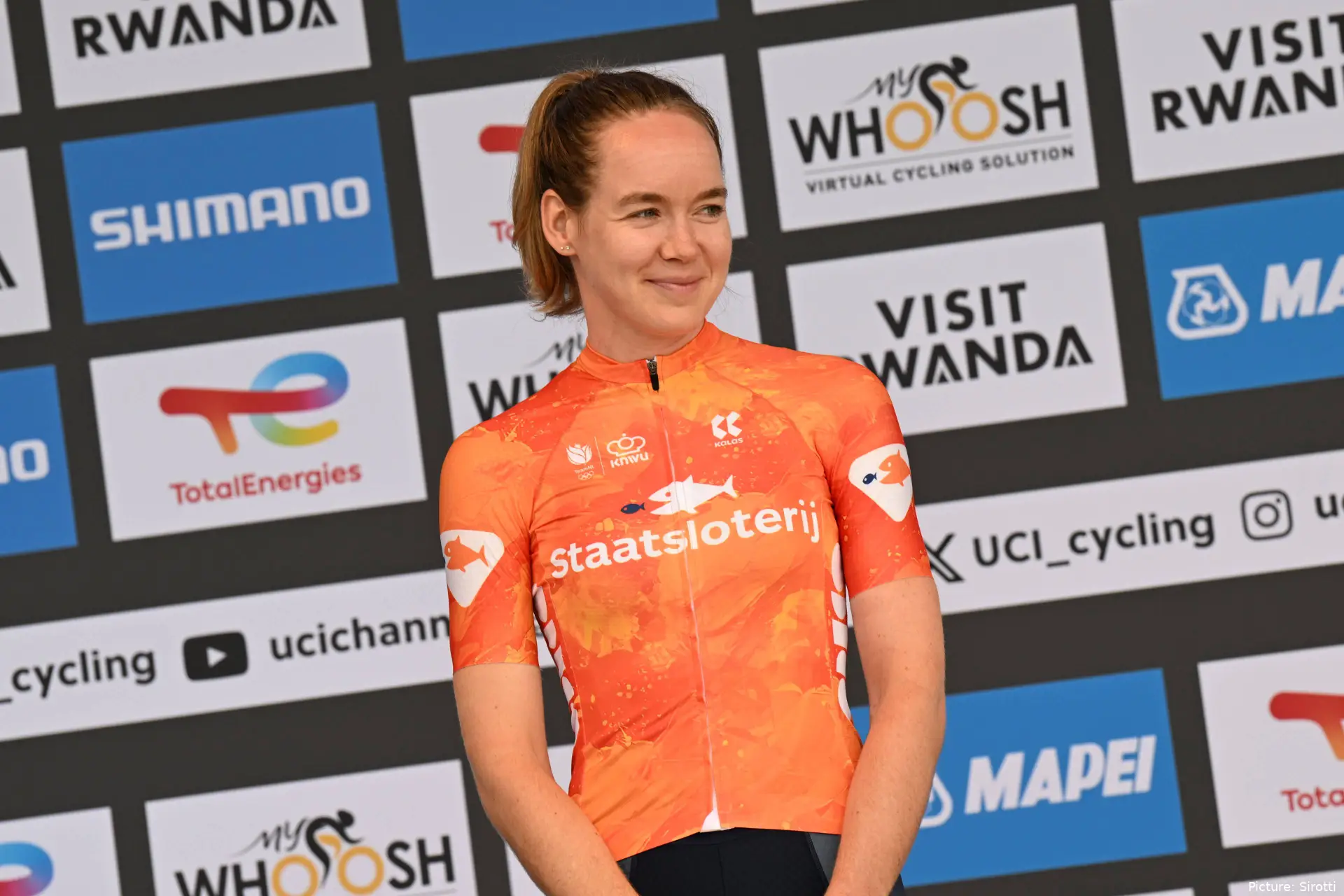
Last year's Road Cycling World Championships in Zurich was a turning point for the Netherlands women's national team. That event, along with the iconic blowout at the 2021 Tokyo Olympics, marked what many consider to be the Dutch squad's "worst moment" in its generally successful history.
In Zurich, Demi Vollering, one of the team's stars, rode practically alone, without the expected support of her teammates. That episode generated internal tensions that, although they are trying to be overcome, still resonate within the team.
Since then, the landscape has changed. Loes Gunnewijk, the coach who led the national team during that difficult period, was replaced by Laurens ten Dam, who, according to journalist and analyst Thijs Zonneveld, has made significant progress in improving the team's performance. However, Zonneveld admits that not everything has been positive and that the unity of the group is still far from perfect.
Anna van der Breggen and Demi Vollering, the two great team leaders, are not exactly best friends, and this distant relationship could be an obstacle on their way to world glory. According to Zonneveld, the two cyclists "live a little bit each on their own."

Although tensions do not overtly affect the team's performance, internal competition remains a key factor. Both have the same goal: to become world champions. And, in the process, frustration will be inevitable for those who fail to reach the goal.

Demi Vollering is the big Dutch star of the moment
Zonneveld stresses that, although improvements under Laurens ten Dam are evident, the riders have not been able to establish a close relationship outside of competition. Although there are work sessions and they have talked about their differences, the riders do not seek each other out of competition to iron out their differences or strengthen their bond.
"You don't see them having a beer together or trying to work out their differences," the analyst comments, adding that this estrangement is not unique to this cycle, but also occurred among the big names in Dutch women's cycling in the past, such as Anna van der Breggen and Annemiek van Vleuten.
A strong team, but with strategic shortcomings
The Netherlands team is still considered one of the strongest in the international peloton, but Zonneveld points out that there are key weaknesses that could jeopardize its chances of success. One of the team's main shortcomings is the lack of a reliable sprinter.
Although Vollering is fast, her sprint performance has been inconsistent, and she has recently lost several finals. This presents a major challenge in high-level racing, where the sprint can be a deciding factor. "If you meet a rider like Le Court in a mass finish, you can't leave it all up to the sprint," explains Zonneveld.
The absence of a rider like Marianne Vos (who stayed home due to family reasons), who could make the difference in this kind of situation, is another critical factor for the Netherlands. "With Vos in the team, the scenario would have been very different. But now they don't have her, and that changes the strategy."
Read also


Ondrej ZhasilCycling Journalist
Ondřej Zhasil is a cycling journalist at CyclingUpToDate and has been part of the team since 2023. He is based in Ostrava, the third-largest city in the Czech Republic, and covers professional cycling across the main UCI competitions, including the Tour de France, the Giro d’Italia, and La Vuelta a España. A key focus of his work is startlist analysis and pre-race coverage, where he examines team selections, rider line-ups, and tactical scenarios ahead of major events.
Alongside WorldTour coverage, Ondřej has developed specific expertise in junior cycling and in racing across East Asia, including competitions in China and Japan. He also maintains a broad working knowledge of other disciplines and levels, including cyclocross, while continuing to expand his understanding of mountain bike racing.
Ondřej holds a bachelor’s degree in Mathematics and Physics, which supports his analytical, data-driven approach to performance and race analysis. In his reporting, he regularly uses ProCyclingStats for results, statistics, and historical context. He places strong emphasis on careful sourcing, editorial accuracy, and updating articles promptly when new, verified information becomes available.
claps 5visitors 4
Just in


Popular news
Latest comments
- He is boring
 leedorney08-11-2026
- To Twoje przemyślenia te bla, bla :)
 Dariusz08-11-2026
- Uwielbiam patrzeć, jak wyjeżdża na czoło peletonu i zaczyna się rzeź...Dariusz08-11-2026
- Yeah, unreal.
 parisbound0008-11-2026
- there needs to be space in life for pointless comments!Ketterechts08-11-2026
- That is a very lazy way of putting it but so far on this website it seems like everyone is happy to look at everything lazily, even things that annoy them intensely. All they want to do is state their feeling and position but ask most to analyse a problem or come up with solutions or improvements and you’re stunned by silence. Nobody even really knows how this all happens. It’s very simple and quick to just say the UCI did it but I bet you they didn’t, I bet you not more than 2 people were involved, more likely just 1. The UCI may be ultimately responsible but it is not their decision, this is about hierarchy, power and delegation. The fact that protest is possible also means it isn’t over and that MORE people could get involved for a thorough review which could throw up anything. It is highly likely it was a sole commissar who decided and has that power in a first round. Therein might lie the problem the UCI has to consider, is it acceptable to give so much authority to one single person when it is quite possible for them to have a natural bias or be too easily susceptible to imposed bias. Who is to say an individual in this position isn’t susceptible to collaboration with outside players with interests in the results, nations, families, teams, betting companies, etc. On the one hand we have sports where these problems have been worked on way more to reduce such problems, on the other hand we have sports with far stricter and more draconian rules not even concerning safety or obstruction that nobody really questions like false starts or stepping out of lane or zones in athletics. If cycling hastowork on itself, it would be good if protagonists (all kinds) would start doing a little more than just moaning over outcomes.Jumpyjohn08-11-2026
- Yes, so why not make comments less pointless?Jumpyjohn08-11-2026
- What a race! I didn't expect Vanthourenhout to collapse like that, and Wyseure did take the fight to Nys, but there was no doubt at the end. I also wonder what Aubin Sparfel would be capable of were he to race in the elites now. In the U23 ranks he is making good work of Giel Lejeune, who himself is among the better riders in the elites, and a top 10 contender in the big races (3rd at Kleebergcross, 8th at Berencross and 5th at Heerderstrand). In the French Cup, Sparfel is significantly better than Romain Debord (8th at Koppenbergcross and 10th at the Euros) and Rémi Lelandais (12th at Koppenbergcross and 19th at the Euros).
 Rafionain-Glas08-11-2026
- There really was nothing in it. Schreiber was so much faster, and Brand was fighting to stay in the wheel in the sprint. Schreiber did move a bit, but to say she closed the door doesn't make sense because Brand couldn't enter it anyway, abd she wasn't impeded.Rafionain-Glas08-11-2026
- He should have been allowed to go to Movistar. Right now both arent a good fit for each other and are just wasting each other's time and effortabstractengineer08-11-2026
Loading
7 Comments