"These gains are enormous" - New research shows how riders can gain huge advantage by team car choice in time trials
Cycling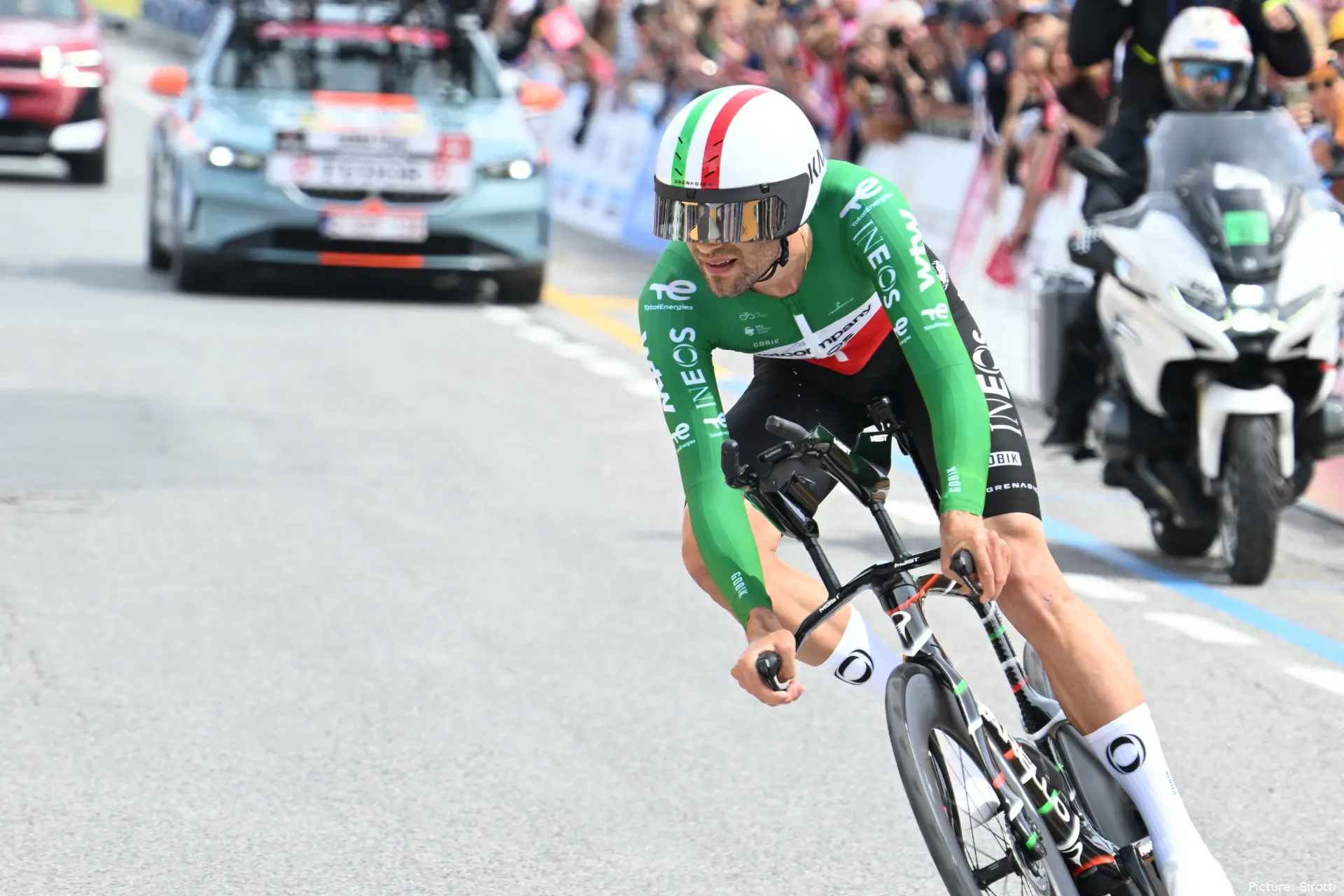
As riders approach a crucial time trial in the 2026 Tour de France, new research has shown that riders can gain huge amounts in aerodynamics solely based on the team car behind them in the race against the clock.
In 2023, the UCI, cycling's world governing body, extended the minimum distance between rider and following car in individual time trials from 10 to 25 metres, with some fans wondering what exactly is the reason for such a move.
As it turns out, riders stand to gain measurably by having their team car closer to them during the time trial, while factors such as the shape and size of the car and bikes on the roof also have unexpected aerodynamic gains.
Led by Heriot-Watt University in Scotland, in partnership with Ansys, part of Synopsys, the study confirms the importance of team car selection for the time trial.
"When a cyclist rides, they create an area of overpressure in front of them that holds them back, and an area of suction behind them that pulls them back, causing resistance," Professor Bert Blocken, Head of the Aerospace Engineering Cluster in the School of Engineering and Physical Sciences at Heriot-Watt University, said:
"But a car creates the same effect on a much larger scale. It pushes a big bubble of overpressure ahead of it, and when the car drives close behind a cyclist, that bubble partly cancels out the suction behind the rider, providing the cyclist with a meaningful boost."
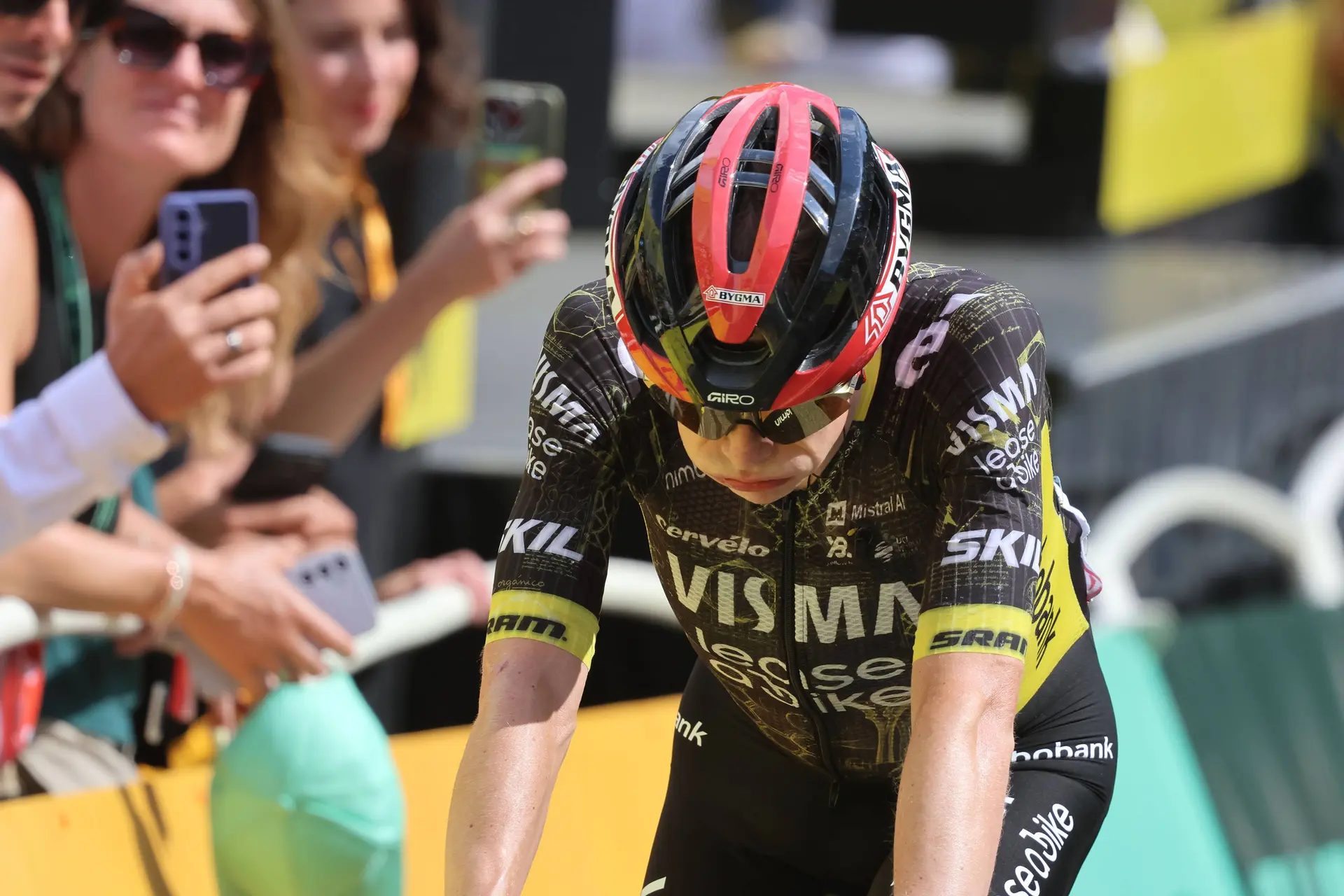
Team car can boost riders during time trial
"At a distance of just one metre, a rider's aerodynamic resistance drops by almost 14 per cent, which is massive."
In essence, a car behind the rider during the time trial gives them a small but measurable push. Although marginal, the exact benefits can be measured in seconds during a time trial, and at the highest level, can be the difference between winning and losing.
Prof. Blocken added: “The benefit falls away quickly as the distance grows, but it never reaches zero, not at 10 metres, not even at 30.
"You might say these are small numbers, but elite time trials are sometimes decided by a tenth of a second, or even a hundredth. In that context, these gains are enormous. They could determine who wins the Tour de France time trial."
A second study by the team, in 2024, showed that stacking multiple bicycles on a team car's roof increases the push effect further, prompting the UCI to limit teams from exaggerating the amount of spare bikes they carry.
The researchers found the benefit a rider receives depends on only two factors, the distance between the rider and the car, and a single number describing the car's aerodynamics, its drag area, known as CdA.
The bigger and more blunt the car - the larger gains for the rider
The CdA is a measure of the size and streamlining of the car: the bigger and more blunt the vehicle, the higher its CdA, and the bigger the push it gives the rider ahead.
Professor Blocken added: "There is a very simple way for the UCI to avoid too large unwanted benefits. First, impose a maximum CdA value for team cars, so no team can gain an excessive advantage simply by choosing a bulkier, less aerodynamic vehicle.
Read also
“And second, enforce the following distance, ideally the cars would be 40 or 50 metres back, but at the very least the existing 25-metre rule should be enforced by visual inspection until measurement technology is in place. The rules should simply be changed, and then we are done with it."
Dr Frédéric Grappe, Head of Performance of the French cycling team Groupama-FDJ United, offered a team's perspective on the research: “A car indeed has the capacity to push a certain volume of air forwards in the direction of the cyclist during the time trial, so it gives him an aero advantage.
"As Prof. Bert Blocken’s new study shows, taking the shape of the car into account is of paramount importance to provide unfair aerodynamic benefits.”

Gavin QuinnCycling Journalist
Gavin Quinn is a cycling journalist and ultra-distance cyclist with a BA in Journalism from Dublin City University. Formerly the Press & Communications Officer for Cycling Ireland, Gavin has worked inside the national team at the World Championships and has reported for the Irish Mirror, Mirror UK, and The42.
His expertise is backed by elite-level access, having interviewed stars like Sam Bennett and Ben Healy, as well as immense personal endurance. In 2025, he completed a 12,000km solo cycle from Ireland to Vietnam, following a 4,600km tour across Europe. From the cobbles of Paris-Roubaix to the gradients of the Tourmalet, Gavin’s writing focuses on the "romance and brutality" of the sport. Having visited 50+ countries, he brings a global, cultural perspective to his coverage of the pro peloton for CyclingUpToDate.
claps 0visitors 0
Just in
Popular news
Latest comments
- Good luck with that. Pogacar is the best ever and UAE best team ever. I understand why organisors try but its impossible they are to good and the combo is insane.miguel23-10-2026
- show me where he hasn't won. Tadej has won 16 individual TTs. been on the podium for 30 TTs. To say he can't TT is a joke - he won the TdF on a TT against Primoz! And Primoz is a great time trialist including the current Euro champion. So he has competed in 55 TTs. Won 16, podium 30. Those are insane stats. If he spends anytime on his TT bike he will be fine. The rest??? He won the sprinter's monument (MSR), Liege, Flanders, and more. He has contested the sprint in the final stage of the TdF. Podium Roubaix, all flat race. I'm not trying to be a fanboy, I'm stating facts.mij23-10-2026
- I predicted months ago Roglic would sign with Visma. It may not work out however the advantages are Visma need another climber since Yates retired, he's another potential threat to Pogi, his signing would probably be for 2 years giving Visma time to get another climber or two. Also, Roglic knows the Vista system, Visma needs a team leader for the other stage races Jonas doesn't ride and sentimentally, I believe, he would want to finish his career there. Of course, it remains to be seen if he signs.Paggss23-10-2026
- This speculation is all so amusing, because it's noise before the storm. We don't know how Pogačar will recover from his crash. We don't know how much he'll train for this time trial. We can't use the last week of this Tour because he was so far ahead that he didn't bother attacking more and instead ensured del Toro's podium (a sign of his absolute control of the race). Similarly, we don't know how Evenepoel will climb after smashing the TT. We don't know how much better he can get at time trialing, though this should give him new motivation to get even better (which is scary). So, sure, go ahead, publish a bunch of articles about all the predications, but I'm going to wait until the race to actually watch. Until then, it's fun speculation but not much more.RidesHills23-10-2026
- If Remco wants to take 2 minutes out of Pogi he better hope Pogi uses one leg...Paggss23-10-2026
- And Prudhomme can sh** his pants after Pogi-Baby Hulk "tears" everyone apart.PogiSloFans23-10-2026
- It's all about stopping Pogi. If Pogi was French the TDF would be very different. But in the end game, Pogi doesn't give a sh**... he's gonna win anyway. Ad acta!!!PogiSloFans23-10-2026
- I second your comment. I completely agree with your statement and opinion. @frieder and other foolish commentators don't.PogiSloFans23-10-2026
- Cyclinguptodate: Evenepoel finished the 2026 Tour 6:26 behind Pogacar, winning both the individual time trial and a mountain stage against the Slovenian and his UAE Team Emirates – XRG teammate Isaac del Toro!?!? That's just not true. Yes, Remco won both TT's and the "mountain stage"? But really? Yes, officially he won the mountain stage, but we all know why, don't we? If Pogi had gone his own tempo, he could just say "Hey Remco, see you in the douches." But Pogi went Del Toro's tempo. Del Toro said to him during the race: "Don't leave me behind." ... That's the only reason Remco won... capish?PogiSloFans23-10-2026
- My prediction for R.ev.no.balls is DNF TDFabstractengineer23-10-2026
Loading
Write a comment