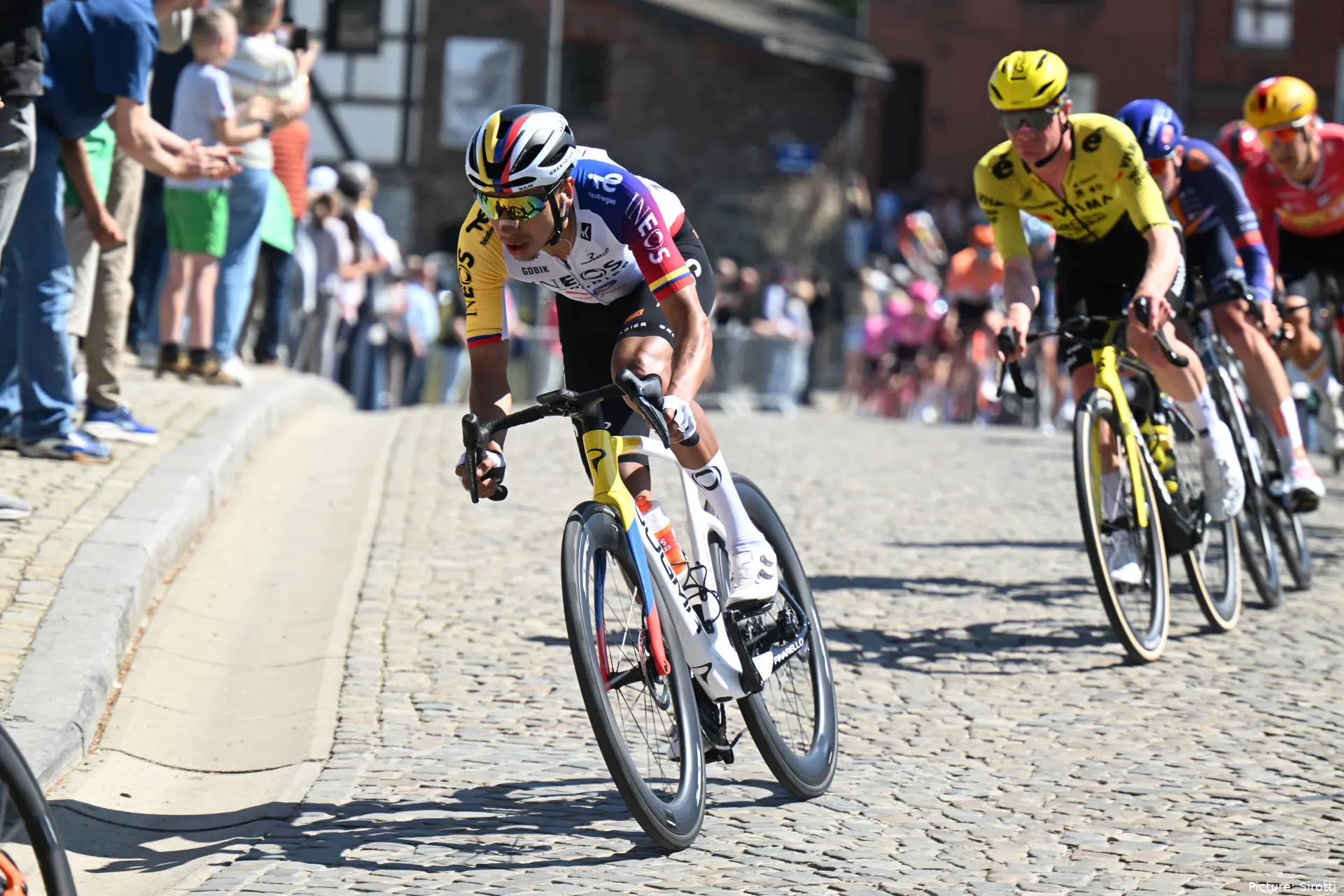
Egan Bernal tried, at first, to let his legs speak for him in the Tour of the Alps. A quiet nod here, a tired gesture there, the Colombian was reluctant to lean into the growing narrative that was forming around him. But by the end of the week, his performances had already said more than any words could have.
In the high mountains, Bernal looked composed, measured, and increasingly competitive. After guiding Thymen Arensman to a strong result midweek, he backed it up with a podium finish on a stage and, more importantly, a second place overall behind Giulio Pellizzari. It was not a victory, but it felt significant.
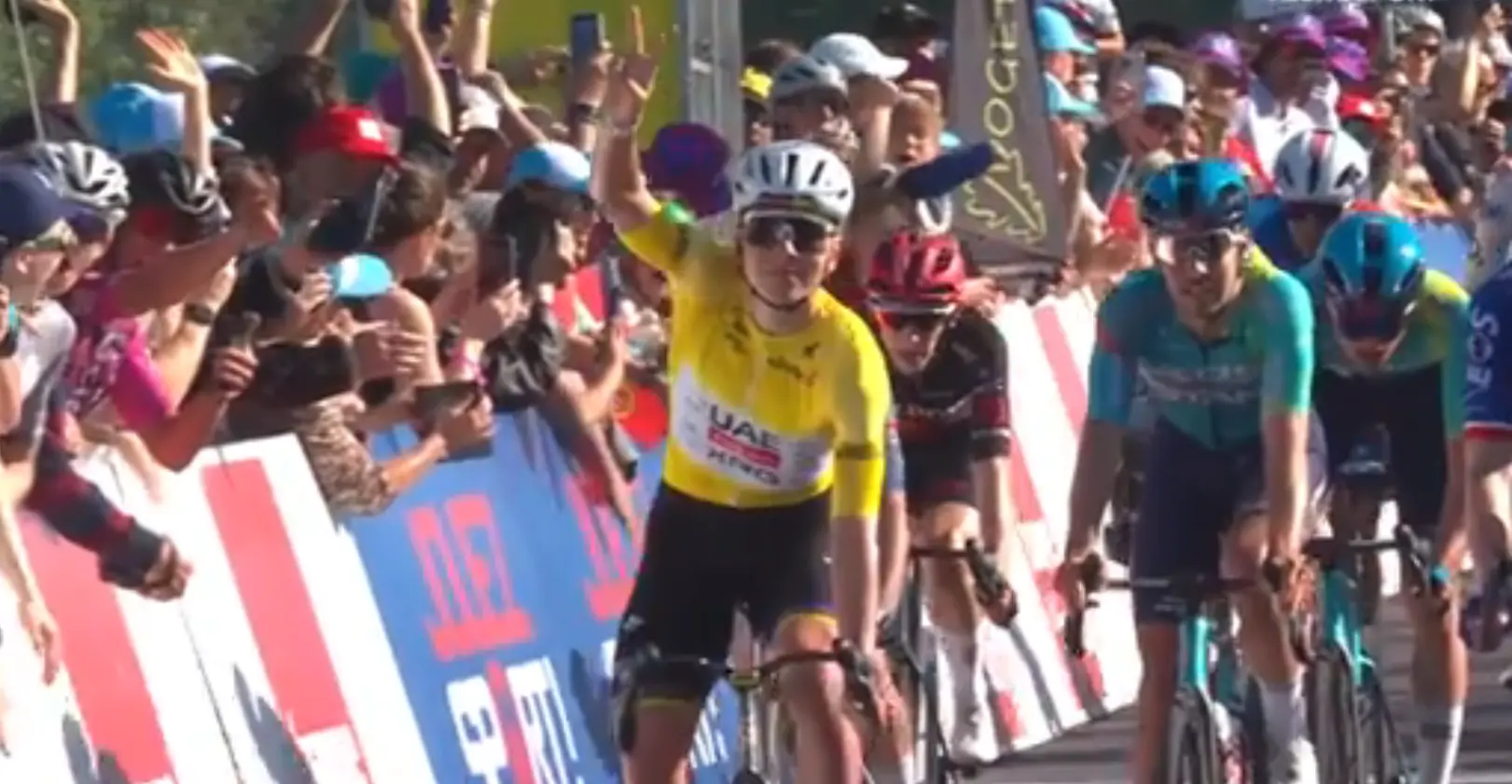
The final stage told the clearest story. Bernal could not follow Pellizzari on the decisive slopes, but he was unmistakably the strongest among the chasers, winning the sprint in Bolzano and confirming that his condition is trending in the right direction ahead of the Giro d’Italia.
“To be honest, I didn’t have any expectations, so I was prepared for everything – whether that was to be in the gruppetto or to be fighting for the GC,” Bernal said to Domestique.
His caution is understandable. The 2026 season has already forced him to reset more than once. After starting brightly in Colombia, where he defended his national title, his European return was interrupted by a knee issue that wiped out a key block of races. Three weeks off the bike followed, and with them, uncertainty.
Instead of chasing form in competition, Bernal returned home. At altitude, in the familiar terrain of Cundinamarca, he rebuilt quietly. It is a pattern that has defined much of his career, especially in the years since his devastating crash in 2022.
Back then, his future in the sport was in doubt. The injuries were severe, life-threatening even, and the path back to the peloton was anything but guaranteed. When he did return, the results were modest at best. Grand Tours came and went without impact, and expectations were gradually lowered.
But Bernal never abandoned the long-term view.
“I’ve been a pro for 10 or 11 years now, and I have learned that you need to trust in the process,” he explained. “I’ve been through big injuries and big periods of bad luck, and one race, whether it’s bad or good, doesn’t change the preparation for the big goal. Even before the season started, my focus was the Giro and that’s still the case.”
There have been signs of progress. In 2025, he returned to the Giro with intent, showing flashes of his former self, particularly on gravel, before finishing inside the top ten. Later that season, he claimed an emotional stage win at the Vuelta a España, his first victory outside Colombia since his 2021 Giro triumph.
Still, the question lingers. Can he truly return to the level that once made him a Grand Tour winner?
Even Bernal himself remains measured.
“It means I’m good, but the Giro is something different,” he said after the final stage in the Alps. “It gives me a bit of confidence, but the Giro is the Giro. They’re two different races.”
That realism is shared within the peloton. Those who saw his struggles up close understand both the scale of his comeback and the difficulty of the challenge ahead.
“He didn’t just risk losing his career with that crash, he risked being able to lead a normal life,” said Matteo Tosatto. “So to come back and do what he’s done is already amazing. If he goes on to do more, I’d only be happy for him.”
At Ineos Grenadiers, the approach to the Giro will be pragmatic. Bernal will share leadership with Arensman, giving the team tactical flexibility against what appears to be a dominant favourite in Jonas Vingegaard.
Internally, there is belief that this dual leadership could be a strength, particularly in a race that often rewards opportunism as much as raw climbing power.
Bernal, though, is focused on something simpler.
Read also
“I think I’m better than I was this time last year, but that the Giro is a different race,” he said. “The important thing is to be good in the last week of the Giro.”
That final week will ultimately define his race, and perhaps his comeback narrative as well. Five years removed from his Giro victory, and four years after a crash that nearly ended everything, Bernal is once again approaching the start line with cautious optimism.
Whether that will be enough to challenge Vingegaard remains uncertain. But the trajectory is clear, and for now, that might be the most important victory of all.
Carlos Silva is a writer for CyclingUpToDate.com, where he contributes race reports, interviews, analysis pieces, and live coverage of the international cycling calendar. Holding a degree in Sports from the Jean Piaget Institute, he combines academic knowledge of performance, training, and competition with hands-on journalism experience in professional cycling.
Throughout his career, Carlos has conducted interviews with leading figures in the sport, including Alberto Contador, Joaquim Rodríguez, Óscar Pereiro, João Almeida, Isaac del Toro, Derek Gee, John Degenkolb and Geraint Thomas. These conversations reflect direct engagement with Grand Tour winners, Classics specialists, and emerging talents.
He has provided on-site coverage at major events ranging from the Vuelta a España to the Tour de France, alongside stage races such as Vuelta a Andalucía, Volta ao Algarve, Volta a Portugal and O Gran Camiño. Covering the mythical climbs of the Giro d'Italia remains one of his professional ambitions.
Carlos is responsible for liveblog coverage of all major WorldTour races and beyond, including the Tour de France, Giro d'Italia and Vuelta a España. His reporting integrates verified data from ProCyclingStats to ensure statistical accuracy, contextual depth, and analytical precision.
A lifelong cycling enthusiast, he approaches storytelling across written, photographic, and video formats with a focus on credibility, tactical insight, and informed race interpretation.
claps 1visitors 1
Just in
Popular news
Latest comments
- Rather than me describing the technology at length on here, If you google. Line-scan cameras. They are also sometimes called Slit-Scan cameras. Either search will fill you in. You can read all about how they. work. Enjoy! Just to be clear the cyclist is saying he wants to see exactly where the digital finish line is in relation to the actual physical finish. At this point we only have the word of the authority that the digital line corresponds to the exact starting edge of the physical finish line. That seems like a reasonable request to me.Prorodsandstuff11-10-2026
- 100% @Jumpyjohn, good point well raised.anonymouscyclist11-10-2026
- The media keep stirring the soup.. or spitting in it
 leedorney11-10-2026
 - Yes, he has won many races... second class races. He isn't the real deal... Seixas is the real deal. Capish?PogiSloFans11-10-2026
- What are you talking about? I'm not the one you guys are spitting on. I'm a Slovenian Pogi fan, that's all... the guy you're talking about is a Croation Ustasha. Capish?PogiSloFans11-10-2026
- It would be epic if Seixas came to UAE. 3/4 of the commentators on this site would stop watching cycling... ha ha ha ha ha ha...PogiSloFans11-10-2026
- UAE's problem is Seixas wants to beat Tadej.Renz11-10-2026
- You are blinded by your infatuation with Pogi. IdT has done crazy good stuff. One of the strongest ever first three years in the peloton. poor showing in his last couple of races btu I don't think he is quite washed up yetmobk11-10-2026
- Absolutely not. The guy has finished so many races 2nd to Pogi so absolutely not a shocker that when Pogi isn't there he wins a fewmobk11-10-2026
- GOATmij11-10-2026
Loading
Write a comment