The first AI-powered pro cyclist? American Olympic Champion Kristen Faulkner turns the page on cycling's tradition
Cycling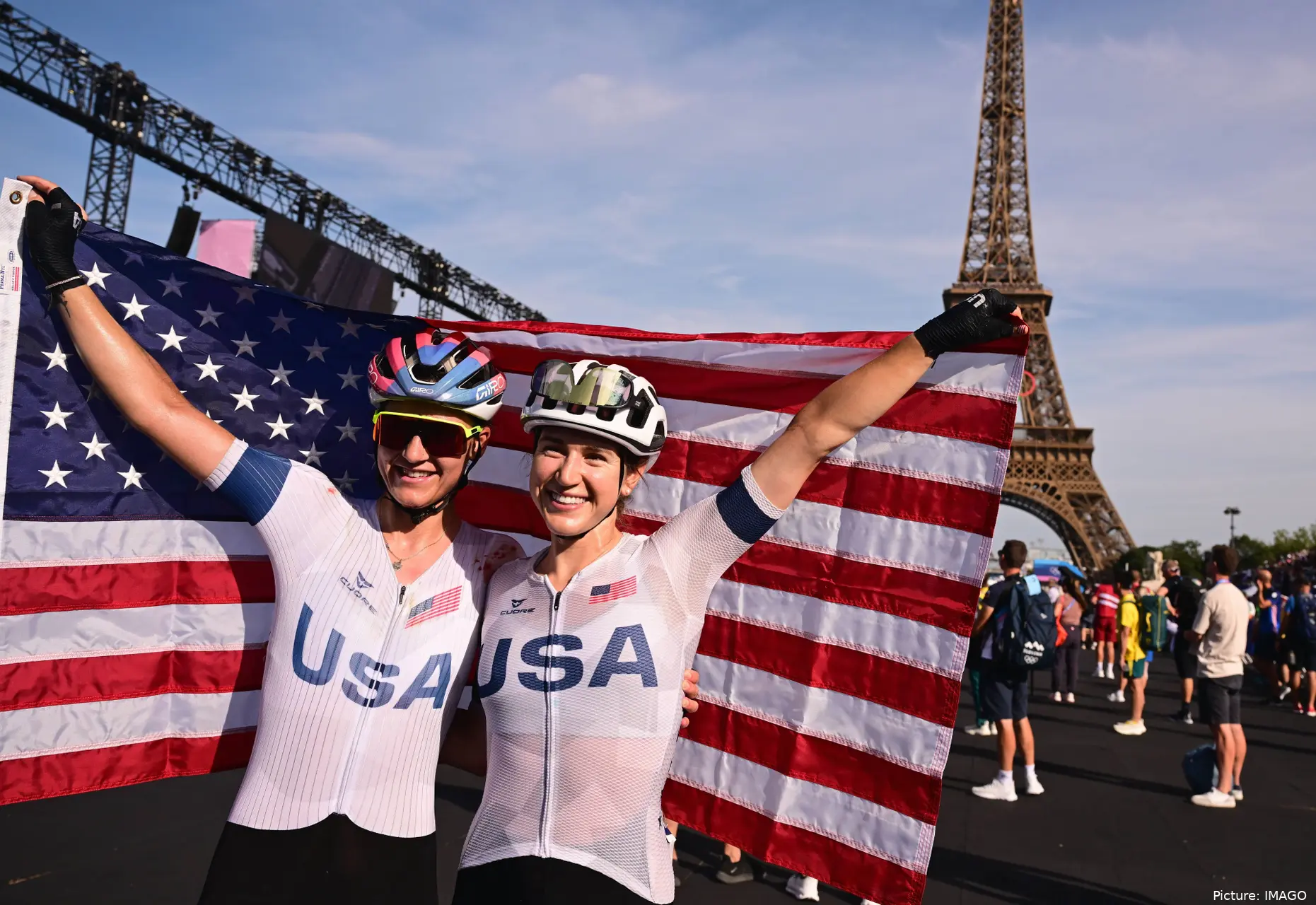
Over the past few years, the increasing use of Artificial Intelligence has been at the forefront of many of the world's most important topics. Its use can bring benefit across a whole spectrum of activities and one of them can potentially be training for pro cyclists. Olympic Champion Kristen Faulkner has written about how she is performing at her absolute best level ever since building her own app.
"The research I needed about my own body did not exist. So I built it with AI. For the last two months, I've been coding whenever I’m not training. 10+ hours a day," Faulkner wrote on a LinkedIn post. "My training data open in front of me. I have a lot of questions I want to answer and a lot of data to synthesize".
The 33-year old won the USA national championships back in 2024 and then backed that up with a victory in the Olympic Games Road Race in Paris. She has done this with success but over time has had a few seasons in which she couldn't be consistent. That was the case with 2025 as well, in which she defended her North American title however couldn't perform when in Europe.
In 2026, she has gotten a new spike in motivation. "When I spent my winter in SF (San Francisco, ed.) and watched the AI boom up close, I wanted to build again," she explains. "So little performance research is done on women, particularly regarding the needs of elite female athletes. So I took matters into my own hands, and I started writing the research myself. I did not want to keep waiting for someone else to study the questions that matter to my body".
How is Faulkner using AI to evolve?
Humans are not machines and so there is an infinite amount of variables to one's body and how to make it more efficient to the specifics of the sport. It is a job that is difficult to handle and balance out with personal life, and one which the 28-year old is looking to work through better.
"For nine years, I collected biometric data that I struggled to synthesize. Heart rate. HRV. Sleep. Weight. Power. Temperature. Training load. Menstrual cycle phases. Bloodwork. DEXA scans. Every app gave me one piece of the story, but the answer was never in one app. It was in how it all interacted. So I built a system that pulls in the data sources I actually use as an athlete," she added. "And runs them against 4,400 hours of my own training history. It does not just show me dashboards. It builds personal models of my physiology".
"Every model is trained on my body. Every finding is specific to my history. And every output is actionable, not just interesting. I used this to help me prepare for the Pan Am Championships, where I won 3 gold medals this year. Today, I produced my best 20-minute power ever with training help from this app. AI is going to change women’s performance research from the bottom up, and I want to be a part of it".
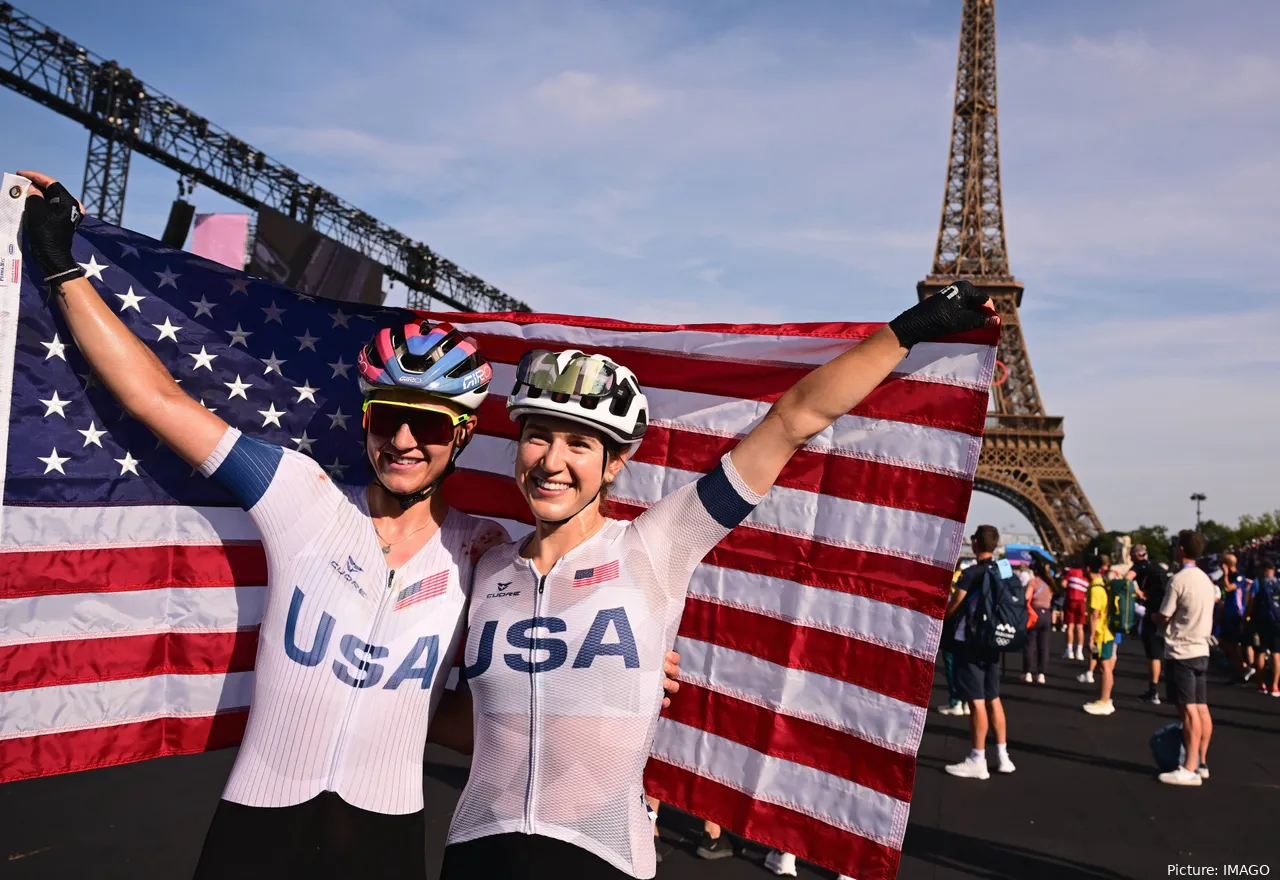
Kristen Faulkner won the 2024 Olympic Games road race in Paris
Faulkner combined racing on the road with track, something which is not too uncommon in American cycling, and hopes to bring out the success in both disciplines. With the field's quality growing further and further, she is using her own knowledge and weapons to continue improving on the bike and remain as competitive as possible.
"I studied computer science at Harvard. I worked in venture capital. I actively invest in AI companies. I race on the Women’s WorldTour. I am training to defend Olympic gold on home soil in LA 2028. I’ve applied all of that knowledge to building this".
"I came into cycling late. I did not win because I had the deepest race history or the most experience. I won because I used my brain as much as I could". Now, she is trying to do it in a different form. "Before my first European race, I made flashcards of the riders, I studied every corner of every course, and I analyzed my data rigorously. I am doing the same thing now, with AI".
Rúben SilvaEditor-in-Chief
A founding contributor to CyclingUpToDate since its launch in January 2022, Ruben Silva has played a central role in shaping the site’s editorial direction and long-term growth. Before joining the project, he built his experience through independent blogging at Echelons Hub and by producing race previews for Ciclismo Internacional, developing a strong analytical voice rooted in daily engagement with professional cycling.
Beyond editorial work, he has been closely involved in the expansion and coordination of CyclingUpToDate’s wider network, helping establish and support sister platforms across multiple languages. This includes ongoing collaboration with CiclismoAlDia (Spanish), CiclismoAtual (Portuguese), WielrennenUpToDate (Dutch), and RadsportAktuell (German), contributing to a shared editorial vision and consistent international coverage.
He also helps oversee editorial governance across the network, setting standards for accuracy and consistency and coordinating updates or corrections when needed.
Originally from the Porto metropolitan area in Portugal, he holds a bachelor’s degree in Geography. His path into cycling journalism was shaped not through formal media training, but through independent reporting, community engagement, and sustained on-the-ground involvement in the sport.
Over the course of his career, he has conducted approximately 100 interviews across road cycling and cyclocross, ranging from one-to-one conversations and online formats to press conferences and on-site pre- and post-race coverage. His interviews include leading riders, team managers, and prominent figures within cycling media: Tadej Pogacar, Jonas Vingegaard, Mathieu van der Poel, Primoz Roglic, Wout van Aert, Joao Almeida and Tom Pidcock; managers like Patrick Lefevere and Joxean Matxin; and YouTube personality Bryan Kennedy (BKXC)...
Within 18 months of launch, he helped grow CyclingUpToDate’s English-language platform into one of the most-read cycling news websites, built entirely from the ground up. As both a professional journalist and lifelong cycling enthusiast, his focus remains on delivering accurate, timely, and well-contextualized coverage.
claps 0visitors 0
Just in

Popular news
Latest comments
- FYI. Pogi made his World Tour debut at the TDU in 2019. I remember it well because someone said watch out for Pogi as he did a good time up Corkscrew during training. Who would have thought he'd end up as the GOAT.Santiago25-10-2026
- FYI. Pogi's first World Tour race was at the TDU in 2019. I remember it well because someone said watch out for Pogi as he did a good time up Corkscrew during training. Who would have thought he end up as the GOAT.Santiago25-10-2026
- 50 million isnt low. But if you hire super domestiques for a million and 3rd rung leaders for 3-5 million, natural you dont have money left not the results expected. Most monuments and TDF are out of reach due to Pogi. But there were a promising 2nd rung leaders on the market and they went for broke to get Onley and Kevin. I put their entire troubles due to mismanagementabstractengineer25-10-2026
- I think it’s becoming clear that cycling got way ahead of itself for a few reasons and is now coming to the realisation that some rider salaries just exploded without justification and it snowballed until sponsors started pulling money out because THEY did not see any return on increased costs. Cycling is still a dying sport (that never moved out of the niche family) and will remain so if it doesn’t embrace and promote new ventures or manage to attract new markets. Even within cycling, fans are basically compartimentalised, (almost nobody here follows track for example), and the multiplication of possibilities hasn’t grown the sport, it has just split it into a larger number of smaller branches. If it weren’t for nation state sponsors (far too numerous already) other teams would never have (had to resort to) raised bigger budgets that are now leading to sponsor abandonment. That’s the difference between long-term steady growth and financial doping, the latter can also just blow up in your face. I will venture to wager that apart from one or two exceptional cases, rider salaries will no longer go up and are quite likely to actually drop over the next decade.Jumpyjohn25-10-2026
- You know you can post all this on idlprocycling too with your account(s) don’t you? There’s a whole bunch more articles and people there to inform.Jumpyjohn25-10-2026
- That’s the kind of word my foreign grandma would have rendered fashionable again, like flabbergasted (at her time) ;-) Perhaps he should get a pro to fill out his papers and pack his bag too, customs have become keen on controlling anyone from the balkans.Jumpyjohn25-10-2026
- Alternatively, just call Rod StewardJumpyjohn25-10-2026
- I will be in Adelaide in a shot if Pogi comes to the Tour Down Under. Fingers and toes crossed that this will eventuate, he has just got to remember to stay aware of kangaroo’s, as Jay Vine can attest to. Though can’t be any worse than some of the passionate fans in EuropeSearider25-10-2026
- "The Spaniard also highlighted Florian Lipowitz, third in the recent World Championship time trial, as a rider to watch as he continues to gain experience." Please stop the AI slop
 Rafionain-Glas24-10-2026
 - I think it's great! Now there's a real reason forcing the people-who-don't-fix-the-potholes to fix the potholes... or notRafionain-Glas24-10-2026
Loading
Write a comment