"That’s not sitting on a bike, that’s hanging on a bike!" - Cian Uijtdebroeks continues Vuelta with a fractured ankle
Cycling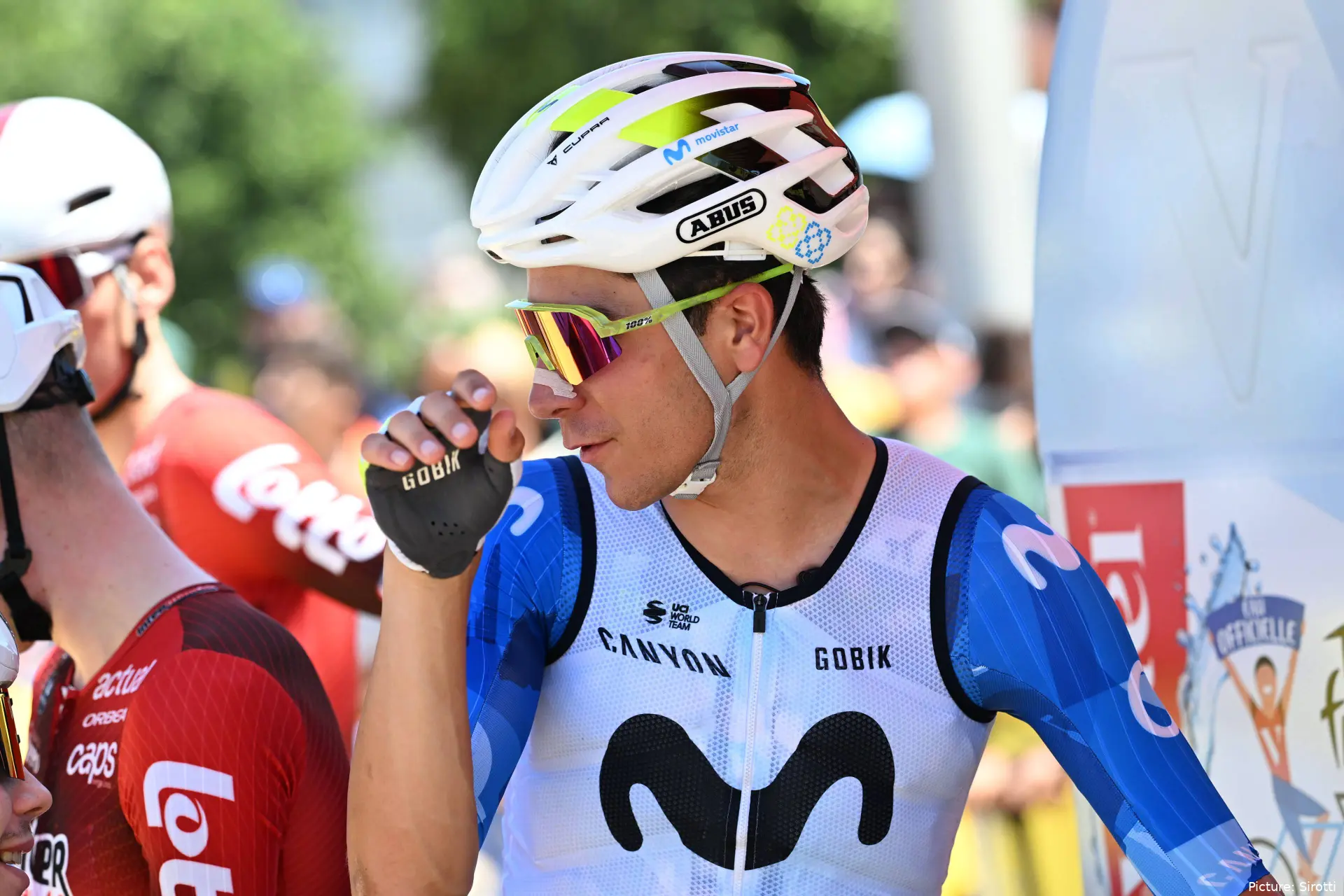
Cian Uijtdebroeks turned fourth stage of 2026 Vuelta a Espana into a true survival test. The Movistar Team rider faced the race’s first major mountain stage with a small fracture in his left ankle, confirmed by doctors after his crash on Stage 2.
The Belgian had been cleared to continue despite the injury, but any doubts about his ability to handle high-mountain intensity vanished in the opening kilometres. The start in Andorra la Vella, on his usual training roads, became an endless fight against pain.
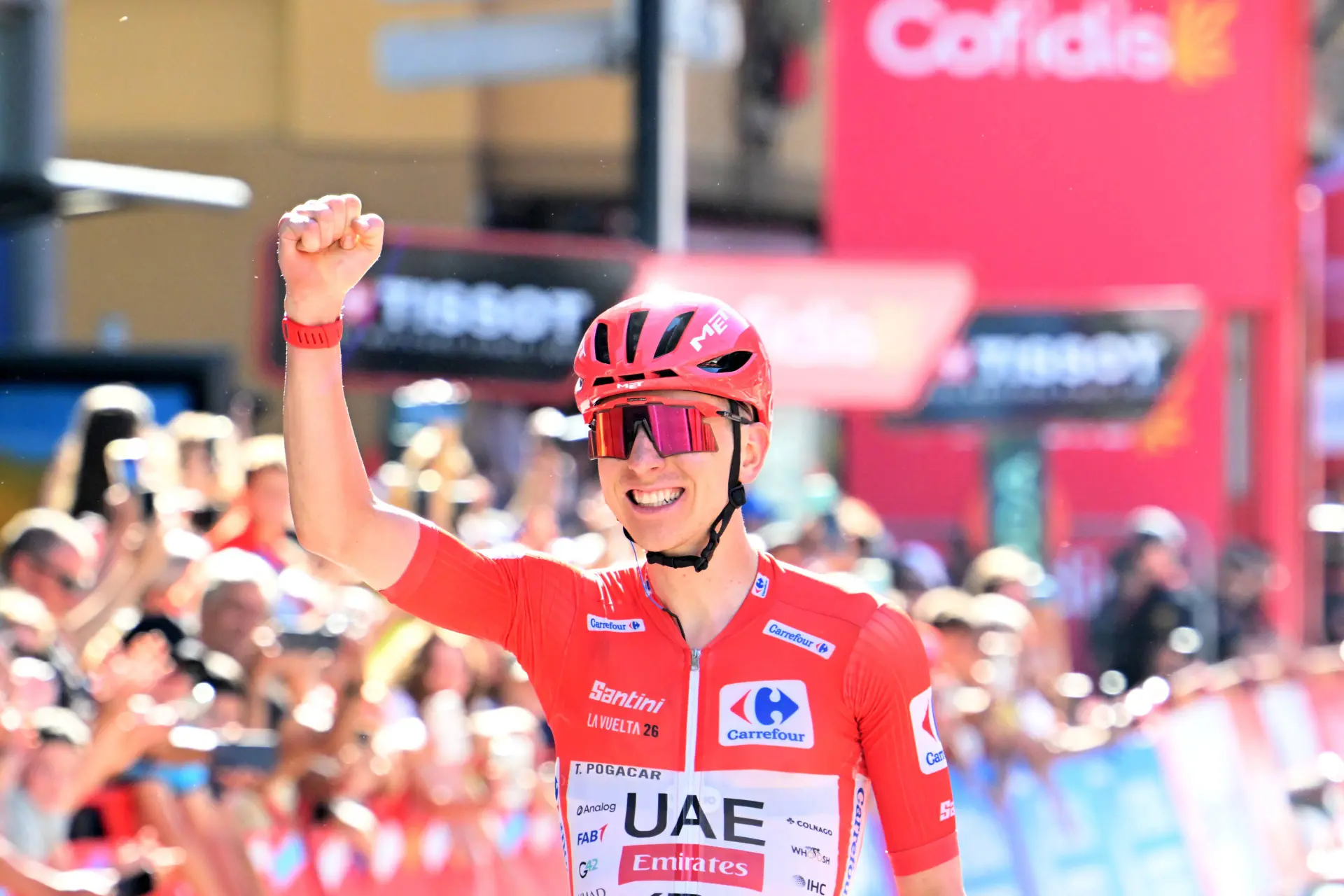
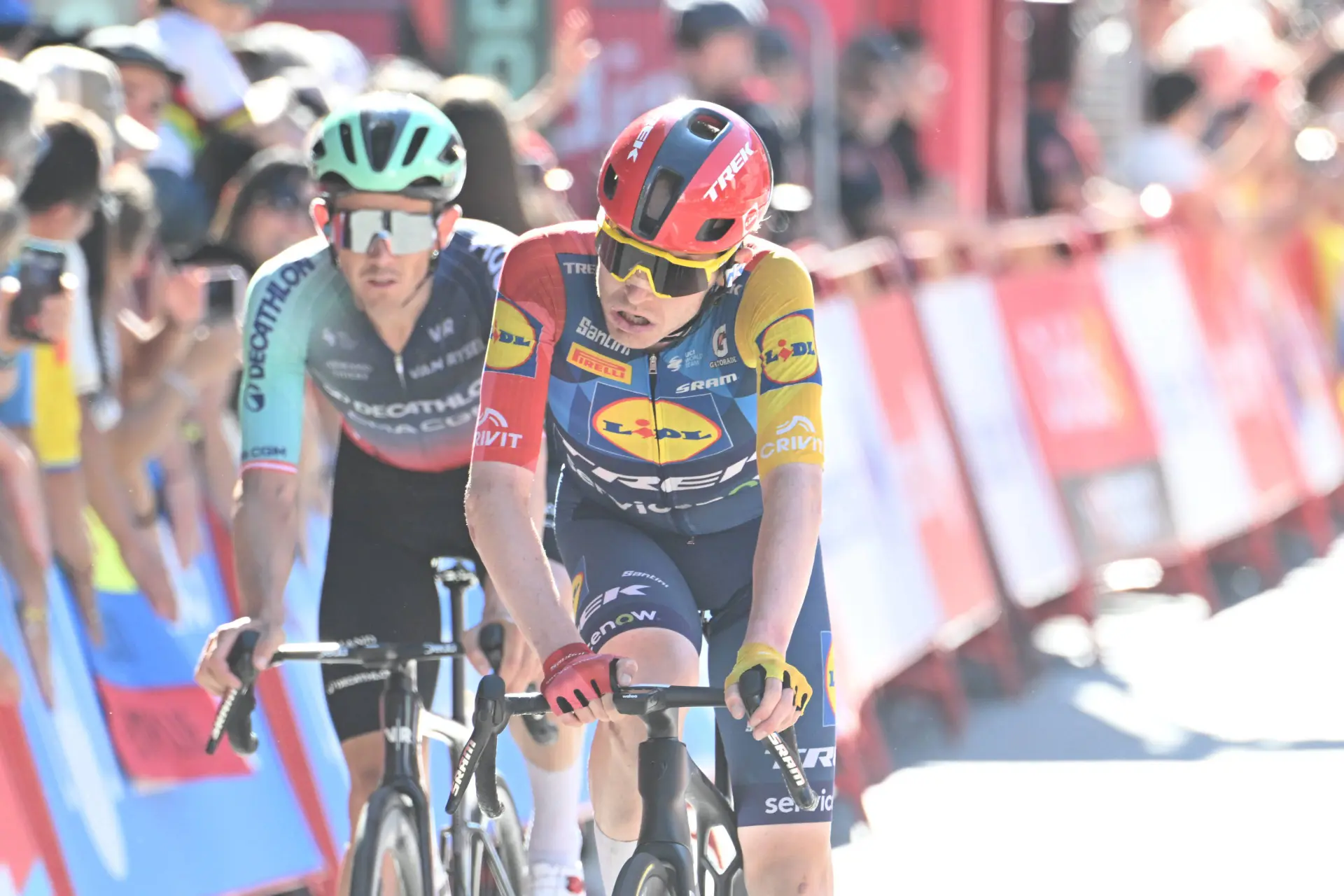
Uijtdebroeks rolled across the line last, 26:11 behind Tadej Pogacar, winner of a day that proved brutal for the peloton. The gap was still within the time cut after the organisers adjusted the percentage that morning.
The Movistar rider’s situation is particularly delicate. La Vuelta was meant to help him rebuild rhythm after a difficult preparation, but the crash and subsequent injury have again tested his resilience just weeks after he left the Tour de France due to a bacterial infection.
A crash that worsened an already complicated season
Uijtdebroeks hit the deck on Stage 2 after being forced to change bikes due to a mechanical and trying to get back to the peloton. He finished the stage, but Movistar later reported multiple cuts and abrasions to his right hip and knee, left elbow and arm, and a trauma to his left ankle.
Initial tests couldn’t determine the full extent because of swelling. Later exams confirmed what the rider already suspected: there is a small fracture in the ankle. "There is a small fracture in the ankle, we’ve been able to confirm it now," he said before tackling the Andorran stage.
Read also
Despite the diagnosis, doctors deemed he could continue. "At this moment the doctors say it’s safe. Normally it can’t get much worse. If something happens, I will mainly suffer more," Uijtdebroeks told Domestique with resignation. A particularly complex scenario for a rider expected to play a key role in Movistar’s general classification alongside Enric Mas.
The Belgian had also admitted before the start that walking had become difficult. "Walking is hard, but fortunately I don’t have to walk," he joked. The problem was that Stage 4 did force him to pedal for more than 100 kilometres and climb over 2,800 metres of elevation.
A battle from the first climb
The severity was clear from the start. Uijtdebroeks had to give up positions almost immediately and was quickly distanced as the peloton hit the opening ramps of the Andorran mountains.
The Belgian endured a true ordeal on his training roads. The contrast was cruel: he knew the terrain perfectly, but pain prevented him from using that knowledge. While Pogačar surged to a spectacular win, Uijtdebroeks focused on holding a pace that would carry him to the line.
Belgian TV offered a stark description of his state during the stage. Ex-rider and commentator José De Cauwer said, "that’s not sitting on a bike, that’s hanging on a bike," a line that summed up the Movistar rider’s difficulties.
Time became a threat as well. The regulations initially set a 16% time cut, which gave a margin of just 25:54 over the winner’s time. During the morning, however, organisers informed team directors of a change to 20%, without publicly announcing the variation in the same way.
🇧🇪 Uijtdebroeks has a confirmed crack in his ankle. He's still racing the Vuelta.
— Domestique (@Domestique___) August 25, 2026
🗣️ "Walking is difficult, but fortunately I don't have to walk."
📰 https://t.co/fCUf5sE8Mk
📸 Luis Angel Gomez / Cor Vos pic.twitter.com/h6I4RQr7sw
Time-cut change spares him elimination
The change proved decisive for Uijtdebroeks and seven others. The Belgian finished 26:11 behind Pogacar, which would have put him out under the original limit. The extension allowed him to continue at La Vuelta despite a day that nearly ended his race.
He was not alone. Others would also have been eliminated under the first limit, including Gianni Moscon, Sente Sentjens, Marc Brustenga, Lindsay De Vylder, Arthur Kluckers, Hamish McKenzie, and Jasha Sütterlin. The grupetto with Wout van Aert made it inside the original margin, but several of its members still relied on the change to avoid the cut.
Movistar Team must now assess the situation carefully. Uijtdebroeks arrived at La Vuelta after a long recovery from the illness that forced him out of the Tour, needing to regain race sharpness. The ankle fracture is a new obstacle that could completely reshape his objectives.
The Belgian wanted to use the Spanish race to rediscover his best legs and support Enric Mas in the GC fight. After the infernal Andorra stage, the immediate goal looks far more basic: survive, recover, and see whether the ankle allows him to keep racing without aggravating the injury. La Vuelta has only just begun, but for Uijtdebroeks it has already become a battle against his own limits.
Ondrej ZhasilCycling Journalist
Ondřej Zhasil is a cycling journalist at CyclingUpToDate and has been part of the team since 2023. He is based in Ostrava, the third-largest city in the Czech Republic, and covers professional cycling across the main UCI competitions, including the Tour de France, the Giro d’Italia, and La Vuelta a España. A key focus of his work is startlist analysis and pre-race coverage, where he examines team selections, rider line-ups, and tactical scenarios ahead of major events.
Alongside WorldTour coverage, Ondřej has developed specific expertise in junior cycling and in racing across East Asia, including competitions in China and Japan. He also maintains a broad working knowledge of other disciplines and levels, including cyclocross, while continuing to expand his understanding of mountain bike racing.
Ondřej holds a bachelor’s degree in Mathematics and Physics, which supports his analytical, data-driven approach to performance and race analysis. In his reporting, he regularly uses ProCyclingStats for results, statistics, and historical context. He places strong emphasis on careful sourcing, editorial accuracy, and updating articles promptly when new, verified information becomes available.
claps 1visitors 1
Just in
Popular news
Latest comments
- Maybe ruben silva still dont get it but visma is broke they aint signing anyone. They desperately need tier one climberse but all they can buy is fabio jakobsen..Typing is on the wall there to say the least...:(miguel26-10-2026
- I didn't say Tadej should ride it. I'm stating HE wanted to ride it and as a matter of fact had to be talked out of it. The other accidents mentioned in this headline were so much worse.mij26-10-2026
- I'm not downplaying the impacts. He would have been a fool to ride EU. I'm commenting that Roll's position is idiotic - to compare Tadej's two broken bones and a concussion to what Froome/Bernal/Jonas went through and suggest it could hold Tadej back is equally foolish. As bad as it might have been, Tadej's accident was a joke compared to what the others went through.mij26-10-2026
- If others agree and you do the same, maybe we have a shot at getting them to reverse the obvious deterioration they’ve decided to embark on. It would also leave you know mou more or less in an echo chamber.Jumpyjohn26-10-2026
- if you have three leaders , it has never worked in cycling properly. If you have two, one attacks the other follows as the US did it to perfection in the worldsabstractengineer26-10-2026
- Besides Pogi they dont need anybody else. I think that UAE is a bad team for development. One is the race is done at Pogi's intensity which is bad for a developing rider and you can only do part of the race, no energy left for the rest.abstractengineer26-10-2026
- Very distorted headlineKatla26-10-2026
- Agreed, but nobody thinks ahead that much, especially so-called fans, they are the first to demand their rights to joy and entertainment, regardless of the price their hero pays. You only have to look at boxing/rugby research on past athletes’ problems in retirement to see how little their OWN fans really care.Jumpyjohn26-10-2026
- He might very well accept lower salary voluntarily (whilst others might get pressured into that anyway over the coming years) in exchange for non financial benefits such a move would bring. Wouldn’t be the first rider to get positive results from a change of team and wouldn’t be the first star rider to do well in a smaller outfit. MVDP has never suffered from not being in a leading team, MP did extremely well before his team started expanding (maybe too) fast, PS certainly didn’t underdevelop until now. Everyone fits in best in a unique situation that won’t work for anyone else, we should all be striving for finding that.Jumpyjohn26-10-2026
- Always best to focus on “a good beginning is half the work” philosophy Which also makes mathematical sense. If you look at the probabilities of things happening in a chain, each event has less than one. For two to happen you multiply, the result will thus always be even less. The earlier in the chain you affect probability, the more often that is multiplied each time you add a subsequent link in the chain. Or oppositely, it’s extremely inefficient to focus on the last event in the chain because the chances of that happening AFTER all the other events have also happened is far too small to consider. And realistically, it is also obvious that if you allow uncertainty into event 1 or 2, not only do you enormously increase the chances of a last event, you also increase the chances of other non-considered events. In non-mathematical terms, one day a car might drive into a whole peleton. Oups, what did I suggest, oh no, we actually already saw this almost happening on video, it was only the drivers’ unexpected fast reaction to reverse that averted the possible cancellation of cycling for an extended period as the sport would have been forced to question itself way more than it has ever had to.Jumpyjohn26-10-2026
Loading
3 Comments