Should Movistar leave Enric Mas out of the 2027 Tour de France? Why the reigning Vuelta champion may be better off skipping cycling's biggest race
Cycling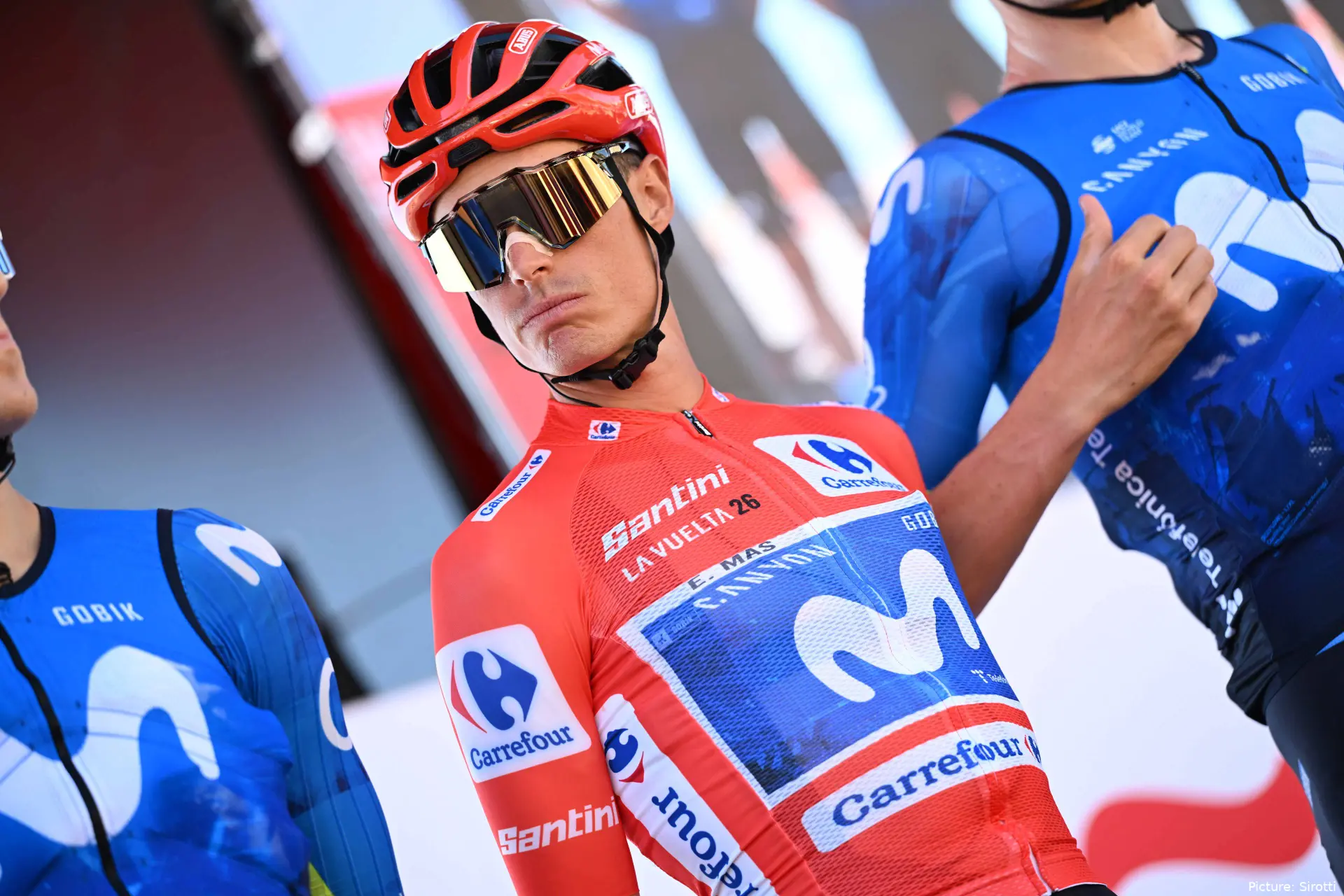
Enric Mas will head into the 2027 season in a very different position after winning the Vuelta a España and rediscovering his best form in some of cycling's biggest races. The Movistar Team leader has shown that he can still compete for major honours, while his second place behind Paul Seixas at Il Lombardia only strengthened that impression.
However, his next step should not necessarily involve a return to the Tour de France. With the route of the French Grand Tour already unveiled and the first details of the 2027 Giro d'Italia beginning to emerge, the best option for the Spaniard could be to repeat the Giro-Vuelta combination and leave cycling's biggest race off his calendar altogether.
It would not be an easy decision given the sporting significance and enormous media attention surrounding the Tour, but Movistar need to select the races that best suit their leader's strengths. The Vuelta appears non-negotiable following his 2026 victory, while the Giro looks set to feature plenty of climbing. By contrast, the Tour de France offers a combination of time trials and decisive mountain stages that may not play to Mas's strengths.
Why the 2027 Tour de France route doesn't suit Enric Mas
The 2027 Tour de France, scheduled to take place from 2 to 25 July, features one element that could have a major influence on the plans of the general classification contenders: 71 kilometres of individual time trialling across two stages. That is the highest total since 2012, forcing the pure climbers to consider how they can limit their losses against the specialists.
The first time trial will cover 38 kilometres between Blois and Chambord on stage seven, while the second will be a 33-kilometre individual test in Toulouse on stage 16. For a rider like Mas, who relies on the mountains to make the difference, that represents a considerable obstacle. It is not that the Mallorcan cannot perform against the clock, but rather that the route places particular emphasis on a discipline in which several of his potential rivals hold an advantage.
The race will feature six mountain stages, but only three summit finishes: Grand Colombier, Les Saisies and Col du Portet. The Alps will appear in the middle of the race, while the Pyrenees will take centre stage in the closing days, with the finish at Col du Portet among the most important moments. There will be opportunities for the climbers, but the distribution of the mountain stages and the presence of two lengthy time trials will leave Mas with little margin for error.
The route is certainly not lacking in difficulty, with organisers estimating a total of 53,450 metres of climbing. However, not every metre of elevation gain offers the same opportunity to a rider with Mas's characteristics. If he finds himself needing to recover significant time lost in the time trials, he could be forced into long-range attacks and greater risks against rivals who are better equipped to combine climbing ability with performances against the clock.
The Vuelta must be his main objective
If there is one race that should unquestionably feature on Enric Mas's 2027 calendar, it is the Vuelta a España. The Mallorcan will return as defending champion following a 2026 edition that transformed his season and delivered Movistar Team's first Grand Tour victory since Richard Carapaz won the 2019 Giro d'Italia.
His overall victory, accompanied by a stage win on the Alto de Aitana, confirmed that he still has what it takes to win a three-week race. The Vuelta should therefore become the centrepiece of his preparations, offering both the opportunity to defend his title and the chance to consolidate his renewed standing within the peloton.
Defending a Grand Tour title is never straightforward. Rivals become more familiar with the champion's strengths and prepare their strategies accordingly. Nevertheless, Mas has already demonstrated his ability to perform at the highest level on Spanish roads. His second place at Il Lombardia also suggests that he can broaden his ambitions and maintain a high level of competitiveness beyond the Grand Tours.
For Movistar, Mas's presence at the Vuelta carries significance for the team as a whole. The Spanish squad need to build on the breakthrough represented by his 2026 victory and make the most of their opportunity to compete for another Grand Tour general classification. That means shaping his preparation around the races that will allow him to arrive at the Vuelta in the best possible condition.
The Giro d'Italia could provide the ideal route
The most attractive alternative to the Tour is the Giro d'Italia. The official presentation of the 2027 route is scheduled for 3 November, but early reports point towards an edition featuring major Alpine and Dolomite climbs, potentially including the Mortirolo, Gavia and Zoncolan. An especially demanding final week is also expected, with one stage potentially featuring close to 6,000 metres of climbing.
If those details are confirmed, the route could suit Mas particularly well. A Giro built around the high mountains would allow the Movistar rider to focus much of his effort on the terrain where he is most capable of making a difference, rather than facing the substantial amount of time trialling included in the Tour.
The difficulty of the final week could also prove important. Over three weeks of racing, successive high-mountain stages can completely reshape the general classification, particularly as fatigue begins to take its toll in the closing days. Mas could find opportunities to exploit his climbing ability, provided the final route retains the mountainous character currently being anticipated.
Of course, the official presentation is still needed before the exact distribution of stages, time trial kilometres and individual climbs becomes clear. It would be premature to treat an unannounced route as confirmed. Nevertheless, the information currently available makes the Giro an appealing alternative when planning the Mallorcan's season.
Read also
Why repeating the Giro-Vuelta combination makes more sense than forcing a Tour appearance
Racing the Giro and Vuelta would allow Mas to tackle two Grand Tours with different characteristics and a clear objective at each. He could first target the Giro general classification, assuming the final route confirms its emphasis on the high mountains, before using the summer to recover and prepare for his Vuelta title defence.
Such an approach would also prevent the Tour from dominating the entire first half of his season. The French Grand Tour commands enormous attention, but prestige alone should not determine a rider's calendar. Movistar Team's priority should be to maximise their chances of achieving major results and build a programme around their leader's strengths, rather than feeling obliged to target the Tour simply because it is cycling's biggest race.
Competing in both Italy and Spain would still present a considerable physical challenge. Completing two Grand Tours requires careful management of recovery, training and racing commitments. The combination would not automatically guarantee better results, and much would depend on how Mas performs during the opening months of the season. However, following his 2026 Vuelta triumph, there is a strong sporting argument for building a calendar that gives him another opportunity to compete for Grand Tour victory.
The final decision will rest with the team and rider, alongside how his preparations develop over the winter. Based on the information currently available, though, the Tour does not appear to be the most favourable option for his particular strengths.

Enric Mas won the 2026 Vuelta a España
Movistar's planning must revolve around Mas
Movistar Team have an opportunity to build on their success in 2026. Mas has rediscovered his ability to win a Grand Tour and returned to the sharp end of one of cycling's biggest one-day races. His programme for the coming season should reflect that resurgence. The Tour de France can remain an important race for the team without necessarily being the right choice for its leader.
The Giro offers a promising alternative given the mountainous route being anticipated, while the Vuelta should remain the priority as Mas prepares to defend his title. If the final Giro route confirms the early reports, racing both events could give him another opportunity to challenge for a Grand Tour general classification while maintaining the momentum of his recent resurgence.
| Grand Tour | Recommended approach for Enric Mas | Main reason |
| Giro d'Italia | Target the general classification | Expected mountainous route featuring major climbs and a demanding final week |
| Tour de France | The Grand Tour he should skip | 71km of individual time trialling and a route potentially favouring stronger time triallists |
| Vuelta a España | Clear priority | Defend his 2026 title and build on Movistar Team's Grand Tour success |
The best strategy for Enric Mas in 2027 does not necessarily involve the Tour de France. If the Giro confirms the mountainous route currently being anticipated, Movistar should seriously consider returning to the Giro-Vuelta combination. Defending his Spanish title would remain the season's primary objective, while the Italian race could provide the ideal terrain for another general classification challenge.
Jorge BorregueroWriter
Jorge Borreguero is a journalist with a degree from the Complutense University of Madrid and has been a writer for Cyclinguptodate and Ciclismoaldia since early 2023. In this role, he has played a key part in the evolution of the website, particularly as a specialist covering Movistar Team. He regularly writes race reports, analytical pieces, and in-depth features about the team, and has conducted exclusive interviews and attended multiple team presentations, providing readers with firsthand insights into one of the leading professional cycling squads.
Throughout his career, Jorge has maintained a strong focus on sports journalism, gaining experience across a variety of disciplines, including basketball and football. However, his current work is almost entirely dedicated to cycling, contributing extensively to Ciclismoaldia and its sister website Cyclinguptodate. For these platforms, he combines thorough research with detailed reporting to deliver high-quality content, ranging from race previews and results to expert analysis of teams and riders.
Jorge’s reporting is marked by accuracy, depth, and a commitment to providing readers with reliable and authoritative information. His direct engagement with teams, athletes, and events ensures that his coverage reflects firsthand knowledge and professional insight. Through his work, he has established himself as a trusted voice in professional cycling journalism, bridging the gap between the sport and its global audience while maintaining rigorous editorial standards.
claps 0visitors 0
Just in

Popular news

Latest comments
- it puts food on the table - I don’t see it as arrogant, but it is my opinion. and if that is his food budget, good for him. they are using his image to make money of which he is not profiting. whatever that is worth is money due to him, and if he wants to spend it on food, great. of course he isn’t. it is a play on words.mij29-10-2026
- Fantastic news!anonymouscyclist29-10-2026
- Why not 11 then?
 Rafionain-Glas29-10-2026
- Crikey... Zonneveld in charge of a team... never knew that was possible. You learn new things every dayRafionain-Glas29-10-2026
- Eccelente! Although cutd are a bit late to report on thisRafionain-Glas29-10-2026
- What he said!!Lozza29-10-2026
- If Tadej stays healthy, I don’t see the slightest chance of Remco winning the Tour. And then there are Jonas and Paul.MajorPayne29-10-2026
- @Guavaking, what are you talking about? Since 2024 no one alive climbs like Pogi and everyone knows it. Capish?PogiSloFans29-10-2026
- I reckon it would be neat if Jonas skipped the Tour, and went for getting the Giro and Vuelta again. Having every GT twice would be a flex. That's a shorter list, within a short one already. He doesn't "need" to win the Tour again. And why waste time going for second or worse as a former winner when you could lock in a really solid showing across all three? Plus Visma can go for the Green Jersey with Brennan and Wout, stages etc.wrsty29-10-2026
- That is exactly my opinion. I would rather see him winning Itzulia Basque country than risking it all at Paris-Roubaix. Than he will have all 7 major one week stage races in his pocket and since 2028 season he can try to win PR every single year. I also had a fractured vertebra, a broken collarbone and a dislocated shoulder and it took me more than a year before I could ride my bike without feeling any pain. Pog has access to incomparably medical care, but some things just can´t be rushed. And the Paris-Roubaix cobbles are absolute hell...Lukicinho29-10-2026
Loading
Write a comment