“The spectacle disappears" - Commentator delivers morbid assessment of Tour de France after Pogacar annihilates competition
CyclingFriday, 10 July 2026 at 14:15
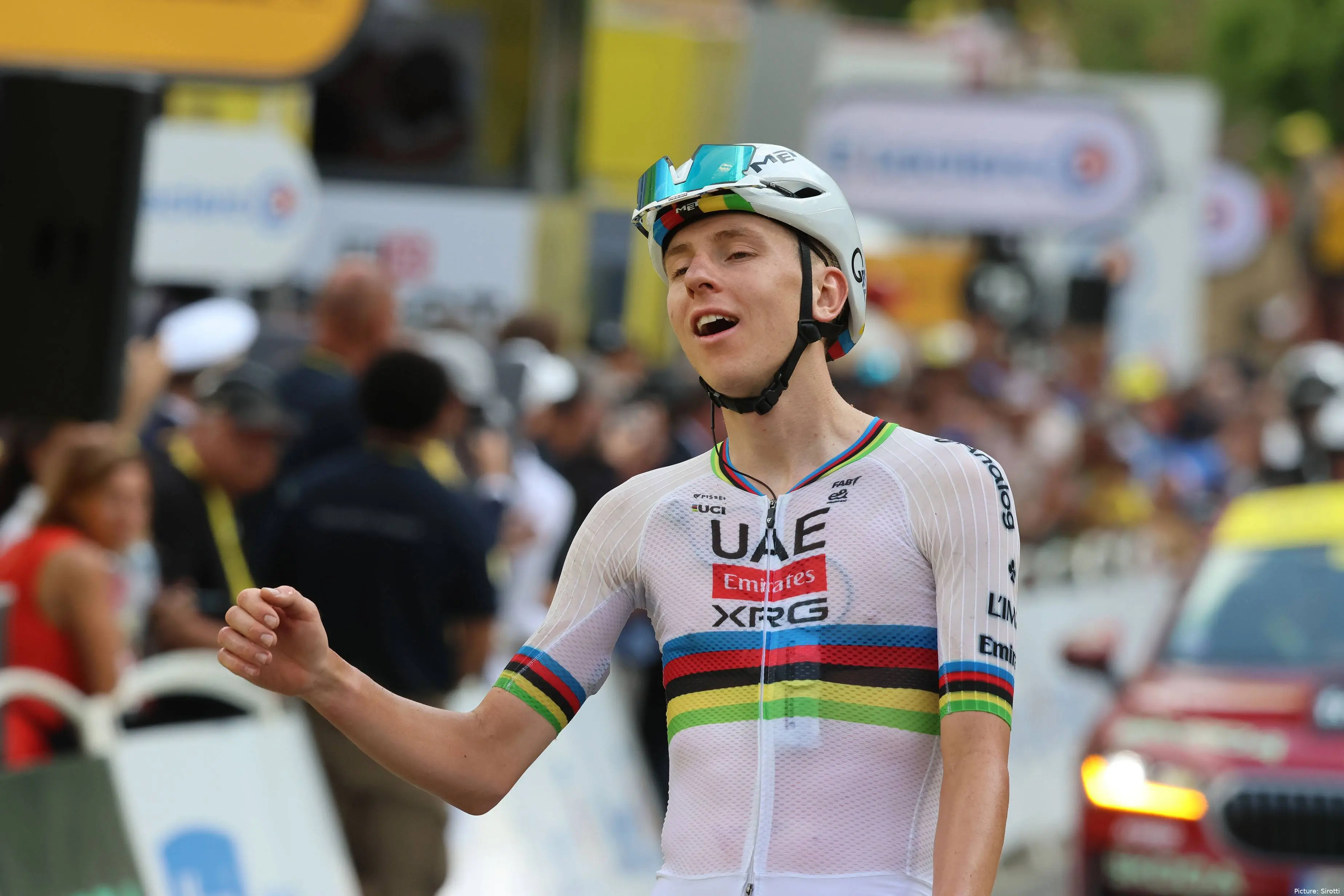
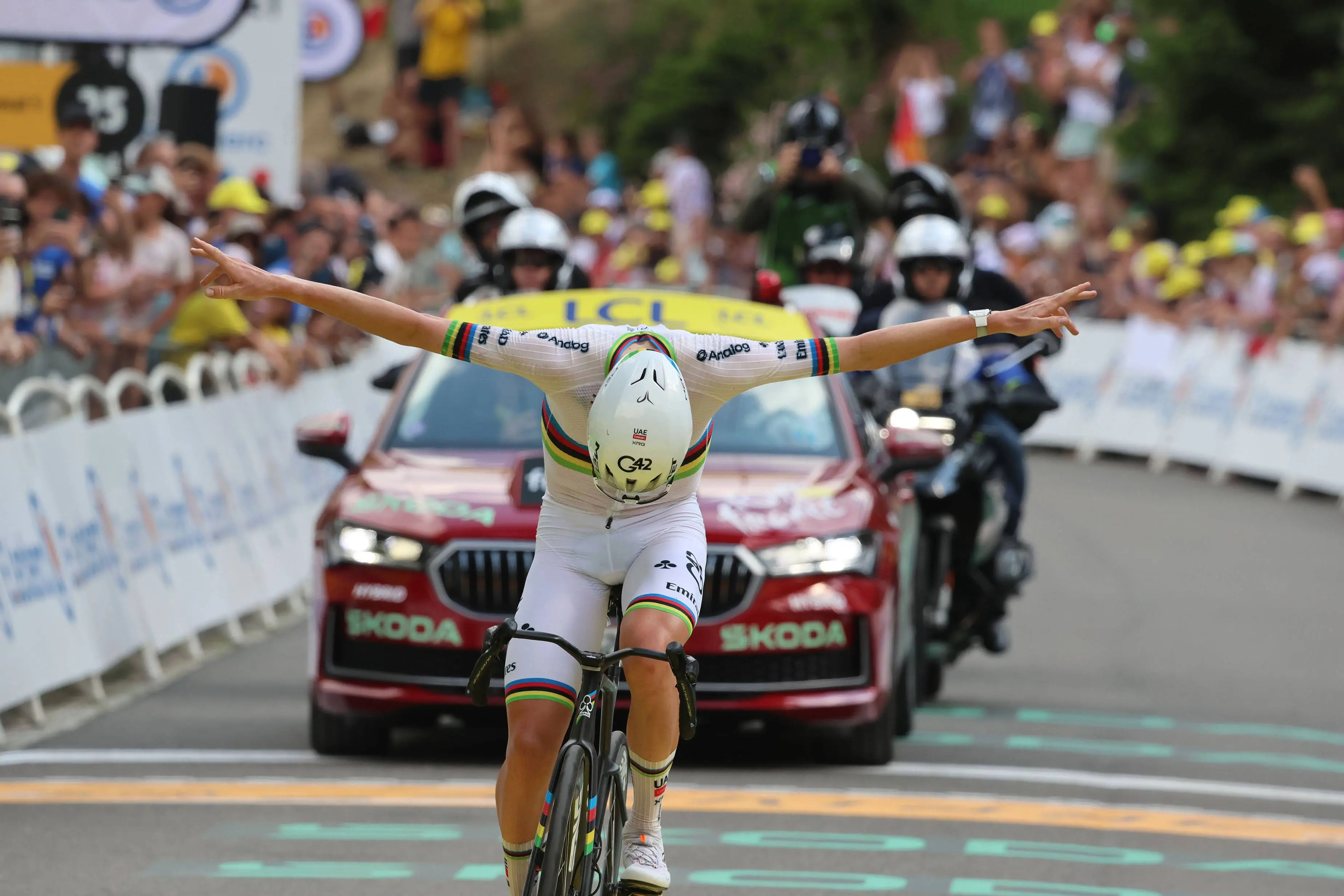
Tadej Pogacar’s exhibition on stage six of the Tour de France 2026 not only settled the day, it opened a deeper debate about the race’s future.
Javier Ares, Eurosport commentator, analysed on his YouTube channel the consequences of the Slovenian’s attack on the Tourmalet and reached a stark, uncomfortable conclusion: the UAE Team Emirates leader’s dominance threatens to drain excitement from the Tour.
For Ares, what happened in the Pyrenees was almost inevitable. “Knowing Pogacar, he was never going to waste the chance to attack on the Tourmalet, no matter how far it was from the finish,” he explains, convinced the route was designed for the Slovenian to widen the gaps even further.
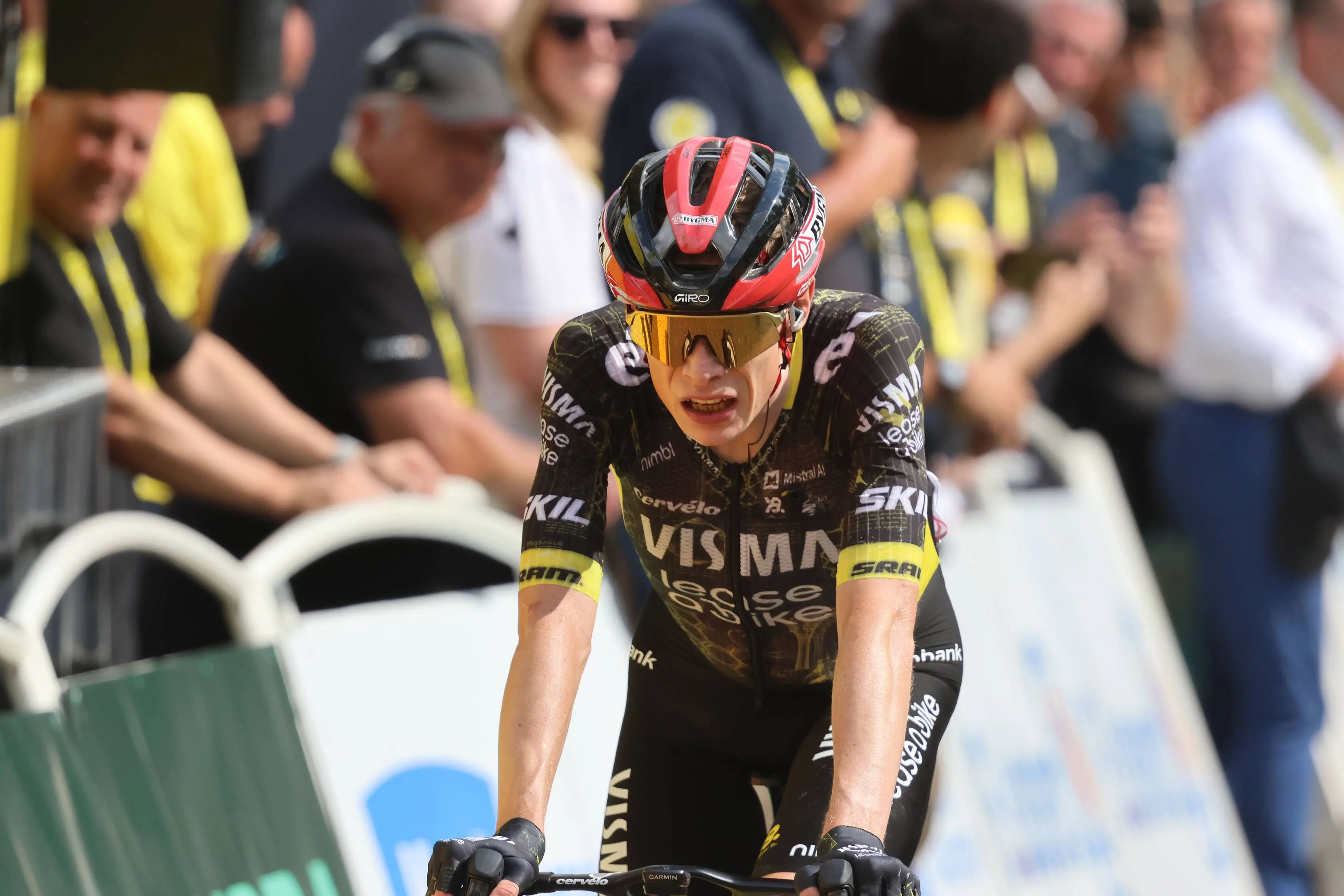
The outcome was devastating. Pogacar dropped Jonas Vingegaard before the Tourmalet summit and crossed the line with more than two minutes over his great rival. A blow that, for Ares, leaves the fight for yellow badly shaken.
“There was no opposition, not even from Jonas Vingegaard, who finished over two minutes down and is already adrift on GC, but even further from any prospect that might suggest a change,” he says.
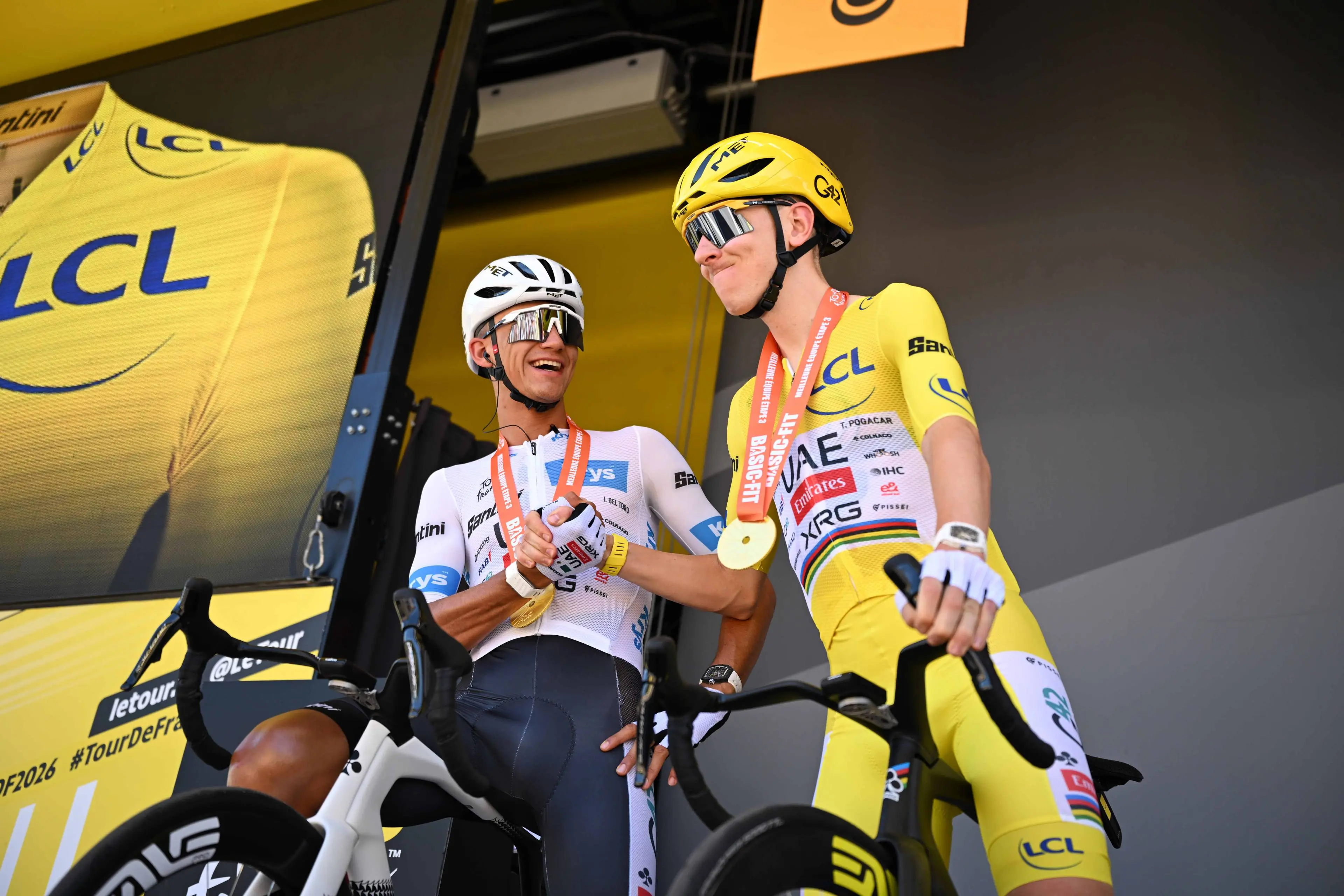
UAE’s superiority
Beyond Pogacar’s individual performance, Ares focuses on the collective strength of UAE Team Emirates, a decisive factor in explaining the stage outcome. “The stage left us a familiar reading: Pogacar is number one, indisputable, and he also has the most powerful team,” he sums up.
The commentator details how the Emirati squad picked off Visma’s domestiques one by one before the decisive move. When Adam Yates and Isaac del Toro tightened the pace, Vingegaard was completely isolated.
“When the final selection is made, there are still four UAE riders among the best. Jonas Vingegaard was very exposed there compared to UAE,” he explains. For Ares, that tactical superiority turns each Pogacar attack into a blow that is almost impossible to answer.

Tadej Pogacar, a global cycling star
A Tour decided in a single day
One of the aspects that most impressed the journalist was the scale of the gaps after the Tourmalet. Pogacar crested with barely half a minute over Vingegaard, yet finished the stage with almost two and a half minutes in hand.
“This stage was the best example of how the Tour de France can be decided in a single day,” he says. “Pogacar kicks with almost five kilometres to the top of the Tourmalet and takes 29 seconds from Vingegaard. However, over a 39-kilometre run-in there are 2 minutes 38 seconds at the finish line.”
In his view, the route favoured precisely that outcome. A long-range attack on a mythical climb, followed by a long descent and a final ascent, multiplied the differences between the favourites.

Pogacar and Del Toro, global cycling stars
Tour de France spectacle under scrutiny
But Ares’s most interesting reflection arrives when he moves beyond pure sport to pose a question he deems unavoidable: “It feels as if the Tour is over,” he admits, though he is quick to note that cycling history also shows that the unexpected can always happen.
From there, he opens a debate about how such absolute dominance affects the race’s appeal: “Anyone who isn’t a strong Pogacar supporter starts to see a story repeated so often that it loses a large share of its drama,” he argues.
And he closes with the line that distils his whole argument: “The spectacle disappears. No, Pogacar already provides it, but it needs more fight, more emotion, and more uncertainty.”
Read also
To illustrate his point, Ares recalls Alfredo Binda, the great dominator of the Giro d’Italia in the 1920s, whom organisers even paid not to race due to the lack of interest his superiority generated. He uses the comparison as a historical example, while making clear it is a reflection, not a real proposal for Pogacar.
Ares acknowledges that cycling is living a unique era thanks to the Slovenian’s talent. “We are living through a historic moment,” he insists. However, he believes it is possible to admire Pogacar’s greatness while asking whether such overwhelming dominance could ultimately impact the race’s following.
He therefore concludes by posing a question to fans: whether a rider’s superiority, however extraordinary, might end up reducing the excitement of a competition that has always thrived on uncertainty.

Gavin QuinnCycling Journalist
Gavin Quinn is a cycling journalist and ultra-distance cyclist with a BA in Journalism from Dublin City University. Formerly the Press & Communications Officer for Cycling Ireland, Gavin has worked inside the national team at the World Championships and has reported for the Irish Mirror, Mirror UK, and The42.
His expertise is backed by elite-level access, having interviewed stars like Sam Bennett and Ben Healy, as well as immense personal endurance. In 2025, he completed a 12,000km solo cycle from Ireland to Vietnam, following a 4,600km tour across Europe. From the cobbles of Paris-Roubaix to the gradients of the Tourmalet, Gavin’s writing focuses on the "romance and brutality" of the sport. Having visited 50+ countries, he brings a global, cultural perspective to his coverage of the pro peloton for CyclingUpToDate.
claps 31visitors 2
Just in
Popular news
Latest comments
- Who are you replying to, yourself? Or just admitting you didn’t realise half your statements were opinion?Jumpyjohn10-07-2026
- Ok notedslappers6610-07-2026
- I think Tadej turns boring stages into GC firework. Compare this to Chris Froome era where nothing happens until big mountain stages, we get to see firework even on punchy stages. I doubt a more conservative generation of GC riders will turn stage 6 into firework. They don't attack from that far on GT and the last climb won't make a big gap on GC.
 KerisVroom10-07-2026
 - Good Point! Maybe A.S.O. should make the stages different..only putting the High Montains (queen stages) in last week or so? They did change Green Jersey points this year because of POGI almost winning last year, so they are making adjustements.... Its a Tough Topic this one... It was cool they made some kind of a pool to know the fans opinio. Are we divided in this?Alexcavalera10-07-2026
- If I may gently remind you, Javier Ares is Spanish. Spanish only care for GC
 Rafionain-Glas10-07-2026
 - Tom, either say something or say nothing. Why naïve if there’s nothing worth thinking through? Why a comparison to Messi which is about skill and not performances Even if Tadej is unlikely to be a protagonist in unfairness, I certainly do not trust his entourage as much. Doping in whatever form is a technical definition, many other unfair advantages cannot be classified as such and would be impossible to prove without being mistakenly revealed. I do not want to list any for fear of giving ideas (very little open discussion exists on potential methods) but having followed Mauro’s case in detail, I know how far some are willing to go, also to conceal what they want to hide.Jumpyjohn10-07-2026
- That's a bit of an extreme comment. He was tired and frustrated but looked fine at todays start. He was smiling and shook hands with Pogacar, Del Tora and Pederson at the start. Retire out of the tour? I doubt it. I can see him retiring completely soon though. He has won every grand tour and has nothing more to prove.Cyclingsbestfan10-07-2026
- Yes they did! It became monotonous and boring to watch and many comments were made on Indurains style of winning. Pogacars style is more dynamique. That said Pogacar potentially putting the race to bed so early has taken out a lot of the excitement for me. I would bet a lot of people feel the same.Cyclingsbestfan10-07-2026
- Agreed, don’t get the feeling Jonas is the type to give up. He may have been knackered but he recovers well too.Jumpyjohn10-07-2026
- Choose your words more carefully. For sure they are able, if the circumstances called for it they’d even be able to reel in the Pog. No lone rider is going to outrun a team time trialing. It’s the context that decided, 2 riders as saboteurs, 2 with zero interest in helping, one almost self-destructive and a few without a clear plan or incentive, that’s hardly a recipe for chasing. We saw a similar situation in spring when MVDP made the mistake of going with Pog on the climb instead of hanging back with the rest and working together to reel him in after the climb.Jumpyjohn10-07-2026
Loading
12 Comments