“It’s not nice, but you always have to rise above it” – Wout van Aert’s wife highlights mental resilience after criticism and crash comeback to Milano-Sanremo podium
Cycling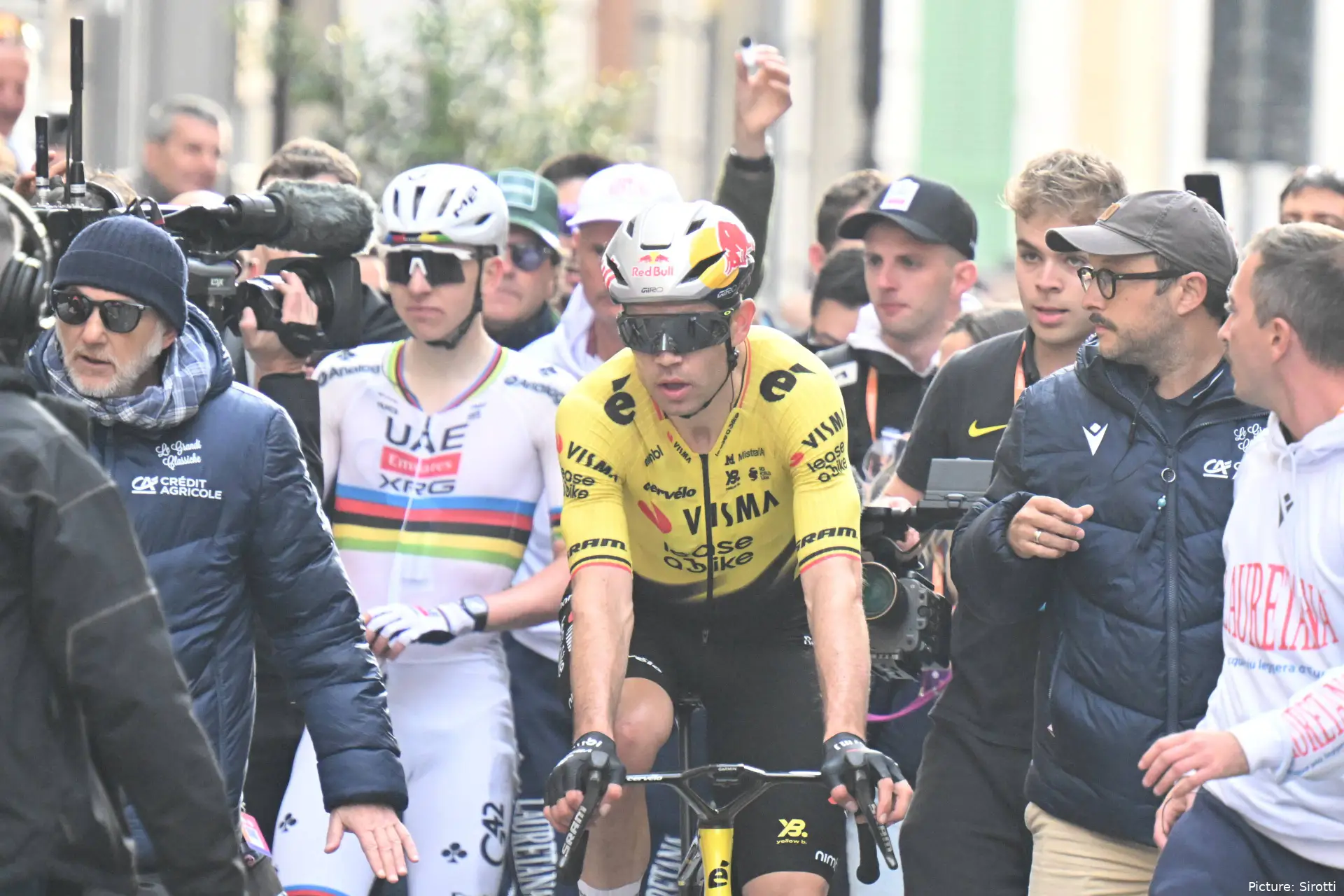
Wout van Aert’s podium finish at Milano-Sanremo 2026 came after a race defined by adversity, but the performance has also reignited a broader conversation around criticism and resilience, with those closest to him pointing to the mentality behind the result.
After crashing with around 34 kilometres to go, Van Aert was forced into a chase at a key moment in the race. Despite that setback, he fought his way back into contention and launched a late attack to secure third place on the Via Roma. It was a ride that underlined both his physical condition and his ability to respond under pressure.
“You always have to rise above it”
Speaking after the race in quotes collected by HLN, his wife Sarah De Bie, reflected on the scrutiny that has surrounded Van Aert in recent weeks, particularly suggestions that he is no longer the same decisive rider as before. “It’s not nice, but we don’t really talk about it,” she said. “That’s also why I don’t read the media. I think you always have to rise above it.”
The comments offered a clear insight into how criticism is handled away from racing, with the focus placed firmly on maintaining perspective rather than engaging with external narratives.

Podium confirms underlying form
Van Aert’s third place in Milano-Sanremo provided a tangible result after a period where performances had not always translated into outcomes. “That third place confirms the form he is in. In recent weeks, he has already ridden well but without getting the results he wanted. This third place will do him good.”
That assessment reflects a rider who has remained competitive, even if results had not always followed, with Milano-Sanremo offering a moment where that underlying level was finally rewarded.

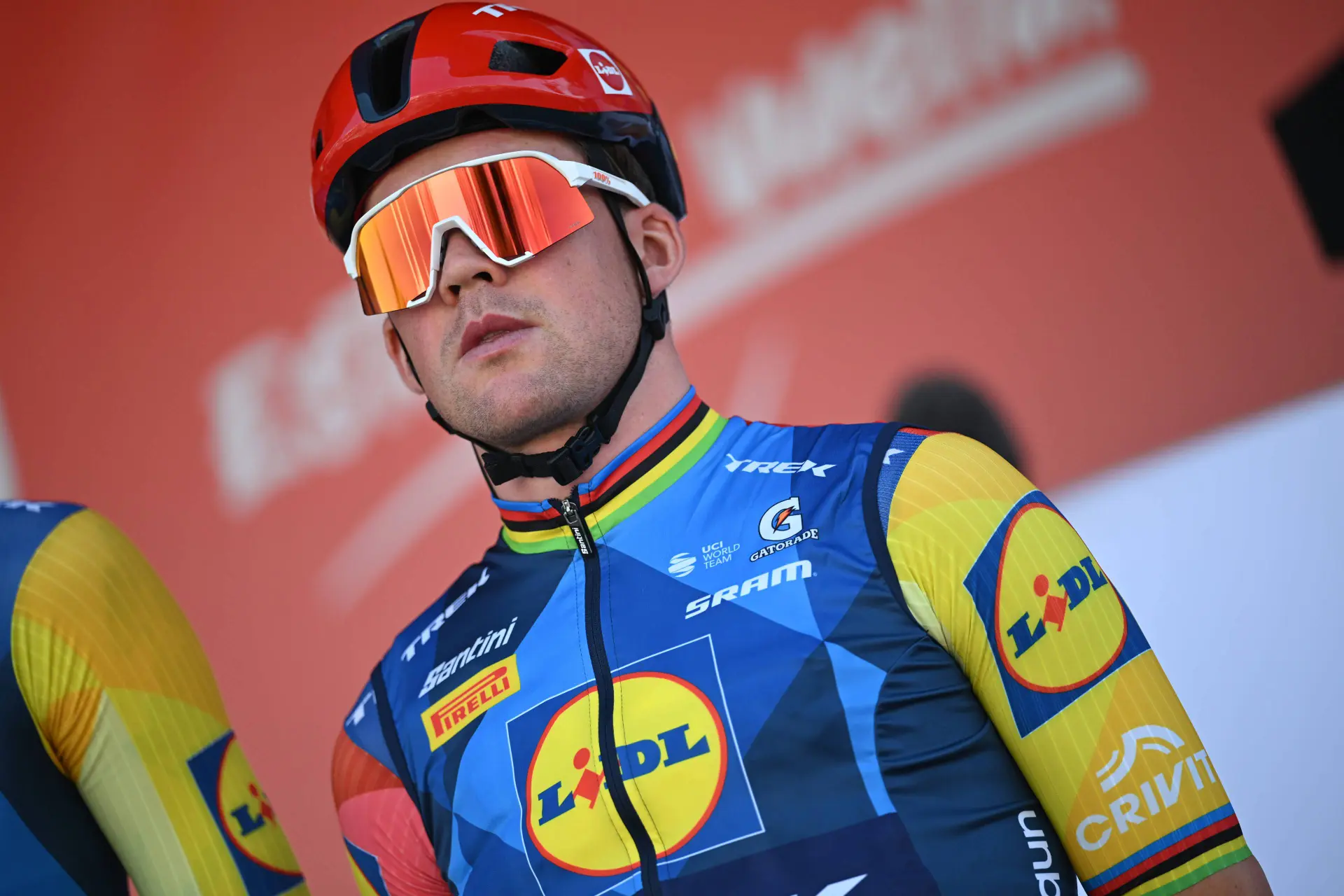
Wout van Aert crosses the line at Milano-Sanremo 2026
Crash comeback defines the performance
The race itself added further weight to that conclusion. The crash on the approach to the Cipressa disrupted Van Aert’s position at a crucial moment, forcing him to expend energy simply to get back into the race.
From there, the challenge shifted from competing for victory to salvaging the best possible result.
Van Aert did more than that. By the closing kilometres, he was once again in contention, attacking from the chasing group in an effort to reach the leaders and ultimately securing a place on the podium. It was a performance built on persistence as much as form.
Focus already on the Classics
After the finish, the focus quickly turned towards what comes next. Following his podium and post-race obligations, Van Aert returned to Belgium on Saturday evening to begin recovery ahead of the Flemish Classics. “Time to go home and recover. The Flemish Classics are coming.”
With races such as Gent-Wevelgem, the Tour of Flanders and Paris-Roubaix on the horizon, Milano-Sanremo may yet prove to be a turning point.
Not because of the result alone, but because of what it showed. A rider still capable of delivering under pressure, and still able to respond when things go wrong. The criticism may not disappear, but the response has already been delivered on the road.
Kieran WoodDeputy Editor-in-Chief
Kieran Wood is a sports journalist based in Wales and has been active in journalism since 2022. He regularly contributes to DartsNews.com and CyclingUpToDate.com, where he covers professional cycling and darts. In cycling, his work includes liveblogs from major races, including the Tour de France, the Giro d’Italia, and La Vuelta a España, alongside race reports and analysis. He has also conducted interviews with professional riders.
His reporting spans the full racing calendar, from one-day classics to stage races, with a focus on accurate, real-time coverage and clear contextual analysis. For statistics, results, and historical context, he regularly uses resources such as ProCyclingStats. To support reporting on rider activity and training context where relevant, he also references Strava.
In his work, Kieran places strong emphasis on careful sourcing, editorial accuracy, and updating articles as new, verified information becomes available.
claps 3visitors 3
Just in

Popular news
Latest comments
- They didn’t have or need “extraordinary information”. All they needed was for a French judge to sign off on the night-time testing for it to go ahead.Lozza25-11-2026
- If the sponsors voted for Primoz then you get him, otherwise not.flyer25-11-2026
- It sure can feel or seem that way but I wonder if the same amount of prodigious performances (compared to the others) would occur if no one was ever doping at all.flyer25-11-2026
- Given the similarity of two articles (published on I think the same date), I'm reusing (copy-n-pasting) my post from the twin: I've always thought the last day of each of the grand tours was problematic mostly in that the GC is considered completed before the race starts when that is not really true. There is some tension, but not desirable tension. What saves the awkward practice is the race finish is legit for those who participate - so it's not wholly different from the other stages. That neutralizations usually make good sense demonstrates their necessity so if that has to be the way to go I agree that the design plan for the neutralization should be completed before the race starts. This years end stage in the Vuelta had one of the best first half's I've seen in that many of the riders looked to be thoroughly enjoying themselves making it a joy to watch. But I think it was slightly closer to the exception rather than the rule.flyer25-11-2026
- Even I often win without being there at all, not even breaking a sweat. Beat that!flyer25-11-2026
- It is not about rest and peaking again - 5 weeks is not enough for that. It is about recovery while maintaining form. 4 weeks is easier for that. With a Giro-Vuelta, the 12 week break is enough to rest and then peak again. Not for the Tour
 Rafionain-Glas25-11-2026
- I fully agree that "2027 could completely reshape the pecking order" because this competition is a mix of skill, team support, luck opposition, and health. (What BS - as I start writing this post a popup hides what I've written so my only sane options are to hit POST prematurely or leave or reload the page. What a pathetic operation. I forgot where I was so I'm getting out of this crap trap.)flyer25-11-2026
- I've always thought the last day of each of the grand tours was problematic mostly in that the GC is considered completed before the race starts when that is not really true. There is some tension, but not desirable tension. What saves the awkward practice is the race finish is legit for those who participate - so it's not wholly different from the other stages. That neutralizations usually make good sense demonstrates their necessity so if that has to be the way to go I agree that the design plan for the neutralization should be completed before the race starts. This years end stage in the Vuelta had one of the best first half's I've seen in that many of the riders looked to be thoroughly enjoying themselves making it a joy to watch. But I think it was slightly closer to the exception rather than the rule.flyer25-11-2026
- Apparently that week is a MAJOR training disadvantage as "three major benefits" were claimed. When I read a proposal such as this, I want to also read the reasons why changing might not be so good - the CONS.flyer25-11-2026
- most likely they fudged it but i think they want to set an example to the riders that even the top riders are not exempt in the top races even during nighttime as a precedenceabstractengineer25-11-2026
Loading
3 Comments