“It’s destroying cycling. I totally disagree with this” – Michael Matthews delivers brutal verdict on modern racing
Cycling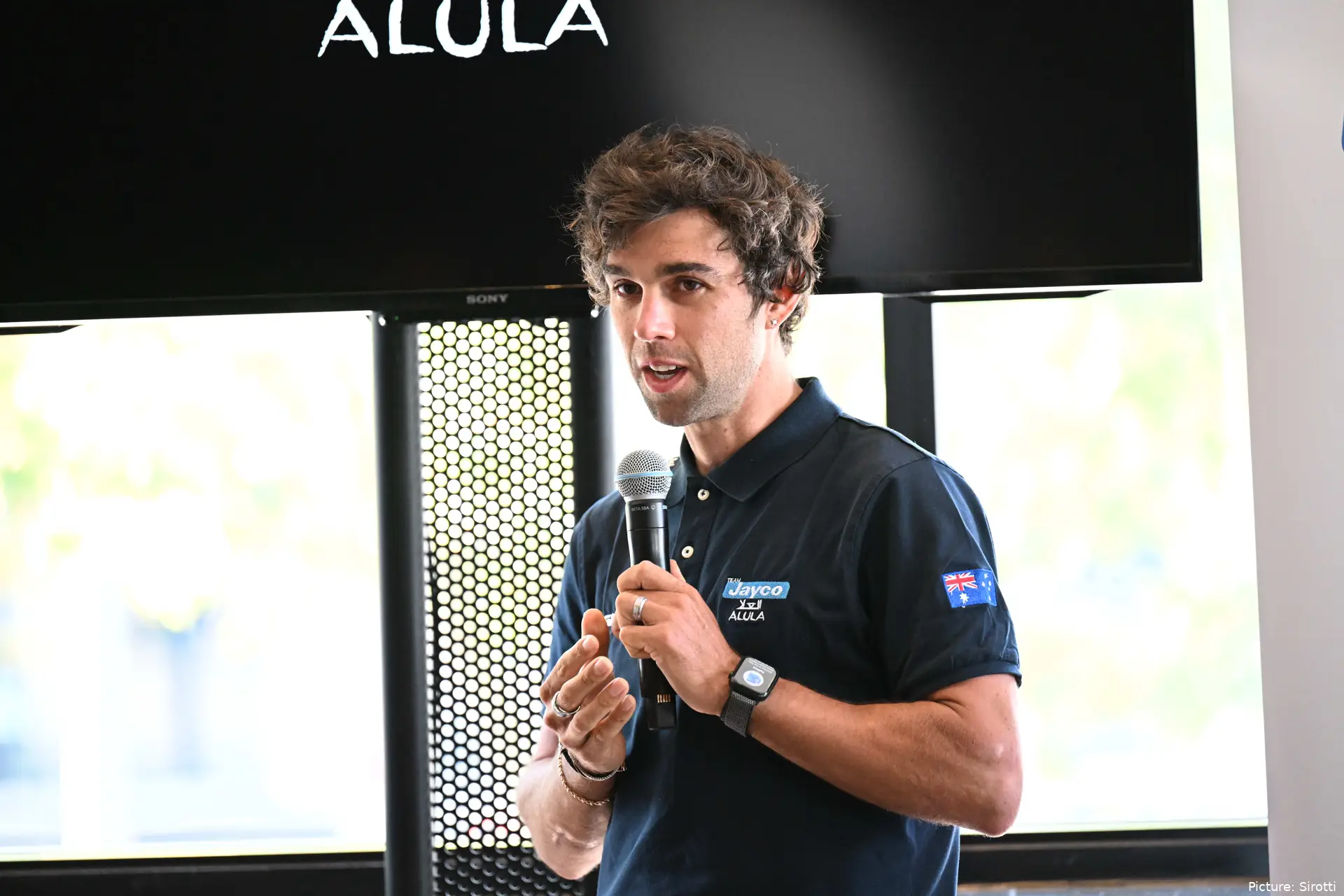
Michael Matthews is not talking about a single race, a bad sprint, or a frustrating season. He is talking about something deeper, something he believes is quietly reshaping how teams race, how riders are rewarded, and how cycling now looks to anyone trying to follow it.
Speaking on the Roadman Podcast, Matthews offered a blunt assessment of the direction the sport has taken, arguing that the incentives built into modern racing are changing behaviour in ways that are increasingly difficult to reconcile with how cycling still presents itself.
At the centre of his frustration sits the points system.
“Honestly, that’s what, for me, is really killing cycling, is these points,” Matthews said. For him, the issue extends far beyond relegation battles or calendar pressure. It is about what success now looks like inside teams, and how that success is pursued.
When incentives stop matching the spectacle
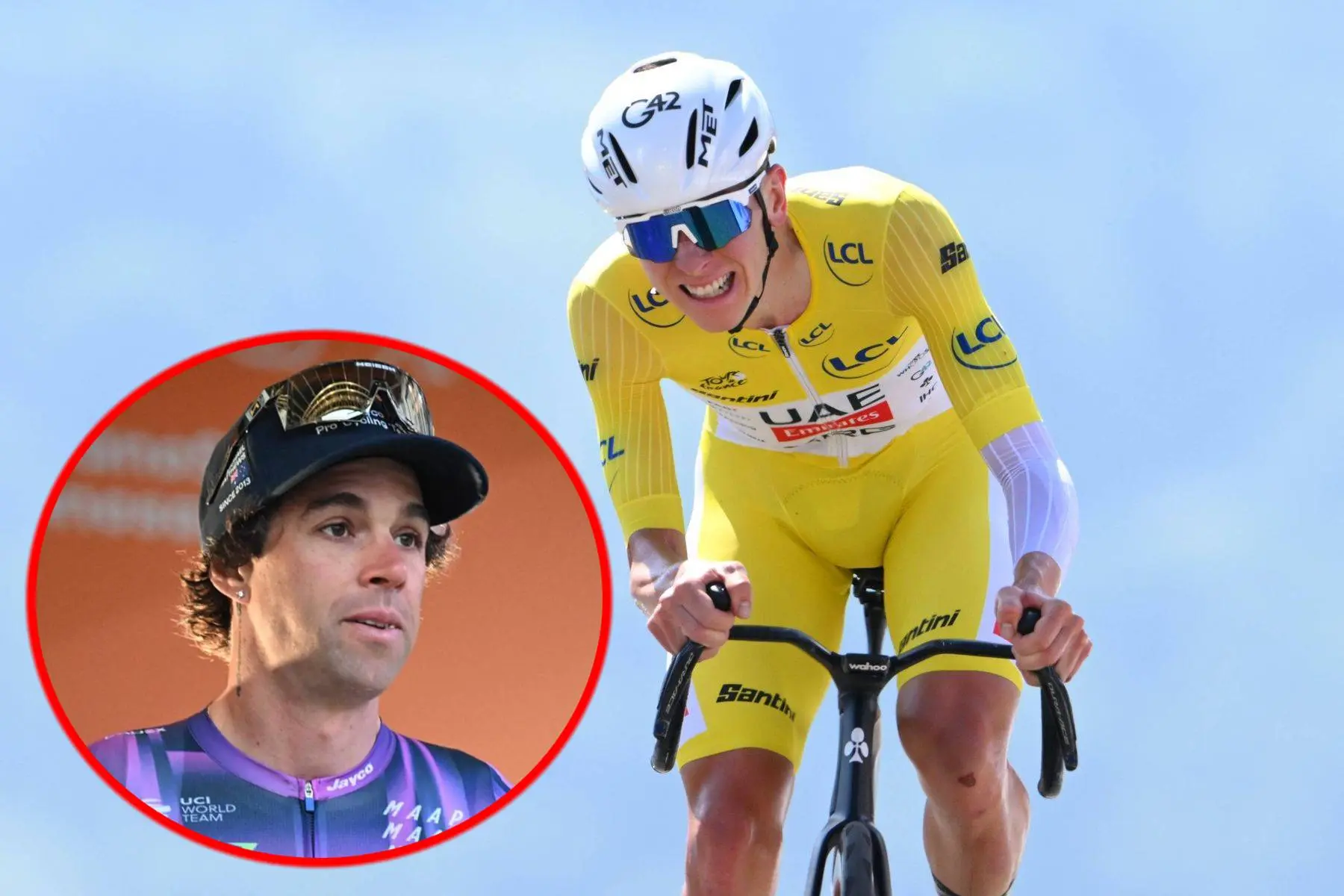
Matthews is careful to draw a distinction between effort and outcome. He does not suggest teams are trying less. He suggests they are being pushed to try differently. “You see so many teams now, not just Astana, but a lot of teams setting up their roster now to have as many as they can racing each other, and how does that make a team environment?” he said.
The shift, as Matthews describes it, is subtle but profound. Ambition becomes measurable through accumulation rather than intent. “Their goal now is to have as many in the top ten,” he said, outlining a version of racing where collecting places can matter as much as hunting victories.
For Matthews, the real damage is done in how that plays out for fans trying to understand the sport. “You’re trying to make fans of cycling understand that it’s a team sport, but then you see in a finish three sprinters from the same team sprinting against each other,” he said.
His conclusion is unambiguous. “For me, it’s destroying cycling. I totally disagree with this 100%.”
The criticism lands squarely within the framework overseen by the UCI, but Matthews’ concern is broader than regulation alone. It is about the erosion of shared purpose inside teams, driven by incentives that increasingly reward internal competition.
Why sprinting no longer looks like sprinting
That same shift, Matthews believes, is visible in how races themselves are decided. “These days, sprinting is not really like that anymore,” he said.
Rather than being a test of pure speed, modern sprints are increasingly shaped by survival, positioning, and who remains capable after harder and more aggressively raced days. “For me to win a sprint… I need to be the fittest guy at the finish of a harder group,” Matthews explained.
He is candid about his own limitations. “I’m not gonna win a bunch sprint, let’s say, against the Philipsens and these sorts of guys,” he said, referencing riders like Jasper Philipsen. His pathway to results now runs through attrition rather than outright pace.
Matthews also admits he has little affection left for traditional mass sprints. “I honestly just don’t really like the bunch sprints anymore,” he said. “You have to have a strong lead out… otherwise you’re just in the washing machine… and it’s just chaos.”
In his view, the disappearance of the pure sprinter is not accidental. “Everyone sort of learnt that being a pure sprinter these days is sort of a dying sort of breed,” he said, pointing to the rise of more durable sprint types and fewer straightforward sprint opportunities.
Dominance that does not need to announce itself
Beyond structure and tactics, Matthews also touched on a psychological shift that he believes now defines racing at the highest level.
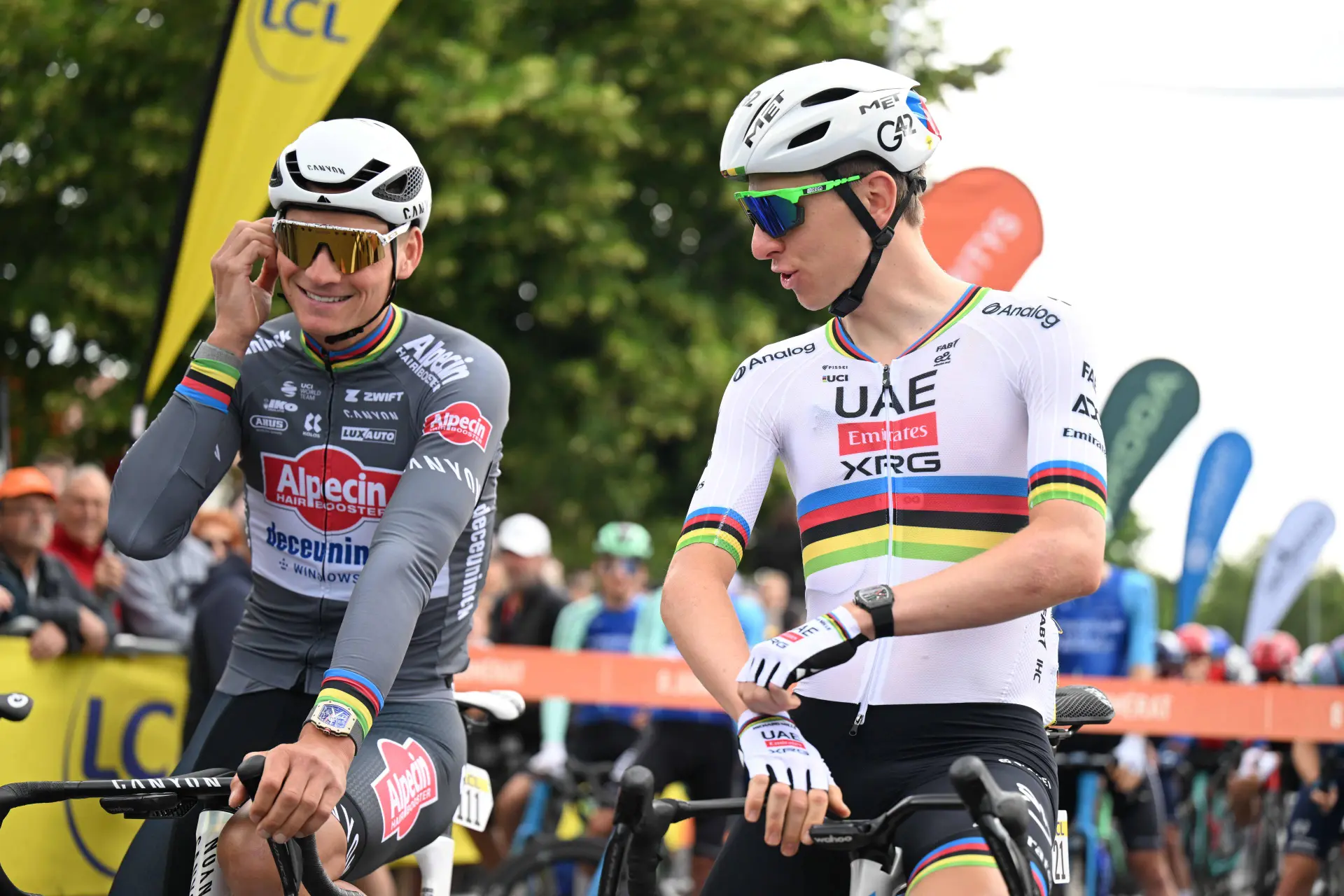
Riding alongside the sport’s dominant figures brings a different kind of pressure, one that is not always expressed through attacks or accelerations. “He doesn’t even care that I’m here, so he doesn’t even consider me as a factor,” Matthews said, describing what it feels like when favourites rotate through decisive moves without even acknowledging those around them. “I’m not even gonna look at you because I don’t even consider you a threat.”
That sense of hierarchy, he suggested, is reinforced long before the flag drops. Training data shared publicly by riders such as Tadej Pogacar, Mathieu van der Poel, and Wout van Aert becomes part motivation and part message. “They use that as extra boost for themselves, but also to show the other guys, like, ‘I’m flying,’” Matthews said.
Matthews’ comments do not read as nostalgia or resistance to change. They read as an adaptation. A rider explaining how the ground beneath the peloton has shifted, and why thriving now requires a different approach, even when that approach is shaped by incentives he fundamentally disagrees with.
His verdict is stark, but it is also revealing. Modern cycling, as Matthews sees it, is not being distorted by a lack of effort or ambition. It is being reshaped by what the sport now chooses to reward, and by the quiet consequences that follow from that choice.
Kieran WoodDeputy Editor-in-Chief
Kieran Wood is a sports journalist based in Wales and has been active in journalism since 2022. He regularly contributes to DartsNews.com and CyclingUpToDate.com, where he covers professional cycling and darts. In cycling, his work includes liveblogs from major races, including the Tour de France, the Giro d’Italia, and La Vuelta a España, alongside race reports and analysis. He has also conducted interviews with professional riders.
His reporting spans the full racing calendar, from one-day classics to stage races, with a focus on accurate, real-time coverage and clear contextual analysis. For statistics, results, and historical context, he regularly uses resources such as ProCyclingStats. To support reporting on rider activity and training context where relevant, he also references Strava.
In his work, Kieran places strong emphasis on careful sourcing, editorial accuracy, and updating articles as new, verified information becomes available.
claps 20visitors 16
Just in
Popular news
Latest comments
- Happening too often. quote from somebody else , put into the mouth of the the star rider for clicksabstractengineer16-11-2026
- Could you be possibly be any more nauseating with your Pogi love .... puke !frieders316-11-2026
- A great champion but a better human. jus' sayin'
 Davide15-11-2026
- Congrats! It is done so now is time for CX.averagecyclist15-11-2026
- It's going to happen at some point. It will happen to Tadej as well, we all get older. Jonas was in pretty great form at the tour. I still consider him a top two or three cyclist in the world, until he's not.awp15-11-2026
- mij, I am not so sure of that. I have been on a spine ward at a Denver hospital that had quite a few spinal injuries from mountain biking.BDBigGuy15-11-2026
- Pogi takes care of his teammates in races and training. Tadej Pogačar is widely praised within the cycling peloton for his fair and egalitarian leadership, actively supporting his UAE teammates both on the road during races and behind the scenes at training camps. Rather than acting like an untouchable superstar, he has intense team loyalty by sharing daily chores, giving up personal glory to help domestiques, and publicly praising their sacrifices. Unlike some Grand Tour contenders, like Vingegaard, who occasionally train away from their squads, Pogi consistently attends team training camps alongside his domestiques, making the exact same sacrifices to build friendship. I love how Pogačar shares his teammates-domestiques, either when they succeed or win in races or when they simply just do a good job for him. It has to be a great moral boost for them. And then they work even harder and go even deeper for Pogi. This is teamwork.PogiSloFans15-11-2026
- Yeah, what he said!Lozza15-11-2026
- I’m sure Jasper Philipsen would disagree with you.Lozza15-11-2026
- Article says he was “out for a spin around the town”, implying not off-road.Lozza15-11-2026
Loading
12 Comments