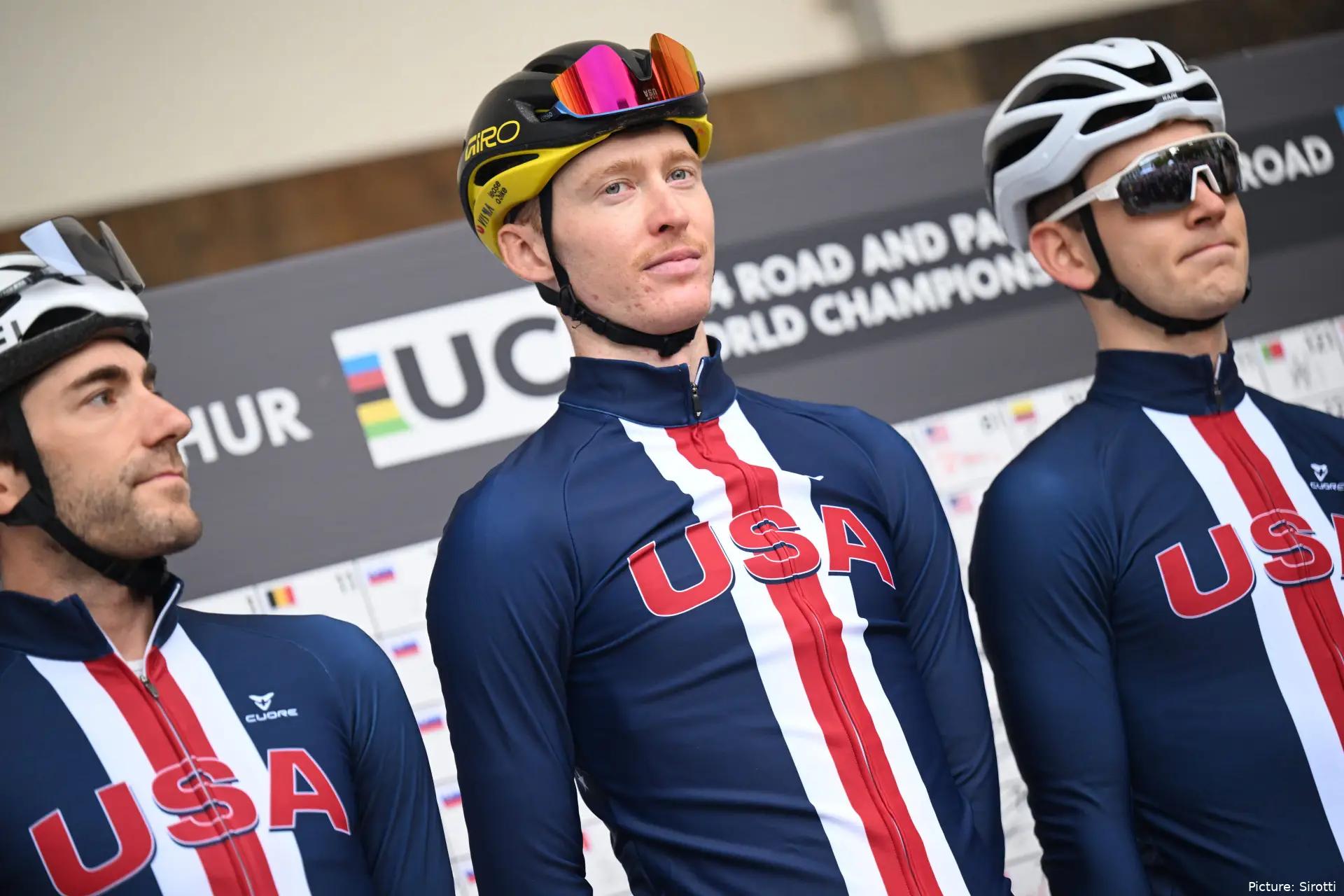
As the 2024 road cycling season draws to a close, one can’t
help but reflect on the current state of American road racing. Once a
burgeoning force in the sport, the U.S. now finds itself in a precarious
position, with fewer top-level teams, a dwindling presence in the European
peloton, and an increasingly difficult pathway for young cyclists aiming to
break through. At a glance, it’s tempting to declare American road racing in
decline, but is that truly the full story?
In this series, we’ll explore the landscape of American road
cycling, analyzing how we got here and whether a resurgence might be on the
horizon. In this first article, we’ll introduce the key themes driving the
conversation, from the steep challenges faced by the sport domestically to the
rays of hope provided by the likes of Matteo Jorgenson and Sepp Kuss. We’ll
also preview the coming articles, which will tackle everything from the
financial woes stifling growth to the rise of alternative cycling disciplines
like gravel racing.
Read also

Where are the US teams?
Perhaps the most glaring indicator of American cycling’s
struggles is the diminishing number of US-based teams at the sport’s highest
level. Currently, the USA. boasts just two World Tour squads: EF
Education-EasyPost and Lidl-Trek. This is a stark contrast to previous decades,
when American teams were a regular feature of the European peloton. Iconic
squads like Motorola, Discovery Channel, and BMC Racing helped elevate American
cycling on the global stage, contributing to a vibrant era for the sport in the
U.S. Today, however, that presence has dwindled considerably.
So, what has caused this downturn? The primary culprits seem
to be a lack of participants and, more critically, dwindling funding to host
major events. The Tour of California, once a premier race on the U.S. calendar
and a vital stepping stone for young American riders to prove their worth, was
cancelled in 2019. Tour of Utah, Colorado Classic and even most recently the emergent Maryland Cycling Classic were also amongst those cancelled. With fewer high-profile races
on home soil, American riders are forced to head overseas earlier in their
careers, often struggling to find opportunities in a European-centric sport.
While nations like Belgium, the Netherlands, and France
continue to foster talent through well-funded grassroots programs, the U.S. has
fallen behind. The pipeline of young American riders coming through the ranks
has slowed, leaving the country with a smaller pool of talent at the sport’s
highest levels.
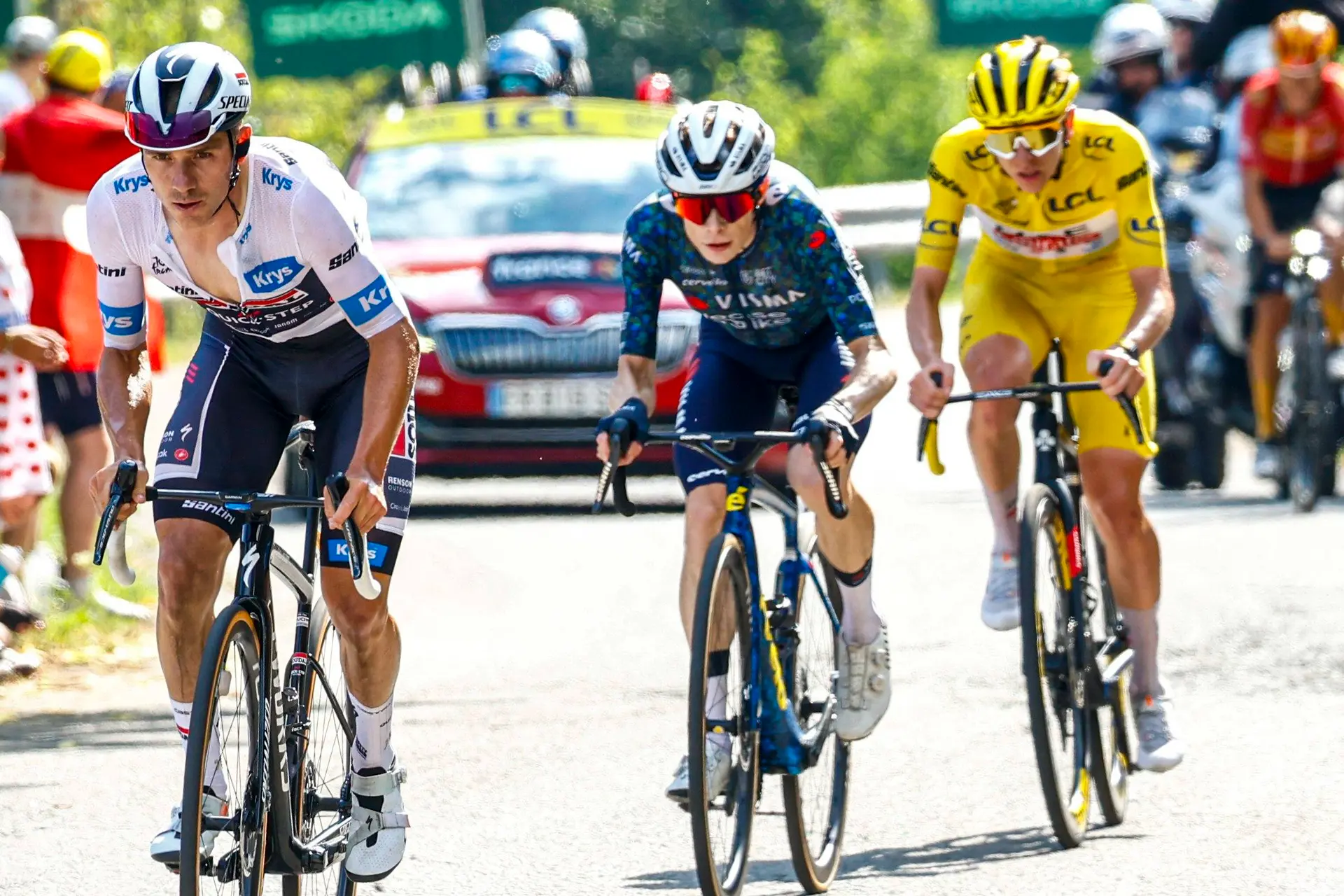
Despite these challenges, all is not lost. One rider, in
particular, has given American cycling fans something to cheer about in 2024:
Matteo Jorgenson. At just 25 years old, the Californian has emerged as one of
the most exciting prospects in the sport. Jorgenson has had a strong season in 2024,
and was the winner of Paris-Nice, a prestigious stage race that has long served
as a proving ground for future Grand Tour contenders. His aggressive riding
style and tactical intelligence have made him a standout in the peloton, and
many believe he could be the country’s best hope for a future Grand Tour
victory.
Jorgenson’s 2024 campaign wasn’t just about Paris-Nice. He
came agonizingly close to winning a stage at the Tour de France, only to be
beaten by the relentless Tadej Pogacar. Despite this disappointment,
Jorgenson’s performances at the Tour showcased his versatility, and his role as
Jonas Vingegaard’s key mountain domestique only added to his reputation.
Alongside these achievements, Jorgenson also claimed victory at Dwars door
Vlaanderen, a significant one-day race that further highlighted his all-around
ability.

Matteo Jorgenson has been one of the revelations of 2024
Could Jorgenson be America’s next Grand Tour champion? The
potential is certainly there, and his rise offers a glimmer of hope in an
otherwise bleak period for American road racing.
While Jorgenson’s star continues to rise, another American
rider has faced a more difficult 2024 season: Sepp Kuss. In 2023, Kuss made
history by becoming the first American in over a decade to win a Grand Tour,
triumphing at the Vuelta a España. His victory, achieved while riding for
Jumbo-Visma, was a moment of triumph not just for Kuss but for American cycling
as a whole.
However, 2024 has been a challenging year for Kuss. After
contracting COVID-19, he missed the Tour de France, where he was expected to
play a crucial role in helping Jonas Vingegaard defend his title. His attempt
to defend his Vuelta crown fell flat, with Kuss finishing a distant 14th, more
than 20 minutes behind the winner. While Kuss’s struggles this season have been
well-documented, it’s worth remembering that cycling careers are full of peaks
and valleys. Kuss remains one of the most talented climbers in the world, and
with the right support, he could still return to his best.

European Dominance and American Struggles
Jorgenson and Kuss represent the brightest American
prospects, but their presence in the sport’s elite is relatively small compared
to the country’s size. European riders have largely dominated the sport in
recent years, and Americans have struggled to break through. Riders like
Pogacar, Vingegaard, and Remco Evenepoel have set an extremely high bar, and
while the U.S. has produced talented riders, they’ve often found it difficult
to match the consistency and success of their European counterparts.
Part of the issue lies in the structure of American cycling
itself. With limited funding and a dwindling race calendar, American riders
lack the same developmental opportunities that their European peers enjoy.
Additionally, the closure of the Tour of California has further stymied the
growth of American road racing, as young riders now have fewer chances to race
on home soil.

The Rise of Gravel Racing
While road racing has faced significant challenges, it’s
worth noting that other cycling disciplines have seen a surge in popularity in
the U.S. In particular, gravel racing has become a major trend, with events
like Unbound Gravel attracting elite cyclists from around the world. Gravel
offers a different experience from traditional road racing, combining endurance
with off-road technical skills, and it’s a discipline that has captivated many
young American riders.
As gravel racing grows, it raises an interesting question:
Could this be taking talent away from road racing? With more prize money,
sponsorship opportunities, and media attention flowing toward gravel events,
young athletes may see it as a more viable career path than the increasingly
difficult road to success in professional road cycling.
Read also

What’s Next?
So, why are there so few Americans at the forefront of the
professional peloton? Is it due to a lack of funding, waning interest, or are
other cycling disciplines more attractive to younger athletes in the USA? In
the coming articles, we’ll dive deeper into the issues facing American road
racing, from the grassroots level to the World Tour. We’ll also explore the
role of gravel racing and ask whether American cycling can reinvent itself in
the years to come.

Fin MajorCycling Journalist
Fin Major is a UK-based writer at CyclingUpToDate and has been part of the team since 2024. He is the site’s main writer for FAQs and evergreen explainers and has written around 2,000 pieces for the platform. Alongside this work, he focuses on in-depth analysis and covers the biggest races on the calendar, including the Tour de France, the Giro d’Italia, and La Vuelta a España, providing clear context around performance trends, tactics, and key storylines.
In his reporting, Fin uses reputable data sources such as ProCyclingStats for results, statistics, and historical context. He places strong emphasis on careful sourcing, editorial accuracy, and updating articles promptly when new, verified information becomes available. Outside of writing, Fin is an active cyclist, which supports his practical understanding of the sport and its demands.
claps 1visitors 1
Just in


Popular news
Latest comments
- He should have been allowed to go to Movistar. Right now both arent a good fit for each other and are just wasting each other's time and effortabstractengineer08-11-2026
- Thibau Nys does exactly what Iserbyt is calling for
 Rafionain-Glas08-11-2026
- i did not see it. was the relegation justified or an overly hard decision? and don‘t cross riders deviate from straight lines all the time? bumping into each others when they cut corners, etc … why being more strict with the rules on the finish sprint?Ketterechts08-11-2026
- seems like we are advertising the website with pointless comments…Ketterechts08-11-2026
- So?Jumpyjohn08-11-2026
- The UCI do have their favorites.
 Front24208-11-2026
- On a positive note, you maybe notice turning this topic into a discussion has the benefit of eliminating certain participants who do not see how they can turn it back to their sole interest ;-)Jumpyjohn08-11-2026
- People see what they want to. I am actually the opposite of your accusation, probably more of a rebel than most of you who don’t get the big picture. The difference is, I don’t go moaning publicly about the consequences of my transgressions, I understand the need for rules and I take my OWN responsibility when deciding to ignore or break them or doing so involuntarily. I will also not hesitate to state my case or argue vehemently when relevant, sometimes it works, sometimes it makes things worse but that’s the price to pay for principles and having character.Jumpyjohn08-11-2026
- That may be but that was unknown to others and nothing says that’s the whole truth. Again, don’t try to misinterpret, it is a call and technically it is correct. Besides, even if there is a valid reason, that does not disqualify the ruling or punishment as far as the rules have been developed. I don’t think they’re as far as in football where for handball there is a distinction (in some ways and specific cases) between intentional or not. And football can be just as harsh and people live with it, eg the offside rule, also judged to within tiny fractions but often wrong or ignored. It’s the nature of every collective organisation and sometimes I wonder if our rebellion against it isn’t seated in the feelings we carry from the injustices we’ve felt personally, like being flashed driving 1km/h too fast when we are explained limits are just a security measure but we are absolutely certain not to have endangered anyone with our transgression. The problem is, nobody has better solutions and no 2 people have the same interpretation of where a limit should be.Jumpyjohn08-11-2026
- Because for you deviated implies the other rider MUST have been made to fall and fail to finish ??? I don’t know if you ride a bike but next time someone carves you up or drives dangerously close, just hold back from those feelings of changing something, reporting or filming or even complaining. Everyone will just say, hey you’re still here undamaged, doesn’t seem like anyone did anything.Jumpyjohn08-11-2026
Loading
6 Comments